


Aquamarine Engagement Ring Guide — NinaVova Education
NinaVova · Learn before you choose
The aquamarine
engagement ring guide.
Find the blue she loves, recognize a distracting window, understand heat treatment and compare real aquamarines for a thoughtfully designed ring.

In this guide Choose a chapter
01 / Start here & aquamarine identity
Start here & aquamarine identity.
Is Aquamarine Good for an Engagement Ring?
Yes, aquamarine can be a good engagement-ring stone.
It has a Mohs hardness of 7.5 to 8, and GIA considers it durable enough for rings and jewelry worn regularly, as long as it is protected from scratching and hard knocks.
That does not make it as forgiving as sapphire or diamond.
For someone who works heavily with their hands, never removes the ring, or wants the most maintenance-resistant blue stone possible, sapphire is the safer choice.
But for someone who specifically loves aquamarine and treats fine jewelry reasonably well, I have no problem using it.
The setting matters too. A very large aquamarine sitting high above the finger is easier to hit than the same stone in a lower, more protective design.
What Aquamarine Actually Is
Aquamarine is the green-blue to blue variety of beryl.
Emerald is also beryl, but the buying logic is very different. Emerald is commonly included. Aquamarine is usually much cleaner, and large transparent crystals are relatively common.
Its color comes mainly from iron, and the natural range is narrower than many buyers expect.
Aquamarine does not normally run from pale blue all the way to royal sapphire blue. The real range is blue through different amounts of greenish blue, usually at a relatively light tone.
The amount of green, the depth of tone, and the strength of saturation change both the look and the value dramatically.
02 / Hue, tone & saturation
Hue, tone & saturation.
The Main Aquamarine Colors and How to Judge Them
Color is where aquamarine listings become confusing.
GIA describes the range as blue, very slightly greenish blue, greenish blue, very strongly greenish blue, and green-blue.
Those names describe the same progression as more green becomes visible.
A blue aquamarine reads clearly blue. You are not looking for sapphire-like dark blue; you are looking for a stone where blue dominates and there is little obvious green.
Very slightly greenish blue still looks blue first, but there is a small green modifier. Some of the finest aquamarine actually sits in this range. The traditional high-value preference is a moderately strong blue to slightly greenish blue, not necessarily a completely pure blue.
Greenish blue is where the green becomes easy to see. Blue is still dominant, but the stone starts to have that seawater appearance people often associate with aquamarine.
Very strongly greenish blue pushes closer toward green while still reading primarily blue. In green-blue, the 2 colors become much more balanced. These stones can look seafoam or almost teal depending on the material.
They are usually less expensive than comparable fine blue aquamarine, but that does not make them bad stones. If you prefer that color, you are simply shopping outside the traditional top-color preference.
Then you have tone.
Tone is how light or dark the stone appears.
Most aquamarine is light. That is normal. The problem is when the stone becomes so light that it only looks blue in the seller’s photography and nearly colorless on the hand.
Saturation is different. It is how strong the color is.
Two aquamarines can have similar light tone, but one has enough saturation to look obviously blue and the other looks washed out.
This is why “dark aquamarine” is not automatically the goal. I would rather have a lighter stone with definite color than a deeper stone that becomes gray or lifeless.
Aquamarine can be tricky online because the material is usually light and transparent.
A white background reflects a lot of light back into the stone. GIA even notes that poorly cut gems can look more attractive on light backgrounds.
A pale aquamarine can therefore look brighter, bluer, and cleaner in a polished product photo than it does over skin.
Warm indoor lighting may weaken the blue. Daylight can make the same stone look fresher. Camera exposure and white balance can shift subtle blue-green colors even further.
So when color is important, I want to see the stone in daylight, ordinary indoor light, movement, and preferably on a hand.
If I am choosing between several stones, seeing them together under the same lighting is even more useful. It immediately shows which stone really has stronger color and which one was benefiting from its individual photography.
One more color issue matters with aquamarine: size.
Unlike many gemstones, aquamarine often shows stronger color as the stone gets larger.
GIA notes that smaller accent stones are commonly pale, and stones over about 5 carats are more likely to show darker, more intense color.
That creates an interesting design problem.
You can have a beautifully saturated center aquamarine and then discover that tiny aquamarine side stones look almost colorless next to it.
If I wanted a strong blue center with small matching accents, I would want to see those stones together before committing to the design.
Real stones. Different possibilities.
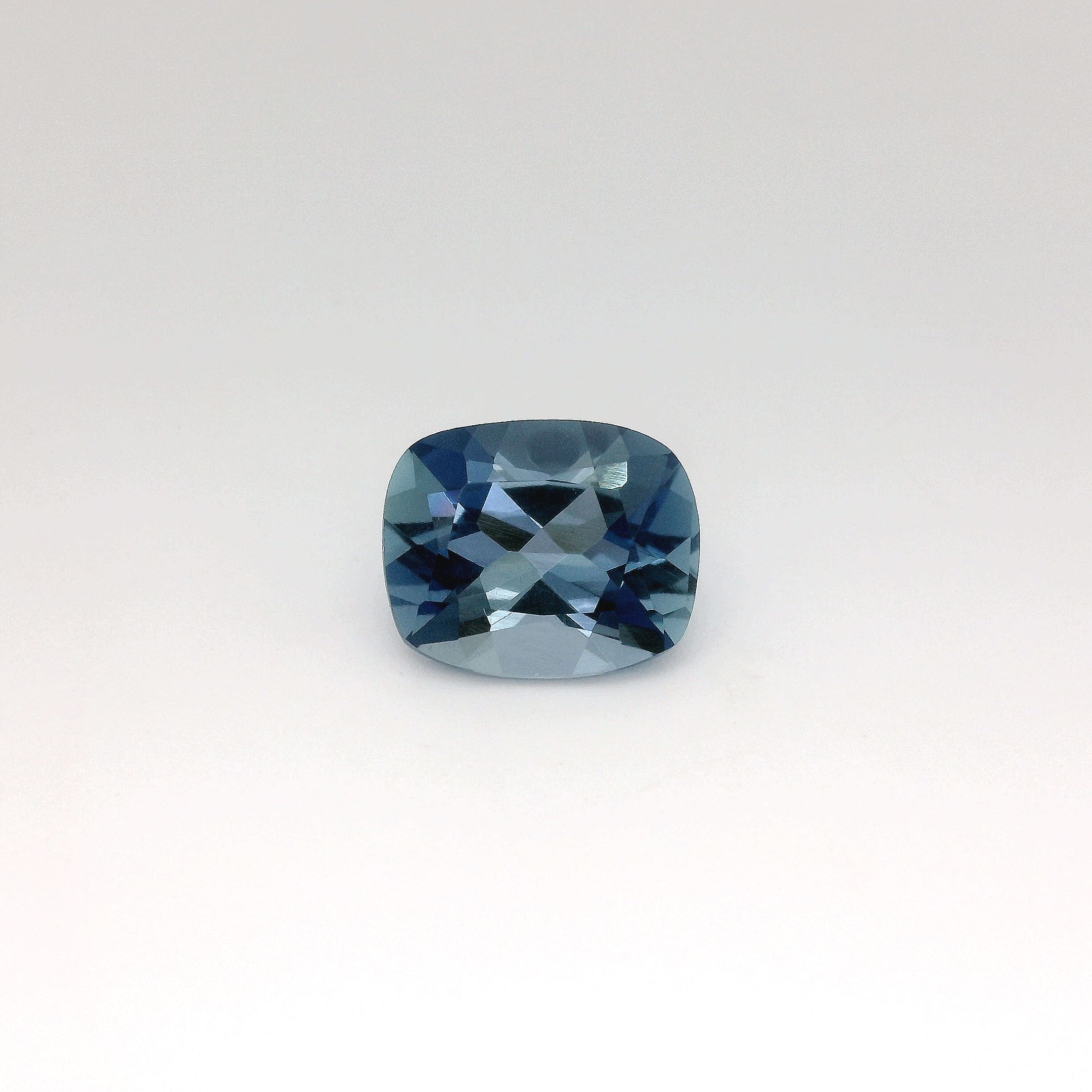
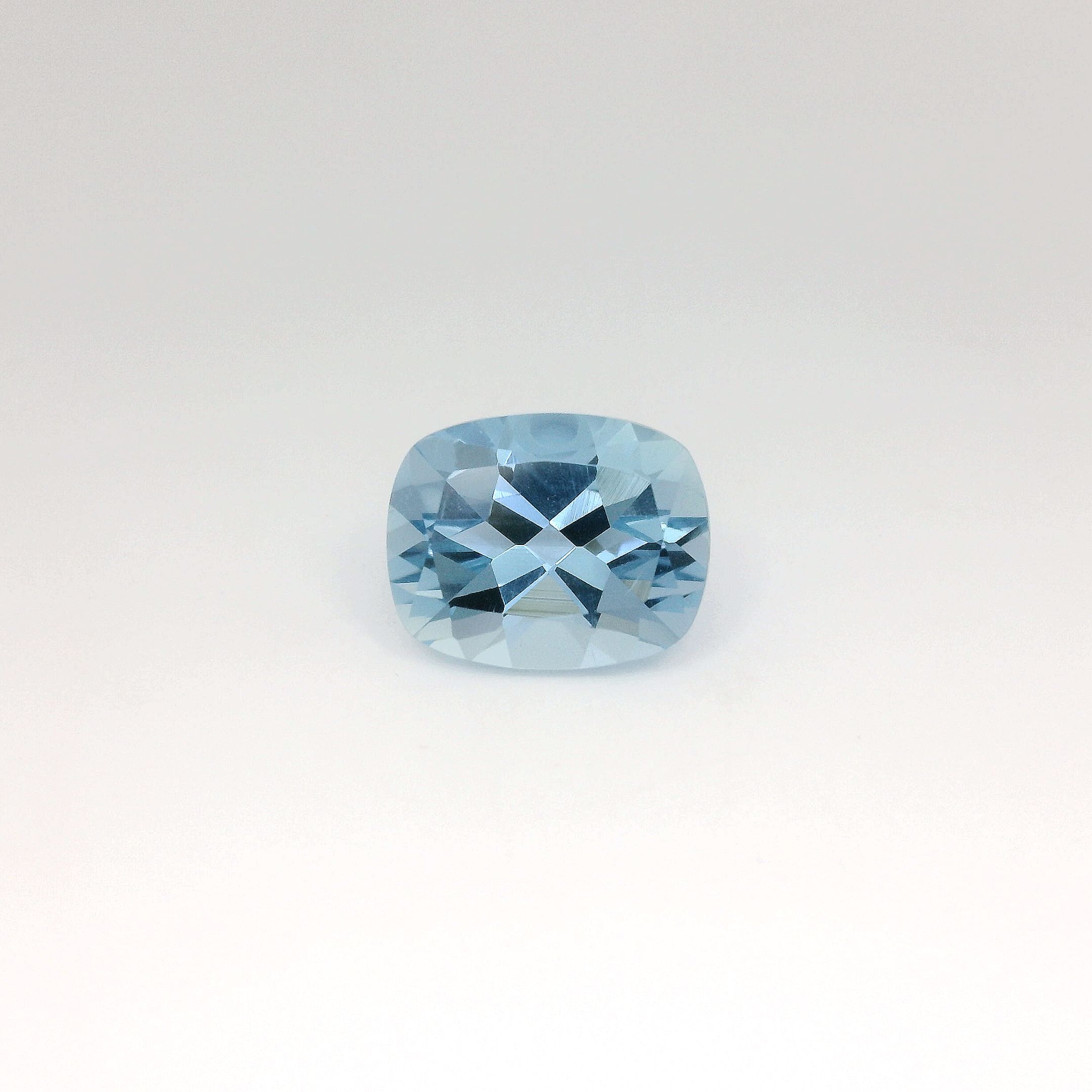
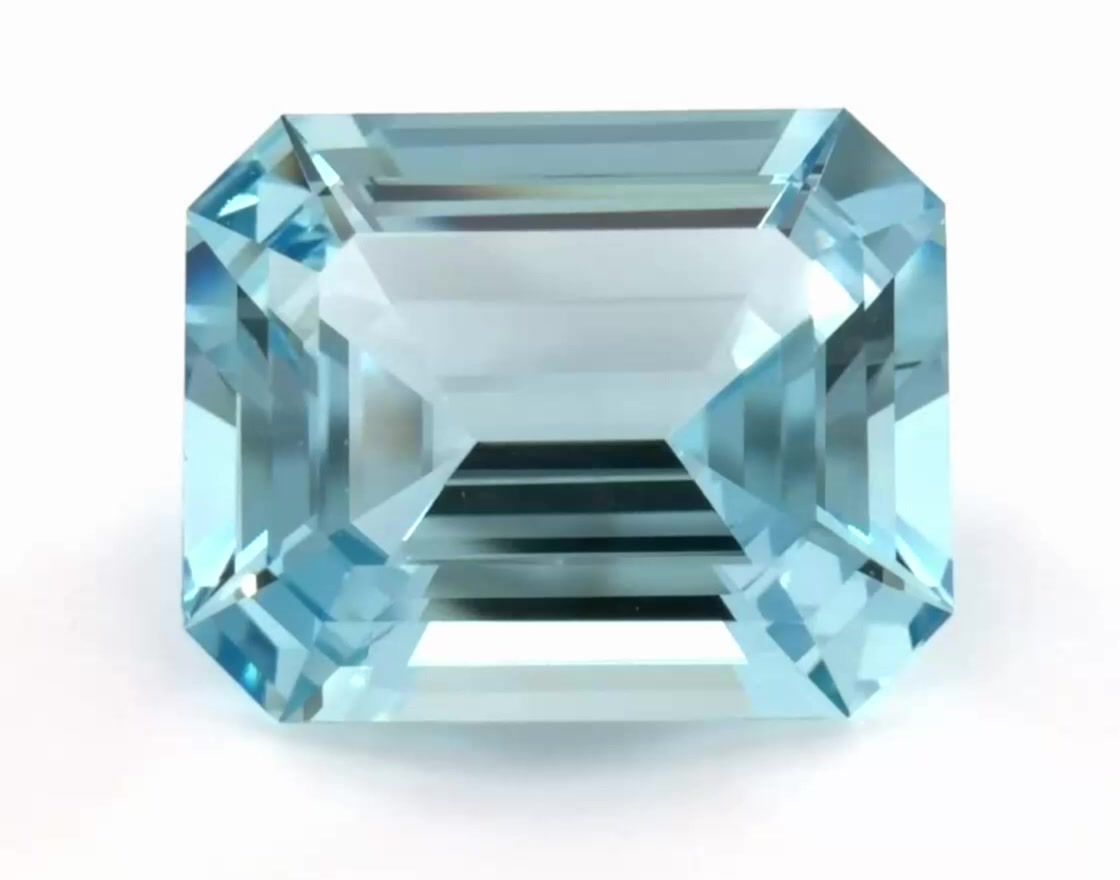
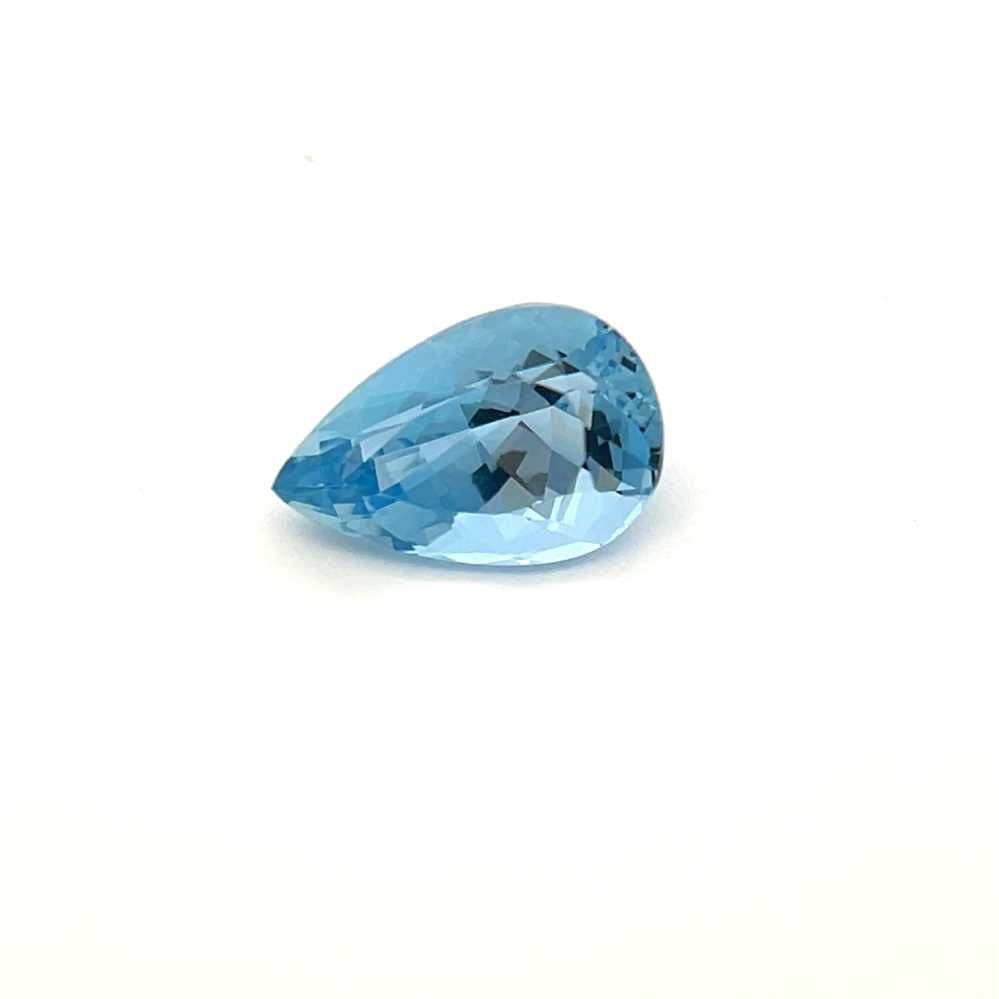
Actual catalog photographs of different stones, generally 1–3 ct. Lighting and scale vary; these are examples, not calibrated color comparisons. Follow a photograph for current availability and the supplier’s details.
03 / Cut, brightness & size
Cut, brightness & size.
Cut and Brilliance
Aquamarine is usually very transparent, so cut problems can be obvious.
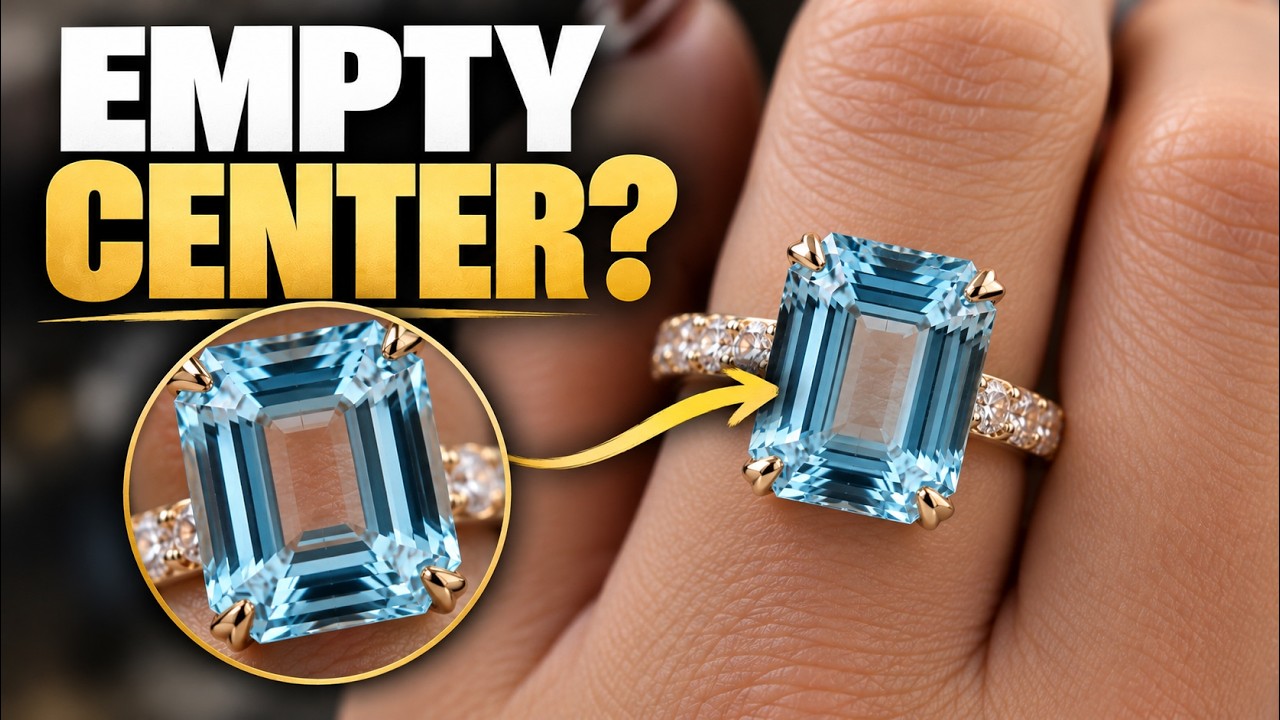
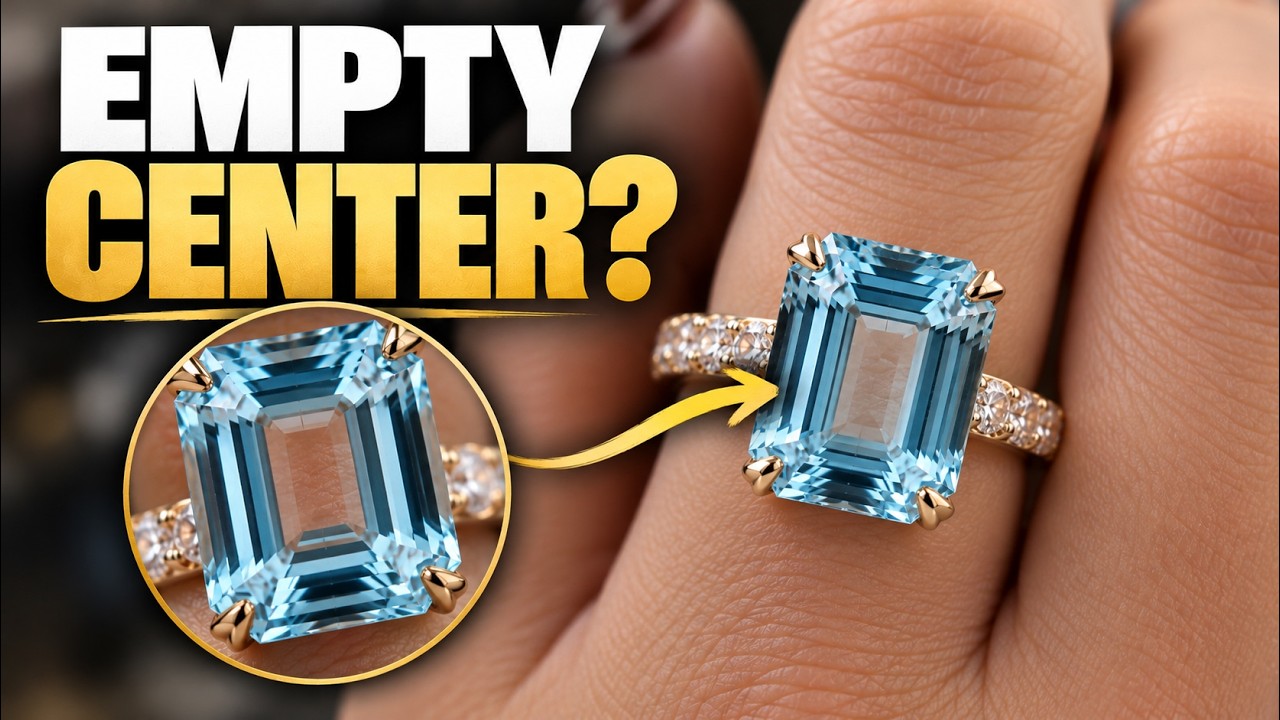
The first thing I look for is windowing.
A window is a transparent area, usually through the center, where the stone is not returning enough light back to you.
In a strong window, you can actually see the finger, background, or part of the setting through the middle.
This is easy to miss in a bright studio photo. Put the same stone over skin and suddenly the center looks empty while the outside still flashes.
A small amount of windowing is not automatically fatal in a colored stone, but a large transparent center would make me reject an aquamarine quickly.
The opposite problem is extinction: areas that remain too dark and dead. Aquamarine is normally light, but poor proportions can still make sections of the stone look inactive.
Then look at depth.
Aquamarine can be cut deeply to retain weight. The carat number sounds impressive, but much of that weight may sit in a deep pavilion instead of adding face-up size.
For a ring, I care much more about the actual millimeter dimensions and how the stone performs face-up than the carat number alone.
Step cuts and brilliant cuts also create different looks.
An emerald or other step cut emphasizes broad flashes, transparency, and the clean watery character of aquamarine.
Ovals, cushions, radiants, rounds, Portuguese cuts, and other brilliant or mixed designs create more movement and smaller reflections.
Neither is automatically better. But there is no reason to accept obviously poor cutting. Aquamarine rough is available in enough quantity that well-cut stones are not some impossible rarity.
Size and Carat Weight
Large clean aquamarine crystals occur naturally, which is one of the reasons aquamarine works so well when you want a substantial center stone.
A 3, 4 or even 6 ct aquamarine can be completely realistic for fine jewelry without the kind of price jump you would normally expect in diamond or sapphire.
That also gives you more freedom with proportions. You can choose a longer emerald cut, a broad cushion, or a large oval based on the design rather than chasing a specific carat threshold.
For a ring, I would look at the actual millimeter dimensions and depth alongside the weight. Two 5 ct aquamarines can sit very differently on the hand depending on how they are cut.
This is one of aquamarine’s real advantages: you can get meaningful size and presence while still being selective about shape, color, and the overall design.
01 / Same light
Rotate the actual stone gently. Notice changing reflections and, for suitable materials, directional color.
02 / Same stone
Keep the stone and background consistent. Change from indirect daylight to ordinary room light.
03 / Real scale
Look at hand distance and over skin. Keep camera exposure steady and avoid filters.
A comparison method, not a prediction that every stone changes color in the same way.
04 / Clarity & heat treatment
Clarity & heat treatment.
Clarity
Clarity is usually one of the easier parts of buying aquamarine.
Most good faceted material is expected to be eye-clean, and large clean stones are readily available.
So I would not chase diamond-style microscopic clarity grades.
If the stone looks clean to the naked eye at normal distance, that is usually enough.
What I do care about are obvious fractures, chips, large central inclusions, or anything surface-reaching that could affect durability or make the stone look hazy.
Included aquamarine also exists and can be intentionally beautiful. Milky material, visible crystals, tubes, or other inclusions can create a different artistic look.
But that should be bought because you like that included character, not because someone is presenting it as equivalent to fine transparent aquamarine.

Heat Treatment, Unheated Aquamarine, and Synthetic Material
Heat treatment is very common in aquamarine.
Much natural aquamarine has some green in the color. Heating can reduce that green component and produce a purer blue appearance.
The treatment is stable and widely accepted. Unlike sapphire or ruby, routine heating generally does not create a significant price penalty in aquamarine. The resulting color matters much more. A fine heated blue aquamarine can be worth more than a comparable greener unheated stone.
There is also no standard premium for unheated aquamarine. And because this type of heating can be difficult or sometimes impossible to detect conclusively, I would be careful paying extra just for the word “unheated.”
There is also Maxixe and Maxixe-type blue beryl. Their deep blue is associated with radiation-related color centers, and Maxixe-type material is artificially irradiated. This color can fade with exposure to light or heat, unlike normal aquamarine color, which is stable to light.
Most buyers will never encounter it, but an unusually intense dark-blue beryl deserves proper laboratory identification.
Synthetic blue beryl also exists, so for an expensive stone or unusual color, a lab report can confirm whether the material is natural or synthetic and identify detectable treatments.
05 / Reports, labels & origin
Reports, labels & origin.
Lab Reports
Most aquamarines are sold without an independent laboratory report, and for an ordinary jewelry-quality stone that does not concern me.
GIA can issue an identification report confirming whether the stone is natural or laboratory-grown, along with its measurements, color, and any detectable treatments. AGL offers similar identification services.
But aquamarine is not graded like a diamond. GIA evaluates and identifies aquamarine rather than assigning a diamond-style quality grade. An identification report is not automatically a geographic-origin opinion; check what the requested laboratory service actually covers.
That is why reports are more common once the stone becomes expensive, unusually colored, or there is a specific question about identity or treatment.
And if the stone you like does not already have a report, that does not mean you cannot get one. Ask the seller whether they can send it to an independent lab before you buy it. We can absolutely do that for a client.
The additional considerations are time and cost. Turnaround, testing scope, shipping and fees depend on the laboratory and service, so confirm the current estimate before making the report part of your buying schedule.
For a normal aquamarine from a trusted supplier, I would rather spend my attention on the actual color, cut, and appearance. For an expensive or unusual stone, independent identification becomes much more useful.
AAA, Santa Maria, Origin, and Certification
Ignore AAA, AAAA, or similar aquamarine grades unless the seller explains exactly what their own scale means.
There is no universal AAA grading system for aquamarine. One company’s AAA can be another company’s ordinary commercial quality.
“Santa Maria” needs context too.
The name originally refers to fine blue aquamarine associated with the Santa Maria de Itabira area in Brazil, but similar-looking material is found elsewhere and the term is also used in the trade for color appearance.
GIA is clear that origin itself is not an important aquamarine value factor.
A famous mine is famous because it produced fine stones. A mediocre stone does not become fine because someone attaches a famous source to it.
GIA does not quality-grade aquamarine the way it grades diamonds.
A colored-stone identification report can identify the material, indicate whether it is natural or laboratory-grown, record measurements and color description, and list detectable treatments.
That is useful when the price or claims justify it.
But the report will not tell you whether the stone looks washed out indoors, whether the window bothers you, or whether the color works in the finished piece.
06 / Durability & care
Durability & care.
Durability, Cloudiness, and Care
One of the most common complaints about aquamarine is that the stone became cloudy after being worn.
Sometimes the stone has not changed at all.
Aquamarine is transparent, so lotion, soap, skin oils, and dirt on the pavilion can noticeably reduce brilliance.
Warm water, mild soap, and a soft brush are the safest basic cleaning method. Make sure the underside of the stone is actually being cleaned.
But dirt is not the only possibility.
Aquamarine is 7.5 to 8 on the Mohs scale, so years of hard wear can eventually produce surface abrasion and small scratches. Cleaning will not fix that.
If the stone still looks dull after proper cleaning, I would have a jeweler inspect the surface rather than assuming the color faded.
Normal aquamarine does not simply fade because you wore it in sunlight. GIA considers its color stable to light.
Rare fracture-filled aquamarine requires more care. Those stones should be cleaned only with warm soapy water, and for a daily-wear center I would generally prefer structurally clean material.

Read the hardness scale correctly.
- Diamond
- Corundum (ruby and sapphire)
- Topaz
- Quartz
- Feldspar
- Apatite
- Fluorite
- Calcite
- Gypsum
- Talc
07 / Value, alternatives & choosing
Value, alternatives & choosing.
Price Logic and Common Mistakes
Aquamarine prices can look irrational until you understand how much ordinary material exists.
Large, pale, clean aquamarine is not especially difficult to find. Fine color is much more selective.
Good cutting removes another large part of the comparison because many inexpensive stones are cut primarily to retain weight.
That is why a smaller stone with obvious color and excellent face-up performance can make a much stronger piece of jewelry than a larger pale stone with a window.
Blue topaz creates additional confusion.
Treated blue topaz can have a bright blue appearance and is extremely abundant. GIA notes that fine aquamarine costs more because attractive natural aquamarine color is rarer.
So if you see a huge bright-blue stone for very little money, make sure you are even comparing the same gemstone before using that price as a benchmark.
The common mistakes are consistent: buying from one perfect photograph, assuming darker always means better, choosing carat weight instead of dimensions, accepting a large window because the stone is big, overpaying for AAA language, paying for unheated status without evidence, and treating aquamarine like sapphire when planning daily wear.
Aquamarine or Light-Blue Sapphire?
This is the comparison I would make if durability starts becoming a concern.
Aquamarine gives you a transparent, watery look and allows large clean centers without pushing the budget nearly as high as sapphire.
Light-blue sapphire is harder at 9 on the Mohs scale and is more forgiving for someone who is tough on jewelry. It can also show stronger color at smaller sizes.
We recently made an engagement ring with a natural light-blue sapphire. It was still darker and more saturated than a typical aquamarine, but the overall look was close enough that I think it is a very good alternative for someone who does not specifically want aquamarine, but simply wants a light-blue center stone and is concerned about durability.
A larger, well-cut natural light-blue sapphire will usually cost considerably more than a comparable aquamarine.
So I would not say sapphire is simply better. If you specifically love the lighter, more transparent aquamarine look, choose aquamarine. If you mainly want light blue and greater durability, light-blue sapphire is worth considering.
Final Decision Guide
For most aquamarine jewelry, I would start with the actual color and make sure it still has enough presence in normal light.
Then I would be strict about the cut. A large window can ruin an otherwise attractive stone, and extra hidden weight adds very little to the finished piece.
For classic transparent aquamarine, eye-clean is enough. Heat treatment is normal and stable. Unsupported AAA grades do not impress me, and neither does a famous trade name if the stone itself is ordinary.
For an engagement ring, the size and setting need to make sense for the person wearing it.
A good aquamarine should not need a perfect photograph, an impressive carat number, or a rare-sounding label to convince you.
The stone itself should do that.
Your custom ring
From what you know about her
to a finished ring.
Discovery & Design
The journey begins with understanding your vision and translating it into a unique ring design.
- Personal Consultation: We initiate a detailed conversation to capture the essence of your desired design.
- Design Inspiration: Presenting examples of previous works to showcase what's possible and inspire your selection.
- Sketching Ideas: Our designers sketch several versions of your ring, refining the concept to match your vision.

Gemstone & Metal Selection
Choosing the perfect materials to bring your custom ring to life.
- Choosing the Right Stone: We offer a serious selection process, explaining all gemstone options and providing educational materials.
- Trusted Vendors: We provide multiple options from our reliable vendors with whom we have longstanding relationships.
- Custom Cuts: If your vision includes a unique gemstone shape, we can custom-cut the stone for you.
3D Modeling & Approval
Visualizing your ring in precise detail before it comes to life.
- 3D Presentation: We create a 3D model of your ring, allowing you to visualize and turn it around, ensuring it matches your expectations.
- Design Finalization: We proceed only when you are completely satisfied with every detail of the design and model.


Craftsmanship & Creation
Bringing your ring to life with meticulous attention to detail and quality craftsmanship.
- Wax Modeling: Creating a wax model to capture the intricate details of your design before casting in metal.
- Expert Crafting: Our artisans craft your ring, focusing on alloy creation, meticulous polishing, and precise stone setting.
Delivery
The final step where your custom engagement ring is ready to be delivered and cherished.
- Complimentary Shipping: Your ring is shipped to you for free, anywhere in the world.
- Lifetime Warranty: All our rings come with a lifetime warranty, ensuring your peace of mind (with the exception of accidental damage).

09 / Questions before you choose
Questions before you choose.
Why does an aquamarine look cloudy after wearing it?
Soap, lotion and skin oils can coat its surface and underside. Gentle cleaning may restore brightness, but it cannot remove abrasion, scratches or internal fractures. If dullness remains, have the ring inspected rather than assuming the color has faded.
Should I pay extra for unheated aquamarine?
There is no automatic unheated premium. Heating commonly reduces the green component, and its detection can be difficult. Compare the actual color, cut and evidence instead of paying for an unsupported label.
Is this guide about the actual stones for sale?
The photographs link to real examples, but availability and prices can change. Confirm the current listing, treatment disclosure, measurements and any report for the exact stone before ordering.
Can we choose the stone before finalizing the design?
Yes. We can compare candidates and develop the setting around the chosen stone’s outline, depth, condition and the wearer’s preferences. Bring a color, an idea or simply what you know about her.
What should the complete quotation include?
Identify the actual center stone and accents, metal, design work, relevant reports, known treatments, current price, taxes, shipping, approval stages and delivery. Confirm resizing, return, warranty and aftercare terms for the project.
Does a laboratory report guarantee beauty or future value?
No. It reports the findings within the laboratory’s service scope. Match it to the stone, then assess appearance, physical condition, price and the complete ring separately.
10 / Continue on the NinaVova blog
Continue on the NinaVova blog.
11 / About NinaVova
A name inspired by lasting love.

Guided by your story.
NinaVova is named after founder Sergey’s grandparents, Nina and Vladimir. Their enduring love inspires the rings we create.
Our design, production and client-guidance team helps turn your ideas into a personal ring, from the first conversation to the finished piece.
Meet NinaVova ↗Image credits & gemological references
Real gemstone and jewelry photographs are identified in captions and link to NinaVova examples where available. Illustrations are educational concepts, not identity tests, controlled color grades or promises of an individual stone’s appearance. Catalog availability can change.
Your story starts the design
Let’s create the ring
that feels like her.
Bring a favorite color, a ring idea or simply what you know about her. We’ll help you understand the options and create the ring together.
Talk with Sergey →Explore aquamarine options ↗