
What Is a Halo Setting? Styles, Proportions, Fit and Care

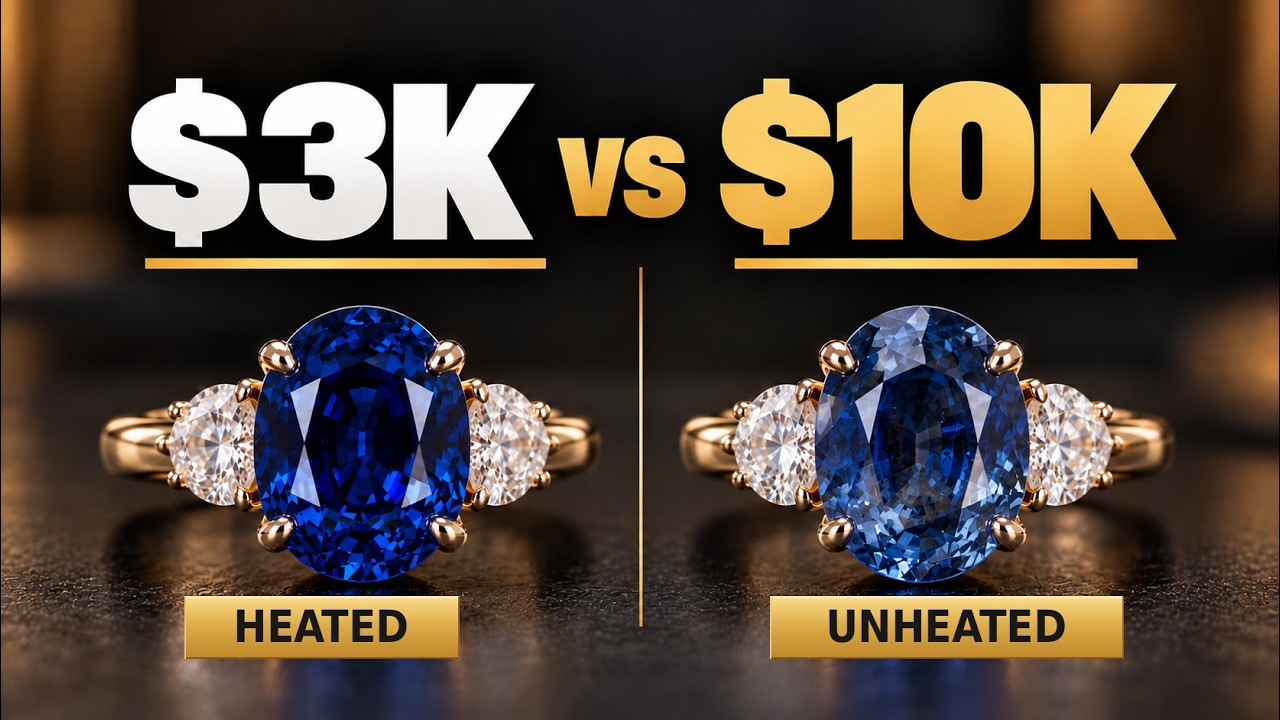
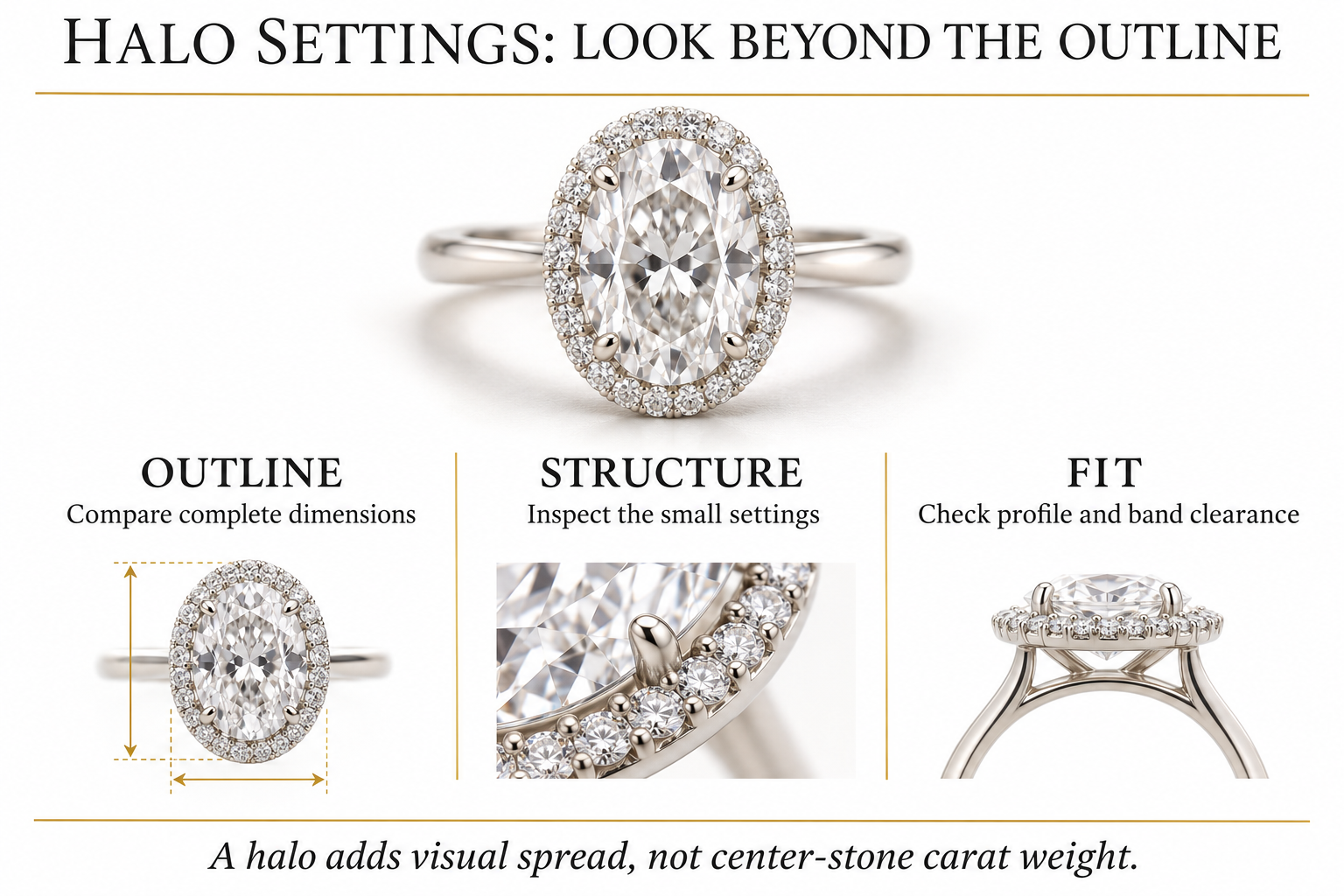
A halo setting surrounds a center gemstone with smaller accent stones, creating a larger overall outline and a distinct pattern of sparkle. The center stone keeps its own dimensions and weight. When choosing a halo, compare the complete ring: the face, side profile, small settings, color relationships and future band clearance.
A halo changes the surrounding outline, not the center stone’s weight. Compare the complete dimensions, accent settings, color, side profile and future band clearance. A larger visual spread does not by itself establish better quality or value.
At a glance · Understand what the halo actually changes · Single, double and decorative visible halos · Hidden, floating and cluster descriptions · Match the outline to the actual center stone
Watch the NinaVova discussion
Watch the original NinaVova video on YouTube.
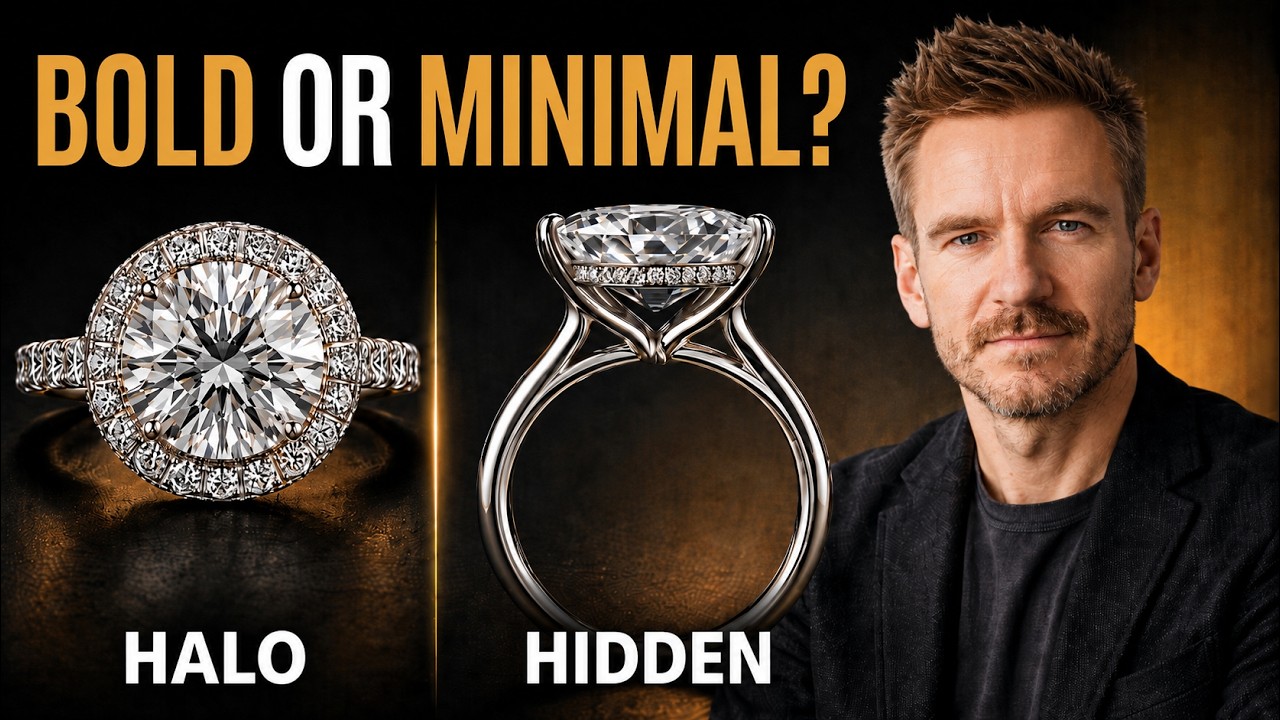
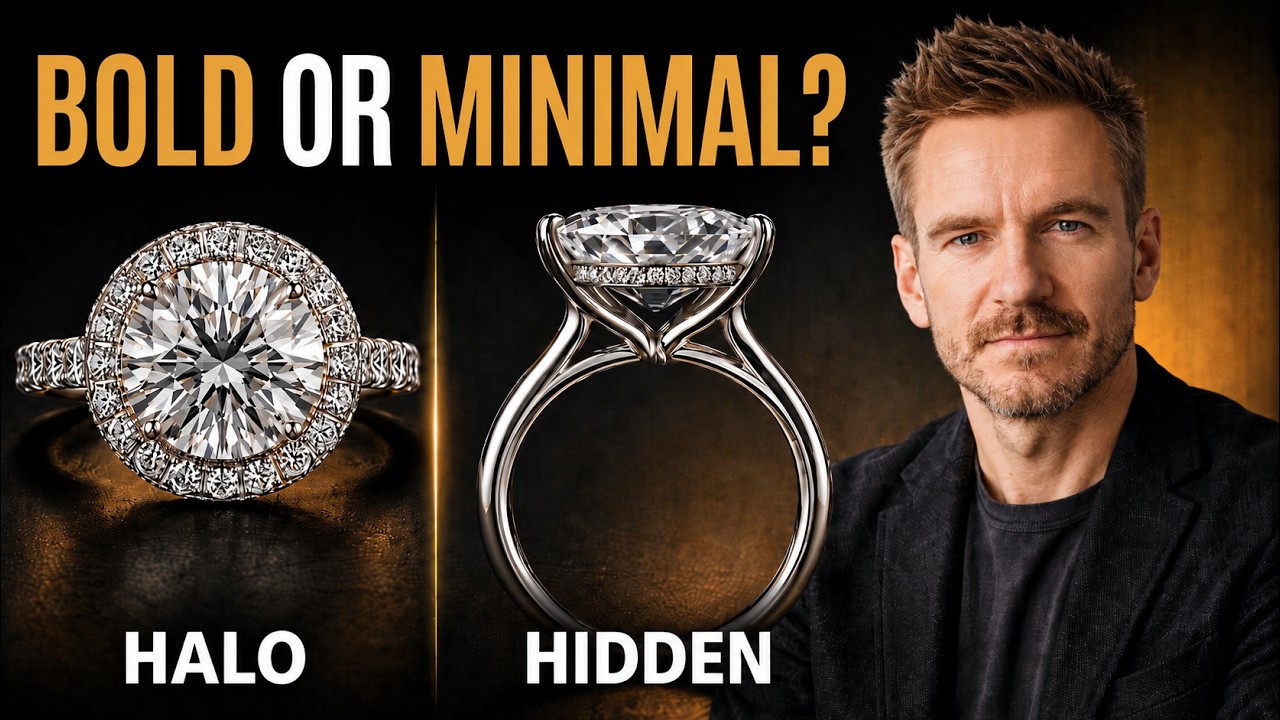
The NinaVova halo-versus-hidden-halo discussion supports comparing face-up appearance and side detail. This written guide adds a broader checklist for the complete halo setting.
Halo setting: visual effect and ownership checks
| Feature | What it changes | What to check |
|---|---|---|
| Visible halo | Face-up outline and detail | Center dimensions versus complete spread |
| Double halo | Extra rows and setting work | Proportions and maintenance |
| Hidden halo | Detail below the center | Actual side view and clearance |
| Accent stones | Color relationship and sparkle pattern | Consistency and small settings |
| Band pairing | Contact and overall width | Actual gallery geometry |
| Price and care | Complete purchase and future service | Written quotation and repair terms |
Understand what the halo actually changes
A visible halo adds material around the center and changes the overall face-up dimensions. It can give a ring more visual spread without increasing the center stone’s carat weight.
The effect depends on the center, spacing, size of accents and metal visible between them. A halo does not automatically improve the center stone’s cut or guarantee a particular amount of additional brilliance.
Ask for separate descriptions of the center stone and accent weight. A total diamond weight should not be mistaken for the weight of the main diamond.
Photographs can emphasize the outline or disguise gaps. Compare realistic views and dimensions for the actual setting rather than relying on one enlarged image.

Single, double and decorative visible halos
A single halo uses one surrounding row; a double halo uses two. Extra rows change the ring’s size, detail and service needs as well as its appearance.
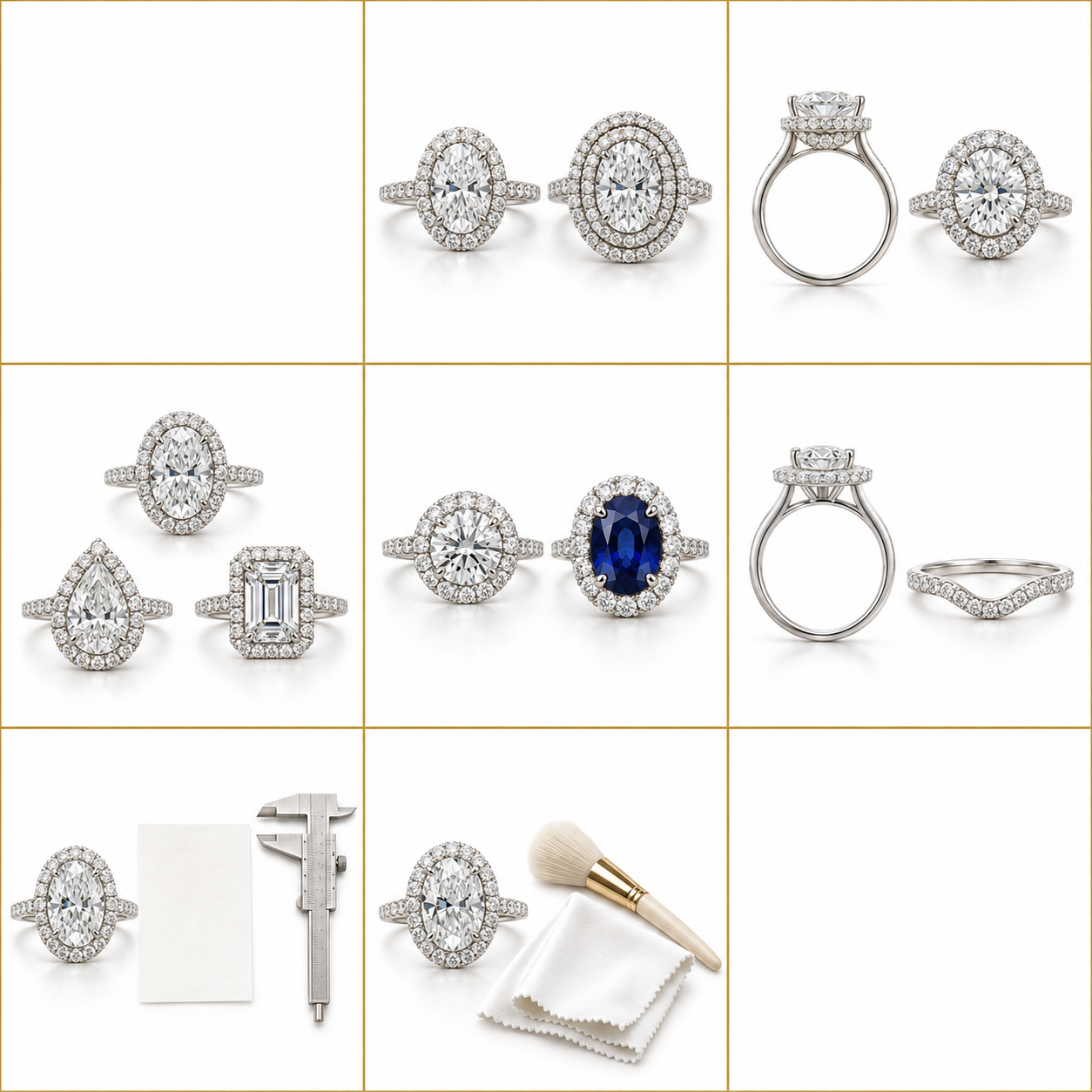
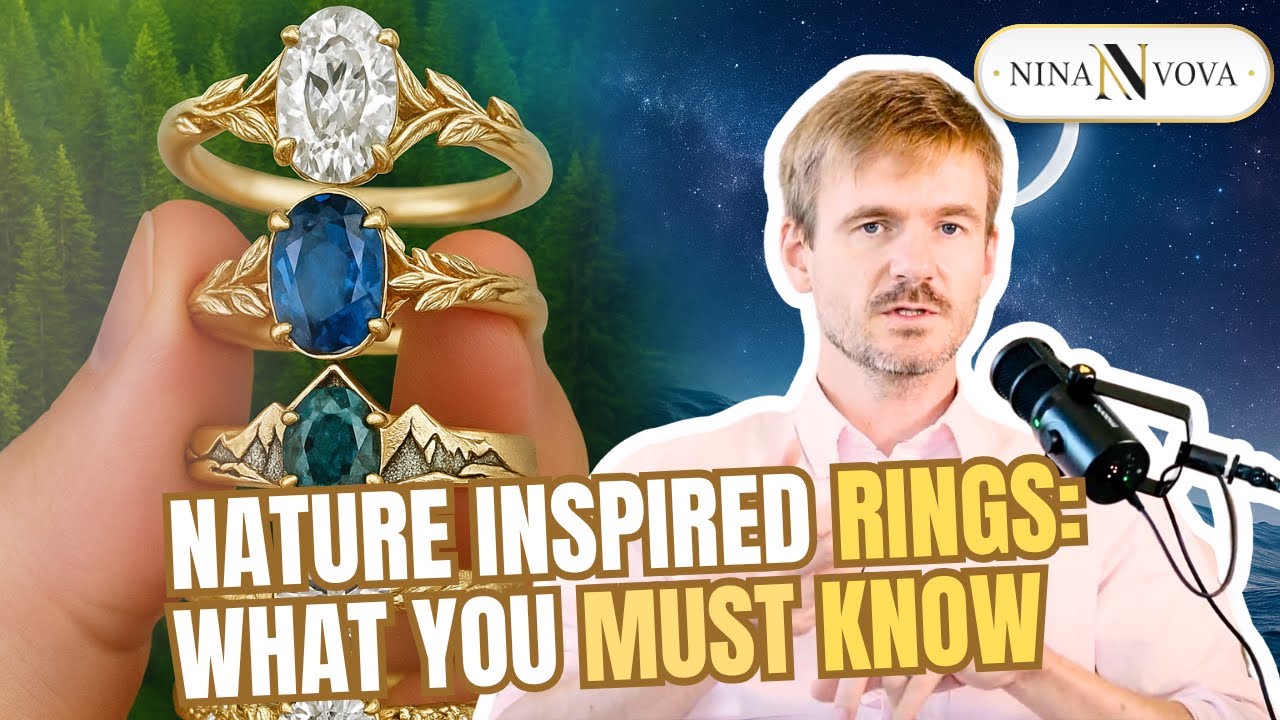
A halo can follow the center closely or create a different outer shape. Floral and geometric versions offer more decorative possibilities without defining the material identity of the center.
Consider how much distinction you want between the main gemstone and its surround. Some designs aim for a continuous bright surface; others deliberately frame a contrasting center.
More accents mean more small settings to inspect and maintain. Added visual spread is a design choice, not a guarantee of lower price or better value.
Hidden, floating and cluster descriptions
A hidden halo sits below the center and is often most evident from the side. It should not be assumed to create the same face-up outline as a visible surrounding row.
Terms such as floating halo are used in different ways. Ask for the actual side view and dimensions rather than assuming the name fixes a single construction.
A cluster can create a larger composite appearance from several stones. It is important to know whether there is one main center or a group of smaller stones forming the focal area.
The written specification should distinguish these layouts. A marketing label is less useful than a clear drawing and an accurate list of components.
Match the outline to the actual center stone
Round, oval, pear, marquise and rectangular centers can all inform a halo design. A close-fitting outline is one possibility; an intentionally different shape can create another effect.
Pointed stones need appropriate protection and support, while the actual depth affects the gallery and overall height. The halo’s outer edge does not automatically protect every part of the center.
Check the proportions between the center and accents, including whether a visible gap is deliberate. A setting made for one stone’s measurements may not suit a superficially similar replacement.
For an elongated shape, compare orientation and the way the ring sits on the hand. A front view alone will not show clearance underneath or contact with adjacent fingers.
Coordinate color, quality and material descriptions
The center and halo may be similar in color or intentionally contrasted. Small bright diamonds around a warmer center can emphasize differences that are less obvious when the center is viewed alone.
Look at the complete ring in appropriate lighting and understand the actual grading or description of the accents. Tiny stones should not be assumed to have individual grading reports.
Identify colored gemstones and relevant treatments separately. A diamond halo does not establish the identity, natural origin or care requirements of the stone it surrounds.
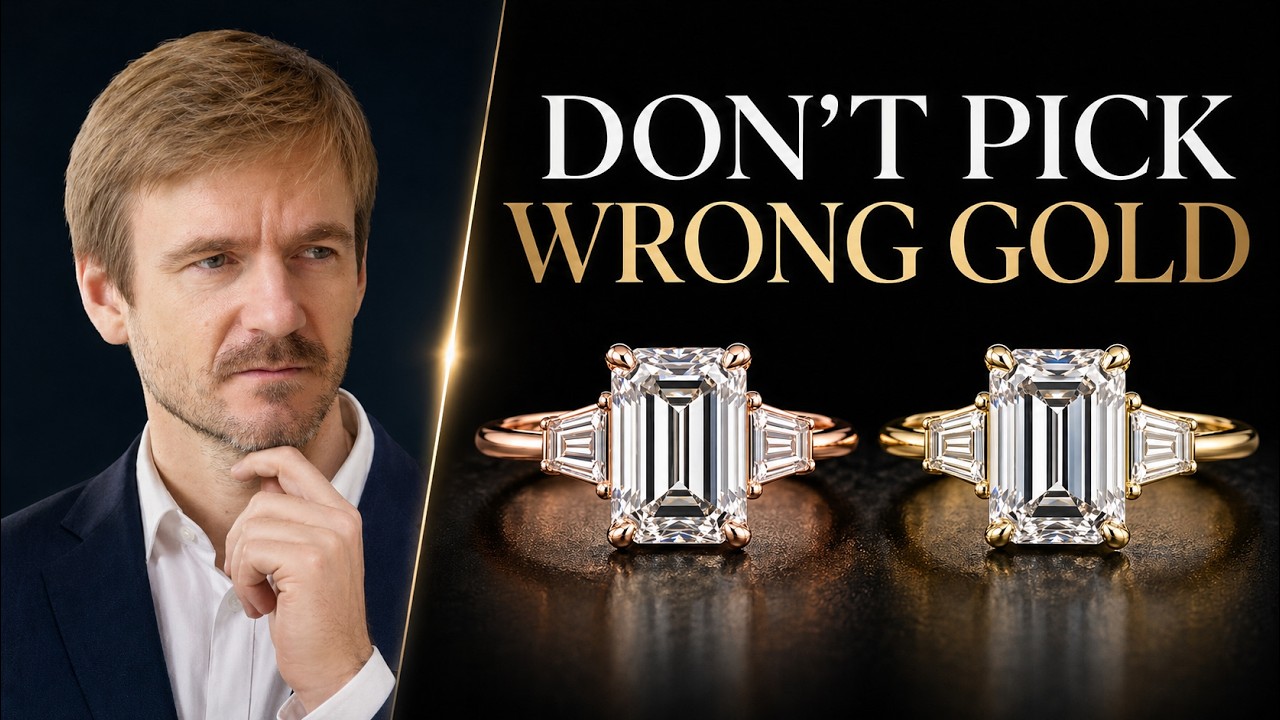
Metal color and visible setting details also influence the composition. Choose from the actual options and known sensitivities rather than imposing a rigid rule based on the wearer’s skin tone.
Inspect the side profile, small settings and fit
Assess support, evenness and the finish of the small settings. A fine appearance should not come from making essential structural areas too thin.
Look at the height, underside and points likely to contact clothing or neighboring fingers. A halo can be low or high depending on its construction; the word itself does not determine comfort.
Try the intended band width and profile when measuring size. A broad face or multiple rings can feel different from a narrow sizing sample.
If adding a wedding band, check the actual clearance and potential rubbing. A straight band may not fit flush; a shaped band or deliberate gap can be part of the plan.
Compare complete price and ownership costs
A halo around a smaller center can be one way to achieve a desired outline, but it is not automatically cheaper than a solitaire or another setting. Compare the actual materials and workmanship.
Include the center, accents, metal, setting work and applicable charges in the quotation. Ask what the price includes instead of comparing an unset stone with a finished ring.
Consider future maintenance and the terms for replacing a small accent if needed. These details can matter more to ownership than the initial impression of size.
A jewelry purchase should not be presented as a guaranteed investment. Insurance, a grading report and a resale estimate serve different purposes and should not be treated as interchangeable.
Clean gently and arrange condition checks
Follow care suitable for every component, including treated or vulnerable colored stones. A diamond surround does not make the whole ring safe for steam or ultrasonic cleaning.
A soft brush and appropriate gentle cleaning may help reach accessible areas when suitable for the materials. Ask the jeweler for instructions for the actual ring rather than applying one method to every gemstone.
If a stone moves, a prong catches or the ring has received an impact, stop wearing it until it can be inspected. Do not tighten small settings yourself with household tools.
Remove rings for heavy work, impact and other unsuitable activities. Periodic checks can identify wear but cannot promise that an accent will never become loose or lost.
Choose the complete design with confidence
Decide whether you prefer a visible frame, side detail or a more understated center. Compare front, side and on-hand views before approving the design.
At NinaVova, the actual gemstone, the wearer’s preferences and a planned wedding-band relationship can guide a halo brief. Feasibility and current materials should be confirmed for the order.
Request written specifications, relevant documentation and current delivery and service terms. Keep the records and photographs for future care.
A halo is successful when its outline, structure, color and fit work together. Its visual effect should be appreciated without confusing extra surrounding detail with a larger center stone or a guarantee of quality.

Frequently asked questions
Does a halo make the center stone heavier?
No. It adds surrounding detail; the center keeps its own carat weight.
Is a hidden halo the same from above?
No. It is generally located below the center and often most apparent from the side.
Is a halo always cheaper than a solitaire?
No. Compare the actual center, accents, metal and workmanship.
Plan the center and its frame together
We can discuss a visible surround or quieter side detail around the actual gemstone, with practical proportions and the wearer’s preferences in mind.
Book a NinaVova consultation or explore our custom design process.
Continue reading: Halo versus hidden halo · Ring profile and fit · Flower engagement rings.
Sources and further reading
- GIA: Purchasing a diamond engagement ring
- GIA: Halo and other settings that affect visual spread
- GIA: Protecting a diamond from chipping
- NinaVova: Current project and service terms
Confirm the actual materials, condition, evidence and current written terms for the offered ring. Illustrations do not establish identity, provenance, certification or an environmental footprint.