


Spinel vs Ruby – Why They’re Not the Same
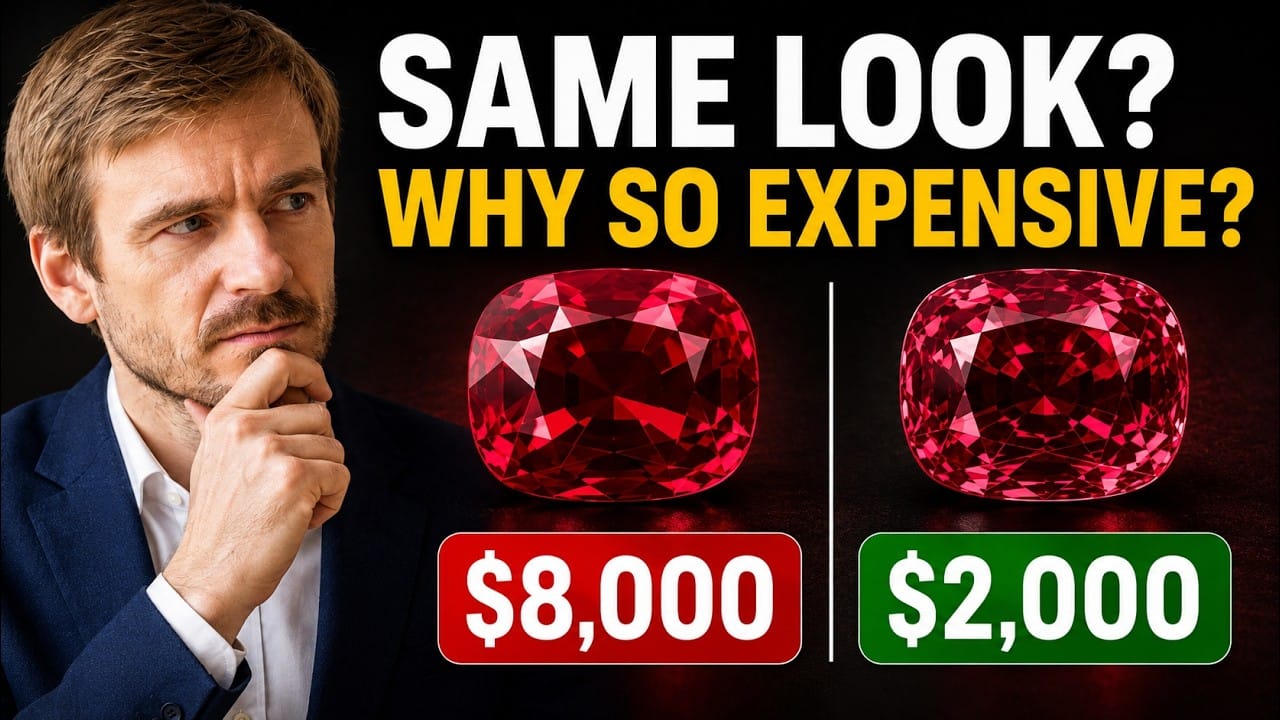
If you’re exploring red gemstones for an engagement ring, you’ve likely noticed two names appearing frequently: ruby and spinel. At first glance, they look nearly identical, yet their price tags can be worlds apart. What explains this difference? Here’s a clear, expert breakdown of the key distinctions between ruby and spinel—no gemologist training required. We’ll cover their appearance, durability, treatments, pricing, and which might be the better choice for your ring.
Spinel: The Hidden Gem
Spinel is often the underestimated contender in the world of red gemstones. Many people haven’t encountered it before, but spinel is 100% natural and has been around for centuries. For a long time, it was routinely mistaken for ruby—even royal crowns hold famous “rubies” that were actually spinels. A prime example is the Black Prince’s “Ruby” in the British Crown Jewels, which turned out to be a stunning red spinel.
It wasn’t until the 1800s that scientists clarified ruby and spinel are completely different minerals. To be clear: spinel is not fake, synthetic, or lab-grown. Like ruby, it’s a natural gemstone formed beneath the earth’s surface. Visually, spinel can be just as vibrant red and striking. When well cut, spinel often looks exceptionally bright, crisp, and lively.
Ruby: The Icon
Ruby is one of the most treasured gems in history. It belongs to the corundum family—when corundum is red, it’s ruby; other colors like blue are sapphires. Ruby’s rich symbolism as the stone of love, passion, and power makes it a classic choice for engagement rings.
Rubies typically present a deep, warm crimson color with a soft, velvety glow that many find deeply romantic. The stone’s legacy and visual appeal have made it an enduring favorite.
Color and Sparkle: What You Really See
When comparing ruby and spinel in person, color and sparkle are two of the first qualities you’ll notice.
- Ruby usually displays a warm, deep crimson that sometimes seems to glow subtly in daylight.
- Spinel often leans toward raspberry or cherry red, and when cut well, it looks crisp and bright.
Importantly, sparkle is influenced far more by cut, clarity, and polish than by whether a gem is ruby or spinel. For example, a clean, expertly cut spinel can sparkle more brilliantly than a poorly cut ruby, while a top-quality ruby can outshine a dull spinel. When examining stones, look for:
- Sharp, mirror-like facet reflections
- Minimal haze or cloudiness beneath the table facet
- A polished surface that makes the stone seem to “dance” with light
These factors dictate how lively and brilliant a gemstone appears.
Clarity: The Experience of Natural “Birthmarks”
Clarity refers to the internal inclusions naturally present in gemstones. Rubies often have more visible inclusions, which add to their character but can soften reflections or reduce sharp sparkle. Spinels tend to be cleaner to the eye, and when paired with a good cut, they appear glassy and very vibrant.
Fluorescence: An Extra Pop of Life
Both rubies and many pink or red spinels can fluoresce—meaning they react to UV light (like sunlight or certain lamps) with a vivid glow. This fluorescence gives an extra “pop” of color and brilliance in bright conditions. Not every stone fluoresces, and how strongly they do varies by origin and individual gem. Consider fluorescence a pleasant bonus rather than a requirement.
Durability for Everyday Wear
Durability matters especially for an engagement ring you’ll wear daily.
- Ruby scores a 9 out of 10 on the Mohs hardness scale, making it extremely hard and very durable.
- Spinel rates an 8 out of 10, also quite sturdy for everyday wear.
Neither ruby nor spinel has cleavage, the natural planes along which a gemstone can split easily. This means typical ring settings—including prong, halo, and bezel—are all perfectly safe for both stones. If you tend to be very rough on your hands, ruby offers a slight edge in toughness. For most wearers, spinel’s durability is more than sufficient.
Treatments: What You Need to Know
Most colored gemstones receive some form of treatment to improve their appearance. Treatments aren’t inherently bad, but transparency is essential because they affect both value and durability.
- Ruby treatments: Heat treatment to enhance color and clarity is very common and widely accepted. Some rubies undergo diffusion treatment, where color is altered at very high temperatures—this should always be disclosed. Lead-glass filling, which fills cracks to improve clarity, is another treatment found in rubies. While lead-glass-filled rubies can look beautiful, they are more fragile and not recommended for lifetime wear in an engagement ring.
- Spinel treatments: Many spinels are sold untreated, which is a big selling point for the gem. Heat treatment and other enhancements exist but are less common than in ruby.
The takeaway is simple: always ask about treatments and insist on written disclosure, ideally supported by an independent lab report.
Lab Reports: The Buyer’s Best Friend
Before committing to a ruby or spinel, insist on an independent lab report from a reputable gemological lab. Trusted examples include GIA, AGL, GRS, SSEF, Gübelin, and Lotus Gemology.
What to look for on the report:
- Identity: Should clearly state “Natural corundum (ruby)” or “Natural spinel.” Avoid any stone labeled synthetic or man-made if you want natural.
- Treatment details: For ruby, look for “Heated” or “Unheated,” and avoid “lead-glass filled” for engagement rings. For spinel, “No indications of treatment” is ideal; any treatments should be described fully.
- Origin (optional): You may see origins like Myanmar, Mozambique, Tanzania, Sri Lanka, or Tajikistan. While origin can affect price, it generally doesn’t impact durability—only pay extra for origin if it matters deeply to you.
- Verification: Use the report number or QR code on the lab’s website to confirm authenticity.
If you want a detailed guide to labs and origin determination, Nina has a dedicated video on certification processes.
Price Realities: What You Can Expect to Pay
Pricing varies widely based on quality, size, treatments, and origin, but here are real-world price ranges for 1–2 carat stones with strong red color and lab certification:
- Unheated rubies (often from Mozambique) list roughly between $4,000 and $12,000 per carat, with exceptional stones or premium origins commanding higher prices.
- Fine red spinels of comparable size (commonly from Tanzania, Vietnam, or Burma) often list between $1,000 and $4,000 per carat, though standout stones can reach $10,000 or more per carat.
At the very top end, large, top-quality red spinels typically sell for about a tenth the price of equivalent rubies. As size and quality increase, the price gap widens further.
Take these figures as calibration points rather than exact quotes, as pricing shifts with numerous factors. For most 1–2 carat ring stones, expect unheated rubies to cost roughly 2 to 4 times as much per carat as fine red spinels of similar appearance.
Choosing Guide: Which One is Right for You?
Here’s a quick way to decide:
- Choose ruby if you value the classic name, the iconic deep romantic red, a rich heritage, and the symbolism of love, passion, and power.
- Choose spinel if you want a vivid, often untreated red stone with a crisp, lively look—and you prefer a significantly friendlier price point.
No matter what, always request a lab report, verify treatment, and pick the stone that makes you smile the moment you wear it.
Conclusion
Ruby and spinel can look incredibly alike but offer slightly different personalities. Ruby delivers velvety depth, historic prestige, and romantic symbolism. Spinel offers brightness, strong daily wear, and excellent value, especially when clean and well cut. Remember, a gemstone’s sparkle comes mostly from cut, clarity, and polish—so trust your eyes, compare stones side by side in good lighting, and listen to your heart.
Happy ring shopping!