

Platinum vs Palladium Rings: Color, Weight, Wear and Service

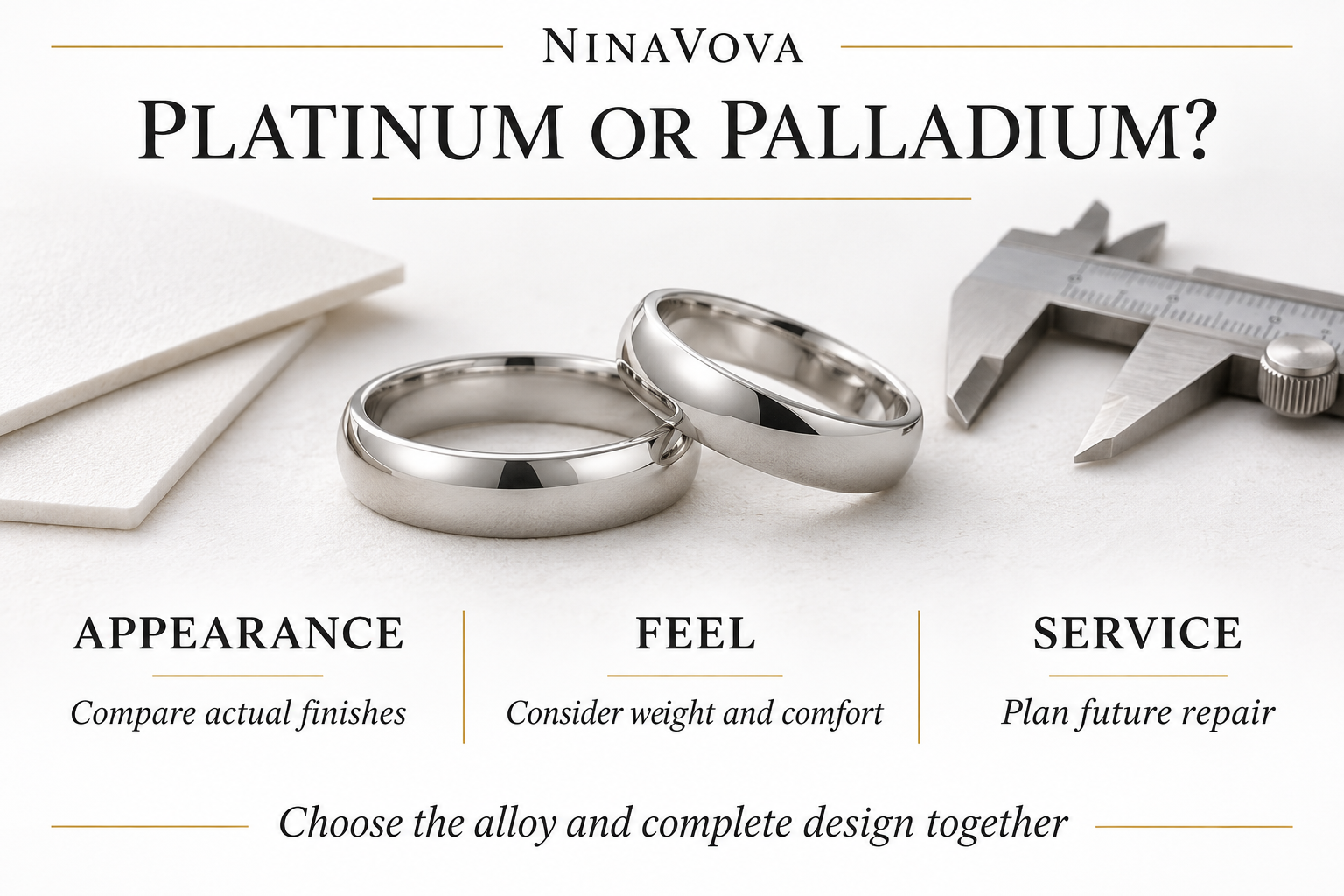
Platinum and palladium can both create a naturally white engagement ring or wedding band. Their similar appearance hides practical differences in weight, alloy behavior and future service. Compare the actual formulation, construction and complete quotation rather than expecting one metal to win on every measure.
Compare the actual alloy, complete ring and service plan. Both metals can create a naturally white ring. Platinum is denser, while construction, formulation, comfort and future service determine how well a particular choice suits you.
At a glance · A short history, separate from the buying decision · Color: compare the actual finish · Weight and density: the clearest difference to feel · Alloy and fineness: read beyond the stamp
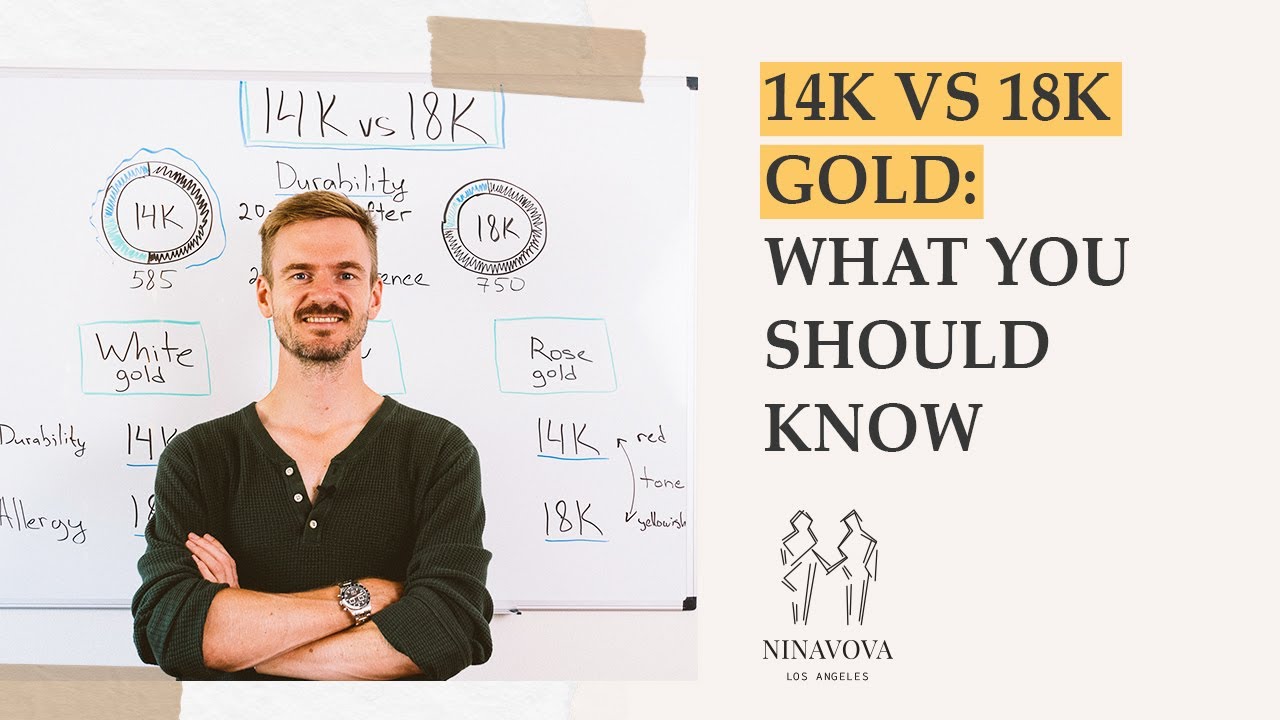
Watch the NinaVova discussion
Watch the original NinaVova video on YouTube.
Related NinaVova gold-alloy discussion supports the broader metal-selection context. This written guide addresses platinum and palladium specifically and corrects older plating, density and wear generalizations.
Platinum and palladium: useful comparisons
| Question | Platinum direction | Palladium direction |
|---|---|---|
| Appearance | Naturally silvery white | Naturally silvery white |
| Comparable volume | Generally heavier | Generally lighter |
| Surface wear | Can scratch and develop patina | Can scratch and develop patina |
| Construction | Assess actual alloy and design | Assess actual alloy and design |
| Service | Confirm qualified repair options | Confirm qualified repair options |
| Price | Current complete quotation | Current complete quotation |
A short history, separate from the buying decision
Platinum was worked in South America long before its wider recognition in Europe. It later became important in fine jewelry, including designs associated with the early twentieth century.
Palladium was isolated by William Wollaston in 1803. It is a different element in the platinum group, and it has jewelry uses as well as industrial applications.
Historical associations can add personal interest, but they do not establish the quality of a particular ring. A platinum label is not proof that a setting has been well engineered.
I enjoy platinum’s substantial feel and its connection with historical jewelry. That preference is a design perspective rather than a universal rule for every wearer.

Color: compare the actual finish
Both metals have a naturally white to silvery appearance. Subtle differences can be easier to notice when actual samples with comparable finishes are viewed together.
Polish, texture and lighting affect the impression. A numerical claim that one is exactly one shade whiter is not a standardized color grade.
Platinum and palladium do not generally require rhodium plating to create their white color. That differs from many white-gold rings, which use a rhodium surface finish.
If a particular piece is plated, ask about that finish and its maintenance. Rhodium is a solid metal at ordinary room temperature, not a liquid metal that defines the identity of every white ring.
Weight and density: the clearest difference to feel
Platinum is substantially denser than palladium. For comparable ring volume, a platinum version will generally feel heavier; the exact difference depends on the actual alloys and design.
That does not mean the designer needs twice the physical volume of platinum. The same shape simply contains a different mass when made in a denser material.
A light feel may be comfortable for one person, while another enjoys a more substantial ring. Neither preference establishes quality or how expensive a ring ought to feel.
Try actual samples where possible. Width, inner profile, setting height and fit can influence comfort more than the metal’s weight alone.
Alloy and fineness: read beyond the stamp
Jewelry normally uses formulated alloys rather than pure elemental metal. A mark such as Pt950 identifies 950 parts platinum per thousand, while Pd950 indicates the corresponding palladium proportion.
The remaining ingredients affect working and wearing properties. A purity mark alone does not tell you the complete recipe or how the ring was processed.
Ask for the actual alloy information and why it suits the design. Avoid assuming that every platinum or palladium ring contains the same five percent of other metals.
Known skin sensitivity should be discussed in relation to the specific ingredients. No alloy can honestly be promised never to cause a reaction for any person.
Wear, scratches and patina
Both metals can be used in durable jewelry when the alloy and construction suit the project. Neither is scratch-proof, and neither eliminates the need for inspection.
Surface wear can create a softer patina. Some people enjoy it, while others prefer periodic professional refinishing after discussing what the process involves.
It is too absolute to say platinum or palladium never loses material, or that a ring will weigh exactly the same after decades. Wear, polishing and repair can change surfaces and dimensions.
A fixed percentage of scratch resistance cannot be calculated from a simple Mohs comparison. Jewelry alloys and their processing need more specific evaluation than a ranking of pure elements.
Construction matters as much as the metal name
Review the band dimensions, joins, support around the center and the shape and size of the prongs. A prestigious metal does not compensate for inadequate structure.
Platinum prongs can work well, but the word platinum does not guarantee that a diamond can never loosen or fall out. All stone settings need appropriate workmanship and periodic checks.
Palladium is not automatically brittle in every jewelry application. The particular alloy, fabrication and design affect how it performs.
Compare the proposed ring as a complete object. Height, exposed points, stone condition and wearing demands can matter more than a broad claim that one metal is always stronger.
Repair and resizing: plan the service
Ask whether the maker has experience with the exact alloy and can provide or arrange future repair. Service availability is a practical consideration, especially for less familiar materials.
Platinum and palladium work can involve specialist equipment and procedures. It is misleading to say the techniques are identical to all gold work or that every jeweler can perform the same repair.
Resizing limits depend on the design as well as the metal. Full-around stone arrangements, intricate patterns, enamel and moving components can complicate or prevent a conventional change.
Understand those limits before ordering, and have any adjustment assessed professionally. A nearby repair counter’s speed or price does not by itself establish suitability for a particular ring.
Price: compare current complete quotations
Precious-metal market prices change. An old article’s claim that platinum or palladium is always more expensive should not be treated as a current rule.
Finished weight, fabrication, setting work, stones, finishing and service enter the ring price. Different density can affect material weight without establishing the final ranking.
Ask for like-for-like quotations in the actual alloys and designs being considered. A lighter metal does not automatically make a difficult fabrication inexpensive.
Buy the ring because it suits your priorities. Metal rarity, industrial demand or a past price rise does not guarantee a retail jewelry investment return.
Which direction fits your priorities?
Platinum may appeal if you enjoy its naturally white appearance, substantial feel and the options a particular experienced maker can offer.
Palladium may appeal if you want a naturally white ring with less weight for a comparable volume, provided the actual design and long-term service arrangements suit you.
White gold is another possible comparison, with different alloy and surface-finish questions. A lower or higher karat number is not a complete performance rating.
Decide with actual samples, a clear brief and written quotations rather than a universal list of pros and cons detached from the ring being made.
Choose the complete ring and ownership plan
At NinaVova, we can discuss the metal together with the stone, proportions, fit and intended wearing routine. Those choices should support one another.
Confirm the actual alloy, construction, approvals, care and future resizing or repair options before production. Keep the current written terms with your project information.
A comfortable, thoughtfully made ring can be personal in either metal. The best choice is the one whose appearance, feel and practical expectations you understand and enjoy.

Frequently asked questions
Do platinum and palladium require rhodium for white color?
Generally no. They are naturally white; ask whether a particular piece has any surface coating.
Will platinum always cost more?
No. Compare current complete quotations for the actual alloys, weights and fabrication.
Does platinum guarantee a stone can never fall out?
No. Construction, setting work, wear and maintenance still matter.
Choose metal around the whole design
We can discuss actual alloys, color, weight, construction and future service beside the chosen stone and your wearing preferences.
Book a NinaVova consultation or explore our custom design process.
Continue reading: 14K and 18K gold · Ring-metal overview · Workmanship checklist.
Sources and further reading
- NinaVova: Related alloy discussion
- Royal Society of Chemistry: Platinum properties and history
- Royal Society of Chemistry: Palladium properties and history
- Stuller: Actual jewelry alloy comparisons
- GIA: White-metal choices
Based on NinaVova’s original writing, with supporting references below. Confirm the actual materials, condition, fit and current written service terms. Care and repair require a case-specific assessment.