

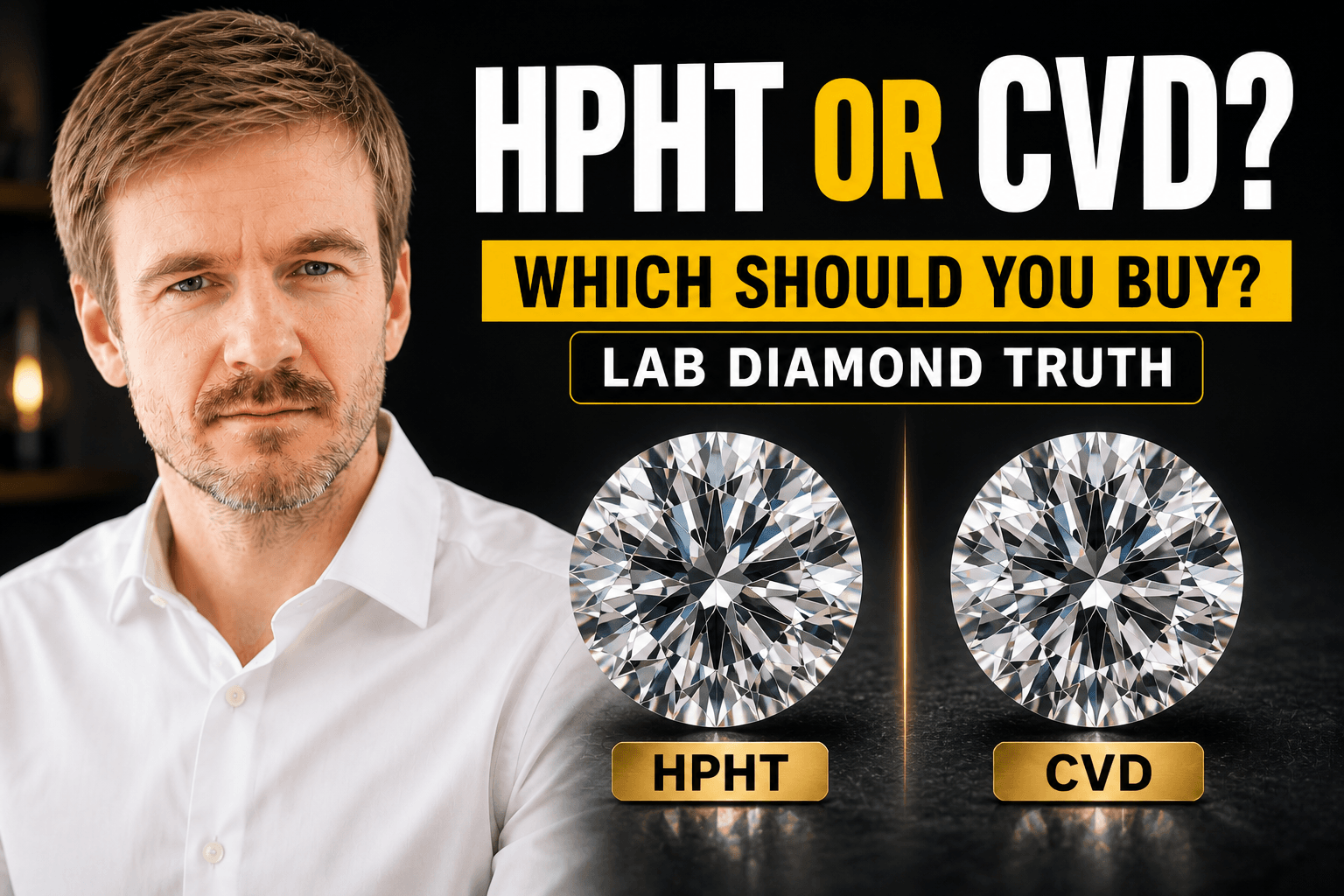

HPHT vs CVD Diamonds: The Truth Nobody Tells You
Choosing the perfect diamond can feel like navigating a labyrinth of technical jargon and marketing claims, especially with the growing prominence of lab-grown stones. Among these, HPHT and CVD diamonds often stand at the forefront of conversation and confusion. As a seasoned custom engagement ring designer, I’ve spent years helping clients understand the subtle nuances behind these two types of lab diamonds. In this article, I will share an honest, in-depth exploration of HPHT versus CVD diamonds — how they’re made, what sets them apart, common misconceptions, and ultimately, what really matters when you’re selecting a lab-grown diamond.
Understanding HPHT: The Pioneer of Lab Diamond Growth
The Origins and Mechanics of HPHT
High Pressure High Temperature—HPHT—is the original method used to cultivate lab-grown diamonds, tracing back to breakthroughs in the 1950s by General Electric chemists. This method replicates, in a compressed and accelerated form, the intense conditions found deep within the Earth where natural diamonds form.
At its core, HPHT starts with a diamond seed, usually a thin slice smaller than a grain of rice. This seed acts as a foundation for crystal growth. The seed is placed with pure carbon inside a colossal press capable of generating over 2,000 degrees Fahrenheit and pressure around 1.5 million pounds per square inch — equivalent to 150 times the pressure scale of the Mariana Trench’s depths. Under these punishing conditions, carbon atoms crystallize tightly around the seed, growing into a rough diamond over a couple of weeks.
HPHT’s Advantages and Limitations
From a buyer’s perspective, HPHT diamonds offer a remarkable benefit: they often emerge from the growth process exhibiting spectacular color grades — D and E — without requiring any post-growth treatment. This intrinsic color purity is a distinct characteristic that makes HPHT diamonds particularly appealing for those seeking top-tier color straight out of the press.
Additionally, HPHT remains the preferred method for producing fancy colored lab diamonds—vivid yellows, blues, pinks, and greens—because the controlled environment allows precise manipulation of color. These colored diamonds are a fascinating alternative to traditional white diamonds and deserve their own detailed discussion.
On the flip side, HPHT’s massive industrial equipment and energy-intensive process impose practical limits on producing large colorless diamonds at scale. The size and cost constraints spurred innovation in the diamond-growing industry, eventually leading to the development of a new method.
The Rise of CVD Diamonds: Innovation for Scale and Efficiency
What is Chemical Vapor Deposition?
Chemical Vapor Deposition (CVD) emerged in the 1980s as a direct response to HPHT’s limitations. Instead of crushing carbon under extreme pressure, CVD grows diamonds layer by layer.
In this process, a diamond seed sits inside a vacuum chamber filled with carbon-rich gases, typically methane and hydrogen. When heated to generate plasma, the carbon atoms are deposited atom by atom over the seed, gradually building a rough diamond in flat, distinct layers. Unlike the gigantic industrial presses required for HPHT, CVD chambers are more compact, consume less energy, and allow for the economical production of larger colorless diamonds.
The Purity and Post-Growth Reality of CVD
CVD diamonds belong predominantly to the Type 2a category — regarded as the purest diamond type and representing only about two percent of natural diamonds. This purity is a major selling point often highlighted in marketing, suggesting superior quality.
However, the reality behind the sheen is more nuanced. Many CVD diamonds initially emerge with a brownish or grayish tint. To achieve the highest color grades comparable to natural diamonds, they typically undergo a secondary HPHT treatment after growth to remove this tint. This hybrid approach blurs the boundaries marketers often try to draw sharply between HPHT and CVD diamonds.
How Gemologists Differentiate HPHT and CVD
Under magnification, the structural growth patterns betray the diamonds’ origins. Natural diamonds, grown over millions of years, display complex “tree-ring” growth patterns resulting from fluctuating environmental conditions.
CVD diamonds exhibit visible, flat, layered growth marks, reflecting their atom-by-atom plasma deposition process. In contrast, HPHT diamonds reveal consistent, geometric cubic growth patterns due to stable pressures and temperatures inside the press.
These microscopic fingerprints allow gemologists to identify the growth method, fulfilling certification requirements and supporting informed buyer decisions.
Dissecting Common Myths About HPHT and CVD Diamonds
Are HPHT Diamonds Always Blue-Tinted or Metallic?
One widespread myth claims HPHT diamonds often show a blue tint from boron or metallic inclusions. While chemically plausible, such instances are extremely rare in the high-quality stones typically chosen for engagement rings. My experience selling numerous HPHT diamonds confirms that this issue rarely manifests in retail-quality stones and is often overstated by recycled online articles.
Do HPHT Diamonds Confuse Diamond Testers?
Some sources caution that HPHT diamonds might register incorrectly as moissanite on older diamond testers, thanks to boron’s interaction with testing probes. While this has occurred with outdated technology, modern diamond testers accurately identify HPHT diamonds without issue. Moreover, the authoritative grading from IGI or GIA certification remains the definitive confirmation of authenticity, far outweighing any handheld tester readout.
Does One Method Sparkle More Than the Other?
Another persistent misconception is that HPHT or CVD diamonds sparkle differently. The truth is sparkle is governed not by growth method, but entirely by cut quality. Two diamonds grown through different processes, cut to the same proportions and standards, will exhibit identical fire and brilliance. This underscores why cut remains the paramount consideration for buyers.
What Really Matters When Buying a Lab-Grown Diamond
The Primacy of the 4Cs – Especially Cut
While the technical differences behind HPHT and CVD can influence certain features, they are far less significant in your everyday visual experience than the diamond’s cut, color, clarity, and carat weight.
Among these, cut quality reigns supreme. It determines how a diamond interacts with light—its brilliance, sparkle, and fire. An expertly cut G-color diamond will invariably outperform a poorly cut D-color diamond under almost all lighting situations. This phenomenon is particularly noticeable in fancy cuts like ovals, where poor proportions create the distracting “bow tie” shadow effect across the center, unrelated to the stone’s growth method.
Balancing Color, Clarity, and Carat Within Your Budget
Understandably, many buyers gravitate toward the visible traits—seeking a clean, white appearance with minimal inclusions and a size that fits their vision. These are valid priorities, but they should support, not override, the importance of cut.
Also, always seek diamonds that come with reputable certification—IGI or GIA reports—where the growth method is transparently documented. This ensures clarity around what you are purchasing, empowering you to make a well-informed decision.
The Last Thought: Growth Method Comes Last
Ultimately, the choice between HPHT and CVD diamonds should not overshadow the fundamentals. Both are genuine diamonds sharing identical chemistry and durability. Neither method inherently makes a diamond more beautiful or desirable when all other factors are equal.
For bespoke engagement rings at NinaVova, we work daily with both HPHT and CVD diamonds, prioritizing exceptional cut and style harmony over lab-grown labels. Our focus remains on helping clients find the diamond that looks luminous on your partner’s hand and fits your budget gracefully.
If uncertainty remains, take advantage of consultations with trusted designers who can decode these details for you.
Frequently Asked Questions
Q: Are HPHT diamonds more expensive than CVD diamonds?
A: HPHT diamonds often have higher production costs due to large presses and energy usage, which can affect pricing. However, price differences also depend on cut, size, and quality factors rather than growth method alone.
Q: Can I visually tell the difference between HPHT and CVD diamonds?
A: No. Both types look identical to the naked eye and even under most magnification. Their growth patterns are visible only under specialized microscopes.
Q: Does the growth method affect a diamond’s durability?
A: No. Both HPHT and CVD diamonds are real diamonds with identical hardness and chemical properties, ensuring the same lasting durability.
Q: Is one method better for fancy color diamonds?
A: Yes. HPHT has an edge for intentionally growing fancy colored diamonds like blues or pinks because of the ability to control growth conditions precisely.
Q: Should I worry about diamond testers misreading HPHT diamonds?
A: Modern diamond testers reliably identify all lab-grown diamonds. Certification from GIA or IGI is the best proof of authenticity, making handheld testers less important.
Q: How do I balance cut with other 4Cs when buying lab diamonds?
A: Prioritize the best cut your budget allows, then balance color and clarity to your preferences. Cut greatly influences sparkle, so a well-cut stone with slightly lower color or clarity grade often looks more stunning.
If you want personalized guidance navigating the world of lab-grown diamonds, including both HPHT and CVD stones, consider booking a consultation. At NinaVova, we create custom engagement rings tailored to your partner’s unique style and your budget, helping you make an informed and confident choice.