


Garnet Engagement Ring Guide — NinaVova Education
NinaVova · Learn before you choose
The garnet
engagement ring guide.
See beyond red: compare real green, orange and raspberry garnets, understand the different varieties and choose a stone that fits her color and daily routine.
In this guide Choose a chapter
01 / A whole family of colors
A whole family of colors.
Garnet is more than a dark red stone
Garnet is a family of related silicate minerals. Red is familiar, but orange, green, pinkish-purple, yellowish and color-change examples can create very different rings. Start with the wearer’s preferred color and the actual gem, then identify which variety you are comparing.
A bright green tsavorite, an orange spessartine and a deep red almandine-rich garnet have different appearances and markets. They should not be judged by one generic price or quality label. Ask for clear identification and a total ring budget.
Natural does not mean automatically untreated
Most garnets in ordinary jewelry trade are natural and commonly untreated, but a blanket promise about every garnet is not appropriate. Ask for the known treatment and material identity in writing.
Laboratory-produced garnet materials such as YAG have also been used as simulants for other gems. Glass, ruby and garnet can overlap visually in some colors. Color, price or an inclusion photograph cannot by themselves identify the material.
02 / Varieties, hue, tone & saturation
Varieties, hue, tone & saturation.
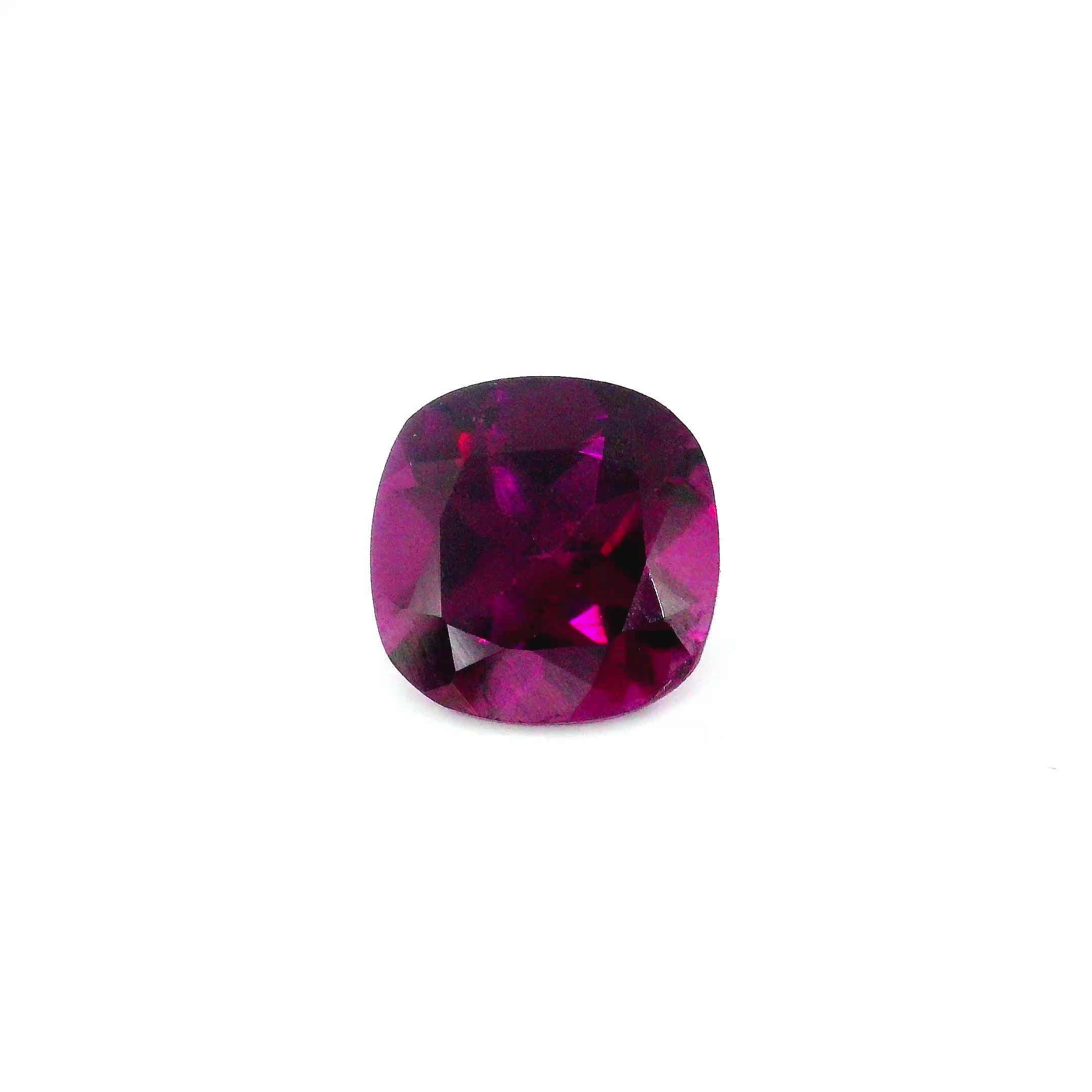
Red, raspberry and purple
Pyrope and almandine contribute to many red garnets, often in mixed compositions. Rhodolite is a familiar trade name for attractive pinkish-to-purplish red garnet, commonly associated with pyrope-almandine compositions.
Do not assume every red garnet will become brown or black indoors. Ask to see the actual stone under both daylight and ordinary room lighting. Prefer the balance of hue, brightness and contrast that she enjoys.
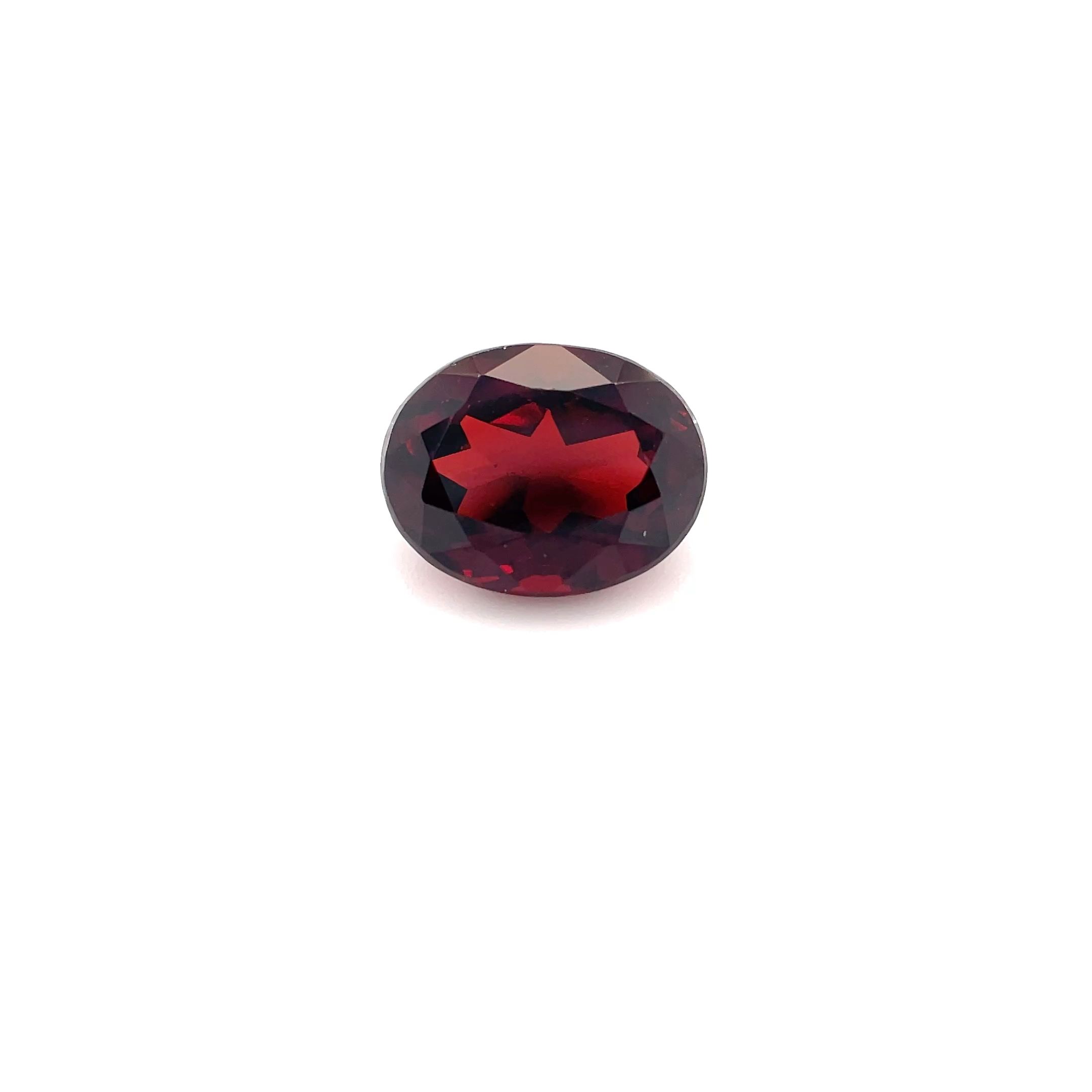
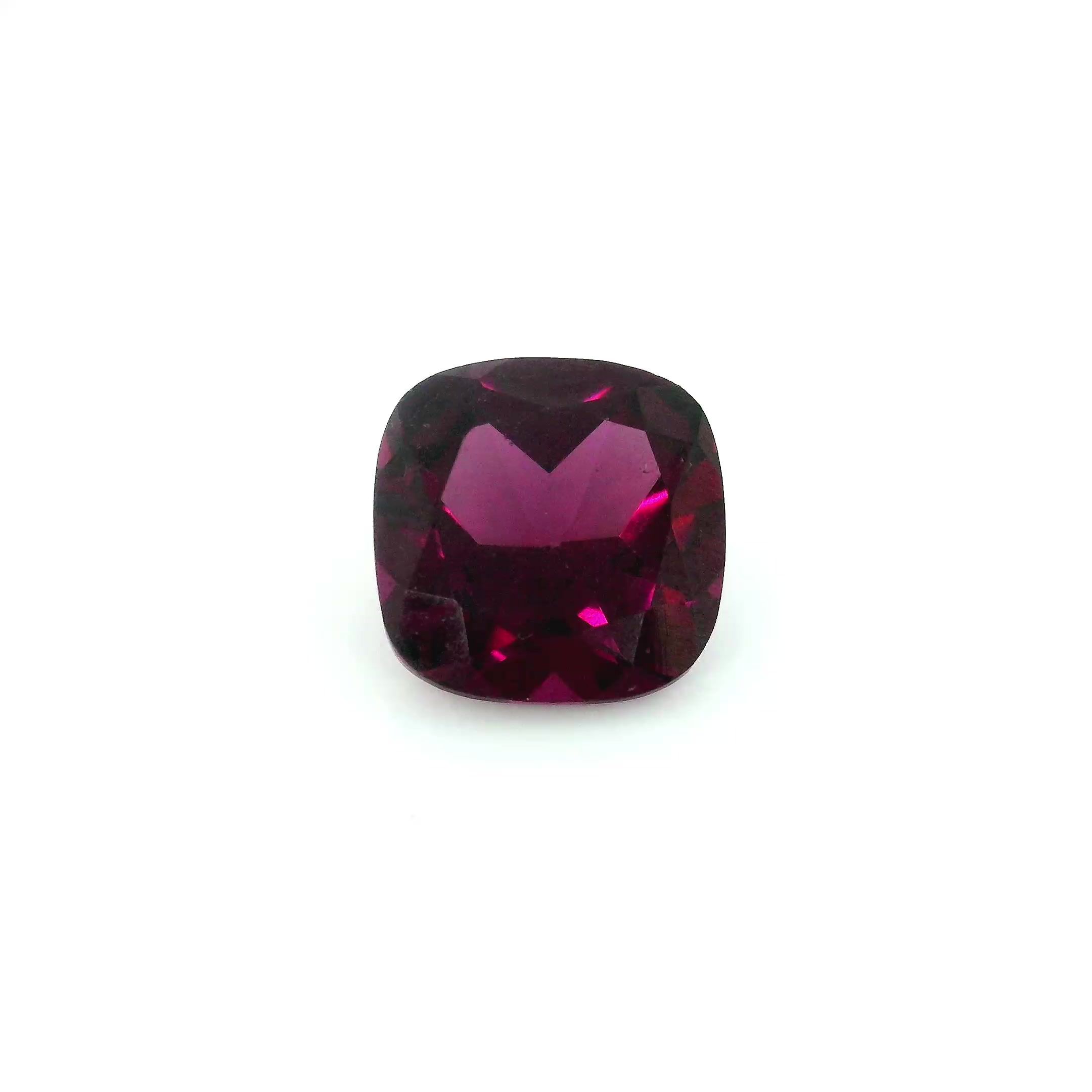
Actual catalog photographs of different stones, generally 1–3 ct. Lighting and scale vary; these are examples, not calibrated color comparisons. Follow a photograph for current availability and the supplier’s details.
Orange and warm colors
Spessartine is associated with orange to reddish-orange colors. “Mandarin” is a trade description often used for vivid orange examples; ask what the seller means by it. Hessonite, a grossular variety, commonly shows orange, yellowish-orange or brownish tones and a different visual character.
A beautiful orange does not identify the species. Transparency, visible inclusions, cutting and treatment disclosure still matter. Compare a bright small stone with a larger darker one before deciding that weight is the priority.
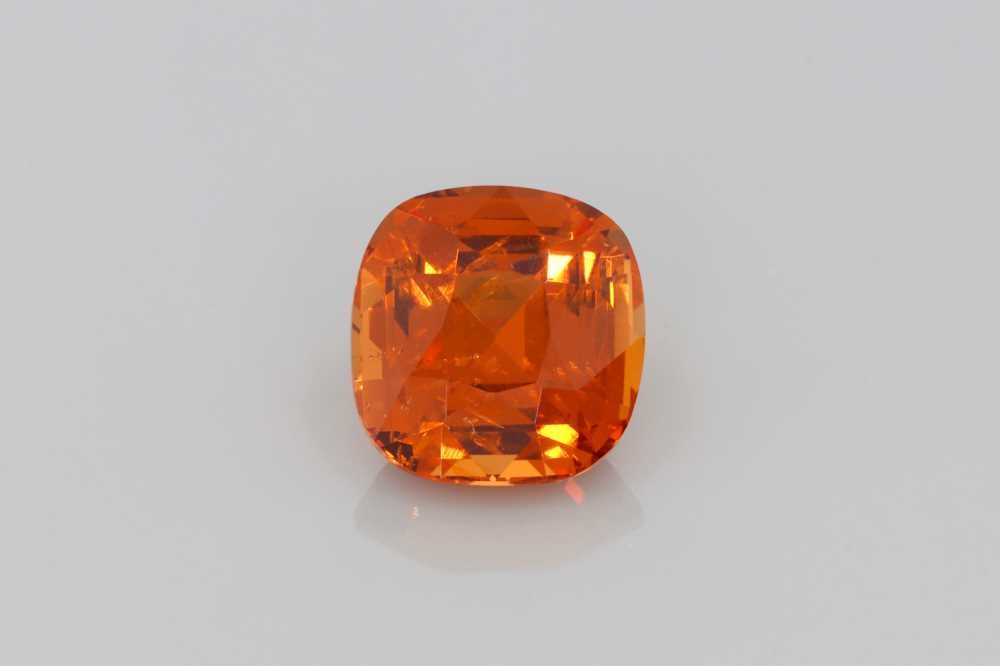
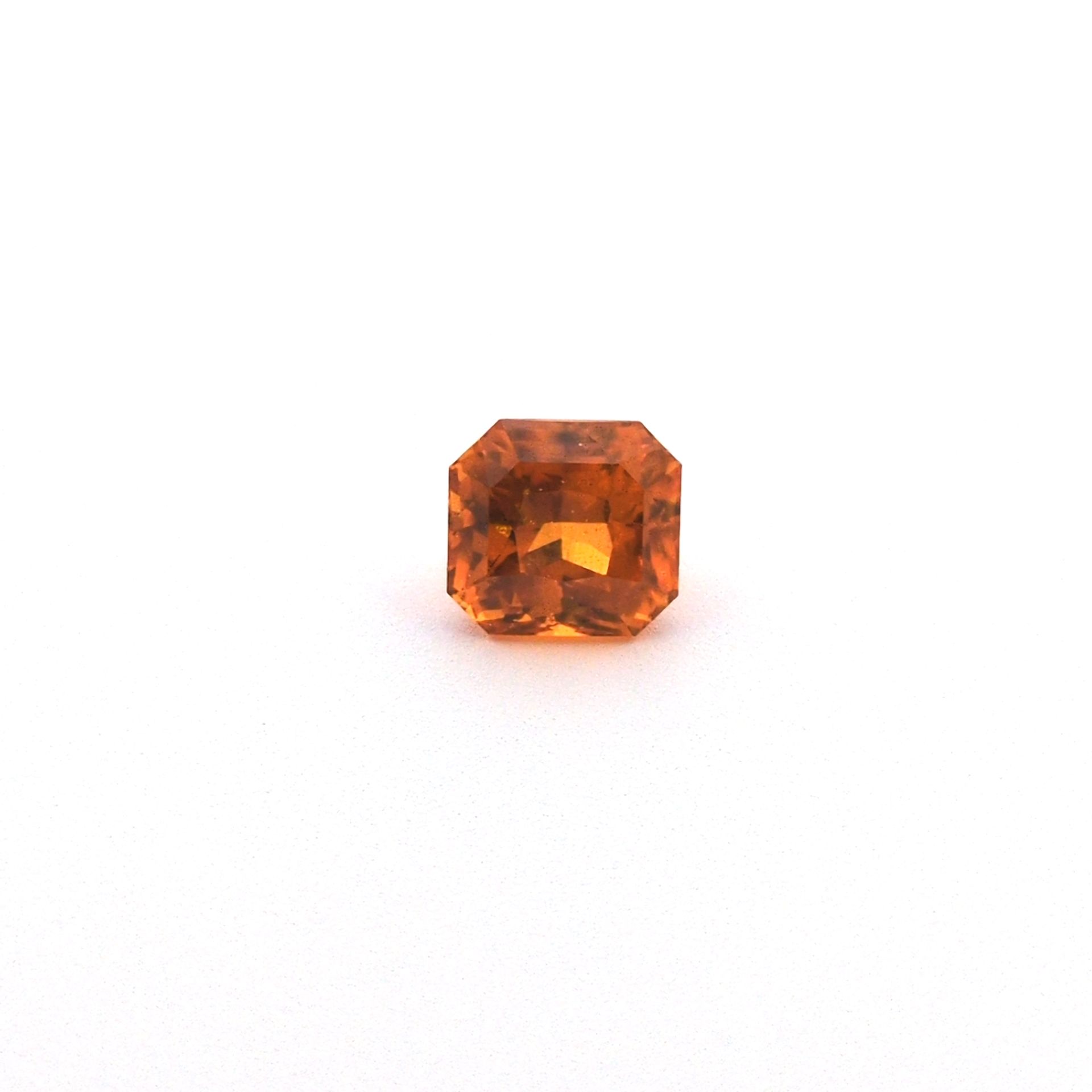
Actual catalog photographs of different stones, generally 1–3 ct. Lighting and scale vary; these are examples, not calibrated color comparisons. Follow a photograph for current availability and the supplier’s details.
Green: tsavorite and demantoid
Tsavorite is green grossular garnet. Demantoid is green andradite garnet and can show strong dispersion, sometimes with characteristic horsetail inclusions. These are different varieties with different properties and value considerations.
A horsetail can be an appealing feature, but it is not present in every demantoid and a photograph alone does not identify origin. Demantoid’s lower hardness within the garnet family deserves particular attention in a ring.


Actual catalog photographs of different stones, generally 1–3 ct. Lighting and scale vary; these are examples, not calibrated color comparisons. Follow a photograph for current availability and the supplier’s details.
Hue, tone and saturation work together
Hue describes the color and modifiers; tone describes lightness or darkness; saturation describes strength of color. A richly colored gem can become too dark to show its best character in indoor light. A pale gem can be attractive without having the strongest saturation.
Judge the actual gem at hand distance. Supplier photographs show different stones with different lighting, so use them to choose a direction, then compare shortlisted candidates under consistent conditions.
Color-change garnet and unusual effects
Some garnets change their apparent color under different light sources. Assess both appearances and the strength of the change using a continuous video with the lighting identified. This is different from fixed color zoning or changing reflections as the gem turns.
Star garnet and other included material may be cut as cabochons for an optical effect. Choose those for the effect and body appearance rather than expecting the sparkle of a clean faceted garnet.
03 / Light, cutting & visible size
Light, cutting & visible size.
A lively center matters more than a shape label
A window can reveal the background through the center when light escapes through the pavilion. Persistent dark areas can hide color. Normal contrast moves as the gem moves; a large region that stays empty or dark may be distracting.
There is no universal ideal depth percentage across all garnet varieties and shapes. Compare cut, transparency, color and dimensions together. Brilliant-style facets emphasize smaller flashes; step cuts emphasize broad reflections and a clearer view inside.
Carat is weight, not size
One carat equals 0.2 grams. Garnet varieties differ in density, and proportions vary, so equal weights do not guarantee equal face-up dimensions. A deep stone may carry substantial weight beneath the visible surface.
Request length, width and depth in millimeters, plus a realistic scale reference. Check how corners and points will be protected and whether the profile works with her wedding band. Avoid direct size promises from a diamond carat chart.
01 / Same light
Rotate the actual stone gently. Notice changing reflections and, for suitable materials, directional color.
02 / Same stone
Keep the stone and background consistent. Change from indirect daylight to ordinary room light.
03 / Real scale
Look at hand distance and over skin. Keep camera exposure steady and avoid filters.
A comparison method, not a prediction that every stone changes color in the same way.
04 / Inclusions & transparency
Inclusions & transparency.
Expectations depend on the variety
Some red and green garnets can appear very clean; visible inclusions are more common in certain other types. Fine spessartine or hessonite may be appreciated with features that would be distracting in another material.
Inspect beauty at normal viewing distance and condition under magnification. Ask whether a feature is a crystal, cloud, healed fracture, cavity or surface-reaching break. A closed internal inclusion and an edge-reaching fracture can have very different implications.
Character should not hide damage
A trade story about an interesting inclusion does not make a chip or vulnerable fracture desirable. Have the setting jeweler examine exposed points, the girdle and any suspected weak area before committing.
Ask for moving, front, back and side views. Eye-clean is a viewing description, not a laboratory clarity grade or proof of a structurally sound stone. The report and the physical inspection answer different questions.
05 / Treatments, origins & evidence
Treatments, origins & evidence.
Know what is—and is not—being promised
Garnet is often sold without treatment, but ask rather than assume. Treatments are uncommon overall; specific material and any filling or other disclosed enhancement can change care. A laboratory can investigate identity and detectable treatment within its service scope.
The report should identify the material clearly. It does not supply a universal beauty grade, set the selling price or promise a resale value. Match its measurements and identifying details to the offered stone.
Origin is one part of the story
Garnets are found in many regions. East Africa is associated with fine tsavorite and spessartine, while other varieties come from countries including Namibia, Madagascar, Sri Lanka, India and Russia. These examples are not an exhaustive source list.
A country name does not guarantee one hue or quality. If a specific origin premium matters, ask what evidence supports it and whether the laboratory provides that determination for the material. Geographic origin and supply-chain documentation are separate questions.
06 / Durability, setting & care
Durability, setting & care.
The family does not share one hardness number
Garnet ranges roughly from Mohs 6.5 to 7.5 depending on the variety. Toughness is generally fair to good, but actual condition, exposed edges and treatment matter. A high hardness number alone does not make a gemstone immune to impact.
Some garnets can work well in rings with careful wearing habits and suitable protection. Demantoid and especially vulnerable stones need a more cautious plan. Remove the ring for rough work, gym activities and substantial pressure.
Protect the color—and the complete ring
A lower profile, supported edges and protected points can reduce exposure. Compare metal colors beside the actual garnet, and consider the care needs of every accent stone. A tougher center does not protect delicate companions.
Warm mildly soapy water is a sensible starting point for an untreated, sound garnet ring. Avoid steam; use ultrasonic cleaning only if a jeweler has checked the particular stone, inclusions and setting. Store separately and arrange periodic setting checks.
Read the hardness scale correctly.
- Diamond
- Corundum (ruby and sapphire)
- Topaz
- Quartz
- Feldspar
- Apatite
- Fluorite
- Calcite
- Gypsum
- Talc
07 / Price, alternatives & a personal ring
Price, alternatives & a personal ring.
Compare value within the right category
An ordinary red garnet may offer an appealing price, while fine tsavorite, demantoid or an exceptional orange stone can be costly. “Garnet is cheap” is not a useful rule for the whole family.
Color, variety, size, clarity, cutting, condition and documentation all affect a specific offer. Compare current complete-ring quotations. Include the setting, accents, workmanship, reports, shipping, taxes and future service.
Garnet or ruby? Start with the tradeoffs
Ruby is red corundum and ranks Mohs 9. Red garnet belongs to a different mineral family and generally has lower scratch resistance. Ruby often carries a different rarity premium and treatment questions. Neither name guarantees a preferred red or beautiful cutting.
Compare actual stones in the same light and decide whether the color, budget and wearing plan fit. A garnet ring can be deeply personal without being presented as an identical substitute for ruby. Let the design follow the stone she loves.

Your custom ring
From what you know about her
to a finished ring.
Discovery & Design
The journey begins with understanding your vision and translating it into a unique ring design.
- Personal Consultation: We initiate a detailed conversation to capture the essence of your desired design.
- Design Inspiration: Presenting examples of previous works to showcase what's possible and inspire your selection.
- Sketching Ideas: Our designers sketch several versions of your ring, refining the concept to match your vision.

Gemstone & Metal Selection
Choosing the perfect materials to bring your custom ring to life.
- Choosing the Right Stone: We offer a serious selection process, explaining all gemstone options and providing educational materials.
- Trusted Vendors: We provide multiple options from our reliable vendors with whom we have longstanding relationships.
- Custom Cuts: If your vision includes a unique gemstone shape, we can custom-cut the stone for you.
3D Modeling & Approval
Visualizing your ring in precise detail before it comes to life.
- 3D Presentation: We create a 3D model of your ring, allowing you to visualize and turn it around, ensuring it matches your expectations.
- Design Finalization: We proceed only when you are completely satisfied with every detail of the design and model.


Craftsmanship & Creation
Bringing your ring to life with meticulous attention to detail and quality craftsmanship.
- Wax Modeling: Creating a wax model to capture the intricate details of your design before casting in metal.
- Expert Crafting: Our artisans craft your ring, focusing on alloy creation, meticulous polishing, and precise stone setting.
Delivery
The final step where your custom engagement ring is ready to be delivered and cherished.
- Complimentary Shipping: Your ring is shipped to you for free, anywhere in the world.
- Lifetime Warranty: All our rings come with a lifetime warranty, ensuring your peace of mind (with the exception of accidental damage).

09 / Questions before you choose
Questions before you choose.
Are all garnets red?
No. The family includes orange spessartine, green tsavorite and demantoid, raspberry and purple shades, and some color-change examples. Confirm the variety instead of judging every garnet by the price or appearance of ordinary red material.
Do all garnets have the same durability?
No. Mohs hardness varies roughly from 6.5 to 7.5; demantoid is softer than several other jewelry garnets. Condition, fractures, exposed points and any treatment also matter. Ask about the actual stone’s wearing and cleaning needs.
Is this guide about the actual stones for sale?
The photographs link to real examples, but availability and prices can change. Confirm the current listing, treatment disclosure, measurements and any report for the exact stone before ordering.
Can we choose the stone before finalizing the design?
Yes. We can compare candidates and develop the setting around the chosen stone’s outline, depth, condition and the wearer’s preferences. Bring a color, an idea or simply what you know about her.
What should the complete quotation include?
Identify the actual center stone and accents, metal, design work, relevant reports, known treatments, current price, taxes, shipping, approval stages and delivery. Confirm resizing, return, warranty and aftercare terms for the project.
Does a laboratory report guarantee beauty or future value?
No. It reports the findings within the laboratory’s service scope. Match it to the stone, then assess appearance, physical condition, price and the complete ring separately.
10 / Continue on the NinaVova blog
Continue on the NinaVova blog.
11 / About NinaVova
A name inspired by lasting love.

Guided by your story.
NinaVova is named after founder Sergey’s grandparents, Nina and Vladimir. Their enduring love inspires the rings we create.
Our design, production and client-guidance team helps turn your ideas into a personal ring, from the first conversation to the finished piece.
Meet NinaVova ↗Image credits & gemological references
Real gemstone and jewelry photographs are identified in captions and link to NinaVova examples where available. Illustrations are educational concepts, not identity tests, controlled color grades or promises of an individual stone’s appearance. Catalog availability can change.
Your story starts the design
Let’s create the ring
that feels like her.
Bring a favorite color, a ring idea or simply what you know about her. We’ll help you understand the options and create the ring together.
Talk with Sergey →Explore garnet options ↗