


Green Sapphire Engagement Ring Buying Guide — NinaVova Education
NinaVova · Learn before you choose
The green sapphire
engagement
ring guide.
Find the green she loves—from soft yellow-green to rich teal—and understand color, treatment, reports and everyday wear.

In this guide Choose a chapter
01 / Start here
Start here.
A green sapphire begins with her.
Start with the color, style and life of the person who will wear it.
01 / HER COLOR
Does she love leafy green, blue-green or something softer?
02 / THE ACTUAL GEM
See it in daylight, shade and ordinary room light.
03 / THE DETAILS
Check dimensions, treatment, condition and the report.
04 / THE WHOLE RING
Discuss the setting, complete price and service terms.
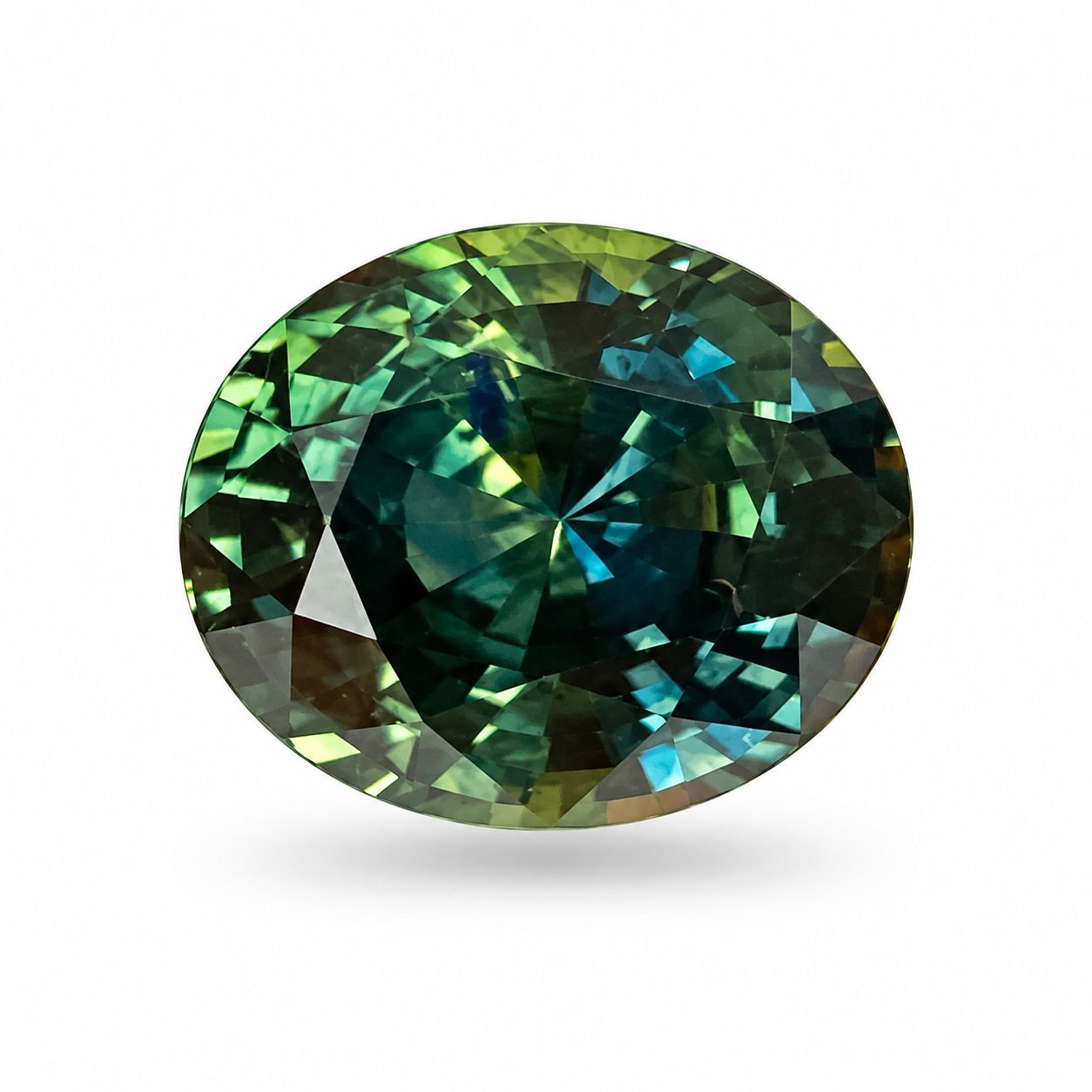
Real natural sapphire from the NinaVova catalog.
There is no salary rule to follow. Consider the center stone, setting, accents, design, taxes and agreed services together. Decide which qualities matter most before comparing options.

Choose the green she would wear.
There is no single “correct” green sapphire.
HER JEWELRY
Notice the shapes, metals and colors she already loves.
HER LIFESTYLE
Think about setting height, comfort and activities.
YOUR STORY
Gather a few ideas, photographs or meaningful details.
You do not need to find the perfect sapphire on your own before contacting a jeweler.
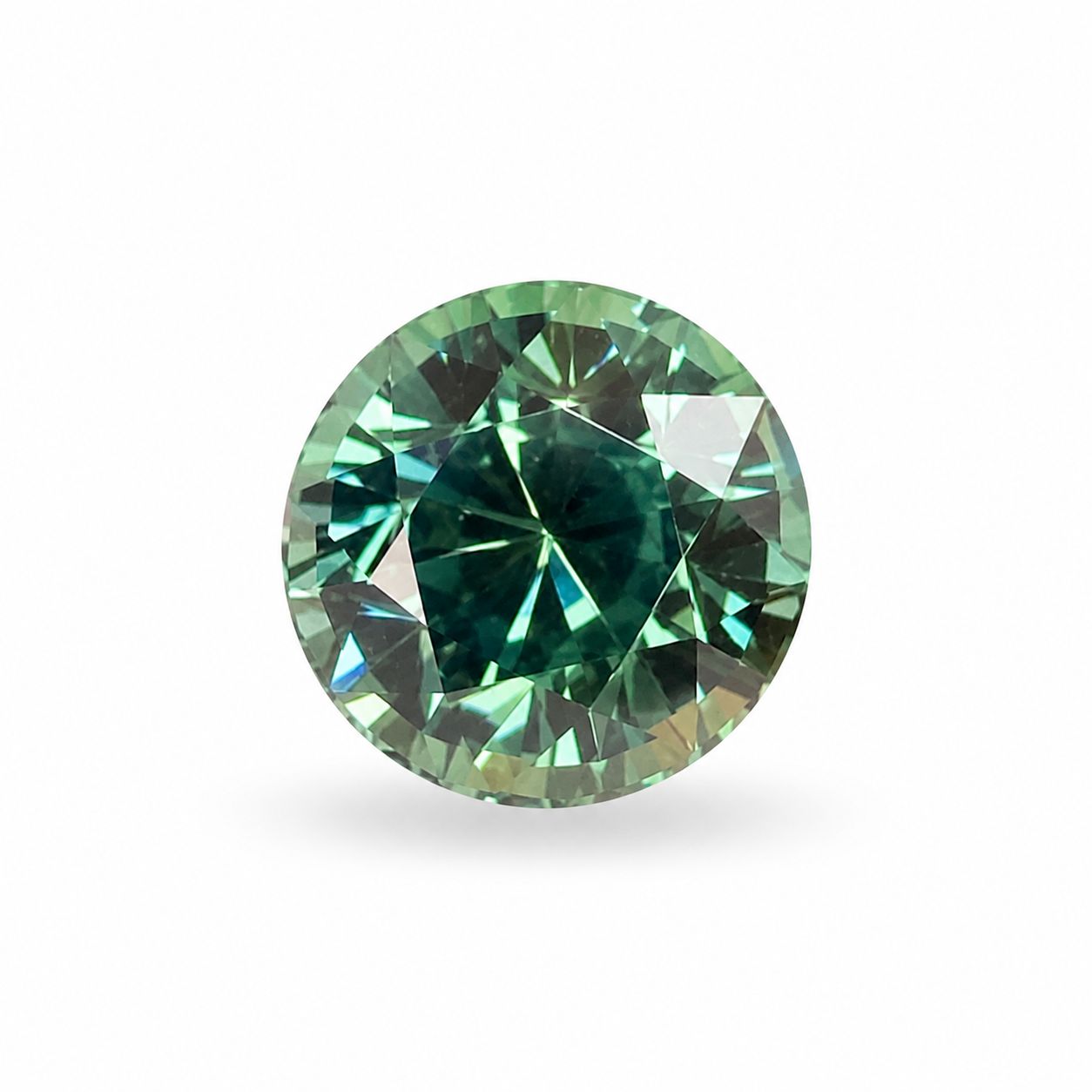
Real natural catalog sapphire.
Natural, lab grown or imitation?
Ask about both the material and how it was made or treated.
NATURAL
Sapphire formed by nature. Natural does not necessarily mean untreated.
LAB GROWN
Sapphire grown by people. Its laboratory-grown origin must be disclosed.
IMITATION
Another material made to resemble sapphire, such as glass.
Conceptual illustrations, not identification tests. A picture cannot establish material, origin or treatment.
Laboratory-grown sapphire is chemically corundum; an imitation may be glass or another material. Treatments are a separate question: a natural sapphire can be heated.
Concept illustrations, not photographs or identification tests. Request the identity and any treatments in writing.
02 / Green, hue, tone & saturation
Green, hue, tone & saturation.
Discover green sapphire.
Green corundum ranges from yellow-green to blue-green and teal.
Green sapphire is a variety of corundum, the same mineral family as blue sapphire and ruby. Its individual color can be subtle, lively, deep or mixed.
The next sections explain hue, tone and saturation through paired illustrations and real sapphire photographs.
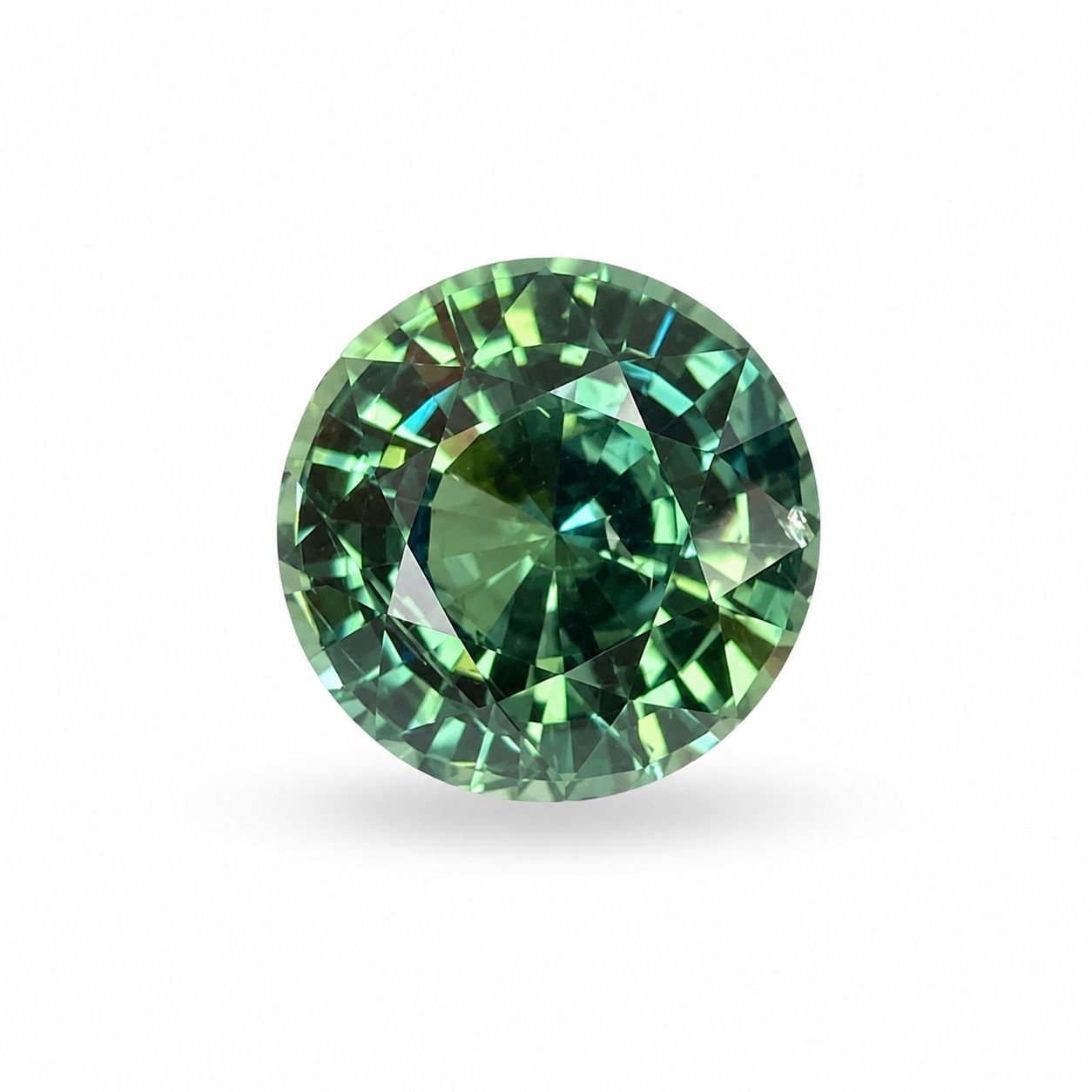
Real natural catalog sapphires photographed separately. Select a stone to see its listing; color varies with lighting and screens.

Three ways to describe green.
Use these terms together when comparing sapphires.
Hue
The direction of green: yellowish, green or bluish.
Tone
How light or dark the stone looks.
Saturation
How strong or muted the color appears.
A sapphire may have the hue she loves but look too dark or too gray for her taste. Compare real stones in the same lighting before deciding.
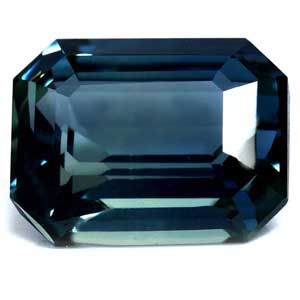
Hue: the direction of green.
A green sapphire may lean yellow, green or blue-green.
Hue names help describe the direction of color. Green and teal labels are trade descriptions, and individual stones can sit between them.
Yellow-green
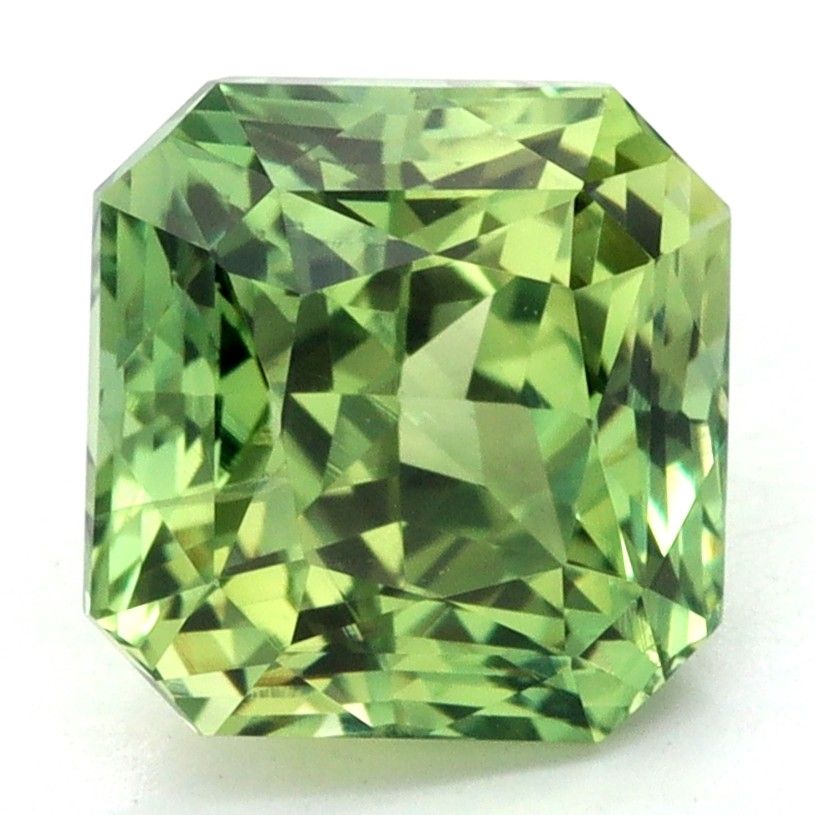 2.21 ct Green Sapphire ↗
Real gemstone photograph
Green
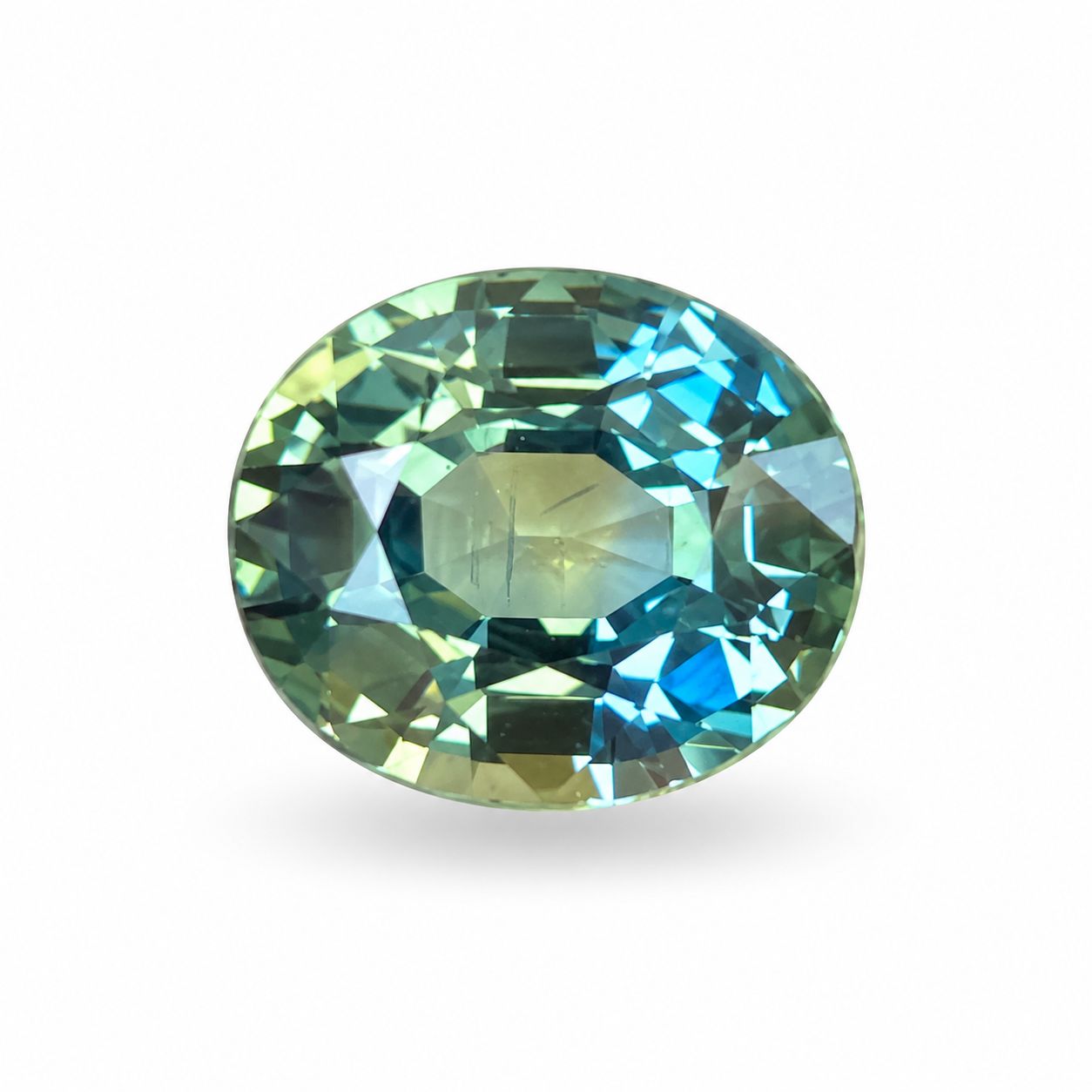 2.34 ct Green Sapphire ↗
Real gemstone photograph
Blue-green
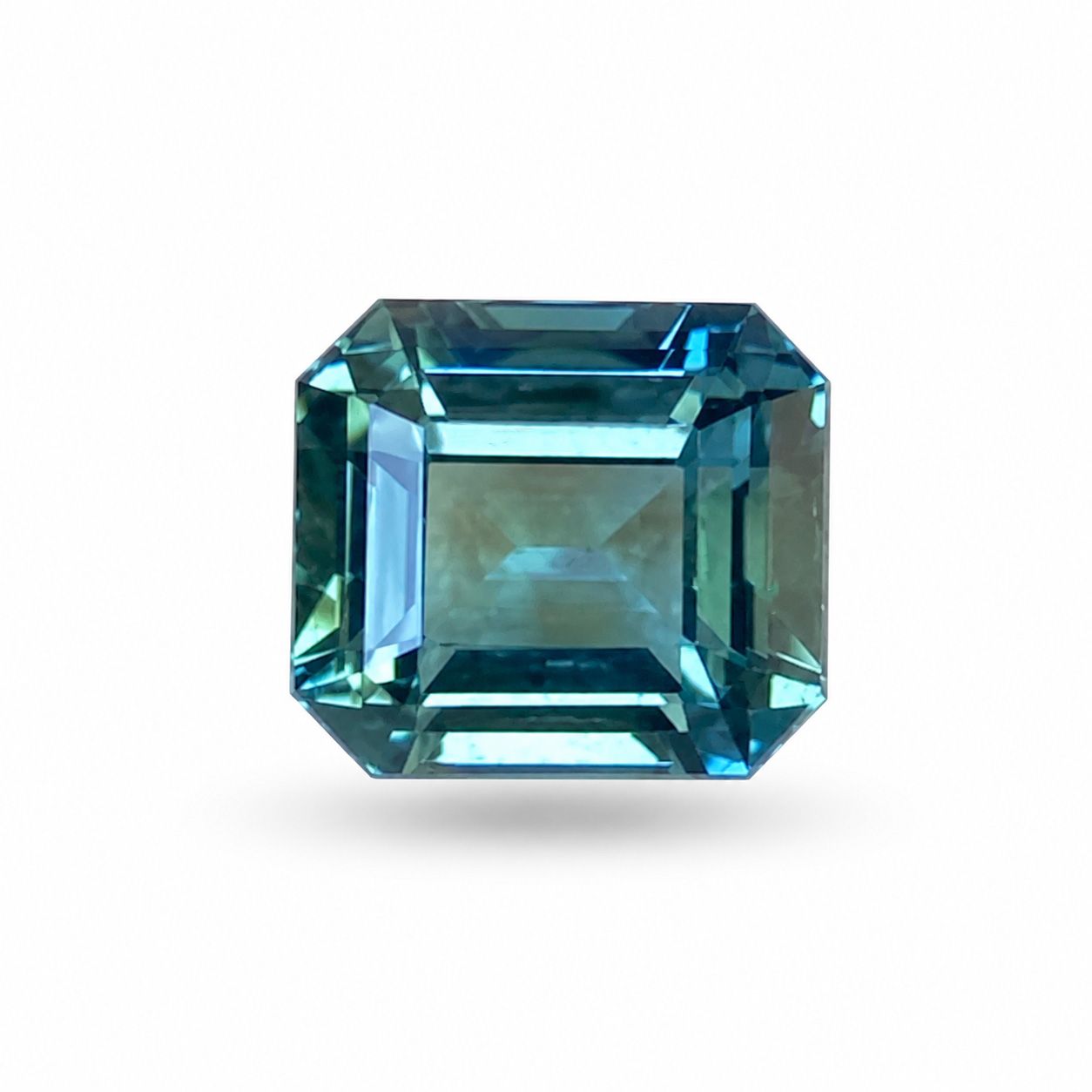 2.37 ct Green Sapphire ↗
Real gemstone photograph
Illustrations explain the color concept. The real stones were photographed separately, so they are examples—not calibrated color grades or a controlled comparison.
Tone: light or dark.
A gem’s tone can change how lively it appears indoors.
Lighter greens can feel airy; deeper stones can look rich but may lose brightness in a room. Ask for an unfiltered video in multiple environments.
Light
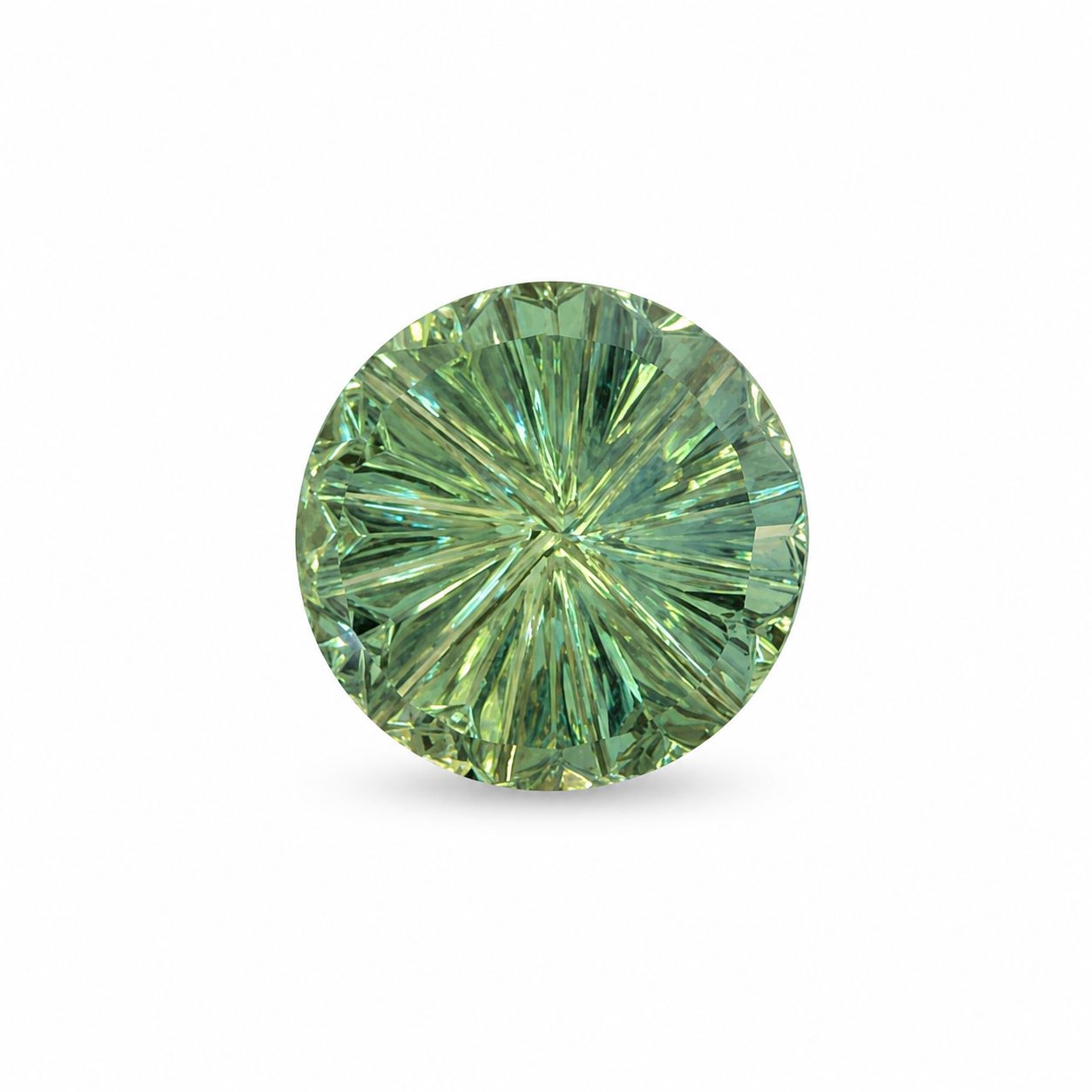 1.91 ct Green Sapphire ↗
Real gemstone photograph
Medium
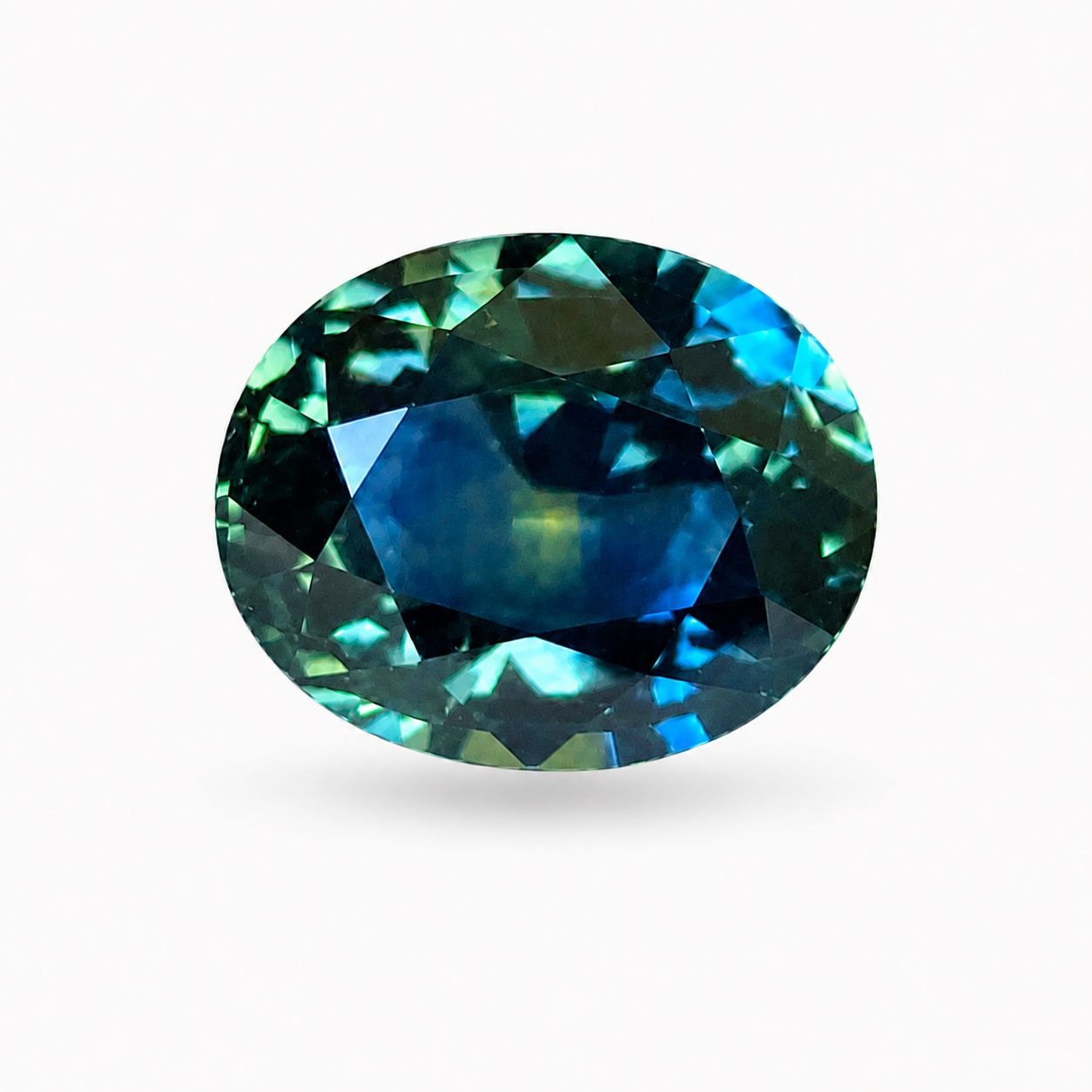 2.22 ct Green Sapphire ↗
Real gemstone photograph
Dark
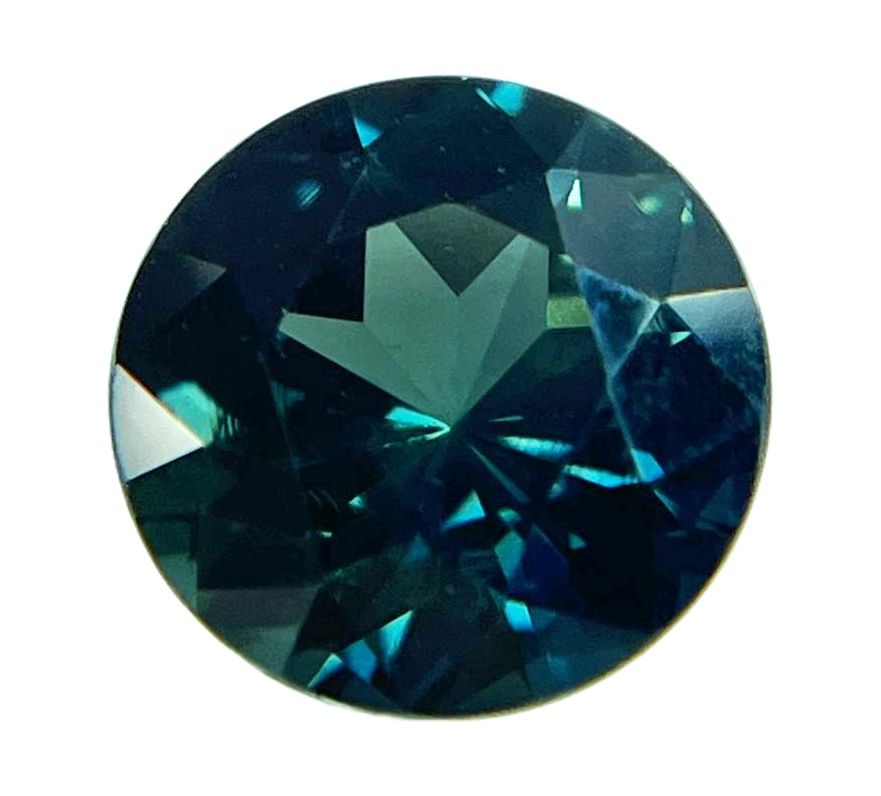 2.38 ct Green Sapphire ↗
Real gemstone photograph
Illustrations explain the color concept. The real stones were photographed separately, so they are examples—not calibrated color grades or a controlled comparison.
Saturation: muted or vivid.
Saturation describes the strength of the color.
A muted green can have a soft gray quality; a vivid green feels stronger. Tone and lighting also change the impression.
Muted
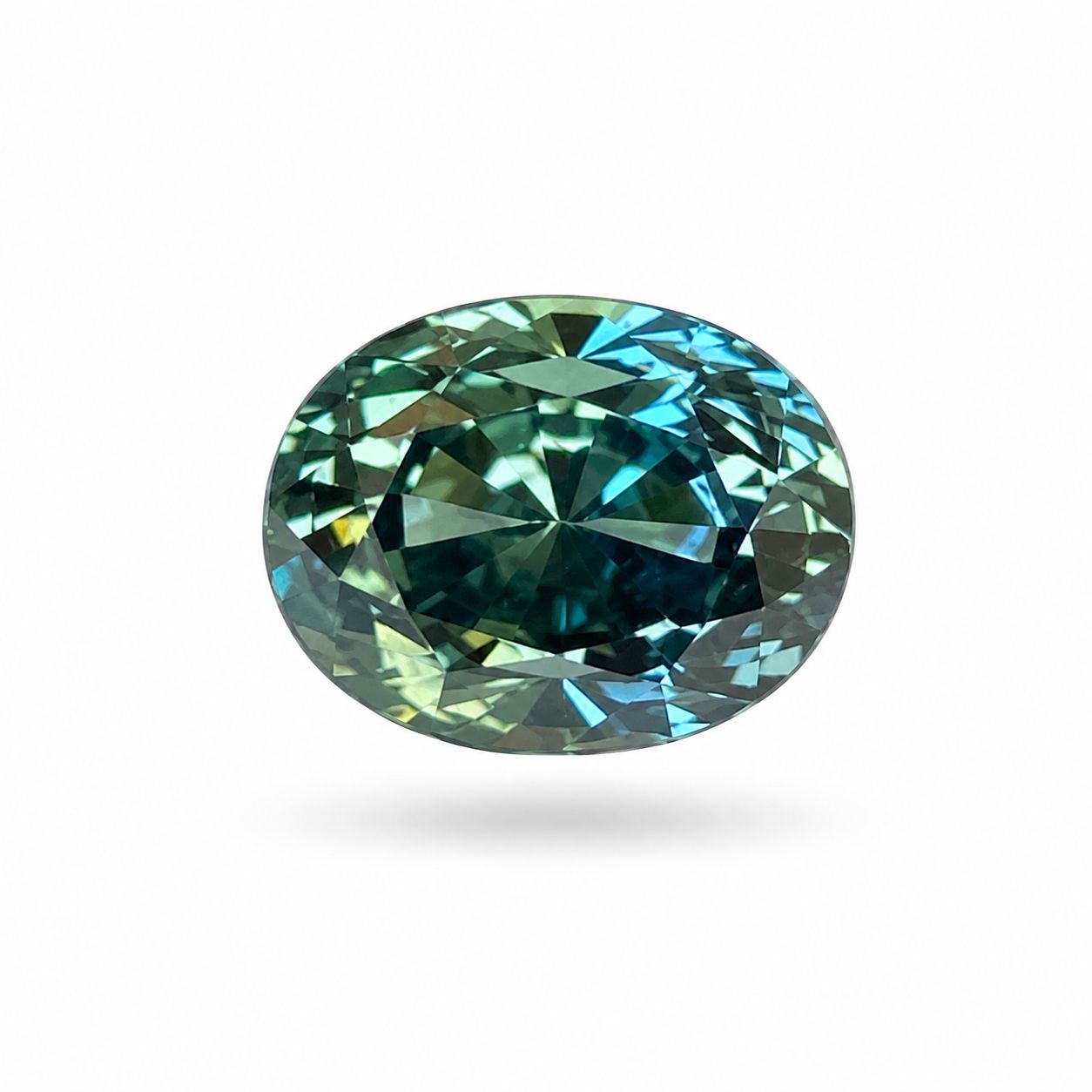 2.26 ct Green Sapphire ↗
Real gemstone photograph
Moderate
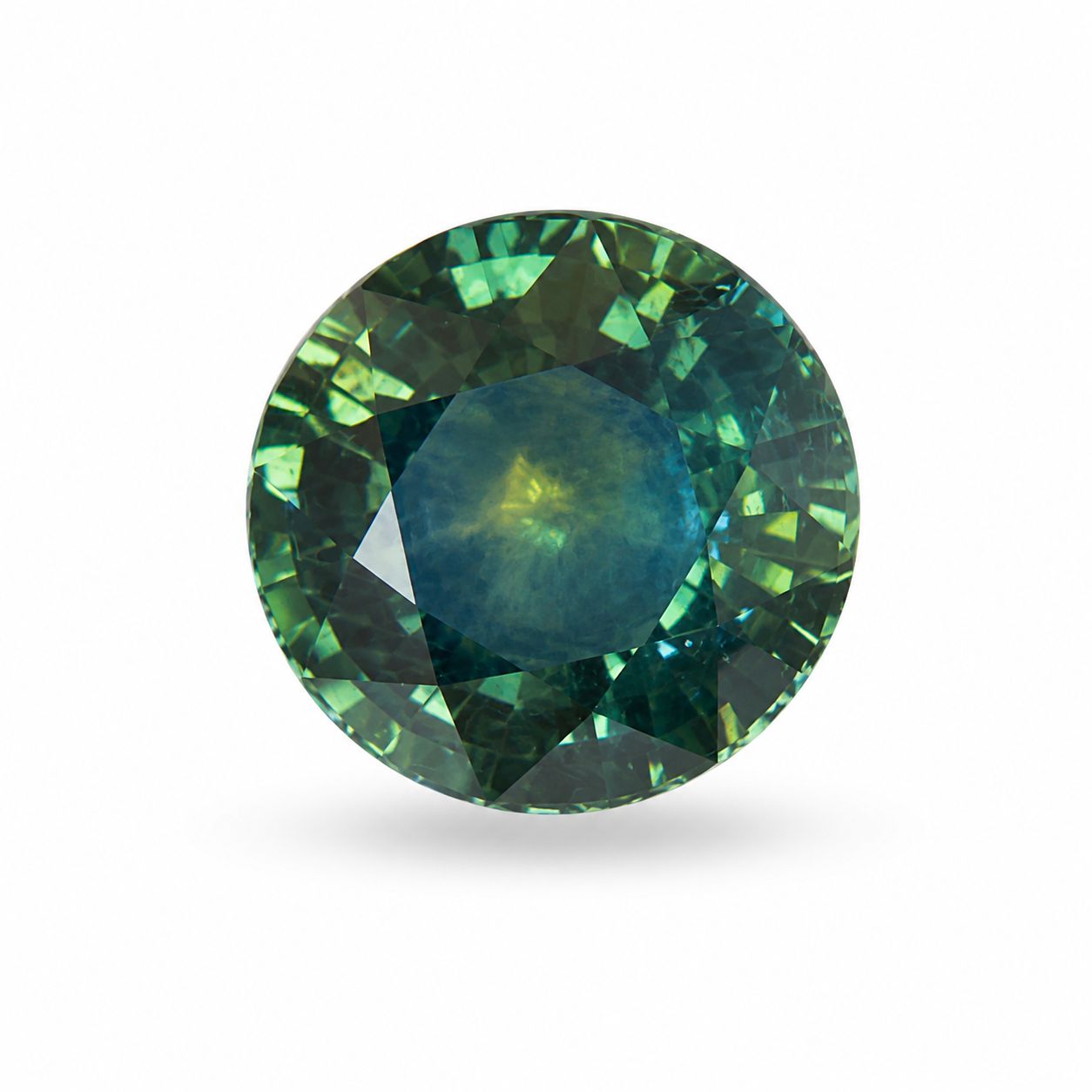 2.42 ct Green Sapphire ↗
Real gemstone photograph
Vivid
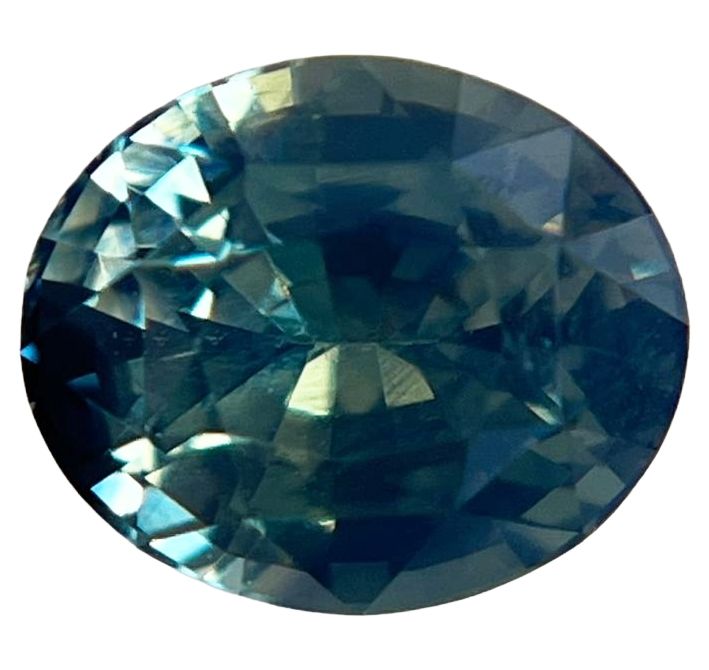 2.62 ct Green Sapphire ↗
Real gemstone photograph
Illustrations explain the color concept. The real stones were photographed separately, so they are examples—not calibrated color grades or a controlled comparison.
Green or teal?
Choose the appearance she enjoys rather than relying only on a seller’s label.
Green can lean yellow or blue. Teal generally suggests a blue-green mixture, but trade terms are not uniformly defined. Compare the specific stones.

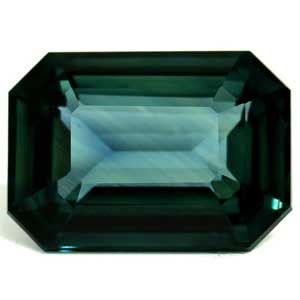
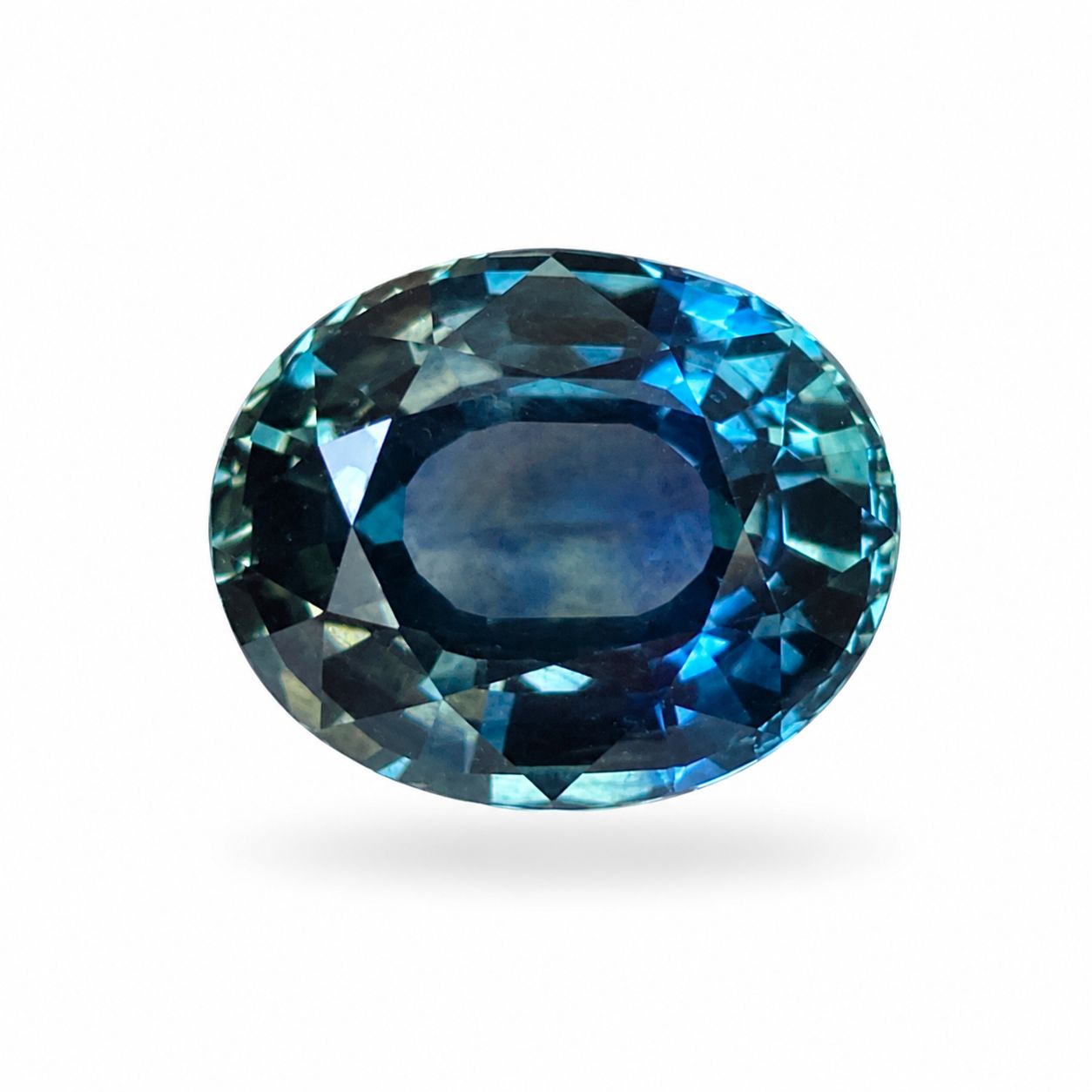
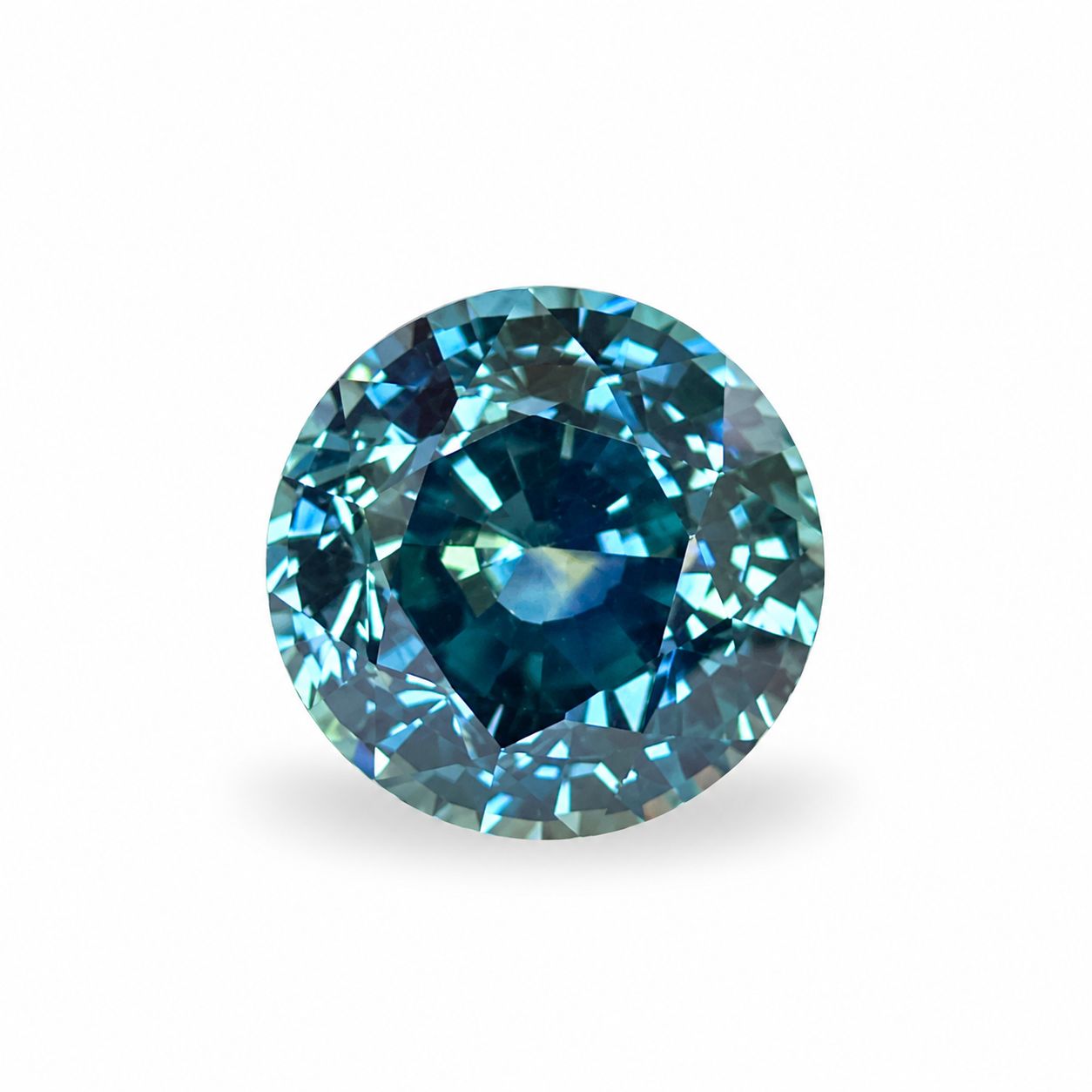
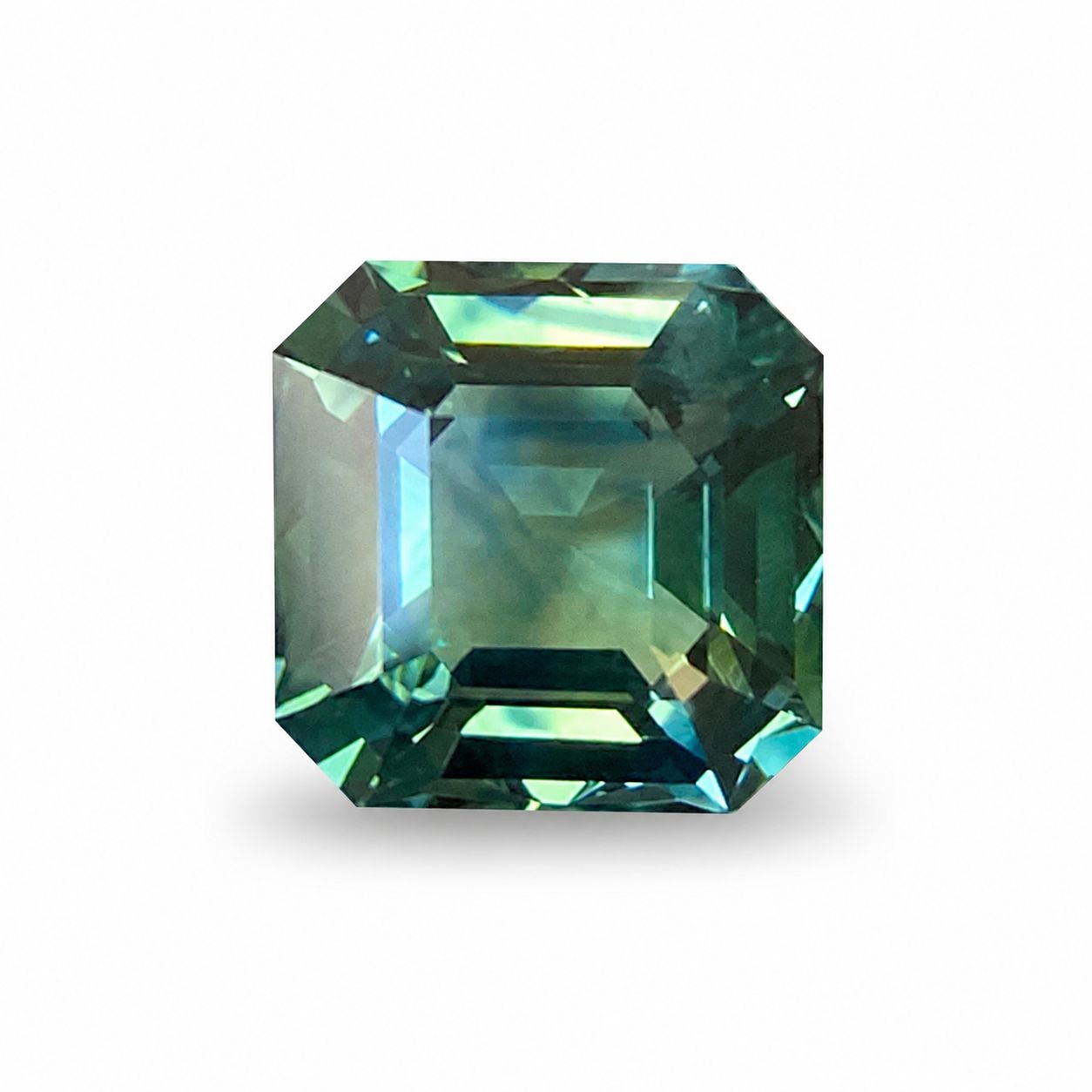
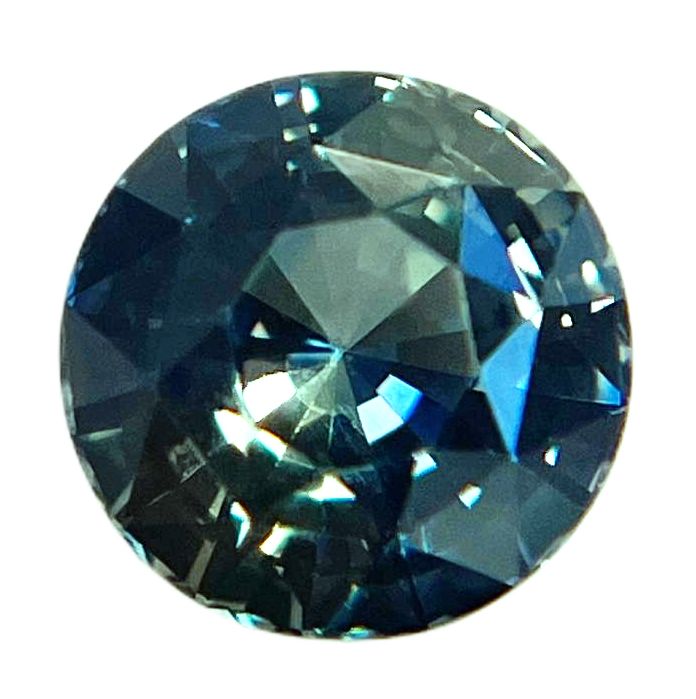
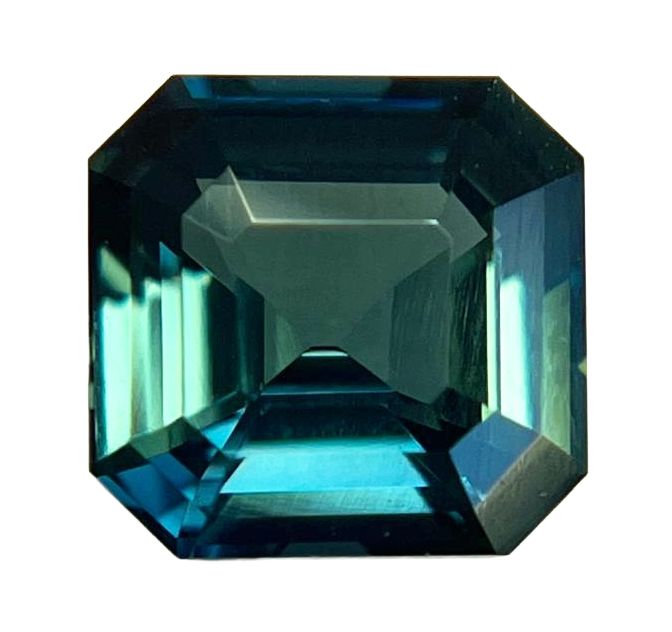
Explore the green spectrum.
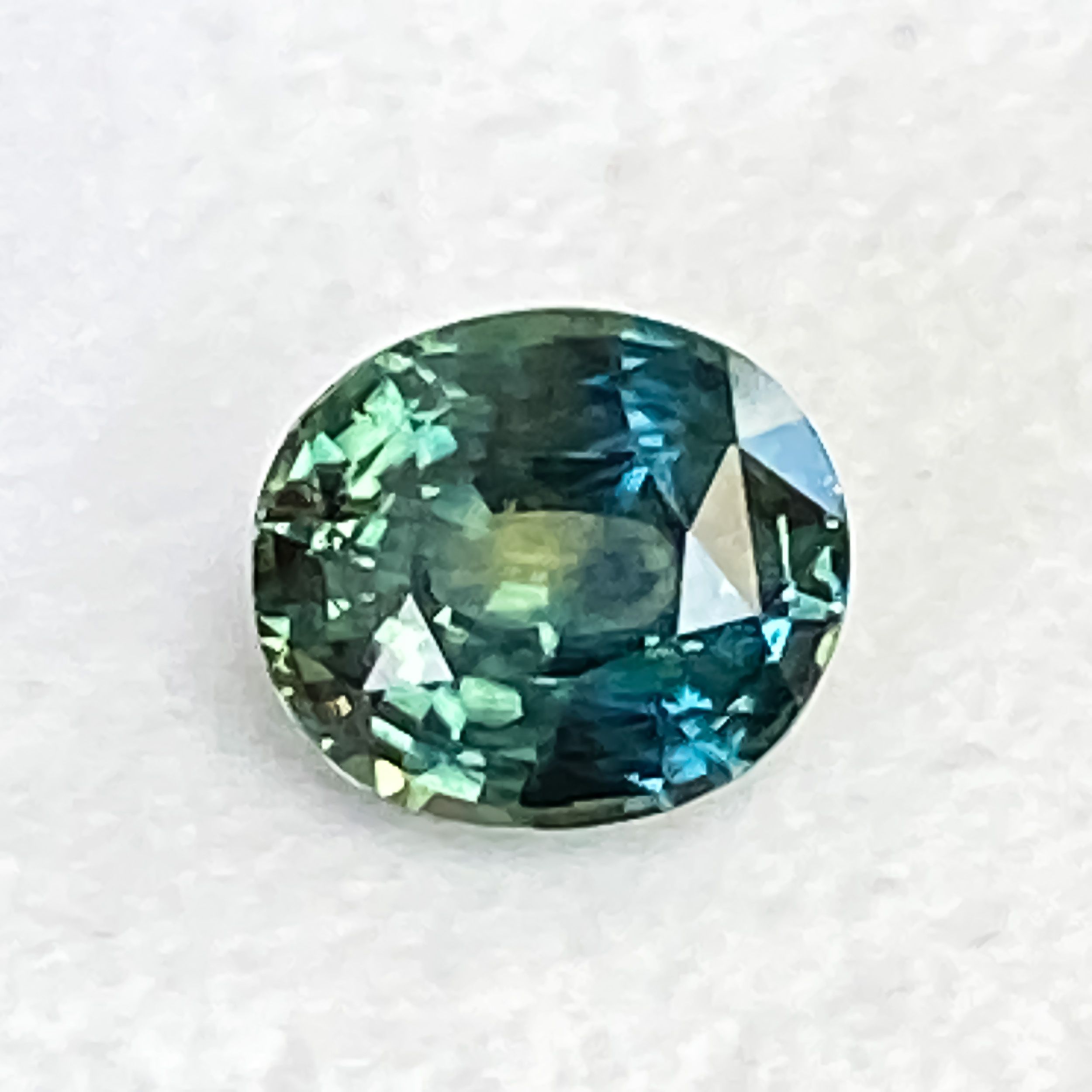
Every photograph is a different natural catalog sapphire.
Compare the stone face-up and in motion. Similar written color descriptions can conceal quite different appearances.
Catalog availability changes. Images use different lighting; select a stone to view its listing.
03 / Montana & bi-color
Montana & bi-color.
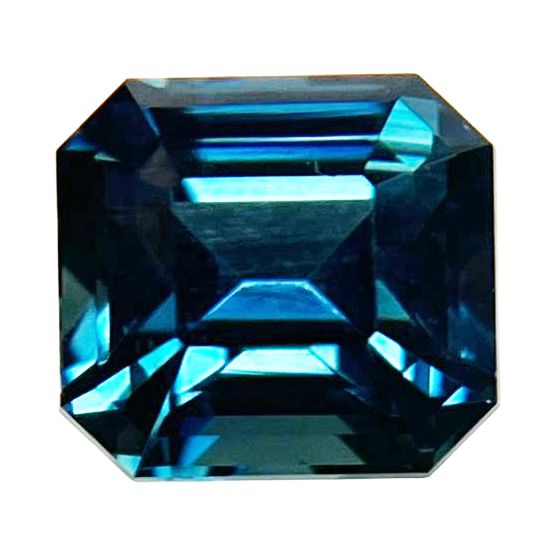
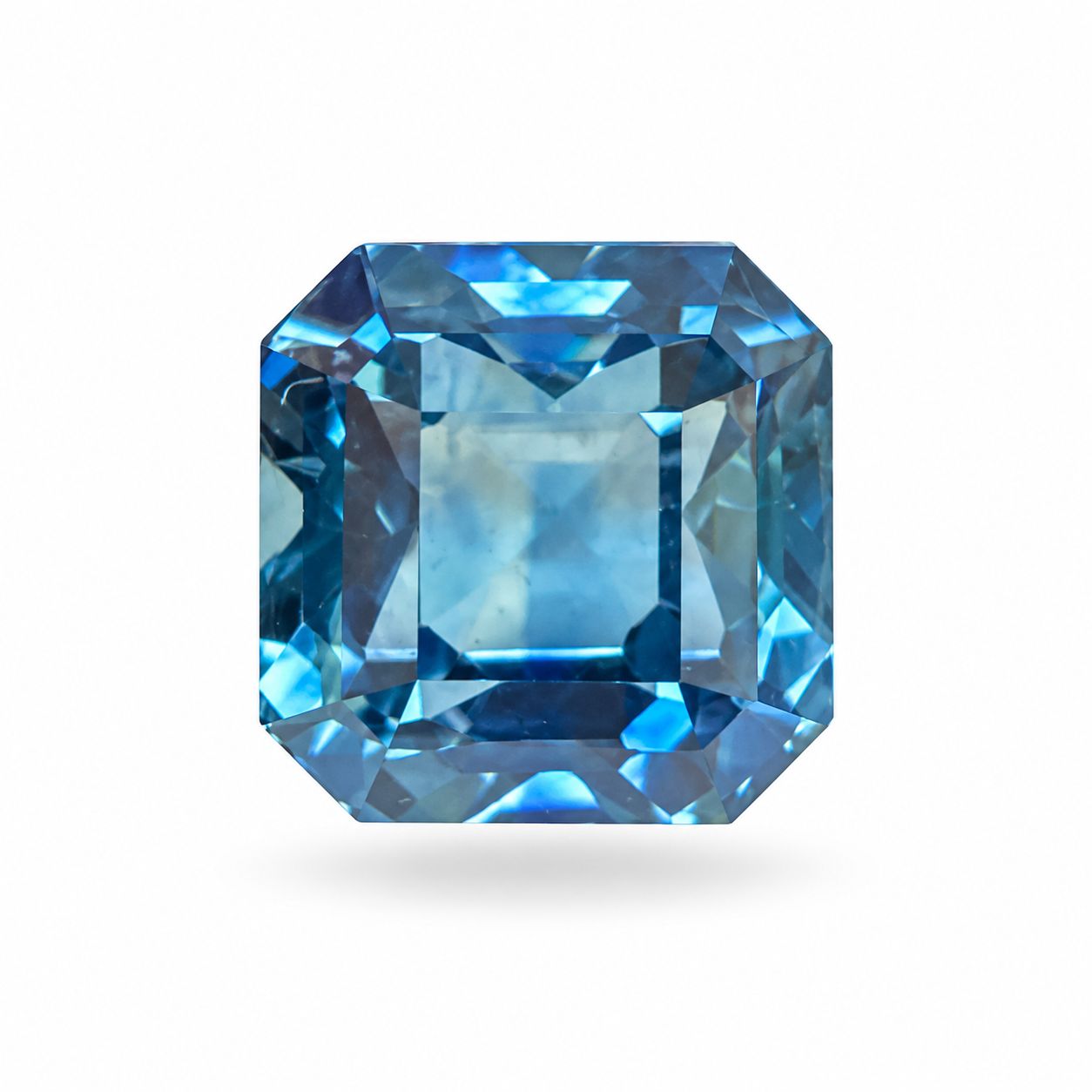
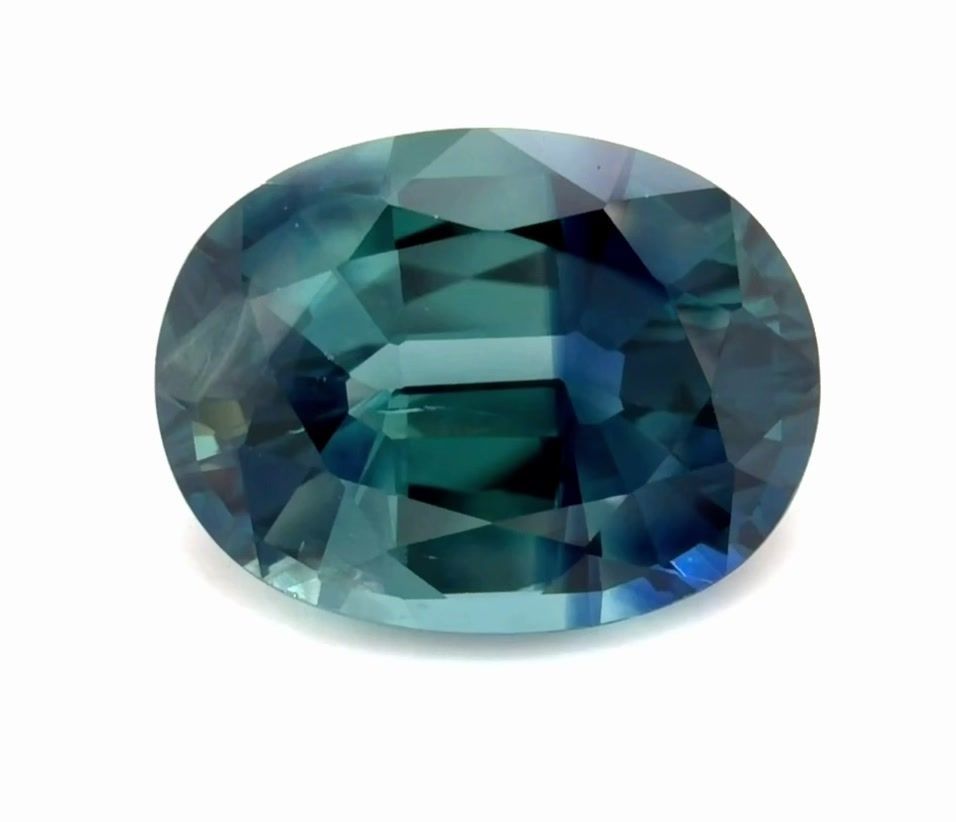
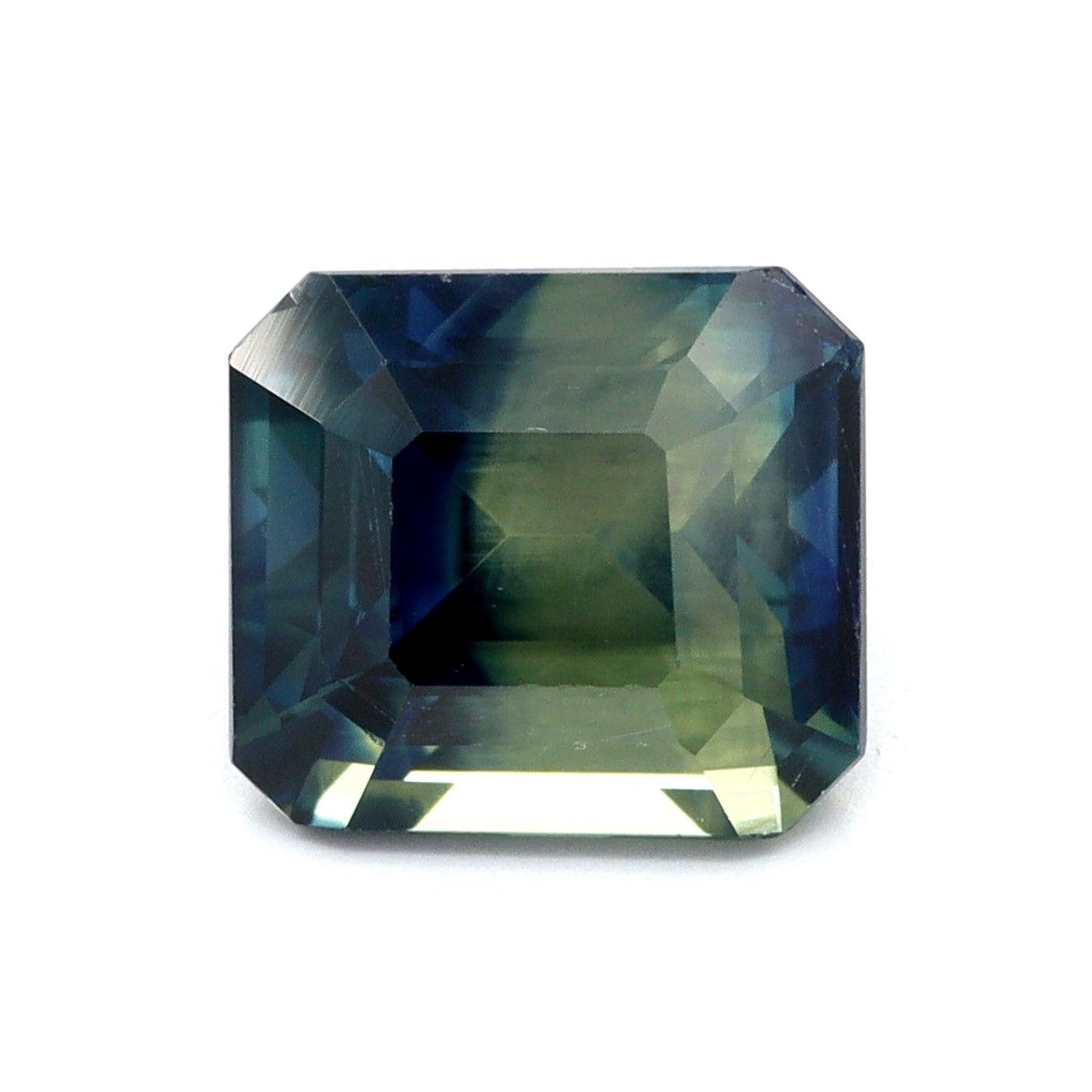
Montana green and blue-green.
The United States produces sapphires in a wide variety of colors.
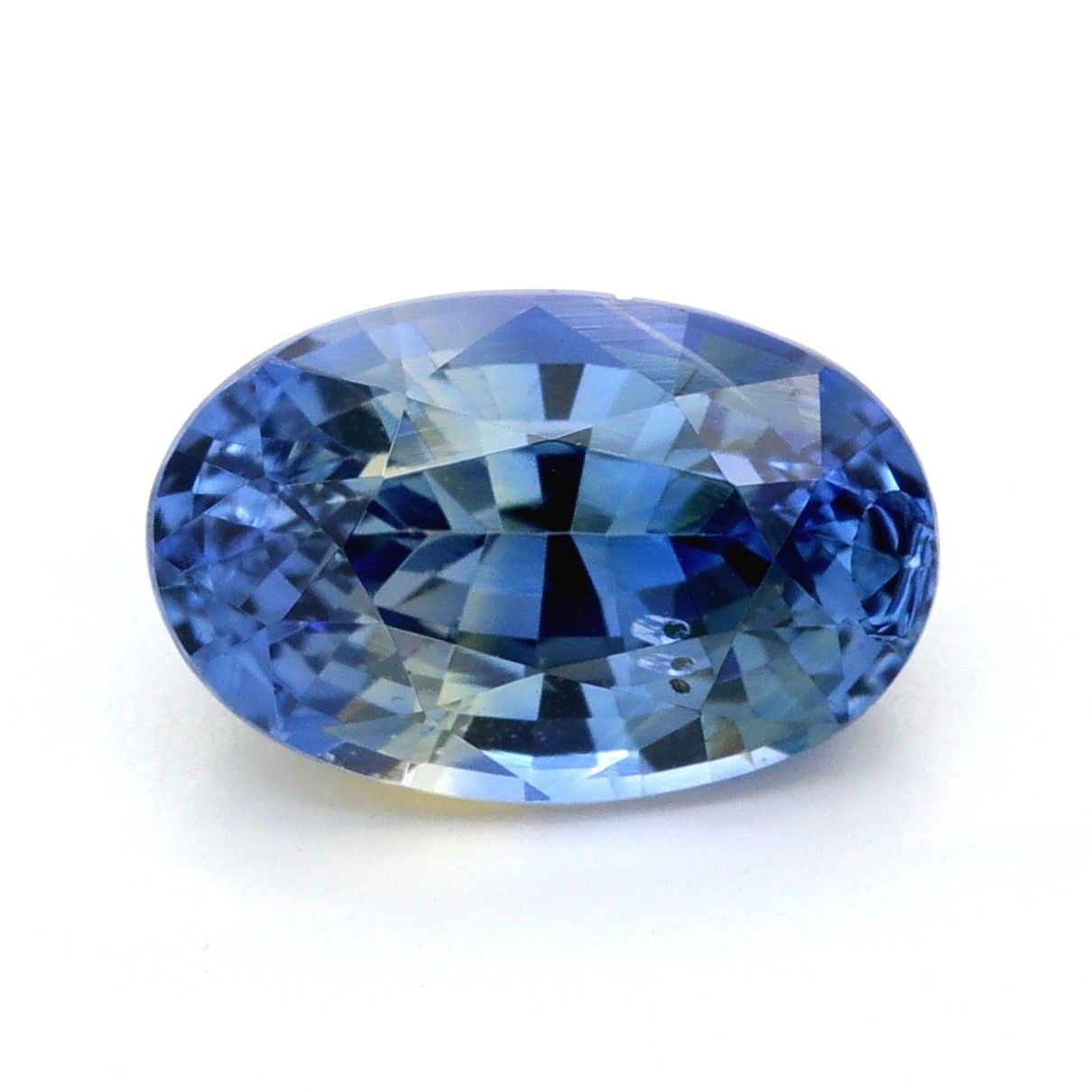
Montana has several deposits. Yogo is known for blue; alluvial deposits can yield green, teal and other colors.
The catalog identifies these examples by country; ask for mine documentation.
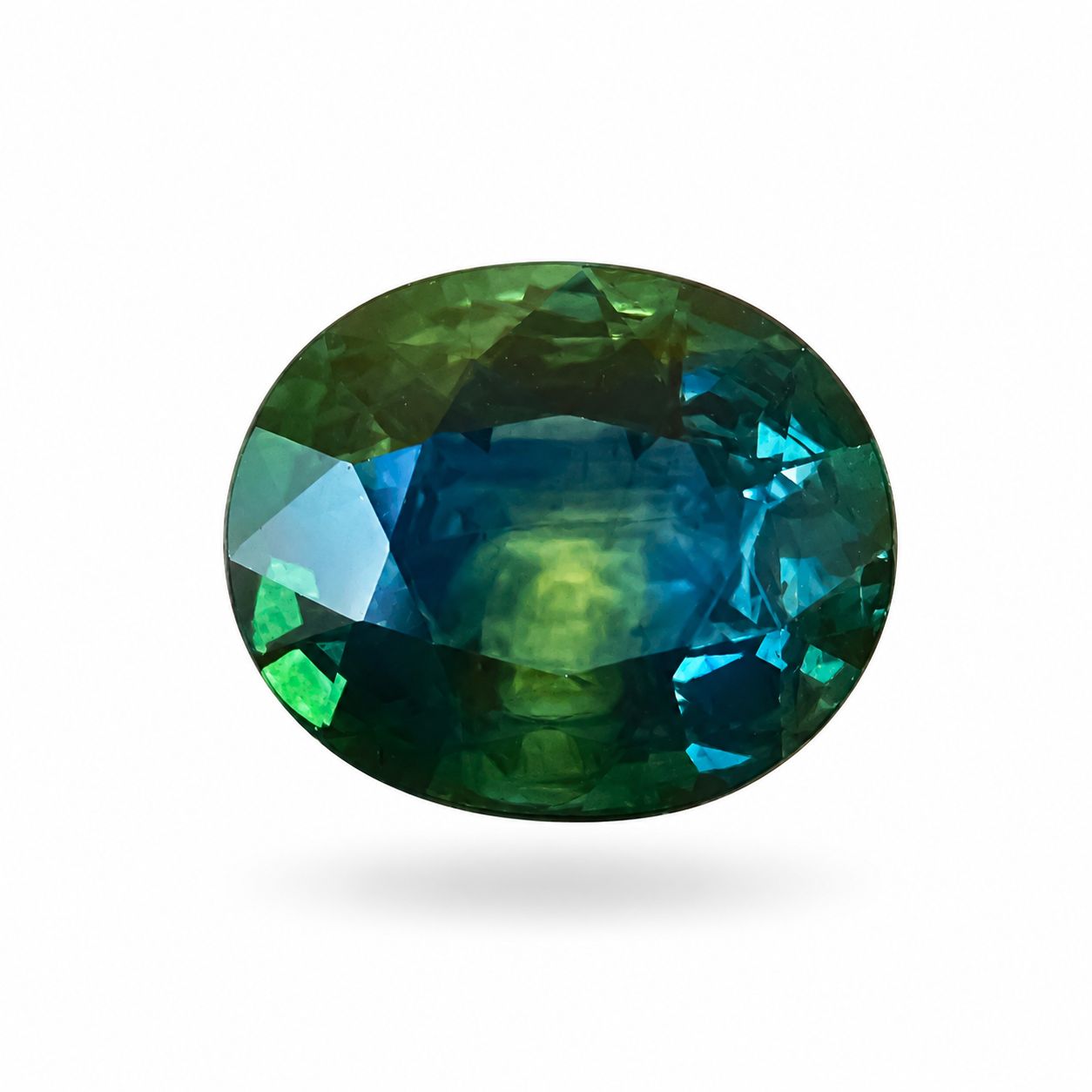
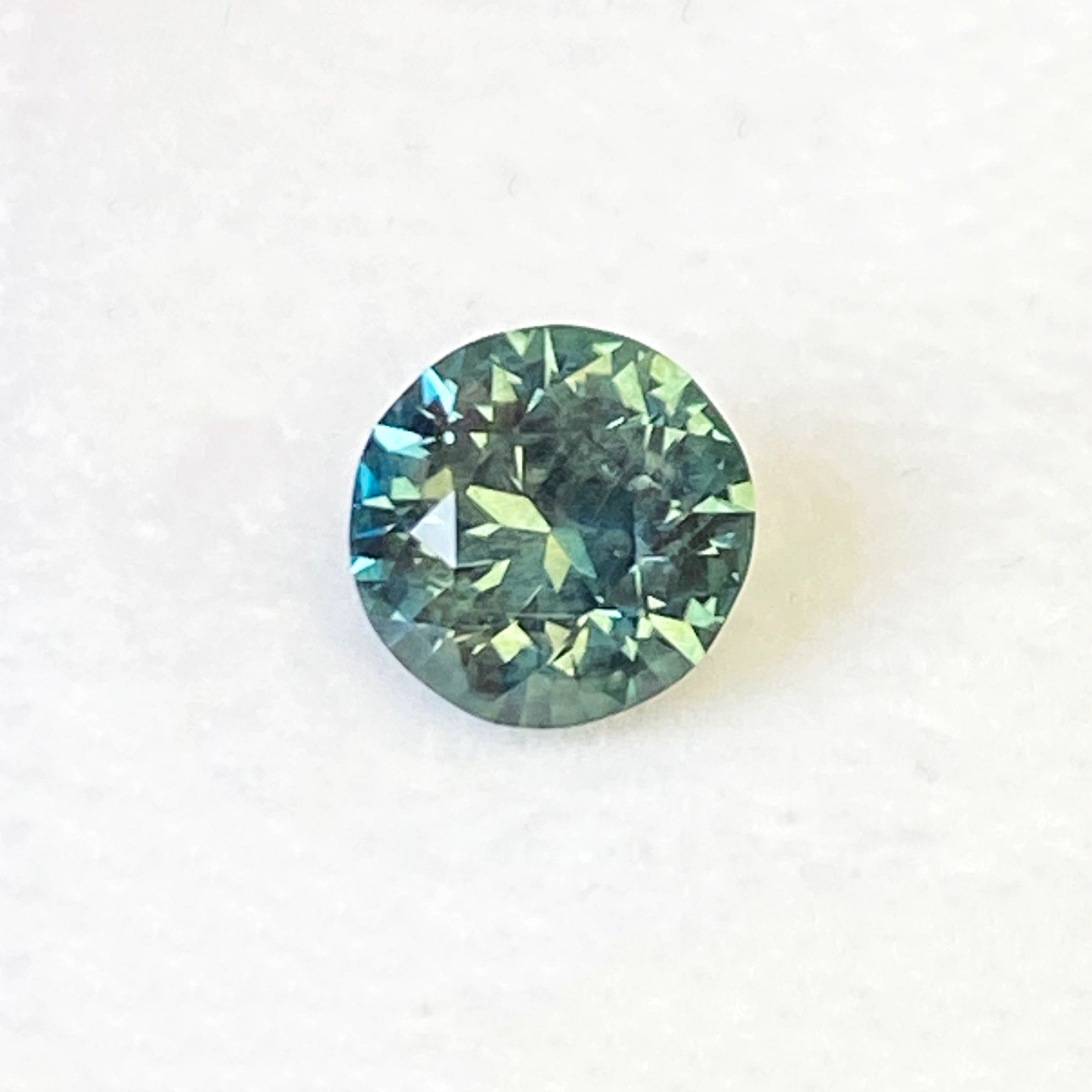
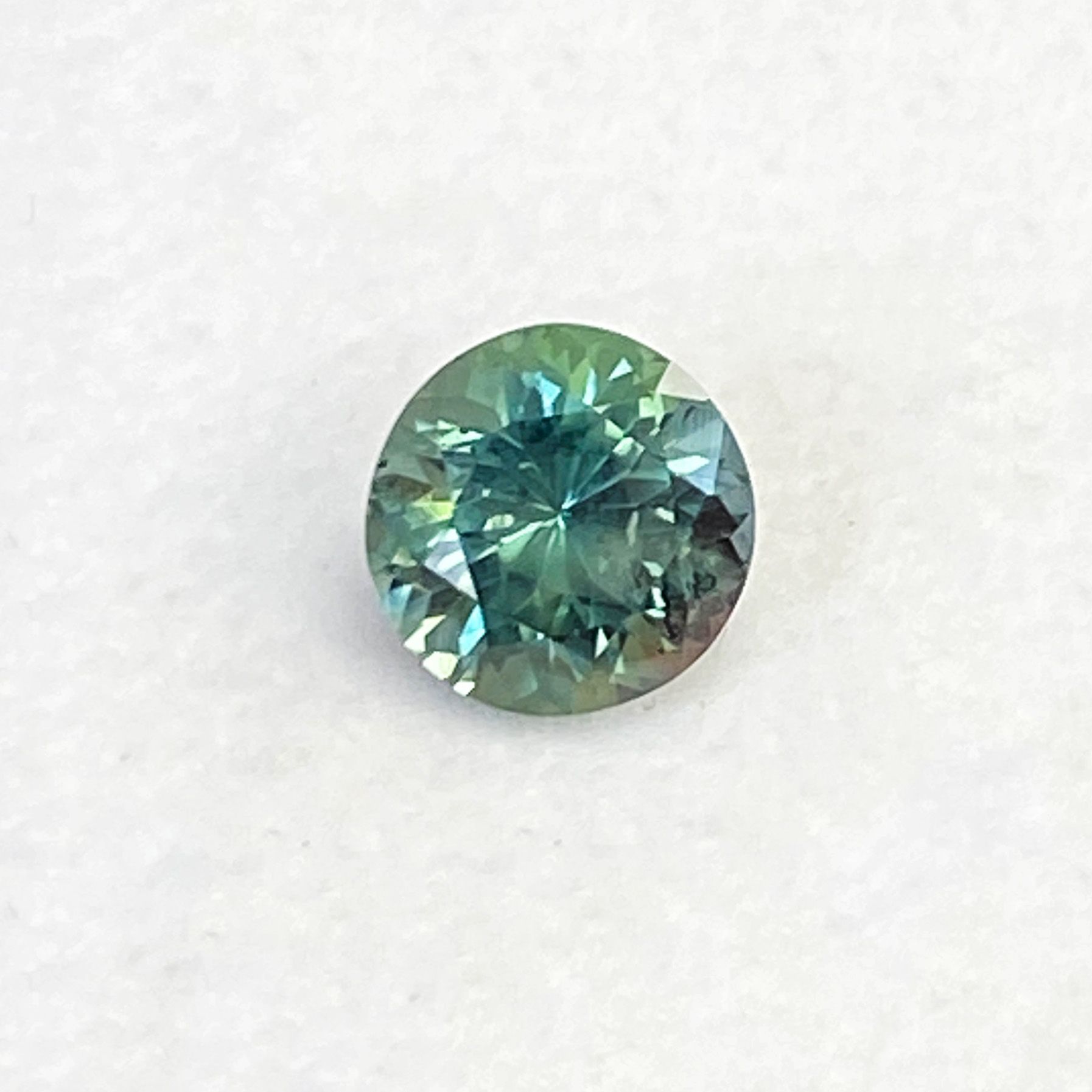
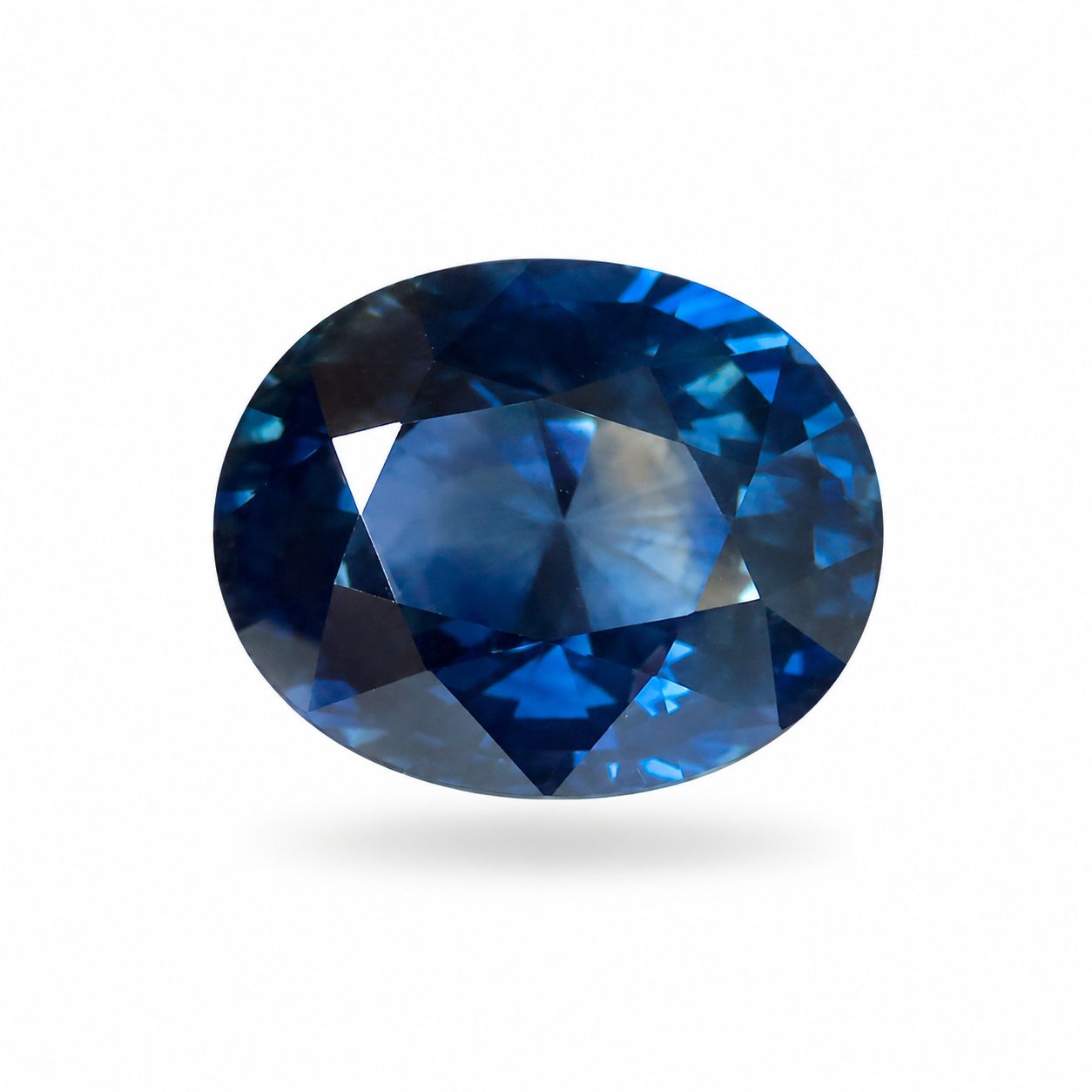
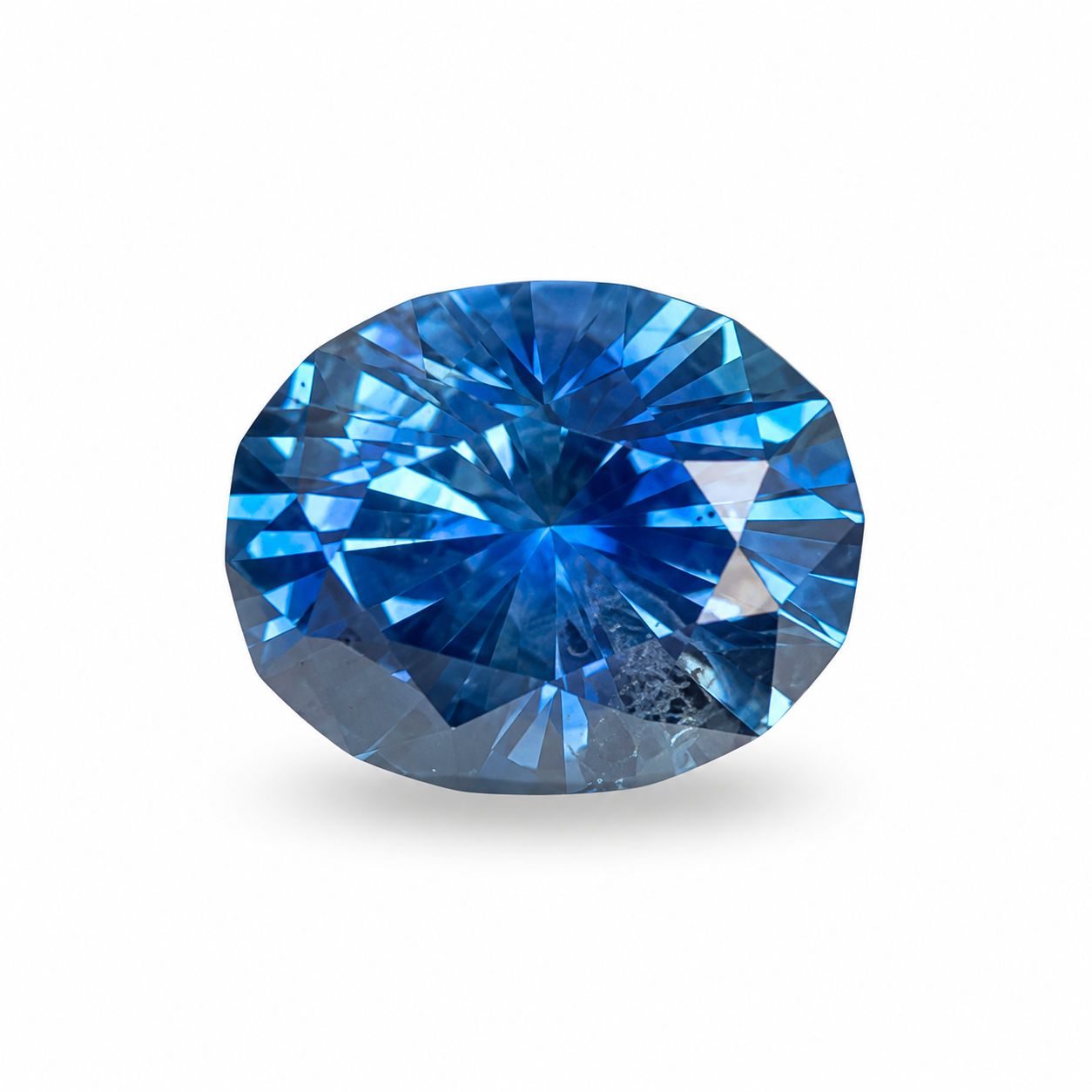
Two or more colors, one gem.
Natural color zoning can create separate areas or a blended appearance.
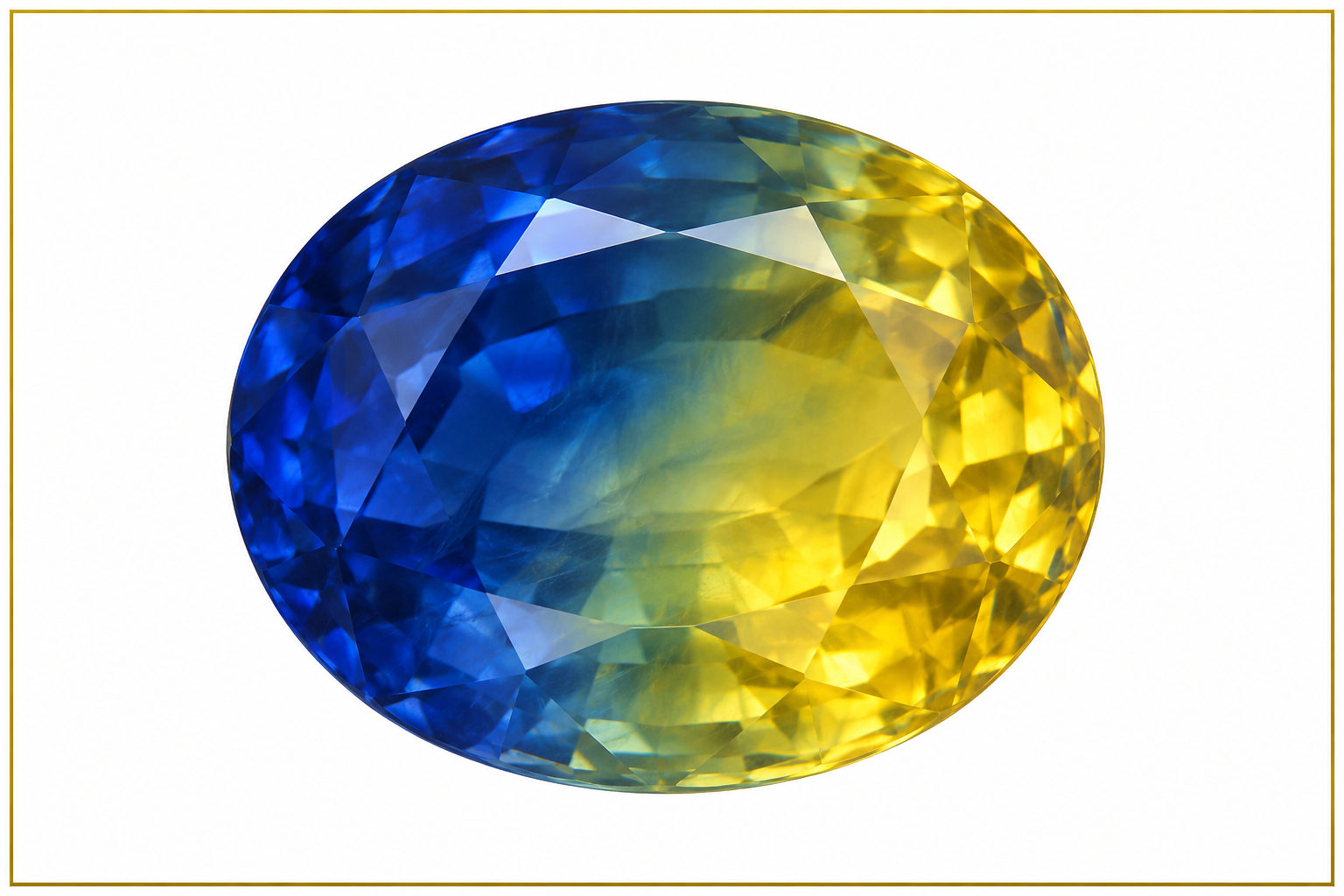
Some sapphires show distinct blue, green or yellow zones. Ask to see the stone turning: face-up balance and visibility change with orientation and lighting.
04 / Light, cut & size
Light, cut & size.
The same stone. Different light.
Ask to see the actual sapphire under several everyday conditions.
Indirect daylight
See the actual stone away from direct glare.
Open shade
Look for brightness, transparency and darker areas.
Ordinary room light
Check that the color and appearance still appeal indoors.
The same illustrated green gem under imagined lighting. These are concepts, not photographs or predictions of how a particular green sapphire will look.
Request an unfiltered video of the same gem in indirect daylight, shade and ordinary indoor light. Keep camera exposure and background consistent where possible, then slowly tilt the stone.
Conceptual illustration, not a photograph of an actual sapphire or a prediction of its behavior.
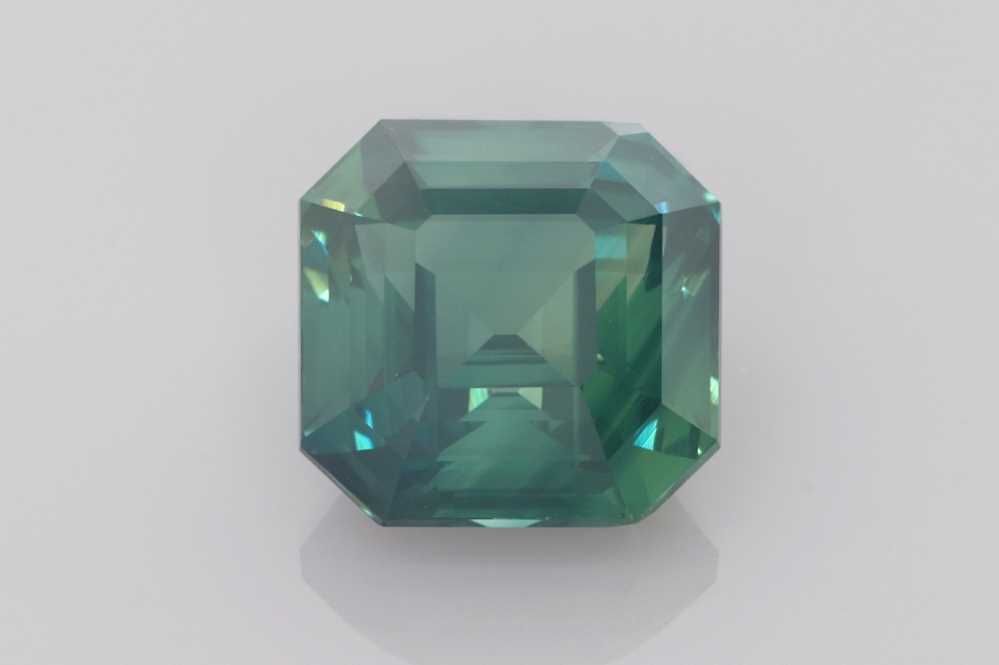
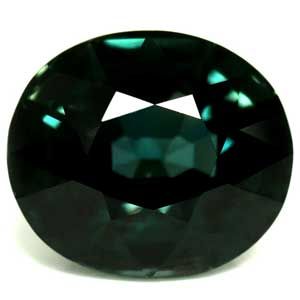
Look into the center.
Cut and lighting affect brightness, contrast and appearance.
A see-through center can be a window, where the background shows through. A single picture cannot reliably establish why a facet looks dark or light.
Ask for a slow, unfiltered face-up video and a tilted view over a neutral background. The next chapter illustrates possible light paths.
Real individual catalog sapphires, photographed independently.
How depth can change appearance.
The pavilion is the lower part of a faceted stone. Its angles help determine whether light returns toward you or escapes elsewhere.
Shallow
Light can pass out through a shallow pavilion, contributing to a see-through window.
Well-proportioned
Suitable facet angles can reflect light within the stone and return it through the top.
Deep
A steep pavilion can send light away from the face-up view. More depth does not guarantee more brightness.
Simplified two-dimensional examples using sapphire’s approximate refractive index. Each ray bends or reflects at a facet surface; real sapphires have many facets, color absorption and different viewing angles. These are explanatory diagrams, not cut grades. Learn about light and colored-stone cutting ↗
Cut can influence brightness, color and face-up size. Depth alone cannot predict beauty: ask to see the actual stone move under several lighting conditions.
Carat is weight, not size.
Ask for millimeter dimensions as well as carat weight.
Cut and depth affect face-up size. A deeper gemstone can carry extra weight underneath without appearing wider from above.
Sapphire is approximately 14% denser than diamond (4.00 versus 3.52). At the same carat weight and identical proportions, its volume is about 12% smaller; actual face-up size depends on the cut. Compare millimeter measurements.
Using approximate densities of 4.00 for sapphire and 3.52 for diamond, sapphire is about 14% denser. At equal weight its volume is about 12% smaller. For geometrically identical shapes, that corresponds to roughly 4% smaller linear dimensions—not 12% less width. Actual cutting varies; use the measured millimeters.
05 / Clarity & inclusions
Clarity & inclusions.
Look inside the sapphire.
Natural features vary in visibility, size, location and significance.
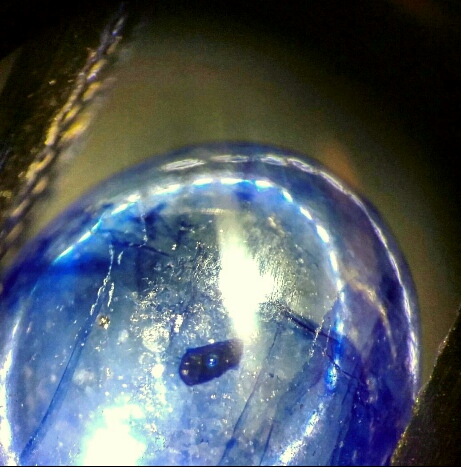
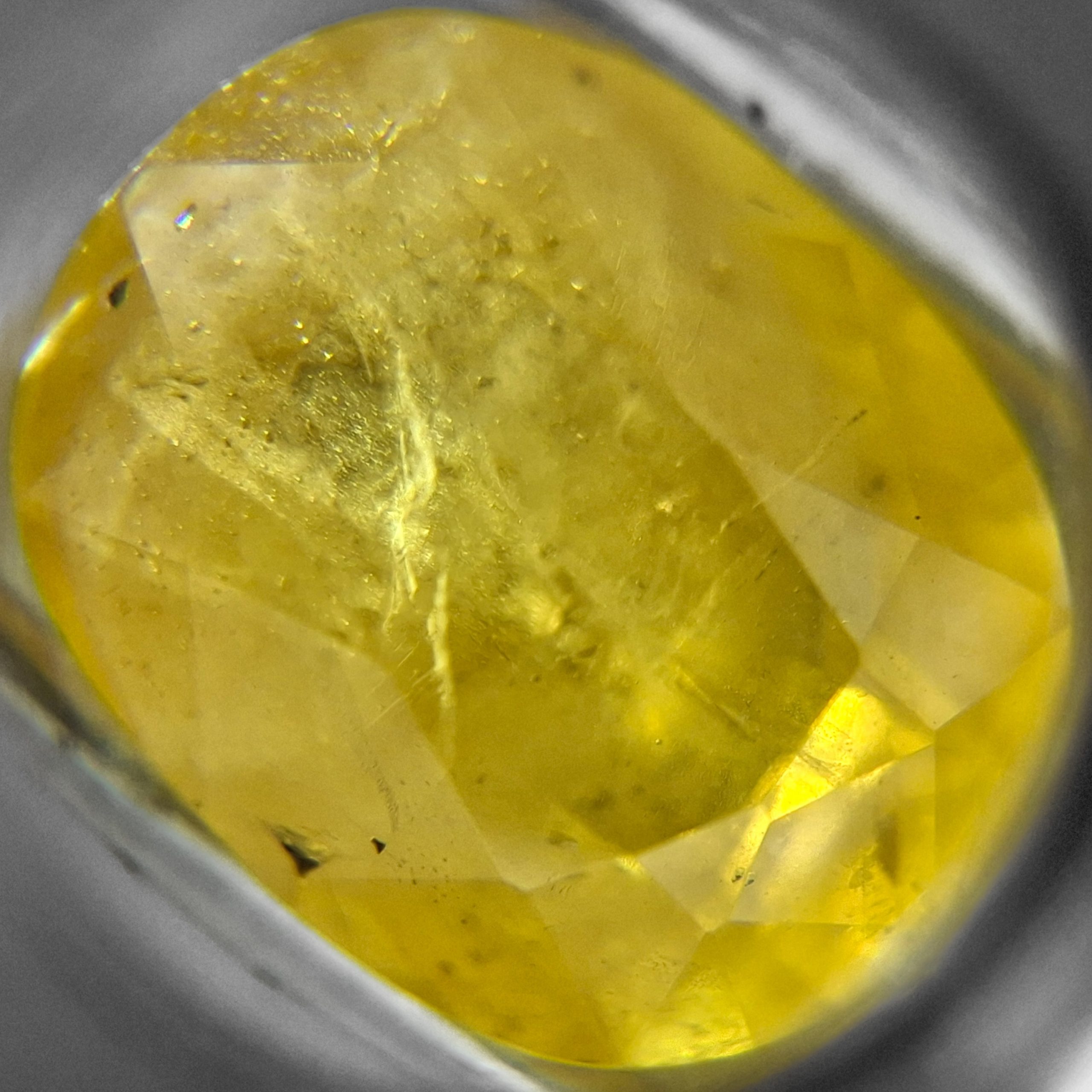
An inclusion does not automatically make a sapphire unsuitable. Fine features can be unobtrusive; a cloud may reduce transparency. A surface-reaching fracture or chip deserves a closer durability discussion.
Ask to see the actual stone face-up and under magnification. “Eye-clean” is not a universal grade: ask about viewing distance and lighting.
These reference photographs show inclusions in blue and yellow sapphires. They explain sapphire features; they are not green-sapphire catalog examples.
Crystals, silk and clouds.
These are real photomicrographs. Their magnification makes small features visible; it does not tell you whether they are noticeable in the finished ring.
Rutile silk
Photomicrograph · Palke, figure 9C
Included crystal
Photomicrograph · Palke, figure 9D
Cloud / particles
Photomicrograph · Amphon et al., figure 1, lower right
Photographs are cropped in the page layout from the same studies used in the PDF; color and features are unchanged. A. C. Palke (2020), figure 9C–D; Amphon et al. (2024), figure 1. Both licensed CC BY 4.0. Drawings explain the feature and are not diagnostic.
Judge location, size and effect together. Magnification does not tell you whether an inclusion is visible at normal viewing distance. A central cloud and a surface-reaching fracture raise different questions about appearance and durability.
06 / Durability & care
Durability & care.
The Mohs hardness scale.
Sapphire is corundum: it ranks 9 on the Mohs scratch-resistance scale.
- Diamond
- Sapphire / corundum
- Topaz
- Quartz
- Feldspar
- Apatite
- Fluorite
- Calcite
- Gypsum
- Talc
WHY THE BIG DROP?
The Mohs numbers are ranks, not equal steps. Diamond is many times harder than sapphire, even though their ranks differ by only one.
Hardness describes resistance to scratching. Toughness describes resistance to breaking or chipping. Even a hard sapphire can be damaged by a sharp impact.
Sapphire has excellent toughness and no cleavage, but it is not unbreakable. Remove the ring for heavy impact activities; store it so harder jewelry cannot scratch other pieces.
For untreated or ordinarily heated sapphire, gentle cleaning with warm soapy water is usually suitable. Filled or dyed material needs different care: GIA advises a damp cloth. Have the treatment, setting and condition checked before using ultrasonic or steam cleaning.
07 / Heat & other treatments
Heat & other treatments.
Heated or unheated?
Both may be natural sapphires. Heat can change color and clarity.
HEATED
Heat can strengthen color or lighten an overly dark blue, depending on the stone and treatment.
UNHEATED
Fine unheated gems can also be vivid and may carry a rarity premium.
Heat is common and accepted when disclosed. A pale stone may become stronger in color, but color alone cannot establish whether heating took place. Ask for the report and compare real stones in several lighting conditions.
The most appealing appearance and the premium you choose to pay are personal decisions.

Ask exactly what was done.
A natural origin does not mean the stone is untreated.
HEAT
Ask for the report and seller’s treatment disclosure.
DIFFUSION
Chemical elements may be introduced with heat; distinguish it from ordinary heating.
FILLING / DYE
These can change cleaning, repair and durability needs.
Conceptual illustration: heat, material used in treatment, and a filled fracture. It does not depict a particular sapphire or procedure.
Treatments are different processes with different implications for value and care. Appearance alone cannot reliably establish treatment. Ask for the report’s exact wording and the seller’s disclosure.
08 / Origin & provenance
Origin & provenance.
A world of sapphire sources.
Examples of well-known sources; each can produce a range of colors and qualities.
09 / Read a laboratory report
Read a laboratory report.
Read an actual green-sapphire report.
A laboratory report records important facts about the stone—not its beauty.
GIA REPORT 2235931691 · 28 APRIL 2026
This real report linked from a NinaVova listing identifies natural sapphire, records heating, and gives a Montana origin opinion. It describes the color as greenish blue.
Check that the report number, carat weight and dimensions match the offered gemstone. Use the issuing laboratory’s verification service.
GIA report linked from NinaVova’s 2.95 ct catalog listing; report image © GIA.
What this report says
IDENTITY, ORIGIN AND TREATMENT
Natural corundum, sapphire; heated. USA (Montana) is the laboratory’s geographic-origin opinion, not a mine-to-market chain-of-custody guarantee.
MATCH THE OFFERED STONE
2.95 ct; 9.42 × 7.91 × 4.64 mm. Check the report number and other details against the actual stone and verify with GIA.
A report cannot tell you whether the green or blue-green appearance is right for her.
Open the original report ↗Read the original report fields up close
Original report fields enlarged for reading. Image © GIA.
Verify with GIA ↗Check the number, weight, measurements and any inscription. A report is evidence of the findings it states; it does not set the price or decide which appearance she will love.
10 / Choose the ring & price
Choose the ring & price.
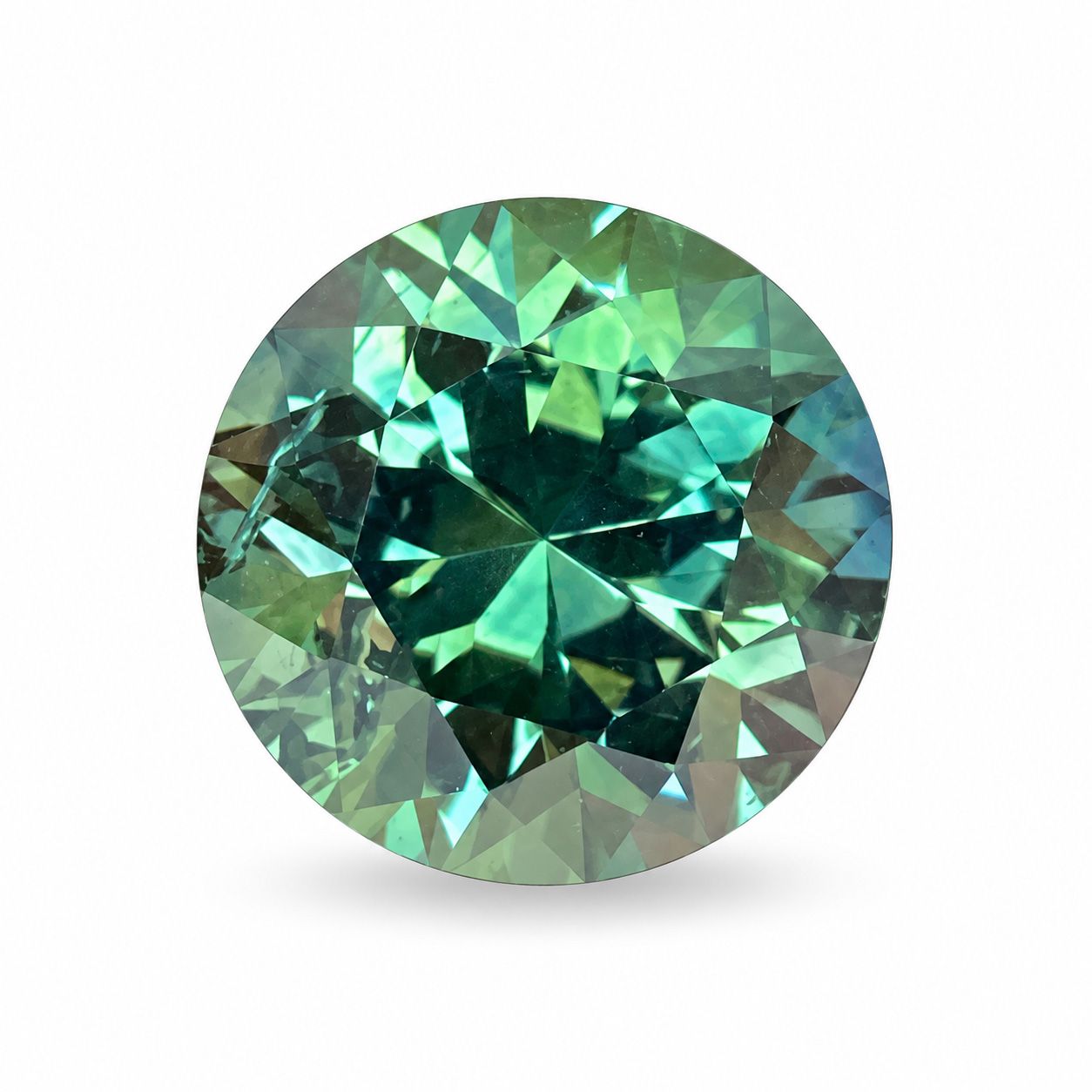
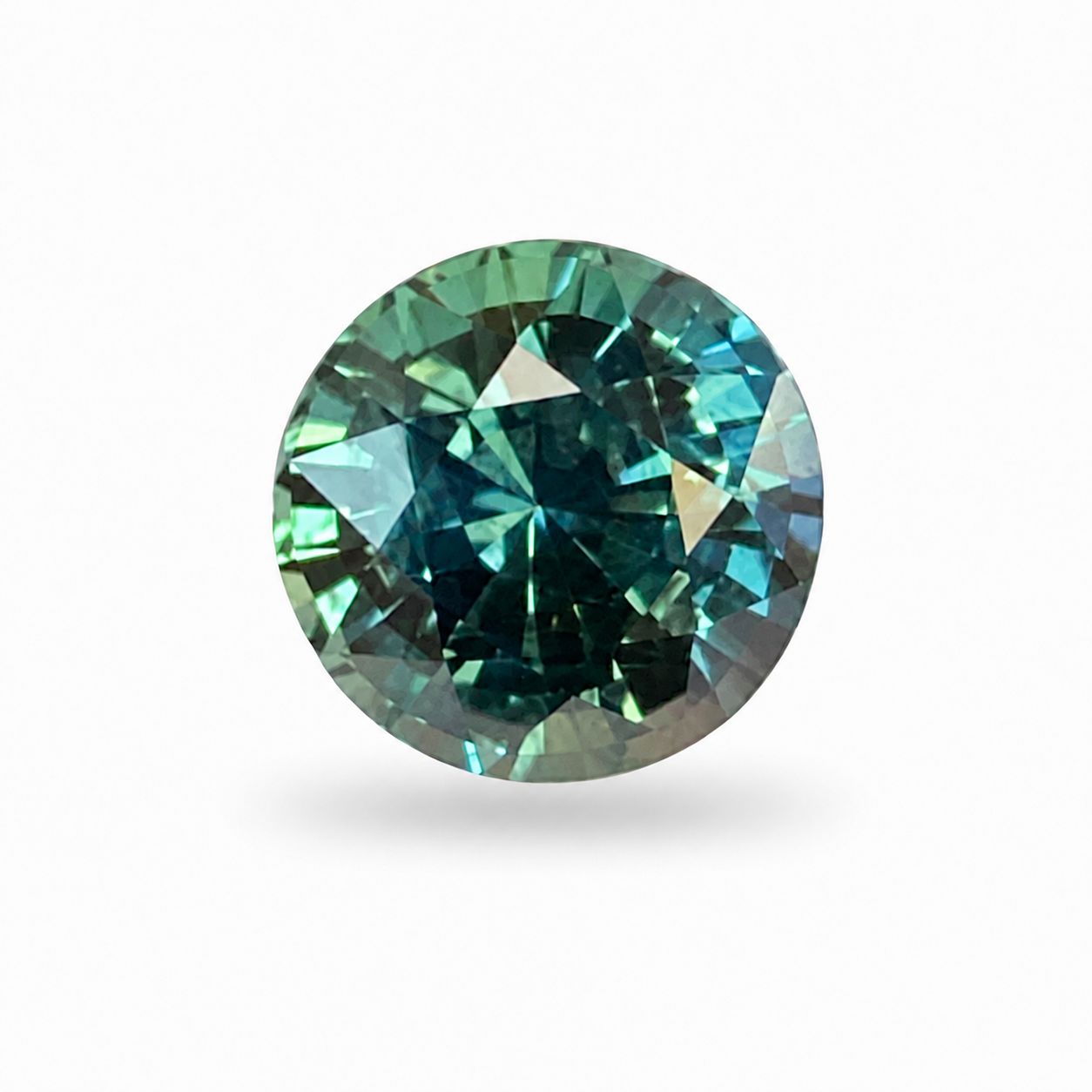
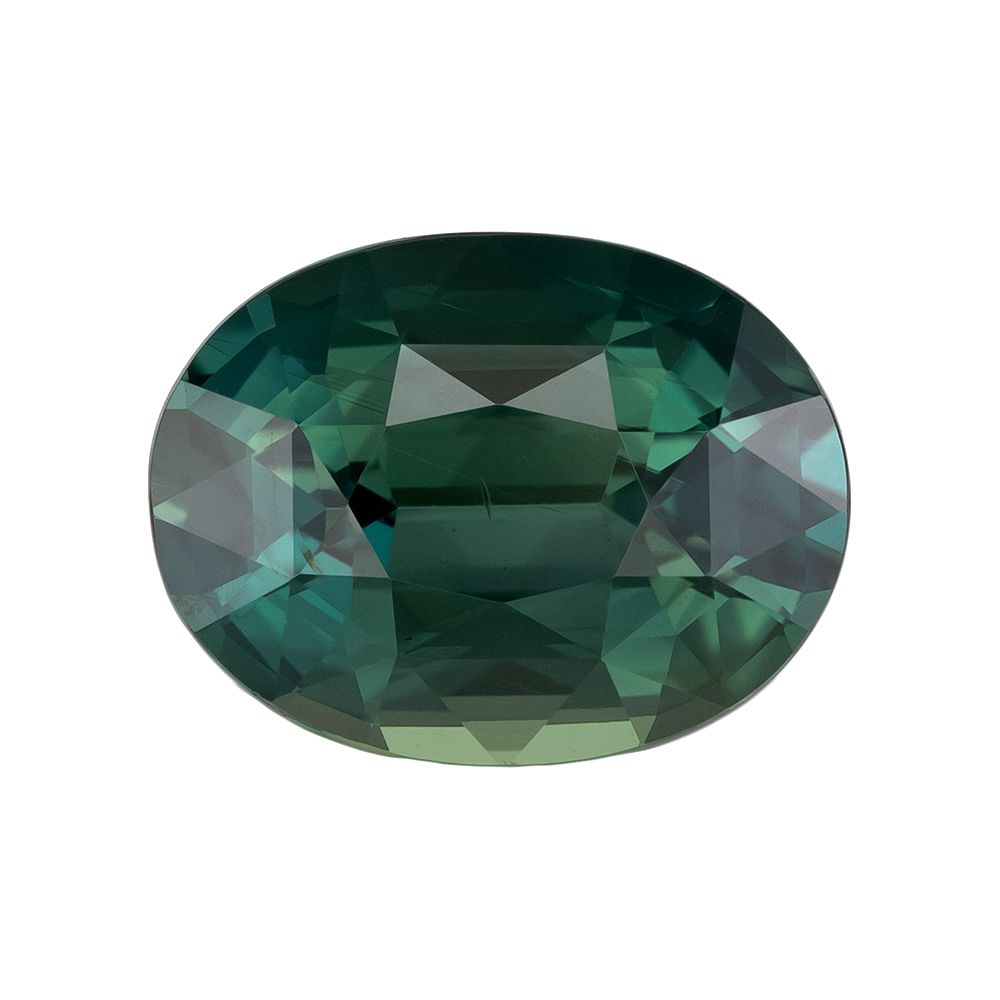
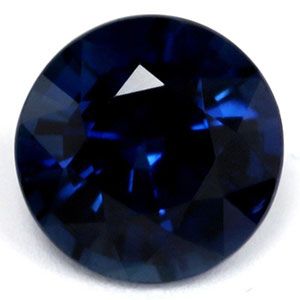
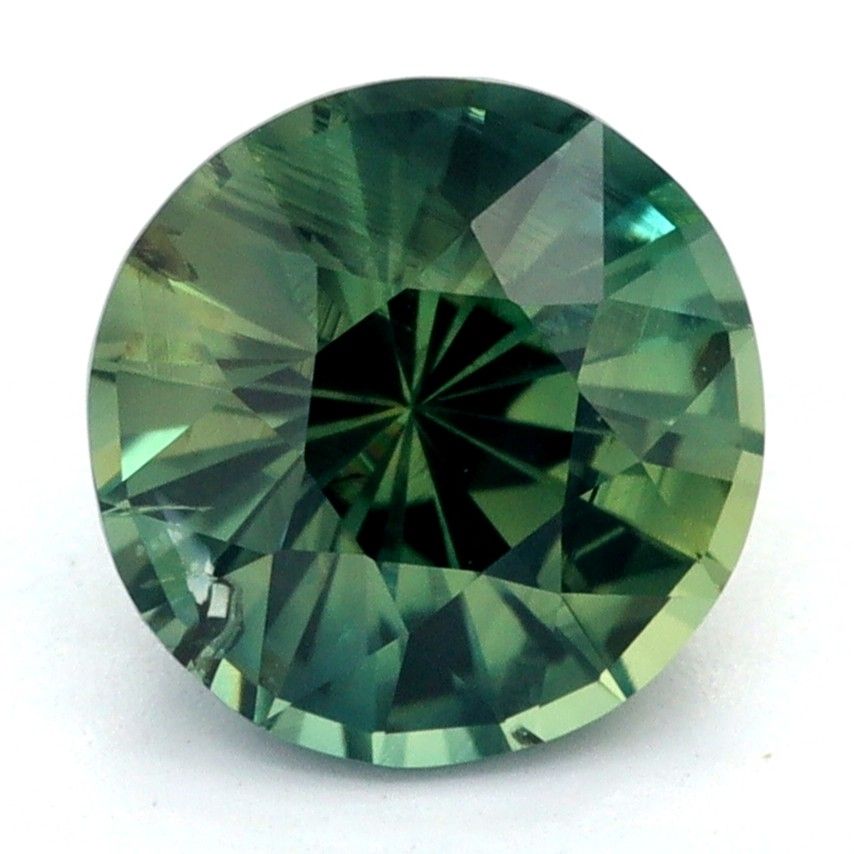
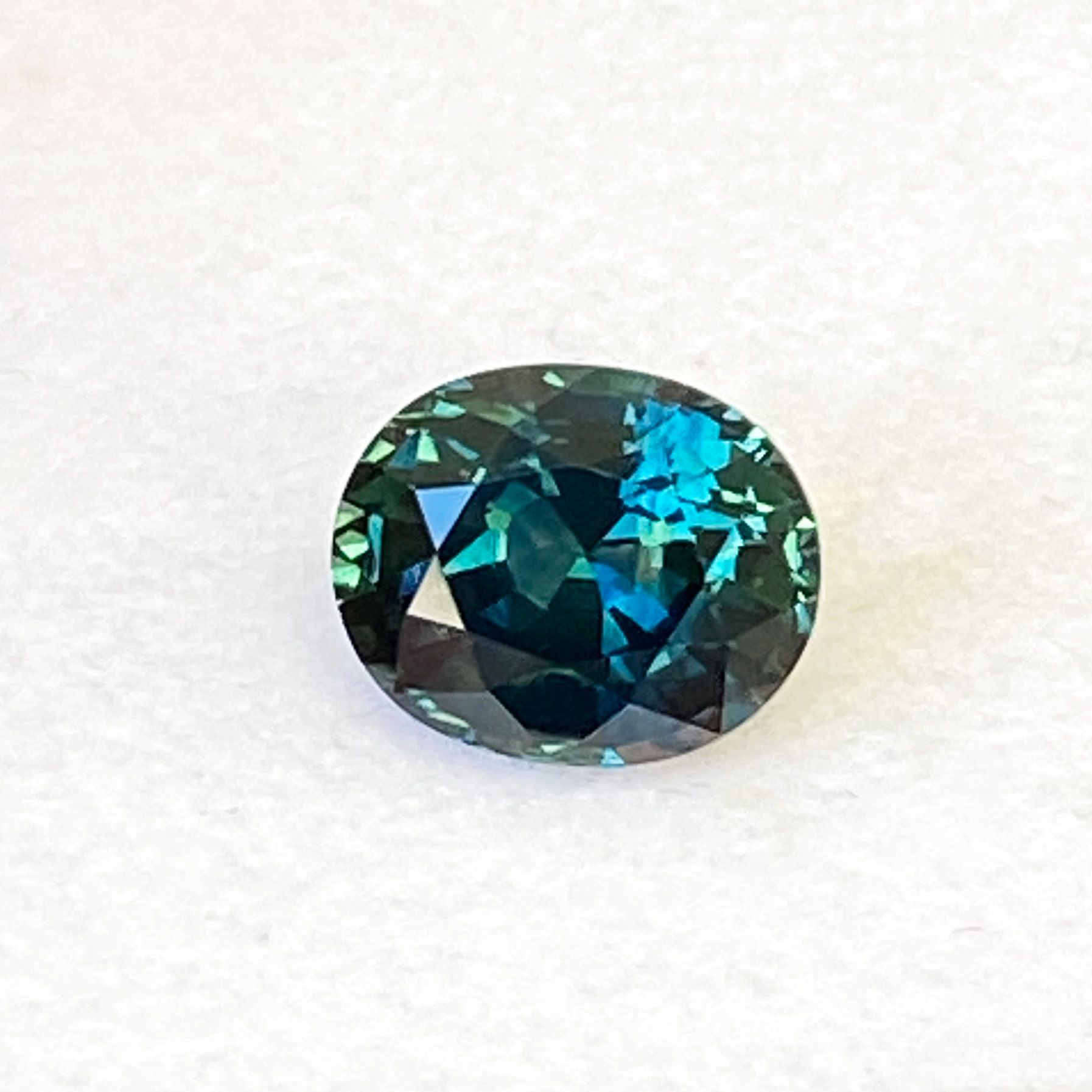
More real green sapphires.
Different shades and shapes offer different personalities.
Catalog images show individual natural sapphires. Lighting and photography differ; ask to compare the actual stones before selecting one.
Select a gemstone to see its listing. Availability may change.

Compare your favorites.
Combine the stone’s appearance with its written details and the whole-ring cost.
01 SEE THE GEM
Watch it move in diffuse daylight and indoor light.
02 READ THE DETAILS
Check dimensions, treatment, condition and report.
03 COMPARE THE TOTAL
Review the complete quote, setting and service terms.
No report or image replaces viewing the actual sapphire in multiple conditions.
Understand the complete quote.
Ask what is included before comparing offers.
STONE
Price, measurements, report and treatment disclosure.
SETTING
Metal, accents, design and workmanship.
EXTRAS
Taxes, shipping, insurance and any report fees.
TERMS
Deposits, cancellation, returns, resizing and delivery.
AFTERCARE
Inspection, maintenance and coverage in writing.
Design around the green sapphire—and her life.
Setting and protection. Prongs reveal more of the outline; a bezel surrounds the edge. Discuss height, point protection for pear or marquise shapes, and snagging. The best solution depends on the actual stone and how she wears jewelry.
Metal and color. Compare the green sapphire beside yellow, white or rose-colored metal. Reflections can affect the impression of color. Ask about alloy, maintenance and any metal sensitivities.
Ring size and wedding band. Confirm finger size with a jeweler, discuss future resizing and decide whether a wedding band should sit flush, curve around the ring or leave a deliberate gap.
Timing. Agree on design approval, production and delivery dates before committing to a proposal deadline. Confirm any rush request in advance.
A warranty and insurance serve different purposes. Ask which maintenance or workmanship issues the warranty covers, and arrange any separate loss, theft or accidental-damage insurance you want.
Ordering, shipping & returns ↗NinaVova warranty ↗Your custom ring
From what you know about her
to a finished ring.
Discovery & Design
The journey begins with understanding your vision and translating it into a unique ring design.
- Personal Consultation: We initiate a detailed conversation to capture the essence of your desired design.
- Design Inspiration: Presenting examples of previous works to showcase what's possible and inspire your selection.
- Sketching Ideas: Our designers sketch several versions of your ring, refining the concept to match your vision.

Gemstone & Metal Selection
Choosing the perfect materials to bring your custom ring to life.
- Choosing the Right Stone: We offer a serious selection process, explaining all gemstone options and providing educational materials.
- Trusted Vendors: We provide multiple options from our reliable vendors with whom we have longstanding relationships.
- Custom Cuts: If your vision includes a unique gemstone shape, we can custom-cut the stone for you.
3D Modeling & Approval
Visualizing your ring in precise detail before it comes to life.
- 3D Presentation: We create a 3D model of your ring, allowing you to visualize and turn it around, ensuring it matches your expectations.
- Design Finalization: We proceed only when you are completely satisfied with every detail of the design and model.


Craftsmanship & Creation
Bringing your ring to life with meticulous attention to detail and quality craftsmanship.
- Wax Modeling: Creating a wax model to capture the intricate details of your design before casting in metal.
- Expert Crafting: Our artisans craft your ring, focusing on alloy creation, meticulous polishing, and precise stone setting.
Delivery
The final step where your custom engagement ring is ready to be delivered and cherished.
- Complimentary Shipping: Your ring is shipped to you for free, anywhere in the world.
- Lifetime Warranty: All our rings come with a lifetime warranty, ensuring your peace of mind (with the exception of accidental damage).

12 / Common questions
A few answers before you choose.
Is teal sapphire a different mineral from green sapphire?
No. Both are corundum. Teal usually describes a blue-green appearance, but trade boundaries vary. Compare the actual hue in ordinary light, then evaluate tone, saturation and brightness separately.
Does green sapphire always come from Montana?
No. Green and blue-green sapphires occur in several countries. Montana is one source, not a color grade. Confirm what the report or supplier actually supports about the particular stone’s geographic origin.
How do I compare stones online?
Ask for the same lighting, background and camera exposure for every option. Compare face-up and tilted views, measurements and written disclosures. Independent catalog photographs are useful examples, not controlled grading tests.
Does a report guarantee a beautiful stone?
No. A report documents the findings it states, which depend on the laboratory and service. Match it to the actual stone, then evaluate appearance, condition and the complete ring design.
Can we choose the stone before designing the ring?
Yes. We can explore stones with you and create the setting around the chosen outline, dimensions and depth. You can begin with a few preferences or meaningful ideas.
What should my quote include?
The specific stone and any report; treatment disclosure; setting metal and accents; design and craftsmanship; taxes, shipping and other costs; approval stages, delivery, resizing, returns and aftercare terms.
13 / The NinaVova blog
Keep learning with NinaVova.
More of Sergey’s explanations, real examples and practical advice for your ring.

NinaVova blog & guides
Natural Sapphire Engagement Ring Guide: Quality, Origins and Reports
Read on NinaVova ↗
NinaVova blog & guides
Lab-Grown Sapphire Engagement Rings: Growth Methods and Buying Advice
Read on NinaVova ↗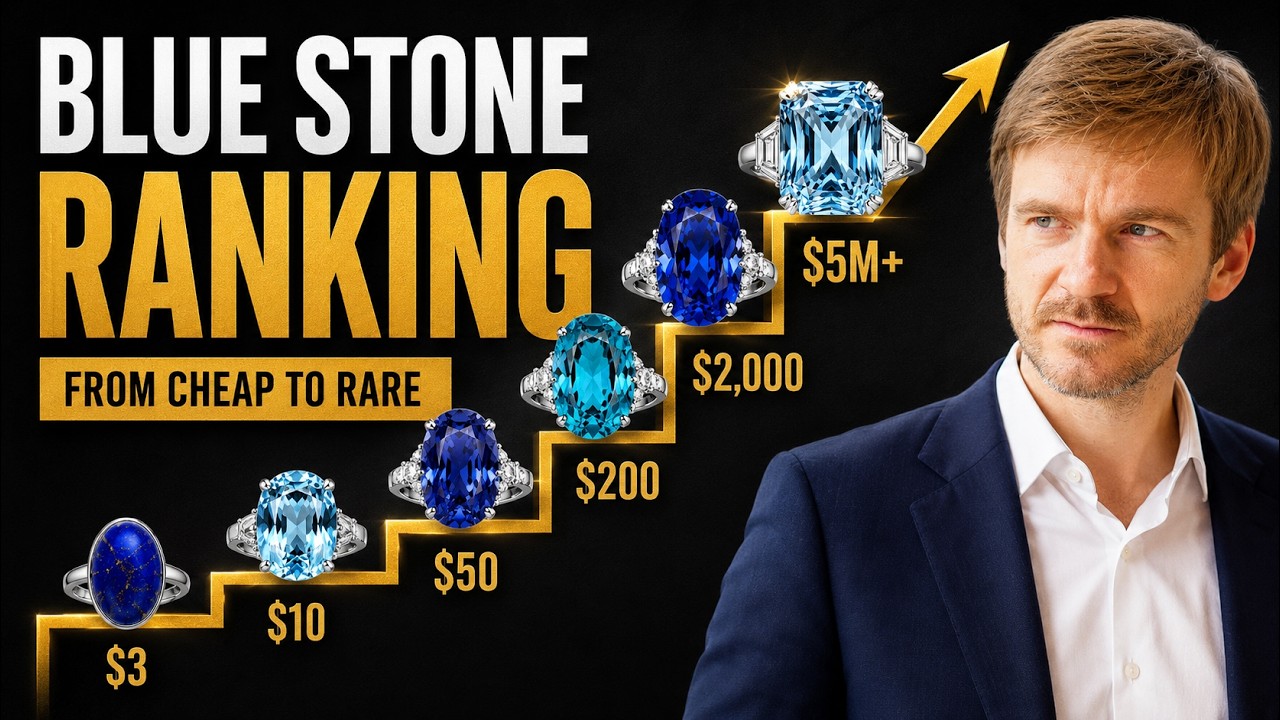
NinaVova blog & guides
22 Blue Gemstones for Rings: Color, Care and Buying Advice
Read on NinaVova ↗Her ring.
NinaVova blog & guides
Start Your Custom Engagement Ring Design
Read on NinaVova ↗14 / About NinaVova
A name inspired by lasting love.

Guided by your story.
NinaVova is named after founder Sergey’s grandparents, Nina and Vladimir. Their enduring love inspires the rings we create.
Our design, production and client-guidance team helps turn your ideas into a personal ring, from the first conversation to the finished piece.
Meet NinaVova ↗Image credits & gemological references
Catalog photographs link to the individual NinaVova gemstone listings. Availability can change. Independently photographed stones are not controlled color grades. Illustrations explain concepts and are identified as such; they are not diagnostic photographs.
- GIA: sapphire buying guide and laboratory-report scope
- GIA: sapphire quality factors
- GIA: hardness, treatments and cleaning
Scientific and reference photographs retain author and license credits beside the images. The GIA report image is credited to GIA.
Your story starts the design
Let’s find the green sapphire
that feels like her.
Bring a favorite color, a ring idea or simply what you know about her. We’ll help you understand the options and create the ring together.
Talk with Sergey →Explore green sapphire options ↗