
Flower Engagement Rings: Personal Meaning, Design and Practical Care

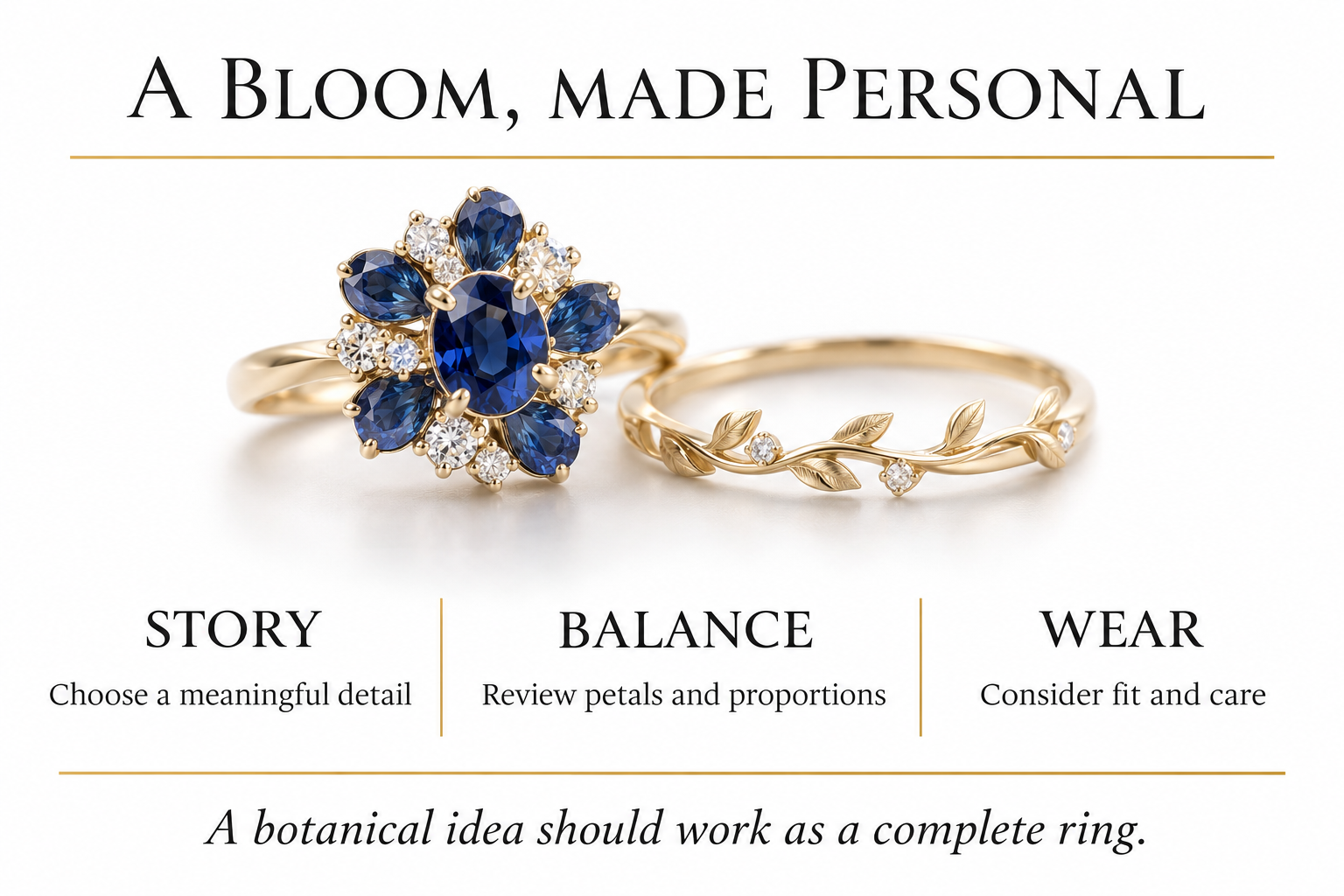
A flower engagement ring can suggest a bloom through a gemstone cluster, sculpted petals, leaves or a quieter botanical detail. The choice may carry personal meaning without one universal language of flowers. Develop the motif around the wearer’s taste, actual stones and practical wearing needs.
Let the botanical idea and practical structure work together. A bloom can be literal or abstract. Choose the wearer’s preferred details, then review the actual stones, settings, profile, fit and future service.
At a glance · Decide how literal the flower should be · Let symbolism come from the wearer · Gemstone clusters, petals and visual balance · Choose materials with clear care expectations
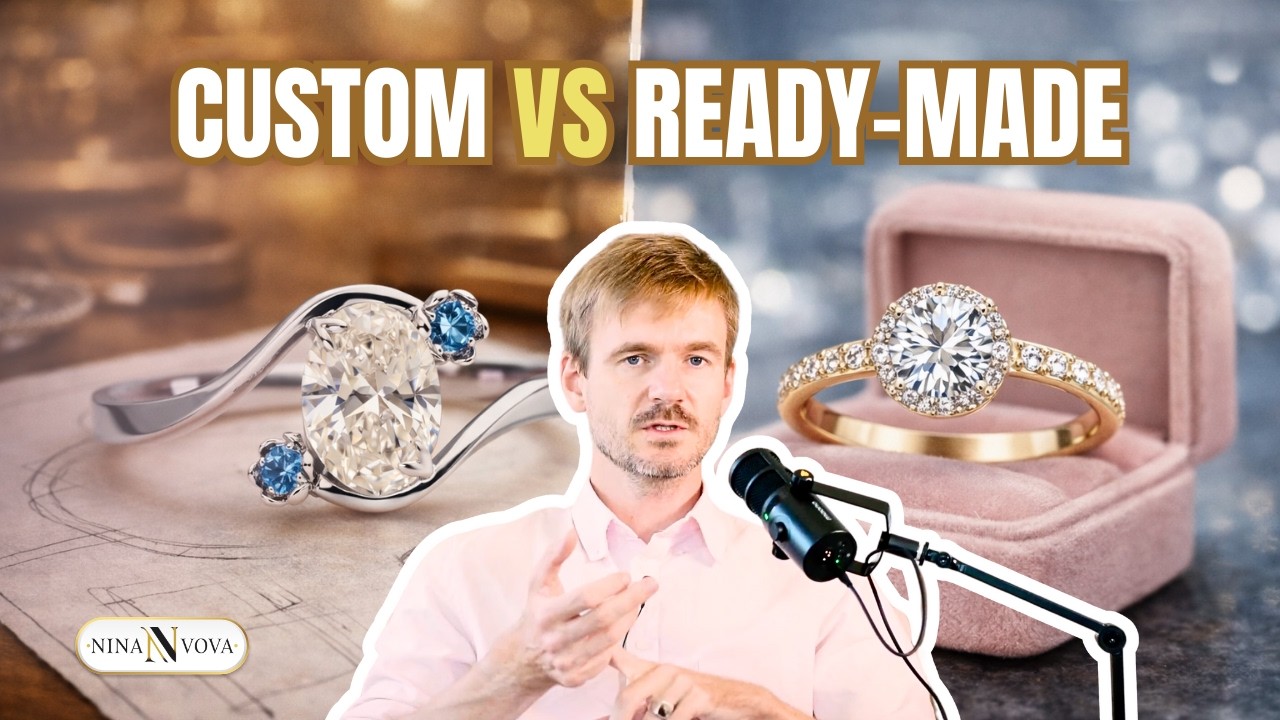
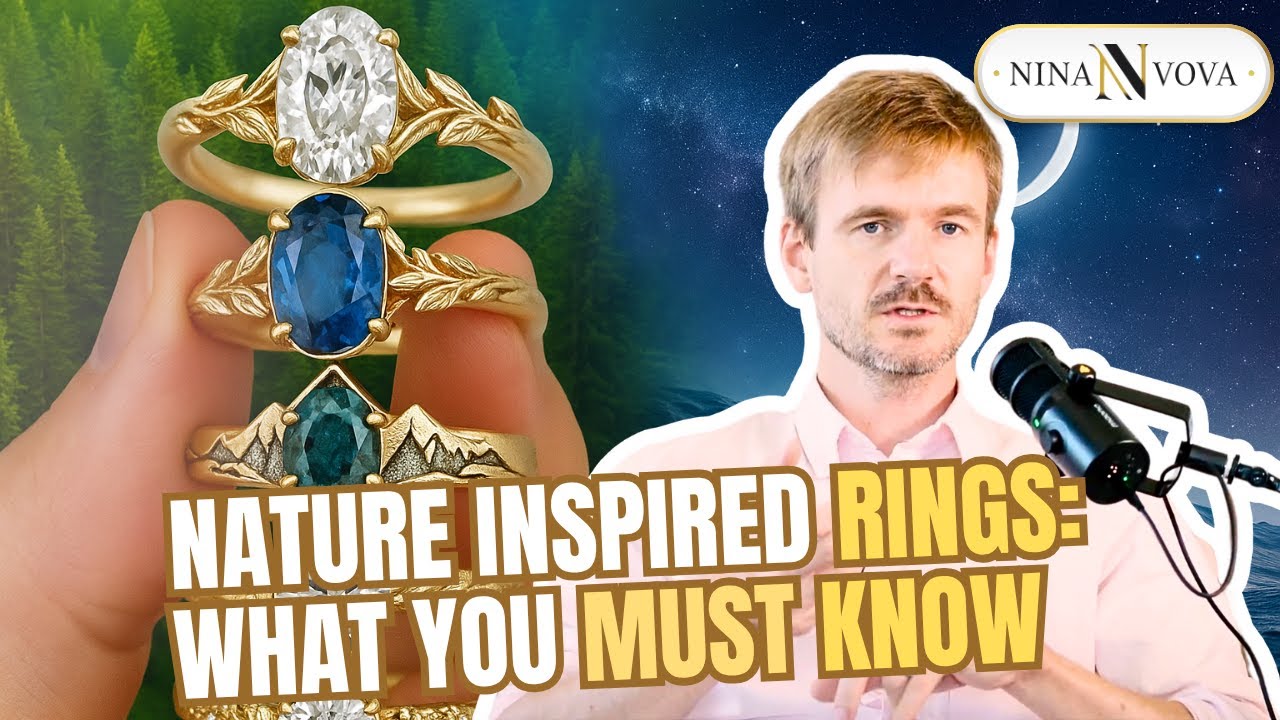
Watch the NinaVova discussion
Watch the original NinaVova video on YouTube.
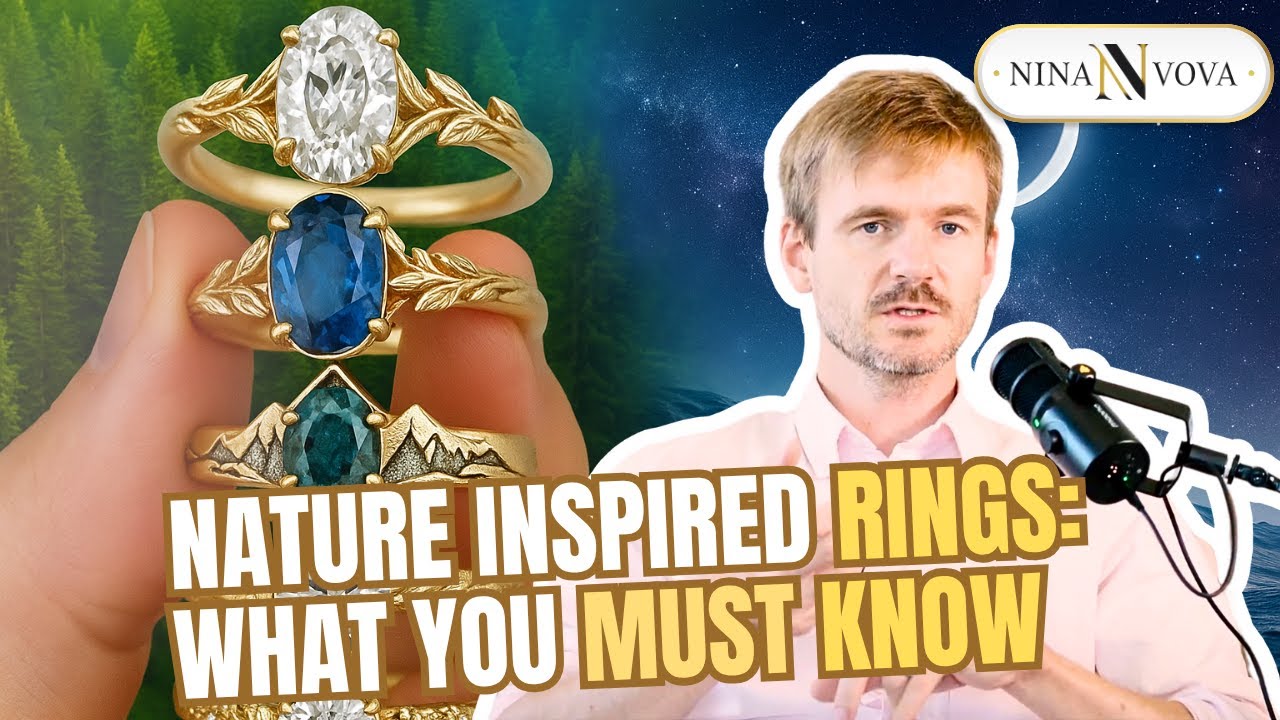
The related NinaVova nature-inspired design discussion supports translating a personal story into botanical details. This written guide focuses on floral compositions.
Floral-ring design decisions
| Decision | Options to explore | Practical check |
|---|---|---|
| Motif | Literal flower or abstract cluster | Support and smooth transitions |
| Meaning | A personal bloom or memory | Wearer’s own interpretation |
| Palette | Colored center or colored accents | Actual identity, treatment and care |
| Detail | Petals, vines, leaves or hidden features | Profile and snagging |
| Band pairing | Straight, shaped or deliberate gap | Contact and comfortable width |
| Approval | Drawings, dimensions and samples | What is confirmed before production? |
Decide how literal the flower should be
A ring may depict a recognizable flower or use a more abstract arrangement of petals and curves. A cluster can evoke a bloom without reproducing one exact botanical form.
Consider whether the motif belongs in the central outline, the shoulders, the gallery or a small hidden detail. These placements create different visual effects and profiles.
The band remains a working structure, not only a decorative canvas. Leaves and petals should be integrated with appropriate support and smooth transitions.
A reference photograph can begin the discussion, but the final ring needs its own dimensions and construction. A design cannot be assessed fully from a face-on image alone.

Let symbolism come from the wearer
Flowers can evoke growth, remembrance, affection or a meaningful place. A particular bloom may recall a garden, season or shared event.
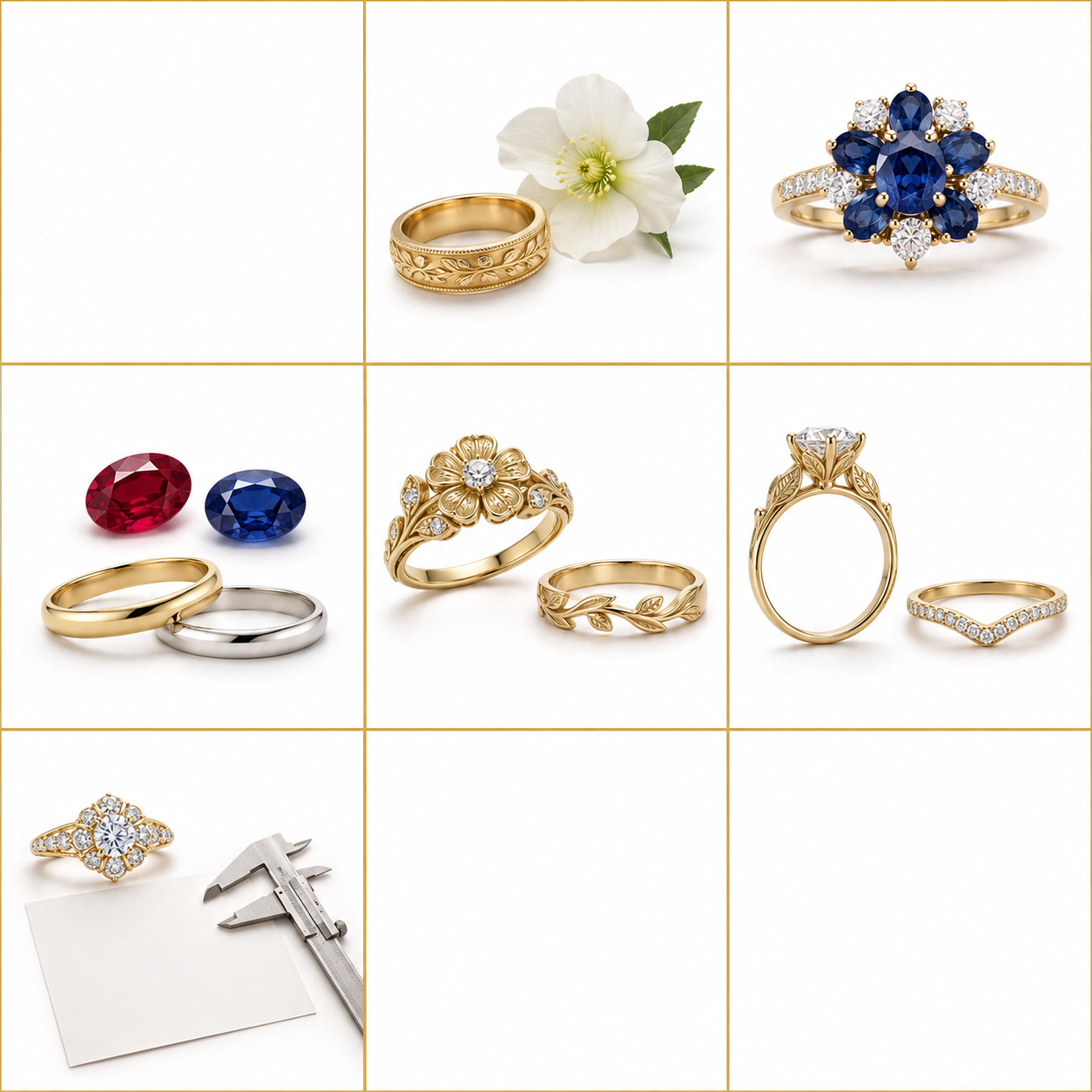
Associations such as roses with romance or lilies with purity are cultural conventions rather than universal facts about every relationship. You do not need to adopt them if another meaning feels right.
Color can be equally personal. A preferred blue or a memory connected with a green garden may be more relevant than a prescribed list of symbolic colors.
Describe the story you actually want to tell. A floral ring need not prove that its wearer’s love is more unique, enduring or meaningful than anyone else’s.
Gemstone clusters, petals and visual balance
A center surrounded by shaped or round accents can create a flower-like outline. The proportions between center, petals and visible metal determine whether the effect feels delicate or bold.
Colorless accents may contrast with a colored center, while a more unified palette creates another atmosphere. Compare actual stones because lighting can change their apparent color and brightness.
The center does not have to be the largest possible stone. Small changes in spacing, petal size and orientation can make the composition more balanced.
Clusters also create multiple settings to inspect and service. Ask how accents are secured, cleaned and replaced if one is damaged or lost.
Choose materials with clear care expectations
Diamond, sapphire, ruby, emerald, aquamarine, morganite and other materials have different identities and wearing properties. Color alone does not establish suitability.
Ask about natural or laboratory-grown origin and any treatment, then choose care that suits all components. A harder center does not remove the vulnerability of softer accents.
White, yellow and rose-colored metals can each support a floral composition. Mixed-metal work adds design and repair considerations rather than automatically being a current trend or an improvement.
If sourcing claims matter, ask for the actual supporting evidence. A botanical theme, recycled label or laboratory-grown stone is not by itself proof of zero impact.
Historical inspiration and contemporary interpretation
Nature has supplied motifs for jewelry across different periods. A new ring may borrow flowing lines or decorative detail from a historical style while remaining a contemporary object.
Distinguish an authenticated antique from a new vintage-inspired design. A period label alone does not establish age, condition, maker or workmanship.
You may prefer a quiet modern outline, more detailed vines or an expressive sculptural flower. These are design directions rather than measured claims about what everyone is buying now.
Use another maker’s work as a reference for a feature you enjoy, then develop a distinct design. Personalization should respect authorship as well as practical construction.
Profile, snagging and fit beside a band
Raised petals, exposed tips and fine leaves can affect how a ring feels and catches on clothing. Smooth finishing and sensible proportions matter in addition to the attractive outline.
A low profile or bezel may reduce some exposed areas, but neither makes a ring suitable for every manual task. Remove jewelry for activities that risk impact, catching or injury.
If a wedding band will be worn beside it, assess the two together. The floral head and shoulders may call for a shaped band or a deliberate gap.
Confirm the intended finger size using an appropriate method. Avoid measuring a sleeping person’s finger, and do not assume resizing is always possible for intricate or fully decorated designs.
Budget and the actual approval process
Set a comfortable complete budget before deciding how elaborate the flower should be. Fine detail, multiple settings and unusual sourcing can add work even when individual stones are small.
Agree on the actual materials, dimensions, proposed profile and approval stages. Ask what a drawing or model shows accurately and what remains an artistic representation.
Confirm timing, delivery, care and current written service terms. A promised symbolic meaning does not substitute for a clear project specification.
If a detail must change for strength or maintenance, discuss an alternative that preserves the idea. A successful ring makes the visual story and practical structure work together.
Make the botanical idea your own
At NinaVova, we can begin with a favorite flower, a garden memory, a palette or a subtle leaf detail. The motif can be developed around the actual wearer and stones.
Compare the face-on design with the side view, comfort and future band relationship before approval. Personal meaning and practical expectations should support each other.
A floral ring can be beautiful as a literal bloom or a restrained suggestion of nature. Choose the interpretation you enjoy, with clear materials, sound construction and realistic care.

Frequently asked questions
Does every flower have one universal ring meaning?
No. Cultural associations vary; the wearer’s own interpretation can guide the design.
Can a low floral ring be worn for every activity?
No. Follow care and remove rings for unsuitable work or impact.
Can an intricate floral ring always be resized?
No. Construction, decoration and materials may limit adjustment.
Bring a botanical memory into the brief
We can develop a favorite flower, palette or subtle natural detail around the actual stones and the wearer’s practical needs.
Book a NinaVova consultation or explore our custom design process.
Continue reading: Nature-inspired ring design · Choosing gemstone colors · Ring sizing and resizing.
Sources and further reading
- NinaVova: Nature-inspired design discussion
- GIA: Diamond protection and setting considerations
- GIA: Accurate finger and ring sizing
- NinaVova: Current project and service terms
Confirm the actual materials, condition, evidence and current written terms for the offered ring. Illustrations do not establish identity, provenance, certification or an environmental footprint.