
Royal Blue vs Cornflower Blue Sapphire: Color, Price and Everyday Wear

Recently I had a client who knew exactly what sapphire color he wanted: royal blue. He wanted that rich, deep, traditional blue people associate with fine sapphire. We found a stone he liked and built the ring around it. The final design was a substantial men’s ring with a bezel setting.
Then he received the ring, and he did not like the sapphire.
The stone had not changed color. But once it was in the finished ring and he saw it in normal indoor light, it looked much darker than he expected. What looked rich and impressive as a loose stone now felt too heavy on the hand.
That experience is why I wanted to explain the difference between a color name and the way a sapphire actually looks in a ring.
When somebody tells me, “I want a blue sapphire,” that still leaves a huge range: pale blue, medium blue, cornflower, royal blue, navy, violetish blue, and greenish blue. Even two stones with similar color descriptions can look very different once you consider tone, cut, lighting, and the setting.
So today I want to explain these blue ranges, why some cost more, and how I would choose one for an engagement ring.
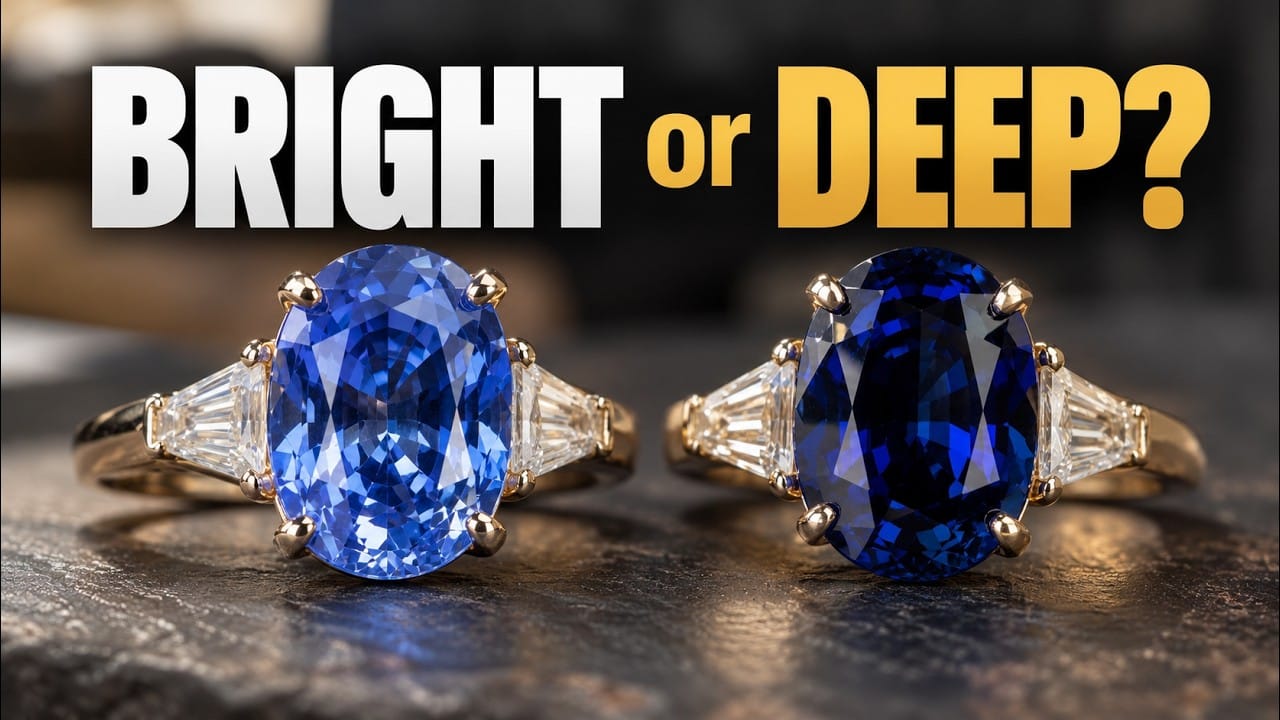
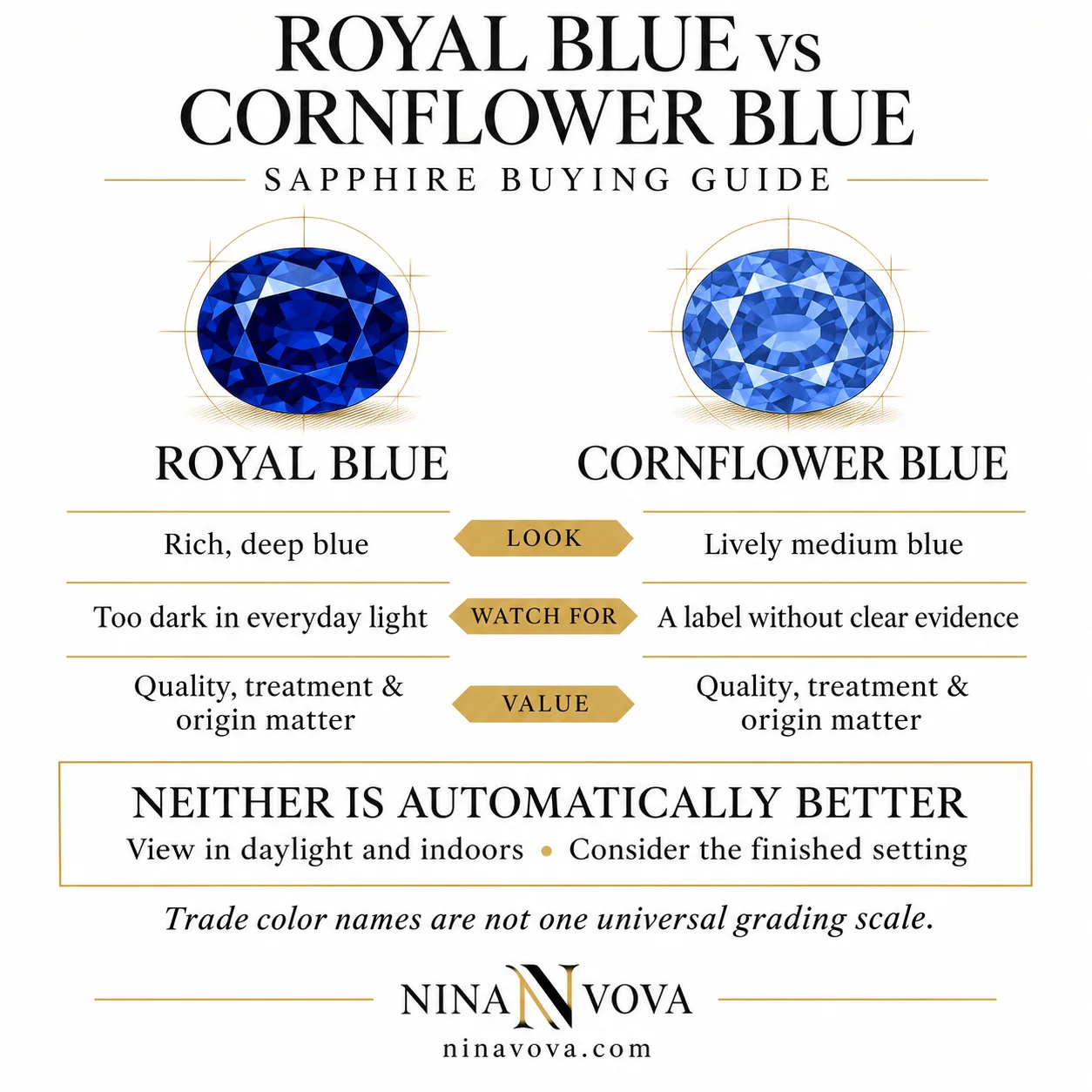
Choose the blue you enjoy in the finished ring, not the most prestigious-sounding name. Royal blue usually describes a rich, deep appearance; cornflower blue usually points toward a lively medium blue. Neither is automatically better or more expensive. Compare tone, saturation, brightness, cut, treatment and documentation in normal lighting.
At a glance · Hue, Tone and Saturation · Pale And Medium Blue · Cornflower Blue · Royal Blue
Watch the NinaVova discussion
Watch the original NinaVova video on YouTube.
Royal blue vs cornflower blue at a glance
| What matters | Royal blue | Cornflower blue |
|---|---|---|
| Typical appeal | Rich, deep and dramatic blue. | Lively medium blue with a more open appearance. |
| Everyday check | Does it remain visibly blue in weaker indoor light? | Does the actual color justify the seller’s label and price? |
| Evidence | Check which laboratory, if any, made the color designation. | Check the laboratory’s own terminology and criteria. |
| Price | Quality, size, treatment and origin matter together. | Exceptional examples can be as valuable as exceptional royal blue stones. |
| The setting | Judge deep tones with the proposed metalwork and design. | Judge brightness and proportions in the complete ring too. |
Hue, Tone and Saturation
Before we compare the colors, there are three terms you need: hue, tone, and saturation.
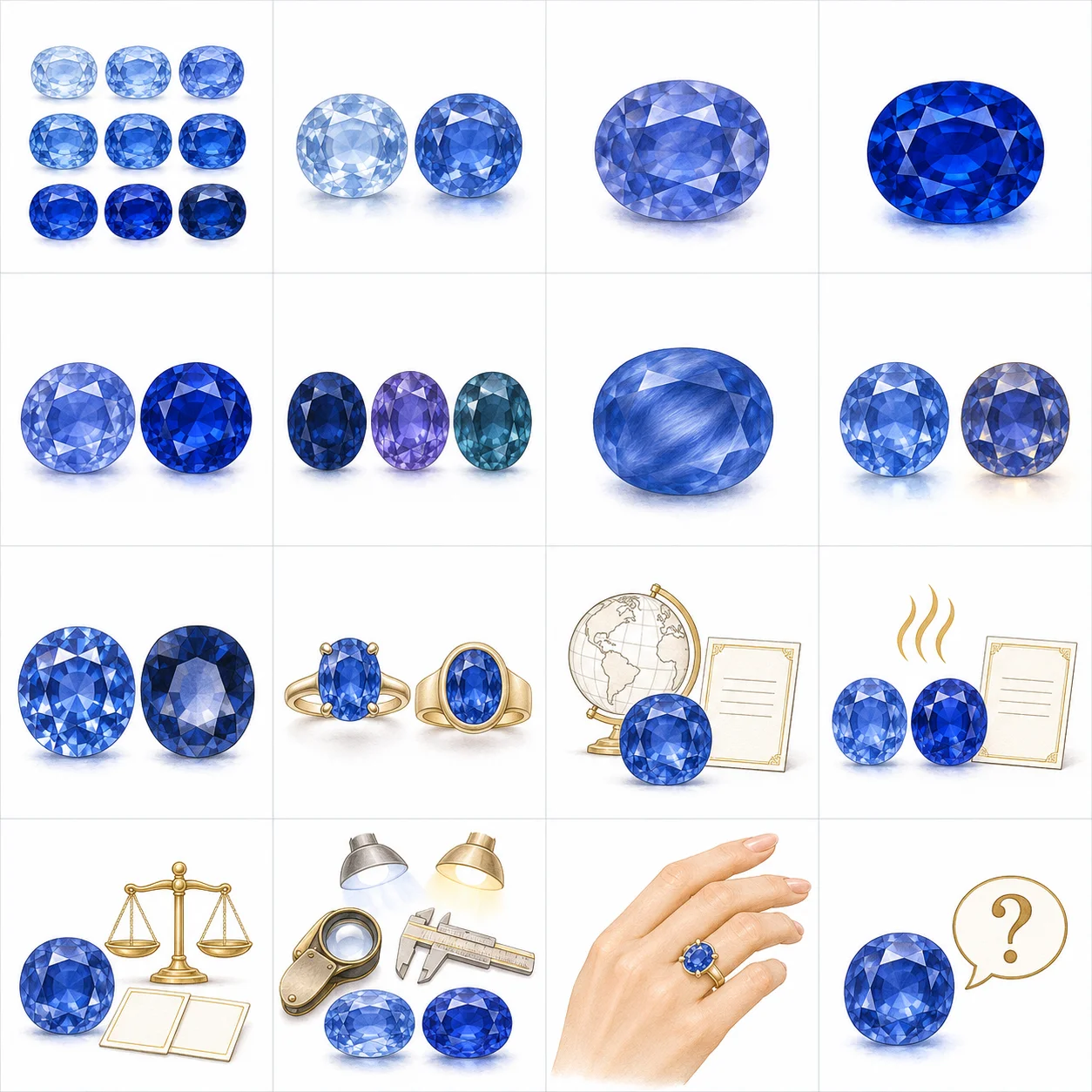
Hue is the basic color. A blue sapphire can be relatively pure blue, slightly violetish blue, or blue leaning slightly green.
Tone is how light or dark that color is. A pale sapphire and a navy sapphire can both be blue, but their tone is completely different.
Saturation is the strength or intensity of the color. Strong saturation gives you a richer blue. Weak saturation can make a stone look grayish or washed out.
And this is where buyers get confused: dark does not automatically mean saturated.
A sapphire can be very dark without having the lively blue that makes fine sapphire attractive. GIA describes the most valued blues as medium to medium-dark in tone with strong to vivid saturation, without becoming so dark that brightness is compromised.
So when somebody says, “I want the deepest blue possible,” I want to know whether they mean stronger color or simply a darker stone. Those are not the same thing.
Pale And Medium Blue
Let’s start lighter.
Pale and pastel blue sapphires can look soft, airy, and modern. Some can visually approach aquamarine, except you still have sapphire’s excellent durability.
Very light blues usually do not command the same prices as fine vivid blues because the traditional market favors a richer balance of tone and saturation. But if you dislike darker sapphire, pale blue may be exactly what you want.
Then we move into brighter medium blues, one of my favorite practical ranges for an engagement ring. You still get obvious sapphire blue, but the stone has more room to stay visibly blue in weaker light.
And medium blue does not automatically mean cornflower. It may simply be a beautiful medium blue.
A lot of buyers initially ask for royal blue because the name sounds premium. Then I put a brighter medium blue beside a deeper stone, and sometimes they prefer the brighter one immediately.
That is why I would not choose from terminology first. Look at several stones side by side and decide which blue your eye actually prefers.
Cornflower Blue
Cornflower blue is generally a lively medium blue, richer than a pale or pastel blue but not as deep or intense-looking as royal blue. The attraction is that balance: enough color to look unmistakably sapphire, while usually retaining a brighter, more open appearance.
But there is an important complication. Cornflower blue is not one universal international grade with one exact boundary.
The term has a long history in the trade, including associations with Kashmir and Yogo sapphires. But laboratories do not all use it the same way. AGL may use Cornflower Blue in supplemental documentation, while SSEF does not use it as a sapphire trade term on its standard reports.
So a seller writing “cornflower blue” is not automatically the same thing as a respected laboratory making that call.
Fine cornflower blue can absolutely command a premium because the appearance is desirable and difficult to find at high quality. What I would not do is pay that premium simply because the listing says “cornflower.”
The sapphire still has to justify the price through its actual color, brightness, cut, transparency, treatment, origin, and overall appearance.
For an engagement ring, this range can be especially attractive because you get a rich blue without necessarily pushing the stone into a tone that becomes difficult to read indoors.
Royal Blue
Now let’s go deeper.
Royal blue is a rich, highly saturated blue, generally deeper-looking than cornflower, but a fine royal blue still needs life and brightness. It should show vivid blue reflections rather than simply reading as navy or black.
That distinction is important because dark blue and royal blue are not synonyms.
SSEF requires strong saturation and vivid blue, either pure or with only a very slight purplish tint, along with good transparency and other quality criteria. It only grants Royal Blue to untreated, unmounted sapphires that qualify.
There is no single international Royal Blue standard used by every laboratory. Ask which laboratory assessed the term and read that laboratory’s criteria rather than treating every report and listing as equivalent.
For a buyer, the bigger point is simpler: even a legitimate royal blue sapphire can be darker than you personally want.
That was the client I mentioned earlier. The sapphire was not bad, but in the finished men’s ring it looked much darker than he expected. For that project, we arranged a brighter replacement sapphire and reset the ring. It was a useful reminder to evaluate the stone and setting together.
Royal blue can be spectacular. It is rich, dramatic, traditional, and visually serious. But I would never choose one only because a seller or a report gives me that prestigious phrase.
I want to see whether that sapphire still looks clearly blue and beautiful when the lighting is not doing it any favors.
Royal Blue Vs Cornflower Blue
So which one is better?
If you want a brighter appearance, a fine cornflower-type sapphire, or simply another beautiful medium blue, may suit you better. You generally have more room before the stone starts feeling overly dark in everyday conditions.
If you want a richer, deeper, more dramatic traditional sapphire appearance, royal blue may be exactly what you want.
Neither is objectively better for an engagement ring.
The right choice depends on whether you value brightness and consistency across everyday lighting more, or whether you specifically want the deeper, richer appearance of royal blue.
For a ring you wear every day, I care more about the finished result than the prestige of the color name. I would take an exceptional medium blue that looks beautiful in normal life over a Royal Blue sapphire that you personally see as nearly black much of the day.
If you genuinely love a dark, moody sapphire, that is different. Then darkness is intentional rather than a surprise.
Navy, Violetish, And Greenish Blue
There are two different ways blue can move away from the colors we just discussed.
It can become darker in tone, toward navy or midnight, or it can shift in hue toward violet or green. Those are different things.
Navy and midnight sapphires are much darker, and GIA notes that these colors are generally more affordable than fine vivid blue.
A nearly black-blue sapphire can still look excellent in a masculine or antique-inspired ring if that is what you want. The mistake is paying a fine-color premium because somebody describes a very dark sapphire as “deep” or “intense.”
Then we have hue.
A blue sapphire can lean slightly violet. That is not automatically negative. GIA’s preferred traditional range includes blue through violetish blue, and a subtle violet component can give the color a rich or slightly more electric character.
On the other side, blue can move toward greenish blue and eventually teal.
Traditional pricing generally favors blue to violetish blue over noticeably greenish blue, but your preference may go the other way. A greenish-blue sapphire can look more organic and beautiful in a nature-inspired yellow-gold ring.
The market can tell us which colors cost more. It cannot tell you which color you should enjoy every day.

Velvety Blue
You may also hear the phrase “velvety blue.”
That is not another shade sitting between cornflower and royal. Velvety describes the character of the appearance.
Fine Kashmir sapphires became famous partly for microscopic inclusions that can create a soft, glowing appearance. So two sapphires with similar basic color can still feel very different: one crisp and transparent, another softer and more velvety.
Why The Same Sapphire Looks Different
Now we get to the practical part.
A sapphire will not look identical in every environment.
Jewelry-store spotlights and supplier light boxes are very good at making gemstones come alive. Your house, office, restaurant, or a cloudy afternoon may be completely different.
Different light sources can change the color and brightness we perceive, which is why laboratories use controlled lighting.
So I do not want one perfect video of an important sapphire. I want daylight, normal indoor light, and movement. With a deep blue, I especially want to know what happens when the lighting gets weaker.
You are not buying the sapphire for the dealer’s light box.
Cut, Extinction, And Windows
Then we have cut.
With colored stones, cut is not only about symmetry or sparkle. It can change how the color presents face-up.
Sapphire cutters have to think about color zoning, pleochroism, depth, orientation, and whether the finished stone becomes too light or too dark.
When you see black areas in a sapphire, do not automatically interpret them as stronger color. Some darkness comes from the body color itself, and some comes from the way cut, lighting, and viewing angle interact.
That is where extinction comes in. Certain areas can appear very dark because little useful light is returning toward your eye.
At the other extreme, a poorly proportioned stone can have a window, where you can effectively see through part of it instead of getting strong light return.
So two sapphires with similar color descriptions can perform very differently because of cut.
Size and depth matter too. More material can strengthen apparent color, although bigger sapphires are not automatically darker. Size, depth, cut, and the material all interact.
The Setting
And then we have the setting.
People often say, “A bezel makes a gemstone dark because no light can enter through the bottom.”
That is too simplistic.
Most of what you see face-up comes from light interacting with the stone and returning through the crown. A faceted gemstone responds to illumination and reflections from different angles around it, not simply light entering from underneath.
So I cannot say that the bezel alone made my client’s sapphire dark. The stone was already deep in tone.
But once that stone was placed into a substantial, enclosed men’s design, the combination was less forgiving in ordinary light. Surrounding metal, contrast, reflections, and the ring architecture can all influence the finished impression.
That is why, especially with darker sapphires, I would not choose the stone and setting as completely separate decisions.
With a heavy bezel, I may show you brighter sapphires alongside deeper options so you can judge the complete combination rather than the loose stone alone.
The point is not that one setting is better. The color and the design simply need to work together.

Origin
Origin can affect value enormously, but it does not guarantee one specific color.
Kashmir, Burma, Sri Lanka, Madagascar, Montana, and Australia all produce ranges of sapphire. Do not reduce that to Kashmir equals cornflower, Burma equals royal, or Sri Lanka equals light blue. Colors overlap.
A famous origin can add rarity, history, and collector value. But first I want to know whether you love the sapphire.
Heat Treatment
Treatment is similar.
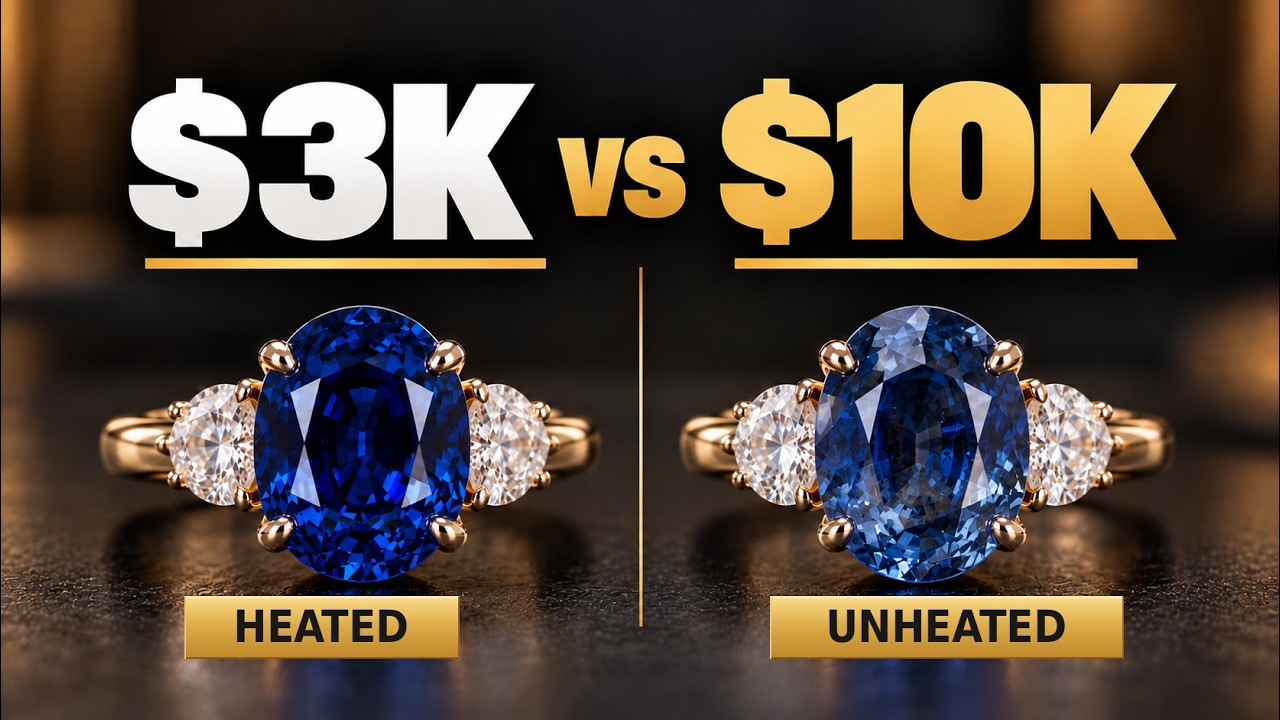
Heating is common in sapphire and can alter color and transparency. An unheated sapphire can command a substantial premium when the quality is high because fine untreated material is rarer.
But unheated does not automatically mean brighter, darker, more saturated, or more beautiful. Treatment history and visual beauty are separate questions.
I discuss heated versus unheated sapphire separately. Here, the key point is that treatment history and the blue you actually enjoy are different questions.
Price
So which blue costs more, Royal Blue or Cornflower Blue?
There is no universal winner. Both are premium sapphire colors, and when the rest of the quality is comparable, an exceptional Cornflower Blue can cost as much as an exceptional Royal Blue. In fact, different respected laboratories have sometimes described the exact same sapphire as Royal Blue and Cornflower Blue, which shows how much these trade-color categories can overlap.
What matters is the quality of the actual color. A great Royal Blue can be worth more than an average Cornflower Blue, and an exceptional Cornflower Blue can be worth more than a mediocre Royal Blue.
Then you stack the other factors on top: size, transparency, cut, treatment, origin, and laboratory documentation. No-heat status, large size, and prestigious origins such as Kashmir can increase prices dramatically.
That is why an important auction sapphire described as Royal Blue can sell for extraordinary money. You are not paying for those two words alone. You are paying for the entire combination of color quality, rarity, origin, treatment status, size, and overall quality.
So I would not look at “Royal Blue” or “Cornflower Blue” and assume one automatically costs more. The premium comes from how exceptional the actual stone is, not simply which of those two names appears on the report.
How I Would Actually Choose One
If I were helping you choose a blue sapphire engagement ring, I would start by putting several different tones side by side.
Do not begin with, “Show me your best royal blue.”
First figure out what your eye likes.
Maybe it is pale, bright medium blue, cornflower-type blue, deep royal, navy, violetish, or leaning toward teal.
Then look at saturation and brightness separately. Do not confuse dark with vivid. Check the cut for large dead areas, obvious windows, or distracting zoning. See the sapphire in more than one lighting environment, especially if it is deep in tone.
Then think about the ring itself.
A delicate, open design and a substantial men’s bezel are not the same visual environment. The sapphire needs to make sense with the piece we are actually building.
If my priority is an engagement ring I love visually, I would get those fundamentals right first.
Then I would decide how much extra I personally want to pay for no-heat status, prestigious origin, or an important laboratory color designation.
Those things can absolutely add value. But they should add value to a sapphire you already love. They should not convince you to love a color you do not.
Choose the Blue You Want to Wear
So, Royal Blue or Cornflower Blue?
If you want a rich, dramatic, traditional sapphire, a great Royal Blue can be extraordinary.
If you want a brighter blue that stays obvious across more everyday lighting conditions, a fine cornflower-type sapphire or another beautiful medium blue can be extremely hard to beat.
But the best blue sapphire is not necessarily the one with the most prestigious color name.
It is the one that still looks the way you hoped it would look after we turn it into a ring.
Frequently asked questions
Is royal blue always more expensive?
No. Compare the actual stone’s color quality, size, cut, transparency, treatment, origin and documentation. The trade name alone does not determine the price.
Does a bezel automatically make a sapphire dark?
No. The stone’s tone, cut, illumination, surrounding metal and design interact. Evaluate the complete combination rather than attributing the result to one setting feature.
Find the blue that works in your ring
Start with the colors you enjoy, then consider how the sapphire, metal, proportions and setting will work together in everyday light.
Book a NinaVova consultation or explore our custom design process.
Continue reading: Sapphire engagement ring guide · Custom engagement ring design process.
Sources and further reading
- GIA: Sapphire quality factors
- SSEF: Royal Blue color terminology and criteria
- SSEF: Sapphire reports and the laboratory’s trade terminology
Availability, prices and service terms can change. Evaluate the individual stone and confirm the current written terms before ordering.