
Designer vs Custom Engagement Rings: Value, Quality & Fit

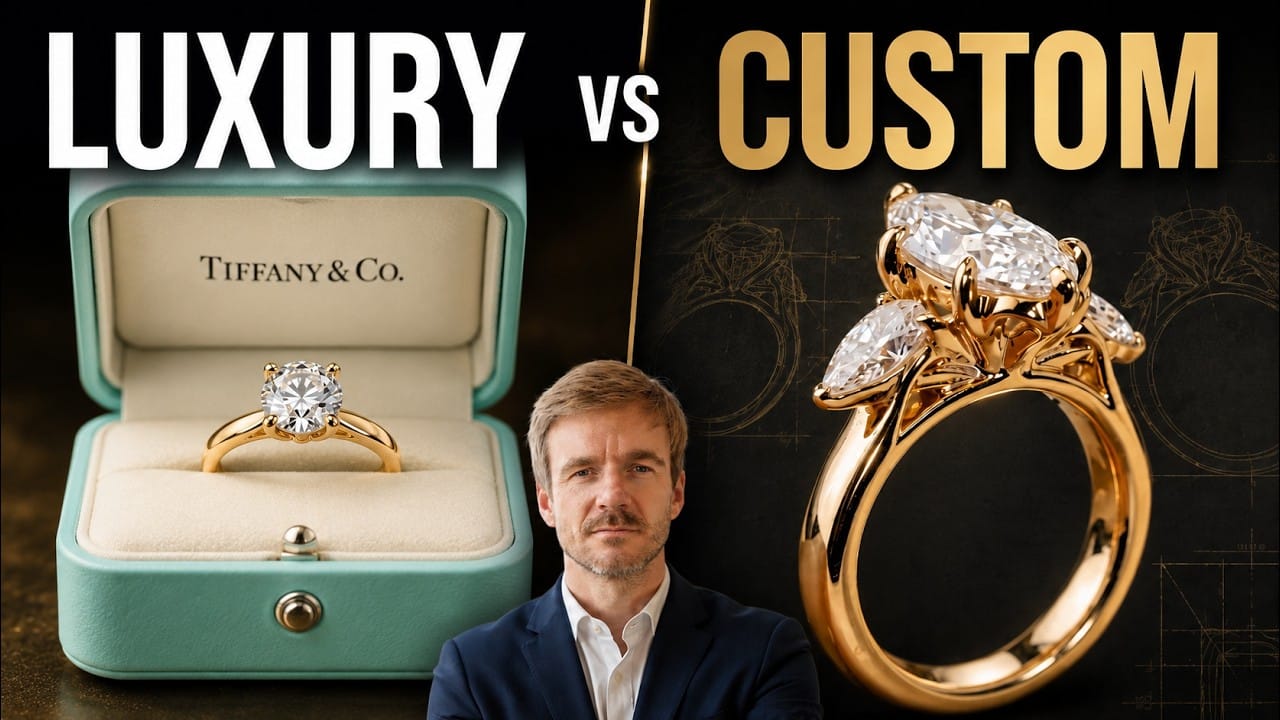
A designer engagement ring can make sense when the name, design and buying experience are part of what you love. A custom engagement ring can make sense when you want the stone, proportions and details chosen around one person.
Compare the complete ring and the complete service. A famous name does not replace an assessment of the stone, and the word “custom” does not guarantee better craftsmanship or a lower price. The better choice depends on what matters to the wearer—and what each jeweler actually promises in writing.
At NinaVova, we create custom engagement rings, so that is the perspective behind this guide. My aim is to help you recognize what you are paying for, including the advantages and compromises of both approaches.
Compare the options · Check stone quality · See a custom example · Use the buying checklist
Designer vs custom engagement rings at a glance
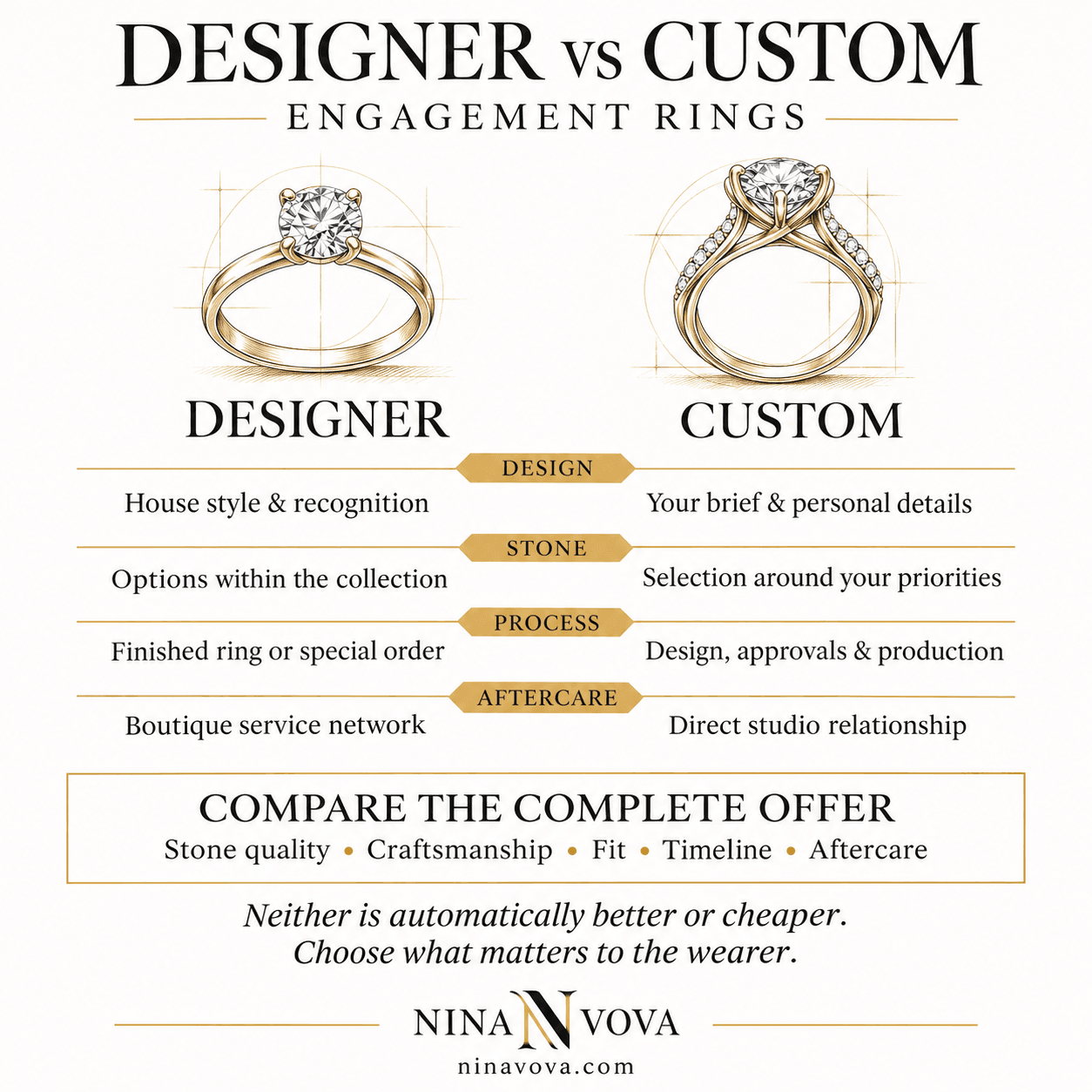
| What matters | Designer engagement ring | Custom engagement ring |
|---|---|---|
| Starting point | A house’s collection, established design and recognizable identity. | A brief shaped around the wearer, or an existing design developed further. |
| Stone selection | Options depend on the collection and the brand’s selection process. | Selection can begin with a particular stone, color or shape; availability still limits the options. |
| Design freedom | Usually works within the house’s design language. Personalization may be available. | Can address details such as setting height, band width and personal motifs before production. |
| Price | Includes the ring, the brand and the particular retail and service offering. | Depends on the stone, metal, design, labor and the studio’s costs. Not automatically cheaper. |
| Timing | An available finished ring may be quicker; sizing and special orders can add time. | Requires time for decisions, approvals and production. Confirm the schedule before committing. |
| Aftercare | May provide a wider boutique network, subject to the brand’s terms. | May provide a direct relationship with the studio. Ask who handles future service and shipping. |
The categories overlap. “Designer” does not always mean off-the-shelf, and custom work can begin with an existing setting. For example, Cartier lists its Set For You service, where clients select a setting and center diamond. Compare the actual offer rather than relying on the category label.
What are you paying for in a designer ring?
Part of a designer ring’s appeal can be the design itself. Part can be the house’s history, recognizable name, presentation and relationship with its clients. Those things can have real emotional value. If your partner has always wanted a particular designer ring, substituting another ring with similar specifications may miss the point.
The difficulty comes when a buyer assumes that every extra dollar represents a better diamond. Separate what you value about the brand from what you can assess about the ring: the stone, the setting, the workmanship and the service terms.
I would not attach a universal markup percentage to Tiffany, Cartier or independent jewelers. A meaningful comparison needs current quotes for genuinely comparable rings. Two rings with the same carat weight can differ substantially in other characteristics.
How to compare diamond quality beyond the name
Start with the individual stone. GIA’s diamond quality framework uses color, clarity, cut and carat weight. Check the diamond’s identity and documentation, then look at how it performs in ordinary lighting.
- Confirm what the stone is: natural diamond, laboratory-grown diamond or another gemstone. Compare like with like.
- Read the documentation: identify the issuing organization and match the report details to the stone. A retailer’s certificate and an independent laboratory report are different documents.
- Look beyond weight: compare measurements, shape, proportions and appearance. Carat measures weight, not face-up dimensions.
- Assess the finished ring: examine the setting’s finish, stone security, comfort and how it sits beside the intended wedding band.
A grading report also serves a different purpose from an appraisal. GIA distinguishes an assessment of quality from an appraisal’s monetary valuation. Neither document is a promise of a future resale price.
Where custom design can offer something different
Custom is most useful when you can identify a specific reason to build the ring differently. Perhaps a setting feels too high. Perhaps your partner loves a particular blue-green color. Perhaps the wedding band needs to fit in a certain way, or an architectural detail has personal meaning.
Those decisions give the project direction. Instead of asking for “something unique,” discuss how the ring should look, feel and function. A good design brief includes the wearer’s taste, daily activities, preferred proportions and budget.
A NinaVova example: a ring inspired by the Brooklyn Bridge

In this design, the reference appears in the structure of the ring. The open pattern along the band echoes bridge decking, while the gallery beneath the center stone draws on the bridge’s arches. The stone and setting work together around a clear idea.

That is a practical way to judge custom design: can you explain why each detail belongs? A meaningful reference should help guide the design, while comfort and construction still need attention.
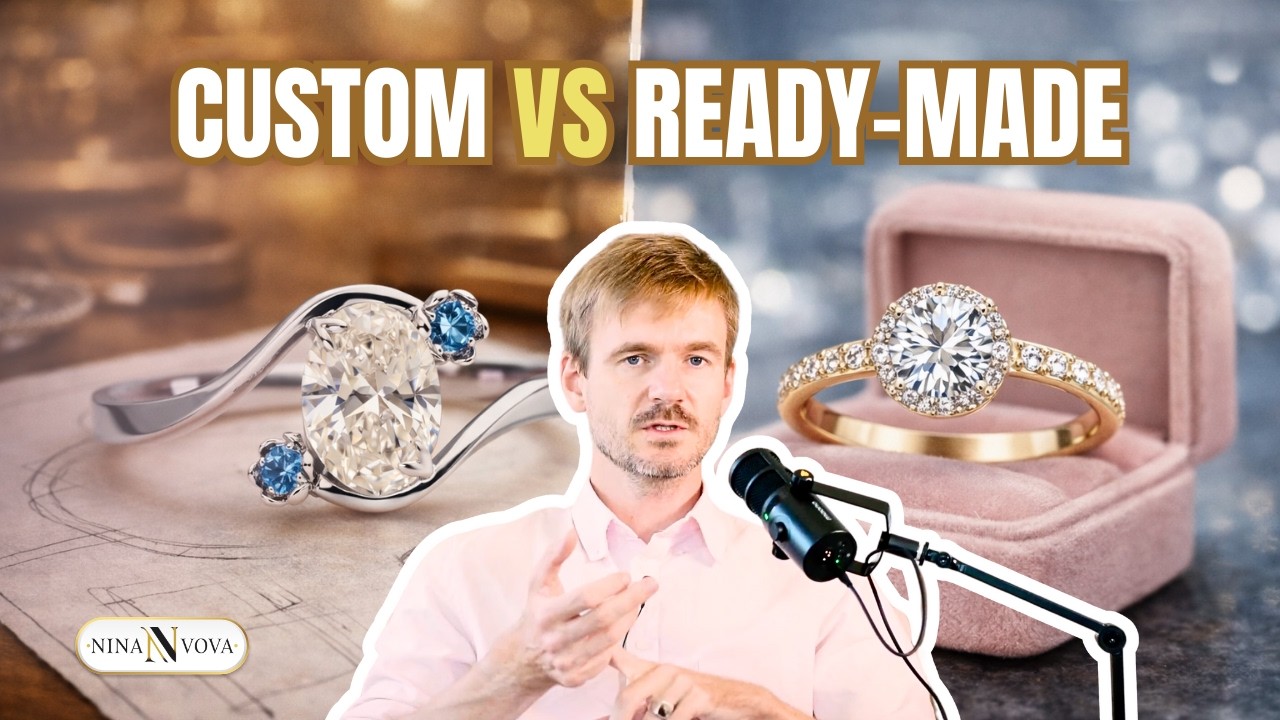
If you are weighing the wider buying process rather than a particular brand, see our separate guide to custom vs ready-made engagement rings.
Compare convenience and aftercare before price alone
A finished ring lets you inspect the object you are buying. A custom project asks you to make some decisions before the final ring exists. That can be rewarding, but it requires clear communication about stone selection, design approvals, revisions and delivery.
At NinaVova, our website currently advises allowing 6–8 weeks for custom pieces unless otherwise stated. Rush orders must be discussed before ordering. Confirm the timeline for your individual project rather than treating any general estimate as a guaranteed proposal date.
Ask the same aftercare questions of every seller: what inspections or cleaning are included, whether resizing is possible, which repairs are chargeable, and what happens if a stone is damaged or lost. Obtain the return and cancellation terms before paying, especially for personalized work.
Read warranty language carefully. For example, Tiffany explains that the lifetime warranty backing its Diamond Certificate concerns the accuracy of the certificate at the point of sale. Do not assume that the phrase “lifetime warranty” means every future repair or loss is covered.
A checklist for comparing two ring quotes
- Define the priority. Is the specific brand essential, or are you mainly seeking a look, a stone or a personal story?
- Match the specifications. Compare stone type and quality, measurements, metal and setting details—not just the headline carat weight.
- Compare the complete cost. Clarify taxes, shipping, design work, revisions, sizing and any separate service charges.
- Inspect what you can. Request clear photographs or video in useful lighting and understand what will be approved before production.
- Confirm the terms. Get the delivery estimate, approval stages, return or cancellation policy and aftercare responsibilities in writing.
- Choose for the wearer. Consider comfort, daily use and wedding-band fit alongside appearance.
Frequently asked questions
Are custom engagement rings always less expensive?
No. A simple custom ring and a complex custom ring are very different projects. Stone choice, metal, design development and workmanship all affect the quote. Compare complete offers for equivalent specifications rather than assuming a fixed saving.
Does a designer ring automatically have a better diamond?
The brand name alone cannot answer that question. Assess the specific stone, its documentation and appearance, together with the setting and the seller’s guarantees.
Should I choose a ring for its resale value?
For an engagement-ring purchase, I would prioritize the ring you want to wear and the amount you are comfortable spending. If resale is important to your decision, obtain an independent valuation appropriate to that purpose; do not treat a retail price or insurance appraisal as a resale offer.
Watch the original NinaVova discussion
Watch the video on YouTube for the original explanation behind this guide.
Start with what matters to your partner
If a specific designer ring is the dream, that preference deserves respect. If you want to explore a ring built around your partner’s story, we can help you consider the stone, proportions and design together.
Book a NinaVova consultation or explore our custom design process.
Sources and further reading
- GIA: Diamond Quality Factors
- GIA: Diamond Buying Tips
- Tiffany & Co.: Diamond Certificate lifetime warranty
- Cartier: Set For You and boutique services
Brand examples describe the published information linked above. Availability, policies and service terms can change; confirm them with the seller before purchasing.