
16 Engagement Ring Claims to Check Before Paying More

Some of the most expensive things in an engagement ring are not diamonds or gold. They are words.
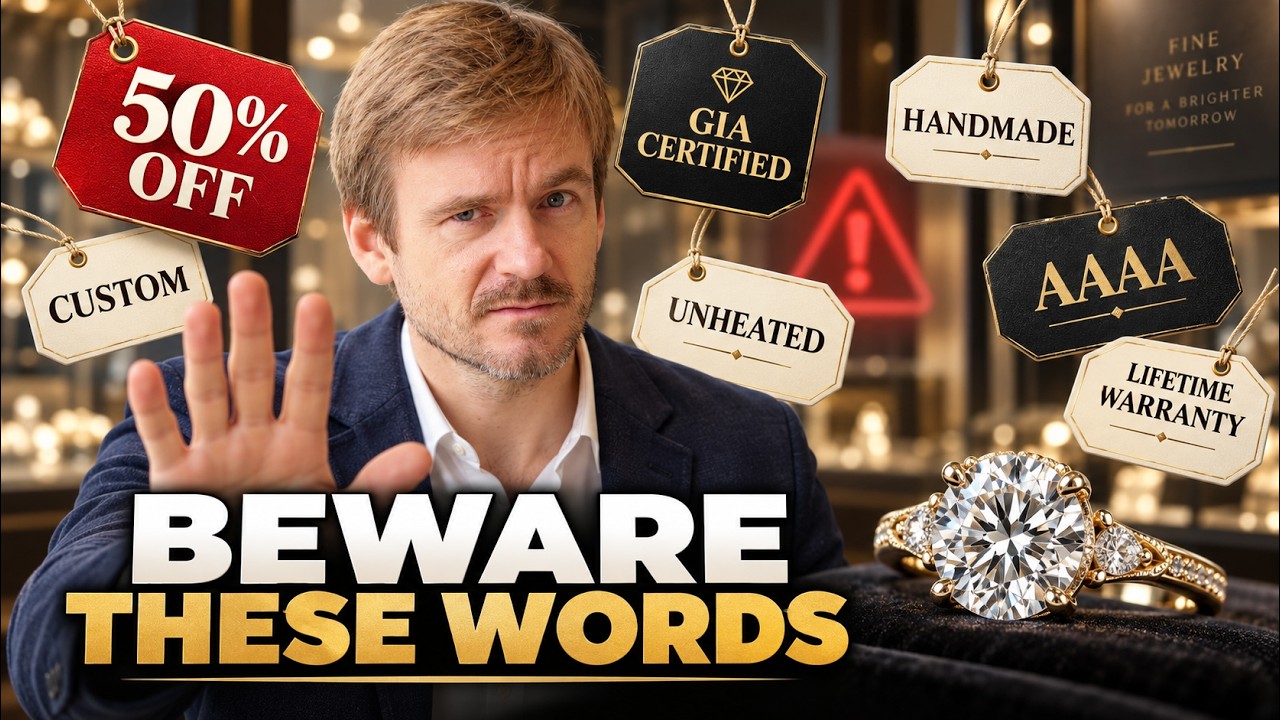
Handmade. GIA certified. Unheated. Natural. AAAA. One of a kind. Appraised at $12,000. Fifty percent off.
Some of these words describe something genuinely valuable. Some are loosely defined. And some describe a real quality, but buyers assume that quality matters much more than it actually does.
This is a guide to useful questions. I make custom engagement rings, and several of these qualities can be worth paying for when they are properly explained and delivered.
The point is that if one word adds hundreds or thousands of dollars to a ring, you should know exactly what that extra money is buying.
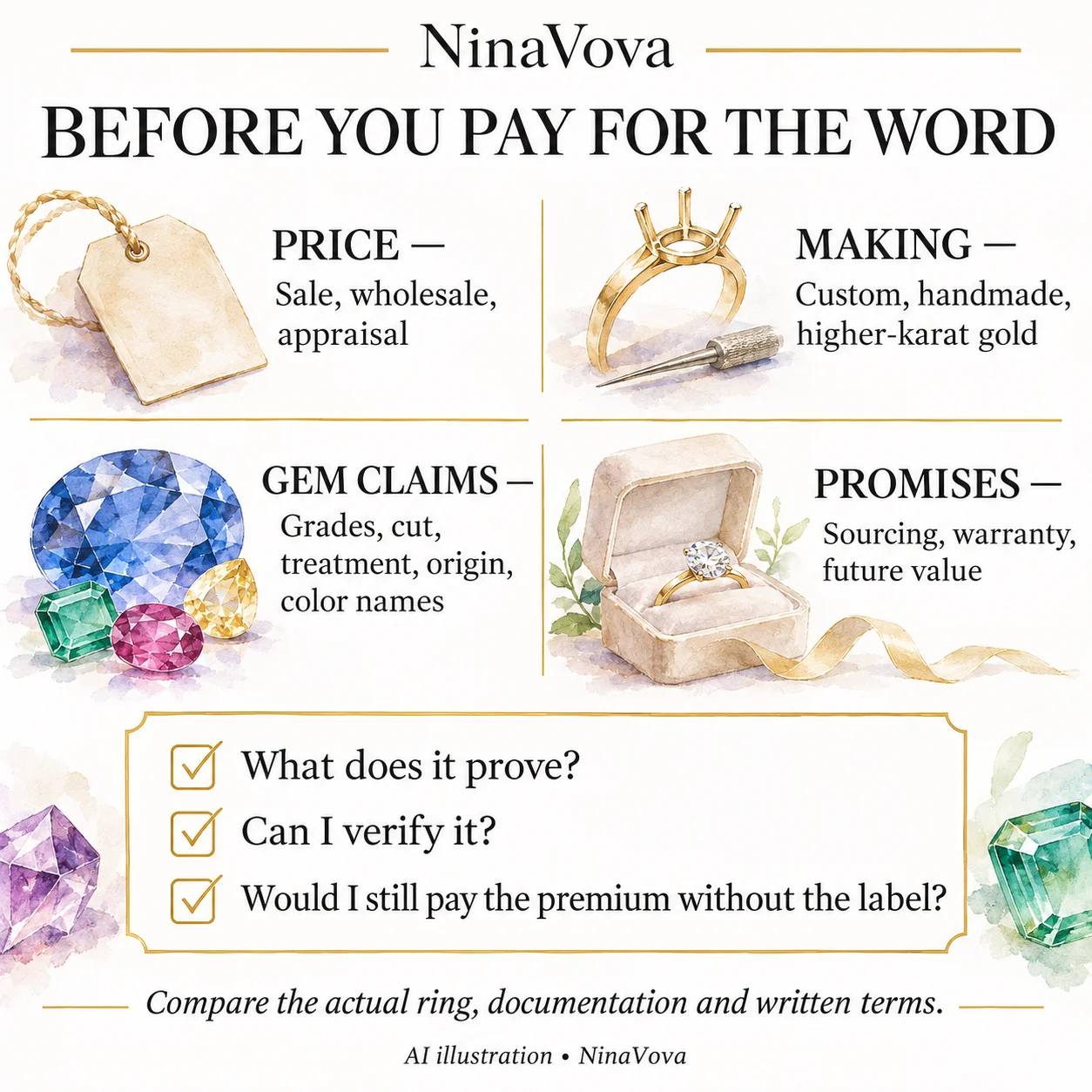
Pay for a documented quality you value, not an unexplained label. A term can describe real design work, rarity, treatment status or useful service. Ask what it means for this exact ring, what evidence supports it and whether that difference matters to you. Compare the final price and written terms as well as the gemstone itself.
At a glance · 1. Sale — 30%, 40%, 50% Off · 2. Appraised At · 3. Wholesale / Factory Direct · 4. Custom / Bespoke / One Of A Kind / Exclusive
Watch the NinaVova discussion
Watch the original NinaVova video on YouTube.
Which evidence goes with which claim?
| Claim group | Useful evidence | What the word alone cannot prove |
|---|---|---|
| Sale, wholesale, appraisal | Comparable offers and the appraisal’s stated purpose | A bargain or cash resale value. |
| Custom and handmade | Design scope, production steps and written specification | That every step is unique or that workmanship is excellent. |
| Gem grades and labels | The actual report and stone, checked against each other | That the selling price is fair or the stone is your favorite. |
| Treatment, origin, trade color | A relevant independent report and clear disclosure | Beauty or a premium justified by the label alone. |
| Ethical or sustainable | Specific traceability, audit or environmental evidence | Every possible social and environmental benefit. |
| Warranty and future value | Coverage terms, exclusions and realistic resale conditions | Insurance coverage, universal protection or a guaranteed return. |
1. Sale — 30%, 40%, 50% Off
A ring can be 50% off and still be overpriced.
The FTC actually addresses this directly. If a seller creates an artificially high former price just so the ring can later appear heavily discounted, that is not a real bargain.
So I would almost ignore the percentage. If a ring was supposedly $10,000 and is now $6,000, the useful question is whether comparable rings with a similar stone, setting, metal, and workmanship sell for $5,000, $6,000, or $8,000.
You are spending the sale price, not the crossed-out price. Judge that number.
2. Appraised At
You pay $5,000 for a ring and receive an appraisal for $9,000. It feels as if you somehow bought $9,000 of jewelry for $5,000.
Usually, that is not what the appraisal is telling you.
An insurance replacement appraisal estimates replacement cost for its stated purpose. Fair-market value and a resale offer answer different questions. Read the document’s purpose rather than treating any appraisal number as cash you could receive.
The declared value can influence insurance coverage and premiums, subject to the insurer’s terms. Discuss accuracy and coverage with the appraiser and insurer; a larger printed number does not automatically give you a larger benefit.
So a high appraisal is not automatically good news. I want an accurate appraisal, not the biggest number somebody can print.
3. Wholesale / Factory Direct
I hear this constantly: “My friend knows a wholesaler,” or “I can get the diamond at dealer price.”
That connection may genuinely give you an excellent deal. But the word wholesale itself proves nothing about the price.
The FTC specifically warns retailers against calling an ordinary retail price “wholesale,” and against claiming “factory price” when it is not actually comparable to the price paid by buyers purchasing directly from the manufacturer.
For you as the buyer, the solution is simple. Compare the actual stone, actual setting, service, return conditions, and final number.
A $6,000 wholesale diamond is still more expensive than an equivalent $5,500 diamond somebody happens to call retail.
4. Custom / Bespoke / One Of A Kind / Exclusive
I want to be especially clear with this one because custom engagement rings are what I make.
Real custom work can absolutely justify a premium. But there is a huge range hiding behind the word custom.
Changing a stock ring from white gold to yellow gold is customization. Changing the head for another center stone goes further. Starting with an unusual sapphire, designing the proportions around that exact stone, keeping the setting low, making sure the wedding band works with it, solving structural problems, developing personal details, and revising the design with the client is something very different.
That is where I believe custom has real value. You are paying for design work, stone-specific engineering, problem-solving, revisions, and a ring developed around one person instead of choosing the closest thing from a catalog.
The same applies to “one of a kind” and “exclusive.” If exclusivity adds to the price, ask whether the design will actually remain exclusive or whether it simply looks unusual.
The useful question is: what is being created specifically for me that I would not receive from a ready-made ring?

5. Handmade / Handcrafted / Heirloom Quality
Handmade can justify a premium, but only if you know what was actually done by hand.
The U.S. Jewelry Guides give handmade claims a specific scope involving hand labor and manually controlled methods for the relevant production steps. Ask which operations were performed by hand rather than inferring the entire manufacturing process from one adjective.
A hand-fabricated ring can start with metal sheet, wire, or bar that the jeweler physically forms and solders instead of casting the main ring from a CAD model. That takes considerably more labor and can be valuable for certain structures, unusual construction, or detailed hand engraving.
But handmade does not guarantee good engineering. A badly designed handmade ring can still have weak prongs or poor support, while an excellent cast ring can last for decades.
So if handmade costs substantially more, ask which parts were hand-fabricated and what advantage that gives this particular design.
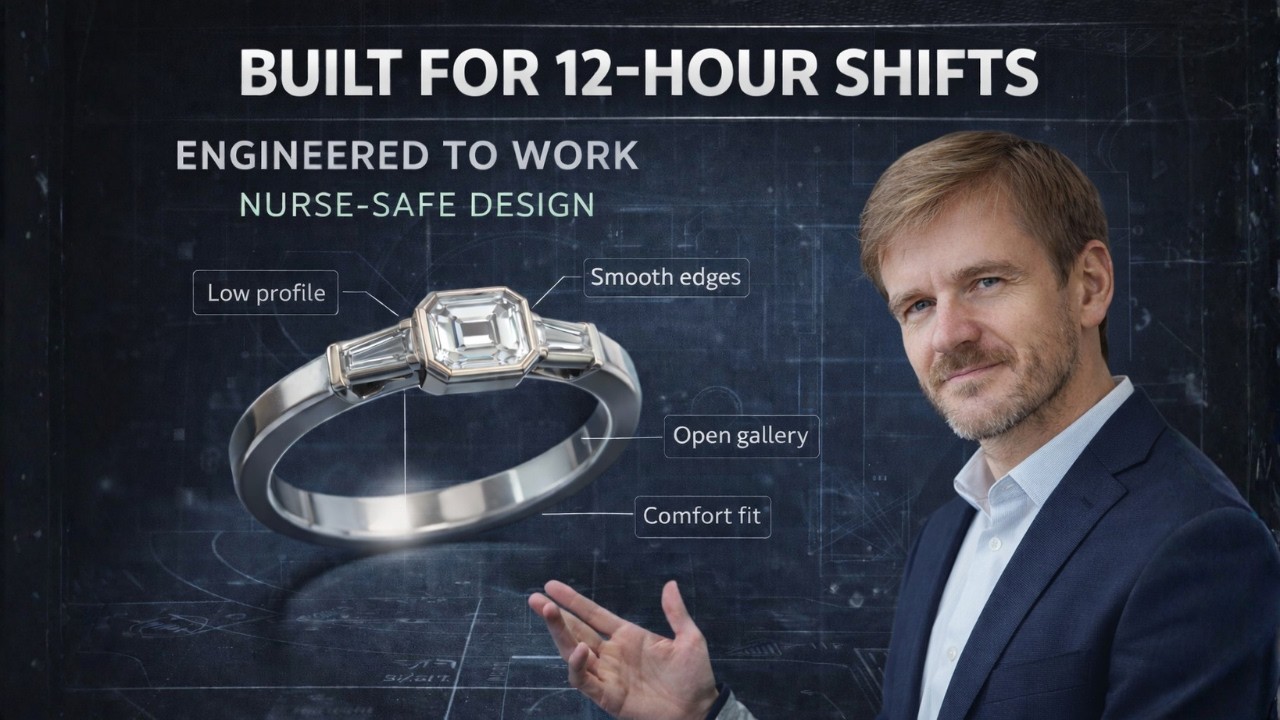
And with “heirloom quality,” look at the things that actually determine longevity: enough metal where the ring takes stress, properly supported stones, good setting work, and construction that can realistically be repaired years from now.
6. AAA / AAAA / Premium Grade
This is one of the clearest examples of a quality label that buyers often assume is more official than it really is.
GIA specifically says that individual companies can create their own AAA, AA, and A descriptions for colored gemstones such as spinel, but there is no standardized AAA grading scale for spinel. GIA also does not give sapphire an overall quality grade.
So when you see an AAAA sapphire, do not interpret it as the colored-stone equivalent of a standardized diamond grade.
The seller may have a perfectly reasonable internal system. AAAA may genuinely mean its best inventory. The problem starts when you compare AAAA from one company with AAA from another as though both companies were using the same ruler.
For a sapphire, I want to know the actual color, brightness, cut, treatment, clarity where it matters, origin where it matters, and how the stone looks in realistic lighting.
I do not buy the number of A’s.
7. GIA Certified
“GIA certified diamond” is technically incorrect, and this comes directly from GIA.
GIA says it does not certify anyone or anything. It grades or identifies gemstones and issues laboratory reports. GIA even lists expressions such as “GIA Certified” and “GIA Certified Diamonds” as incorrect uses of its name because they can imply GIA approval.
That distinction matters because buyers can hear “certified” and think GIA has effectively said, “This is a good diamond. Buy it.”
That is not what the report means.
The report gives you independent information about the diamond’s characteristics. It does not tell you the selling price is fair, and it does not choose between two diamonds with the same grades but different visual character.
I absolutely want reliable laboratory documentation when serious money is involved. I just separate GIA graded from good diamond for the money. Those are two different questions.
8. D Color / VVS / Flawless
These are real grades, and the rarity behind them is real. But here is where the price can move much faster than what your eyes can see.
In many diamonds, the clarity features behind VVS and VS grades are not apparent to an unaided observer. The price difference depends on the individual stones and market. Inspect the actual diamond rather than assuming every grade step will create an equally visible improvement.
That is a very important buyer distinction.
You may absolutely want VVS because rarity matters to you. I would simply separate paying for rarity from paying for a difference you expect everyone to see on the hand.
And “Flawless” is not just a dramatic marketing word. US jewelry guidance gives it a specific meaning based on examination at 10× magnification. “Perfect” is even more restrictive.
So these terms can represent something real and rare. Just understand whether you are paying for visible beauty or for a level of rarity that mostly exists on the report.
9. Triple Excellent / Super Ideal / Hearts & Arrows
Cut is one area where I absolutely want buyers to care, because cutting changes how a diamond handles light.
But these terms are not interchangeable.
GIA gives an overall cut grade only to standard round brilliant diamonds in the D-to-Z color range. “Triple Excellent” normally means Excellent for cut, polish, and symmetry.
“Super Ideal” is not another GIA grade above Excellent. Hearts & Arrows describes a very high degree of optical symmetry seen under a special viewer, and some specialist diamonds genuinely have exceptional precision.
That can be worth money.
But if someone wants a premium because the diamond is called Super Ideal, I want to see what earned it. Show me the proportions, optical precision, light-performance information where available, and the actual diamond.
Exceptional cutting deserves a premium. The adjective itself does not.
10. Higher-karat gold
Higher karat means a greater proportion of gold, not an automatic improvement in every aspect of a ring. Eighteen-karat gold contains 18 parts gold out of 24; fourteen-karat gold contains 14. The other metals influence color and working properties.
Both 14k and 18k alloys are used for frequently worn rings. A richer gold color may be exactly what you want, while the proposed alloy, ring dimensions, construction and maintenance still need discussion. Do not assume the higher number alone tells you which ring will wear better.
If the higher-karat option costs more, ask what you value about it: the color, gold content, weight or the way it supports the particular design. Then compare the complete written specification. The best choice is the material that suits the person and ring, rather than the largest karat number available.
11. Unheated / Untreated
With sapphire and ruby, treatment can change value dramatically.
Heat treatment is accepted and very common. It can improve the appearance of a stone, and a beautiful heated sapphire can be an excellent engagement-ring choice.
Fine material with no evidence of heat is rarer. GIA specifically says that for fine-quality sapphire, independent confirmation of no heat adds rarity and value.
The mistake is turning “unheated” into a beauty grade.
Imagine an unheated sapphire that is too dark for you next to a heated sapphire with beautiful color, brightness, and exactly the appearance you wanted. Buying the first one only because the report sounds more impressive would make very little sense to me.
Treatment status helps explain rarity and price. The stone still has to be beautiful enough to deserve your money.
12. Kashmir / Burma / Ceylon
Now we are paying for provenance, and the premium can become enormous.
GIA says every mine produces a wide range of quality, but for exceptional sapphire an independent origin determination can add significant value, with Kashmir receiving the strongest premium.
And GIA has pointed out something even more interesting: a lower-quality Kashmir sapphire can sometimes sell for more than a much finer sapphire from Sri Lanka simply because of the provenance.
That tells you exactly how powerful one origin word can become.
There is nothing wrong with valuing provenance. A fine Kashmir sapphire has rarity, history, and collector demand that another beautiful blue sapphire may not have.
But origin should not replace looking at the stone itself.
My order would be: first decide whether this is an exceptional sapphire you actually want to wear. Then decide how much the provenance is worth to you.
13. Padparadscha / Pigeon Blood / Royal Blue
These may be the purest examples in this video of a few words adding serious money to a gemstone.
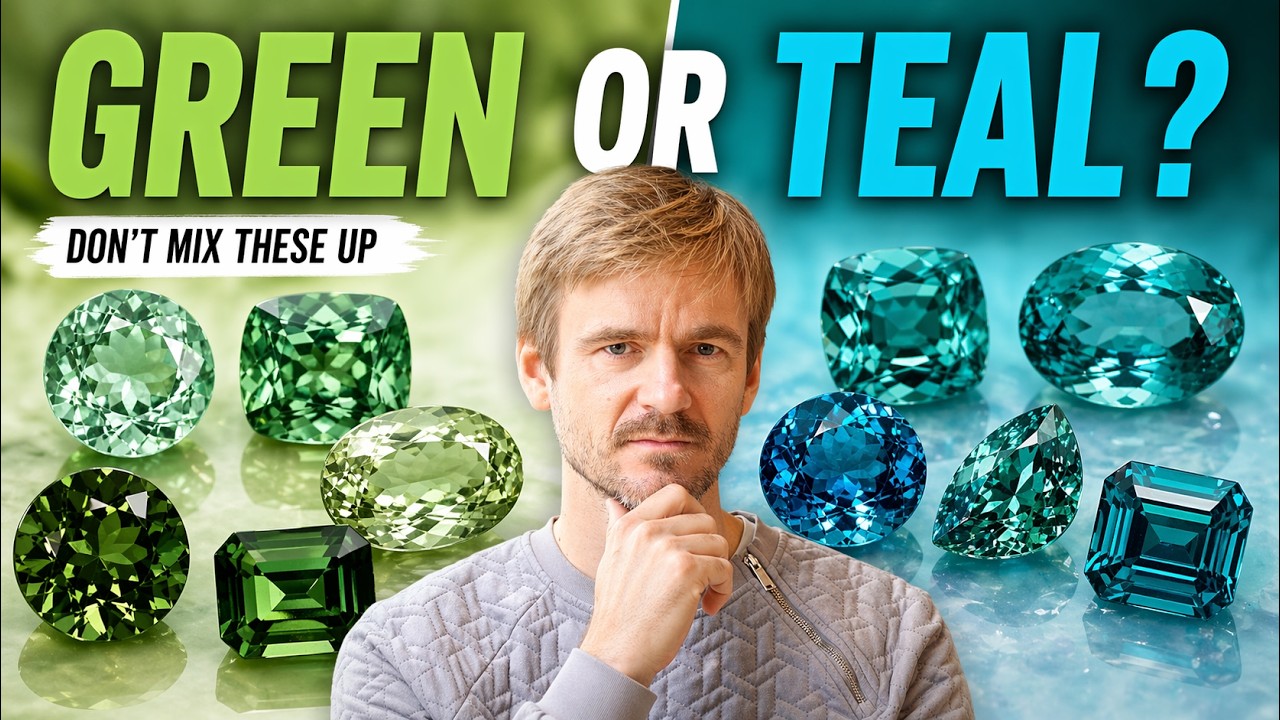
Padparadscha describes a very particular pink-orange sapphire range, but even GIA says the definition has historically been debated. GIA will give an opinion on whether a sapphire meets its criteria for that name.
Pigeon Blood Red and Royal Blue are also prestigious trade-color terms. SSEF points out that they have a major effect on market value, but there is still no universal international colorimetric standard for either term.
SSEF therefore applies its own protocol and will only use those names on stones that meet additional requirements involving color saturation, treatment status, transparency, inclusions, and other characteristics.
So if a seller wants thousands more because a ruby is “Pigeon Blood” or a sapphire is “Royal Blue,” ask a very simple question: who is assigning the name?
A respected laboratory designation and a romantic product description are not the same thing.
14. Ethical / Conflict-Free / Sustainable
These words can matter enormously, but they need to be specific.
Take “conflict-free.” Under the Kimberley Process definition, conflict diamonds are rough diamonds used by rebel movements or their allies to finance armed conflicts aimed at undermining legitimate governments.
That is much narrower than saying a diamond has perfect labor practices, full mine-to-ring traceability, low environmental impact, or a certain carbon footprint.
“Sustainable” can be even broader.
The FTC has actually warned jewelry companies about unqualified claims such as “eco-friendly,” “eco-conscious,” and “sustainable,” because those terms can imply environmental benefits the company may not be able to substantiate.
So if one ring costs more because it is sustainable, ask the seller to finish the sentence.
Sustainable in what specific way? Recycled metal? Traceable mine? Audited chain of custody? Renewable energy? A documented environmental standard?
I am happy to pay for transparency. I just want to know exactly what transparency I am buying.
15. Lifetime Warranty
Lifetime sounds incredibly reassuring when you are about to spend thousands of dollars.
But the value is not in the word lifetime. It is in the terms.
Does it cover manufacturing defects? Routine prong wear? Lost accent stones? Resizing? Shipping? Do you need inspections every 6 months or every year? What happens if you miss one?
And a warranty is not automatically a substitute for jewelry insurance.
A manufacturer warranty may cover workmanship while insurance can address completely different risks such as theft, accidental loss, or damage, depending on the policy.
A good warranty can absolutely be valuable. But compare the actual coverage before paying significantly more because the word lifetime makes one option feel safer.
16. Investment / Holds Its Value
This is the phrase I would be most careful with.
Jewelry can absolutely have lasting value. Rare natural diamonds, exceptional colored gemstones, important antique jewelry, and signed collectible pieces can behave very differently from an ordinary retail engagement ring.
But valuable and good investment are not the same thing.
When you buy an engagement ring, you normally buy at retail. If you later sell it, you enter a different market with different buyers, dealer margins, and expectations.
An appraisal value does not tell you what somebody will pay you. A store giving you full credit toward an upgrade is not the same as somebody handing you the original purchase price in cash.
So if future value is being used to justify another $5,000 today, ask who would realistically buy the ring from you later and how that price would be determined.
I would buy an engagement ring because it is the ring you want to own and wear. If preserving value matters to you, we can absolutely consider that. I just would not let the word investment turn an emotional purchase into imaginary financial math.
Three questions before paying the premium
The point is not that expensive things are bad.
Original custom design can be worth paying for. Excellent handwork can be worth paying for. Natural origin, exceptional cutting, untreated gemstones, famous provenance, reliable laboratory documentation, and genuinely traceable sourcing can all represent real value.
But value is personal and specific.
So when one impressive word raises the price, ask 3 questions.
What does this term actually prove?
Can I verify it?
And if the word disappeared from the description but the ring stayed exactly the same, would I still want to pay the premium?
That usually makes the decision much clearer.

Frequently asked questions
Does a laboratory report tell me that a ring is a good deal?
No. It provides information within the laboratory’s service scope. Price, design, condition, service terms and your preferences need their own assessment.
Does a lifetime warranty replace jewelry insurance?
No. Their purposes and covered risks differ. Read exclusions, inspection requirements and claim terms for each actual contract.
Make the premium specific
We can explain the design work, stone choices, construction questions and written scope behind a proposal, so you can decide which differences are worth paying for.
Book a NinaVova consultation or explore our custom design process.
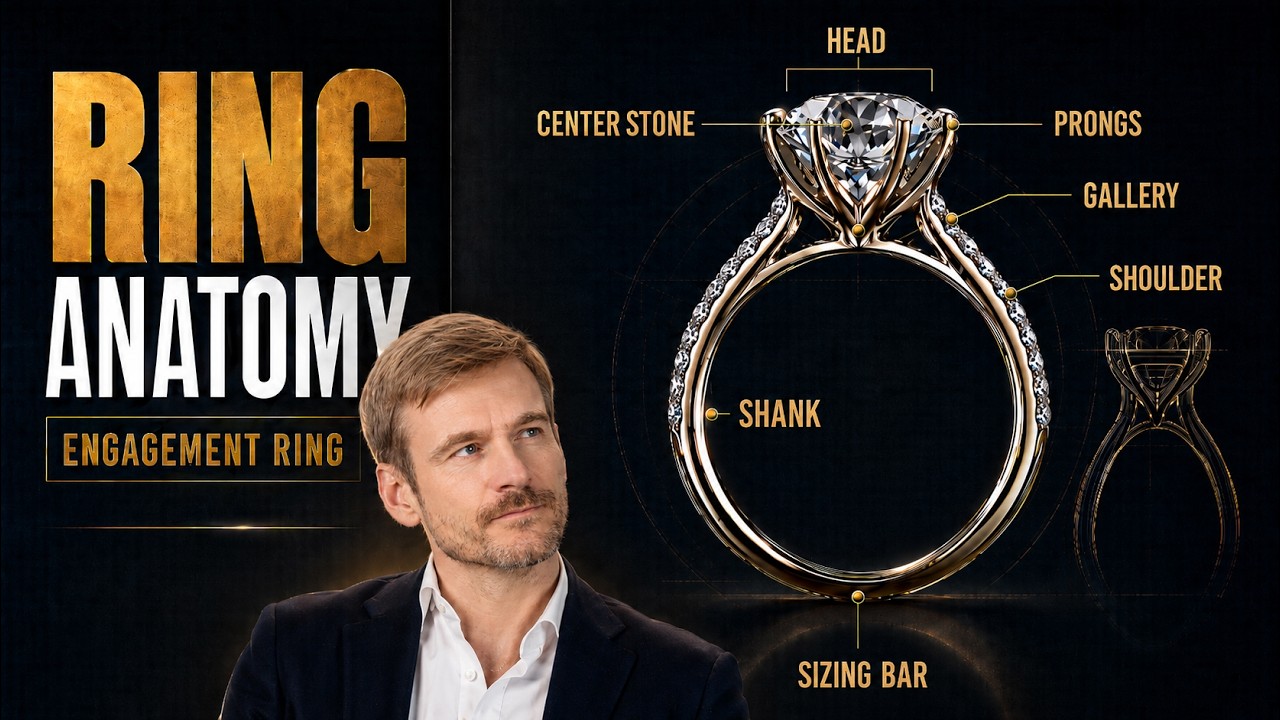
Continue reading: Designer vs custom rings · Heated vs unheated sapphire · Engagement ring anatomy.
Sources and further reading
- eCFR: U.S. deceptive-pricing guides
- eCFR: U.S. Jewelry Guides
- Jewelers of America: Appraisals
- Jewelers Mutual: Jewelry appraisals
- GIA: What is a GIA diamond?
- GIA: Spinel buyer’s guide and grading terminology
- GIA: Triple X diamonds
- GIA: Ring materials for everyday wear
- GIA: Sapphire buyer’s guide
- SSEF: Color terminology
- Kimberley Process: Scope and purpose
- FTC: Diamond advertising and environmental claims
General consumer education, including U.S. advertising-guidance examples. Hypothetical prices illustrate comparisons and are not market quotes. Confirm current seller, appraisal, insurance and warranty terms for the actual ring.