
15 Pink Gemstones for Engagement Rings: Color, Care and Choice

Most people think pink engagement rings basically mean morganite or pink sapphire.
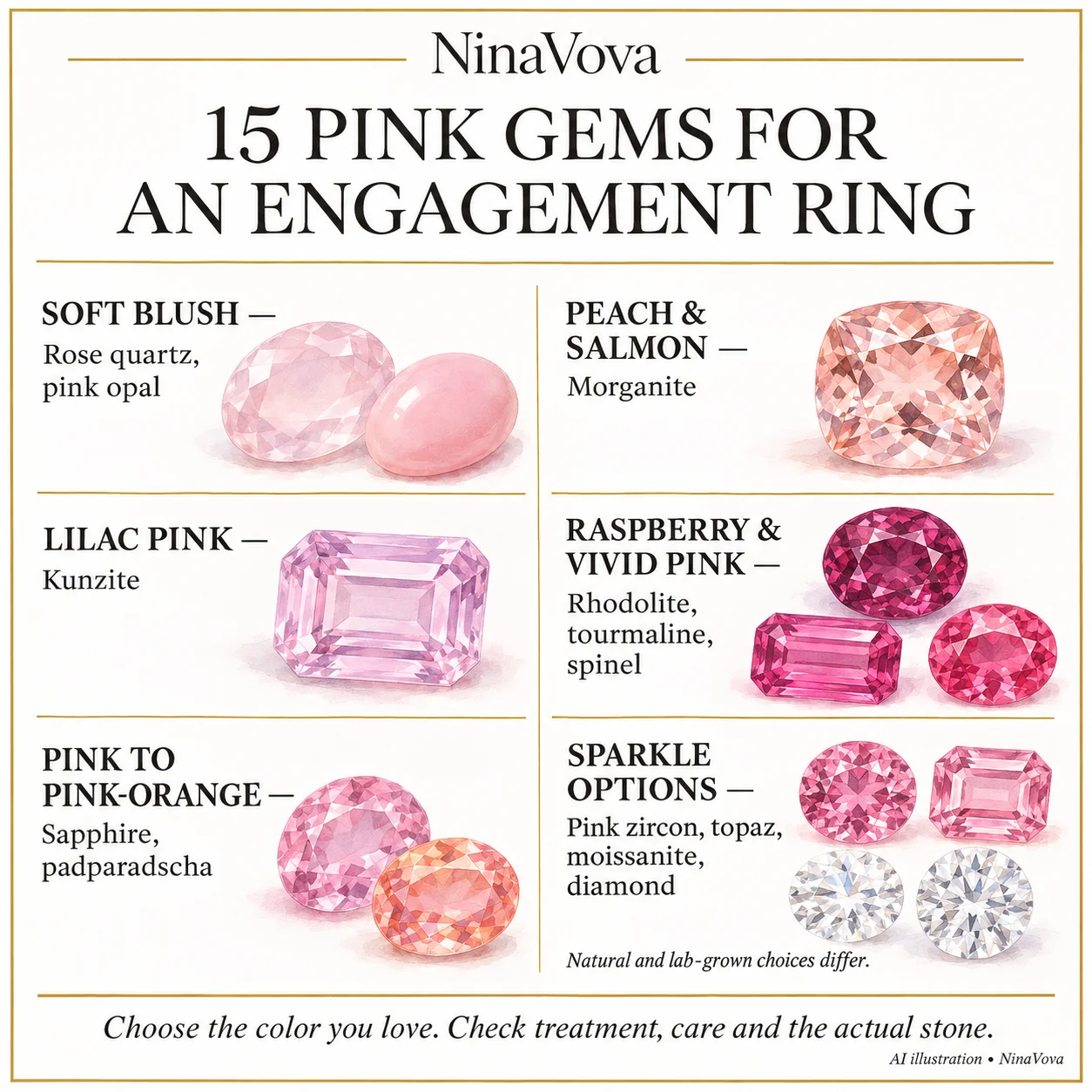
But pink is so much wider than that. It can be soft and cloudy, peachy, salmon, raspberry, lilac, even neon — and at the very top of the market, pink becomes one of the most expensive colors in jewelry.
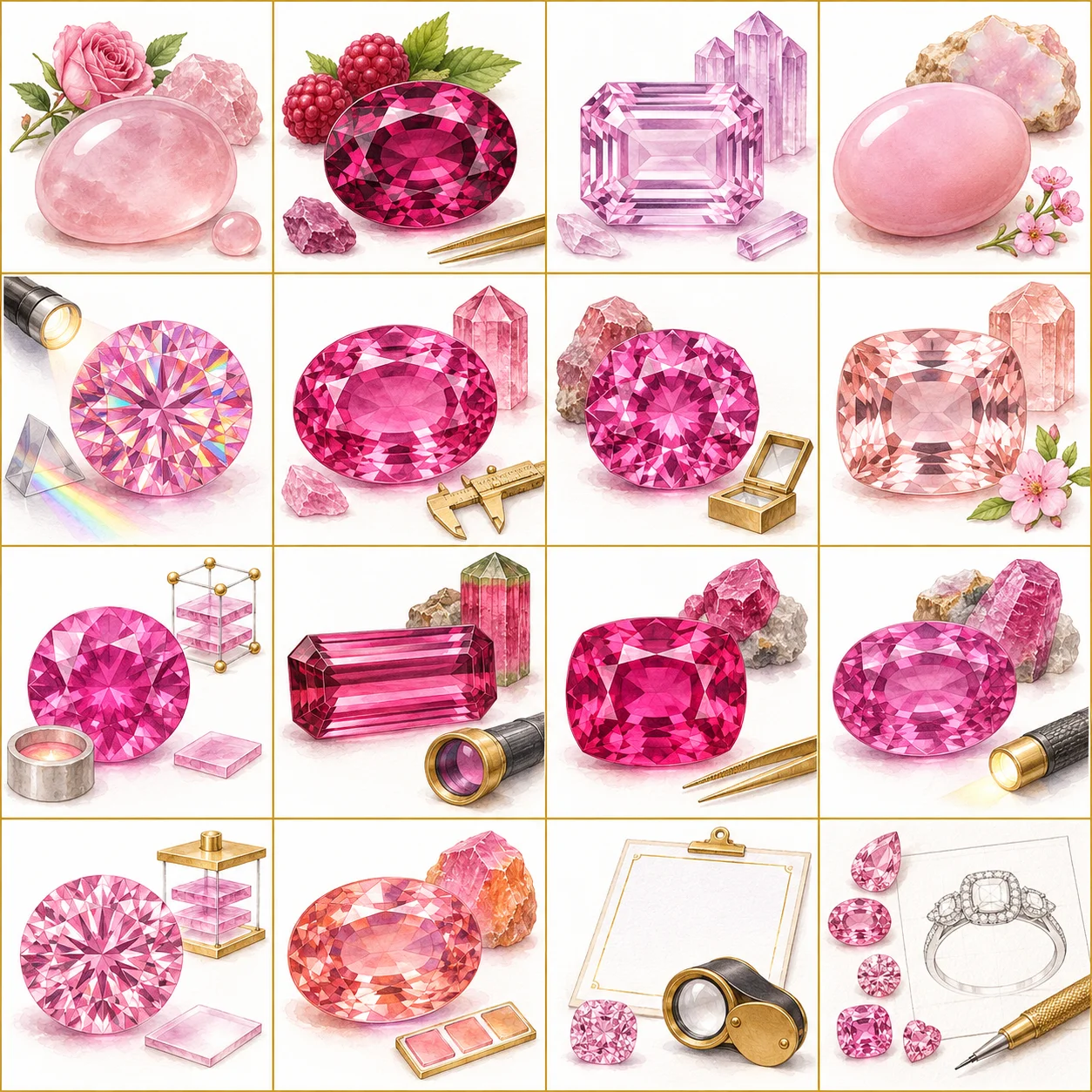
This guide considers 15 pink gemstone choices, from accessible color options to rare natural stones. Ask what kind of pink you want: soft or vivid, sparkly or glowing, peachy or raspberry. Then consider how the actual stone suits the way the ring will be worn.
Rhodonite, thulite, pink jasper, coral, conch pearl and strawberry quartz can also be interesting jewelry materials. This selection focuses on another set of choices; inclusion here is not a promise that every gem suits carefree daily wear.
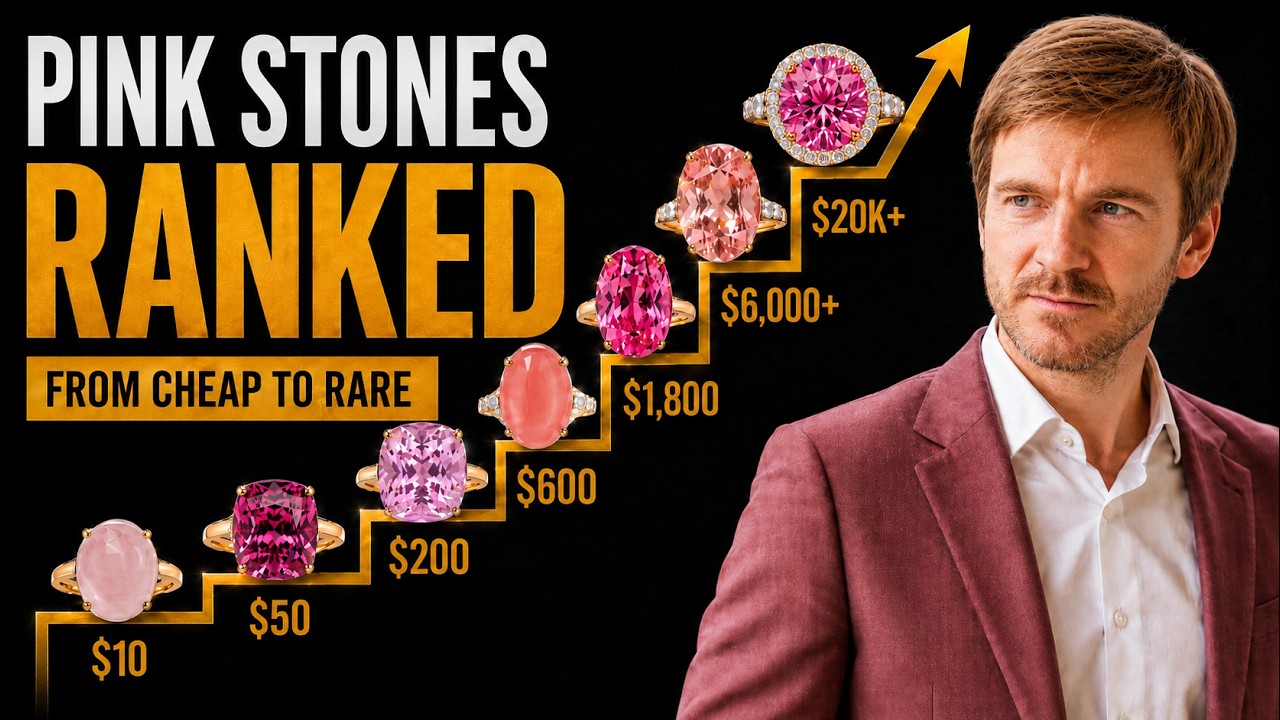
We compare color personality, daily-wear considerations and what to ask before buying. Mohs describes scratch resistance; toughness, cleavage, treatment and construction also matter. Fine material can be hard to find even when the gemstone’s name is familiar. The order is a broad comparison, not a current price list.
Let's start with the softest-looking pink stone on the list.
Choose a specific kind of pink, then assess the whole ring. Soft blush, peach, lilac, raspberry and pink-orange create very different effects. Morganite, spinel, sapphire and diamond also differ in wear and buying considerations. Compare the actual stone in useful lighting, clarify treatments and origin, and choose a construction and care plan you can live with.
At a glance · Rose Quartz · Rhodolite Garnet · Kunzite · Pink Opal
Watch the NinaVova discussion
Watch the original NinaVova video on YouTube.
Pink gemstone directions at a glance
| Color or effect | Starting points | Practical discussion |
|---|---|---|
| Cloudy blush | Rose quartz, pink common opal | Glow and body color rather than diamond-like sparkle; protective wear. |
| Lilac pink | Kunzite | Light/heat sensitivity and cleavage need care. |
| Peach, salmon, gentle pink | Morganite | Compare ordinary-light presence and scratches/knocks over time. |
| Raspberry and vivid pink | Rhodolite, tourmaline, spinel | Color, cut, inclusions, condition and appropriate documentation. |
| Pink or pink-orange | Sapphire, padparadscha designation | Natural vs lab-grown, treatment and the scope of the report. |
| Brilliant sparkle | Pink zircon, topaz, moissanite, diamond | Different materials and care; ask how the pink color was produced. |
Rose Quartz
It's probably the most recognizable pink stone in the world. But what you get isn't sparkle — it's softness. A cloudy, translucent blush-pink glow, like the color is floating inside the stone rather than flashing off the surface.
That's beautiful if you want a ring that feels gentle and personal, but I wouldn't call it a crisp luxury center stone. It doesn't have that polished, bright look most people expect.
Mohs 7 sounds decent on paper, but rose quartz is chosen for the feeling, not the performance. If you want something quiet and soft, it works. If you want a ring that pops from across the room, keep going.
Rhodolite Garnet
This one matters because not every pink stone is soft pastel. Rhodolite gives you raspberry, wine-pink, and deep romantic red-pink tones — if morganite is soft and airy, rhodolite is deeper and moodier, more like candlelight or raspberry velvet.
A lot of buyers say they want "pink," but once they start looking, they realize they actually want depth — something richer and more saturated than a pale pink. That's exactly what rhodolite delivers.
It also carries some real history. Garnet has a long run in antique jewelry, so rhodolite has that old-world feeling, but brighter and more colorful than the dark red garnets most people picture first.
The tradeoff is that garnet isn't as hard as sapphire, so think about your setting. But as an affordable pink-to-red option, rhodolite gives a lot of color for the money.
Kunzite
This is one of the dreamiest pink stones — delicate lilac-pink, sometimes almost lavender. In photos it looks romantic and refined. And it has real history — kunzite was named after George F. Kunz, the gemologist famous for his work with Tiffany.
Kunzite’s color can fade with prolonged exposure to heat or intense light, and its cleavage makes protection from hard knocks important. The response depends on the stone and exposure, so I would not promise a particular safe number of hours outdoors.
So for an engagement ring, I'd be cautious — beautiful and romantic, but not my first pick for a low-maintenance daily ring.
Pink Opal
Pink opal is gorgeous — soft, cotton-candy pink, sometimes almost porcelain, very gentle on the hand. This isn't about sparkle, it's about that soft body color.
For pink opal, I would discuss a protective bezel and a considered wear plan before designing. Pink common opal is valued for its body color rather than play-of-color. Keep it away from heat, sudden temperature changes, harsh chemicals, steam and ultrasonic cleaning.
Water response is material-specific: some opals are hydrophane, but not all opal absorbs water in the same way. Follow care instructions for the particular stone and any assembly or treatment. A bezel can protect edges; it does not make a delicate material indestructible.
Pink Moissanite
This is a different conversation — not a rare gemstone, but a modern color-and-sparkle option. What you get is brightness, size, rainbow fire that's actually more intense than diamond, and a strong pink effect for the money.
Some buyers love that aggressive sparkle. But pink moissanite can also look a little artificial — more candy-like, more futuristic. I'd always check how the color was created, since some pink moissanite is coated or color-enhanced, and that surface color can be more vulnerable during wear or cleaning.
For the right buyer, it makes sense — size, sparkle, hardness, price control. But I wouldn't present it as the romantic, natural pink gemstone option.
Pink Topaz
Pink topaz can look bright, clean, and sparkly — much more like a true faceted jewelry stone than rose quartz or pink opal. Sharper flashes, cleaner surface, brighter pink.
But topaz shows why hardness isn't the whole durability story. Mohs 8 is good for scratches, but topaz has cleavage — it can split from a hard blow in a certain direction. So I'd want a thoughtful setting, and if the price is high, I'd want to know whether the color is natural or treated.
Pink topaz can be beautiful for a careful wearer. But if you want a ring you never think about, look at sapphire, spinel, moissanite, or diamond first.
Pink Zircon
This stone deserves to be here. People hear "zircon" and think "cubic zirconia," but natural zircon is a real gemstone — and visually it's far more impressive than expected. It has strong fire, strong brilliance, and double refraction, which can make the facets look doubled inside the stone, giving an almost electric sparkle.
In pink, that's interesting — not the soft blush of morganite, not the durability of sapphire, but a fiery, unusual pink with an old-world feeling. And here's one of the best facts: some zircon crystals are among the oldest minerals on Earth. So this stone is often mistaken for something fake, when it's actually one of the oldest natural minerals we know.
The downside is wear — zircon isn't as tough as sapphire or spinel, and facet edges can abrade over time. I like zircon, but I wouldn't set it carelessly.
Morganite
Morganite is one of the most important stones here because it became a huge bridal stone — for many buyers, it's the first pink engagement ring stone they ever see.
But you need to understand what kind of pink you're getting. Morganite isn't always clean pink — it can be blush, rose, peach, salmon, even slightly orange or purplish. A pale peach morganite in rose gold looks warm and romantic, but if you wanted vivid pink, you might be disappointed.
It's not a pink sapphire replacement — it's softer, warmer, more delicate, and the color shows better in larger stones. A small, pale morganite can almost disappear outside perfect lighting.
I'd choose morganite for soft, peachy romance — not for strong pink color. It's actually the pink sibling of aquamarine, both part of the beryl family, which is part of why that soft, airy quality feels so familiar.
The gem was named for J.P. Morgan at George Kunz’s suggestion in 1911, after important pink beryl material was found in Madagascar. That history is interesting, but the stone’s actual appearance and wear needs should decide the ring.

Lab Pink Sapphire
This is one of the more practical choices in this comparison. Lab pink sapphire is real sapphire — same mineral, corundum — just grown in a lab instead of mined. You get strong pink color, excellent hardness, great daily-wear confidence, a cleaner appearance, and a much more accessible price than fine natural pink sapphire.
Pink Tourmaline
This is one of the most expressive stones here — soft rose, bubblegum, hot pink, raspberry, sometimes edging toward rubellite. Morganite is usually soft, pink sapphire is usually classic, but pink tourmaline feels more energetic and fashion-forward.
Two things to watch: color and inclusions. Pink and red tourmalines often have visible inclusions — not automatically a problem, but if they make the stone look dull or fractured, the color loses its power. Cut matters too: a badly cut tourmaline can look dark in the center or uneven, while a good one looks alive.
And about "rubellite" — that term usually refers to the richer pink-red side of tourmaline, but not every pink tourmaline deserves it. Don't overpay for the label; look at the actual color and how it performs in normal light.
Pink tourmaline is great if you want something stronger and more expressive than morganite, without jumping all the way to fine sapphire pricing.
Pink Spinel
This is one of the best stones on the list that most buyers still don't know about. It can be soft pink, hot pink, vivid pink, pinkish red, sometimes almost neon — and the best stones look clean, sharp, and bright in a way that's really different from morganite or tourmaline. This is where pink starts to feel serious and modern, more electric and crystal-clear than pink sapphire.
Historically, spinel has a fascinating connection to ruby — for centuries, famous red spinels were mistaken for rubies. The modern story matters too: Mahenge spinel from Tanzania brought vivid pink and red spinel into serious attention among collectors, so it became a beautiful gem in its own right, not just "the stone confused with ruby."
For engagement rings, I really like pink spinel — good hardness, excellent brightness, less obvious than sapphire. Unlike sapphire, spinel is rarely heat treated, but if the stone is expensive, the lab report still matters, since both natural and synthetic spinel exist.
Pink Sapphire
This is the main practical luxury stone here. Pink sapphire is corundum — the same family as blue sapphire and ruby — putting it in one of the best gemstone families for engagement rings.
It ranges from pale blush to bubblegum, dusty rose, purplish pink, raspberry, even close to red. That's why you can't buy pink sapphire by name alone — the actual color is everything. Some look elegant and refined, some too pale, some too purple, some just poorly cut and flat. Heat treatment is common with sapphire, so if the stone is expensive or sold as untreated, I want a respected lab report.
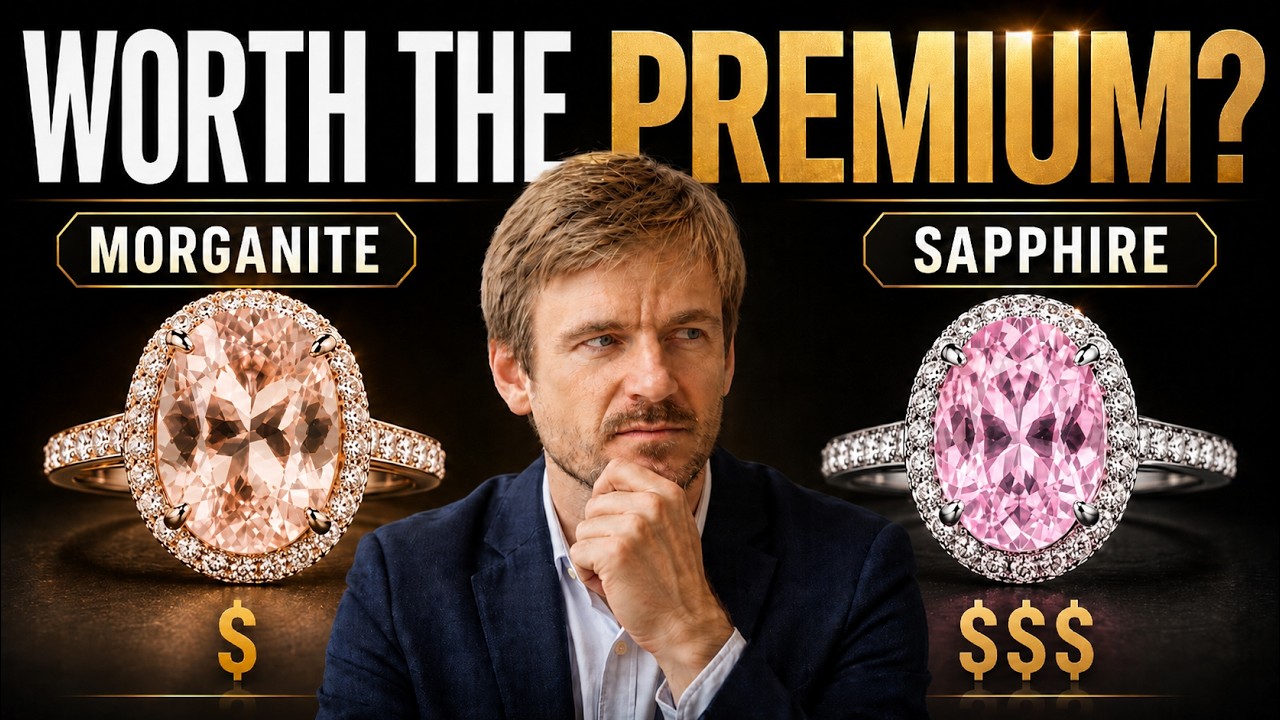
The big comparison is morganite versus pink sapphire: morganite gives soft, affordable, delicate romance; pink sapphire gives stronger color, better durability, and a more classic fine-jewelry feeling. For many frequently worn rings, a well-chosen pink sapphire is a strong candidate, supported by an appropriate setting and care.
This is also where the ruby boundary comes in — ruby and pink sapphire are both corundum, and the line between a deep pink sapphire and a ruby can come down to color judgment and trade tradition. If a seller uses words like "ruby" or "deep pink sapphire," I want the report and the color to back that up. A name shouldn't carry the whole price.
Lab Pink Diamond
This is the realistic pink diamond route for most buyers. It's real diamond, grown in a lab, so you get diamond hardness, diamond sparkle, and pink color — without natural pink diamond pricing.
For most of jewelry history, a true pink diamond look was out of reach for normal budgets. Lab-grown diamonds changed that. But the value logic is different — a lab pink diamond isn't a "cheaper natural pink diamond." It's its own category: the look, the durability, and price control, but not the natural rarity or the Argyle story.
For most buyers, lab pink diamond is sensible if you want that pink diamond look in a ring you can wear every day.
Padparadscha Sapphire
This is one of the most misunderstood stones in the pink world, because it's not simply pink sapphire — it sits between pink and orange. The best stones have a delicate pink-orange balance, often described as lotus flower, sunset, or peach-pink.
That's exactly why buyers get confused. Once a stone enters that peachy pink-orange space, sellers may want to call it Padparadscha — but not every peach sapphire earns that name. Some are too orange, too pink, too brown, or too dark — just ordinary peach sapphires with a more expensive label.
If the price depends on the word Padparadscha, the report needs to back it up, and even then the stone still has to be beautiful. I would also want treatment clearly disclosed, because treatment can affect both color and value. Princess Eugenie's engagement ring helped bring this stone into the mainstream, with many people seeing this pink-orange sapphire for the first time on a royal hand.
Don't pay for the name alone. Pay for the color, the beauty, and the report.
Pink Diamond
Natural pink diamond is the rare-luxury end of this comparison. Natural pink diamond isn't just a "pink version" of a diamond — it's a completely different market. Most pink diamonds are small, the color is rare, and fine stones become collector pieces more than typical engagement ring stones.
The science is fascinating too. In most natural pink diamonds studied by GIA, color is linked to distortion of the crystal structure rather than a simple trace-element explanation. Not every pink diamond has the same cause of color, so a laboratory’s actual findings matter.
Australia’s Argyle mine has an important place in the modern pink-diamond story. A documented origin claim and natural color can matter to collectors, but a famous mine name does not guarantee the future value of an individual stone.
For a typical buyer, natural pink diamond usually isn't the practical recommendation — for pink beauty, look at pink sapphire, pink spinel, or lab pink diamond first. But if you want rarity, prestige, and one of the most famous luxury colors in diamonds, pink diamond is the top of the category. At this level, it's less about size and more about rarity.
Choose the pink you actually want
That's the full pink gemstone ranking, and what matters most is figuring out what kind of pink you actually want — blush, peach, salmon, raspberry, lilac, neon, pink-orange, or diamond pink — and how it wears day to day.

Frequently asked questions
Is pink opal expected to show rainbow play-of-color?
Pink common opal is generally selected for its pink body color rather than the play-of-color associated with precious opal. Ask what material and treatment the seller is offering.
Can all pink diamonds be compared as the same market?
No. Natural-color, treated-color and laboratory-grown diamonds have different origin and value considerations. Read the actual report and disclosure.
Build around the pink your partner loves
We can compare a gentle pastel or a stronger pink, review the actual stone and develop the proportions, metal and personal details together.
Book a NinaVova consultation or explore our custom design process.
Continue reading: Morganite vs sapphire · Spinel buying guide · Green and teal sapphire.
Sources and further reading
- GIA: Gem encyclopedia
- GIA: Kunzite care
- GIA: Opal care
- GIA: Morganite quality factors
- GIA: Topaz care
- GIA: Zircon care
- GIA: Spinel buyer’s guide
- GIA: Pink diamond color research
- SSEF: Color terminology
- FTC: Gemstone and diamond disclosure
Choose by the actual stone and complete wearing plan. The order is not a current price ranking. AI illustrations are concepts; actual NinaVova photographs are separately identified.