
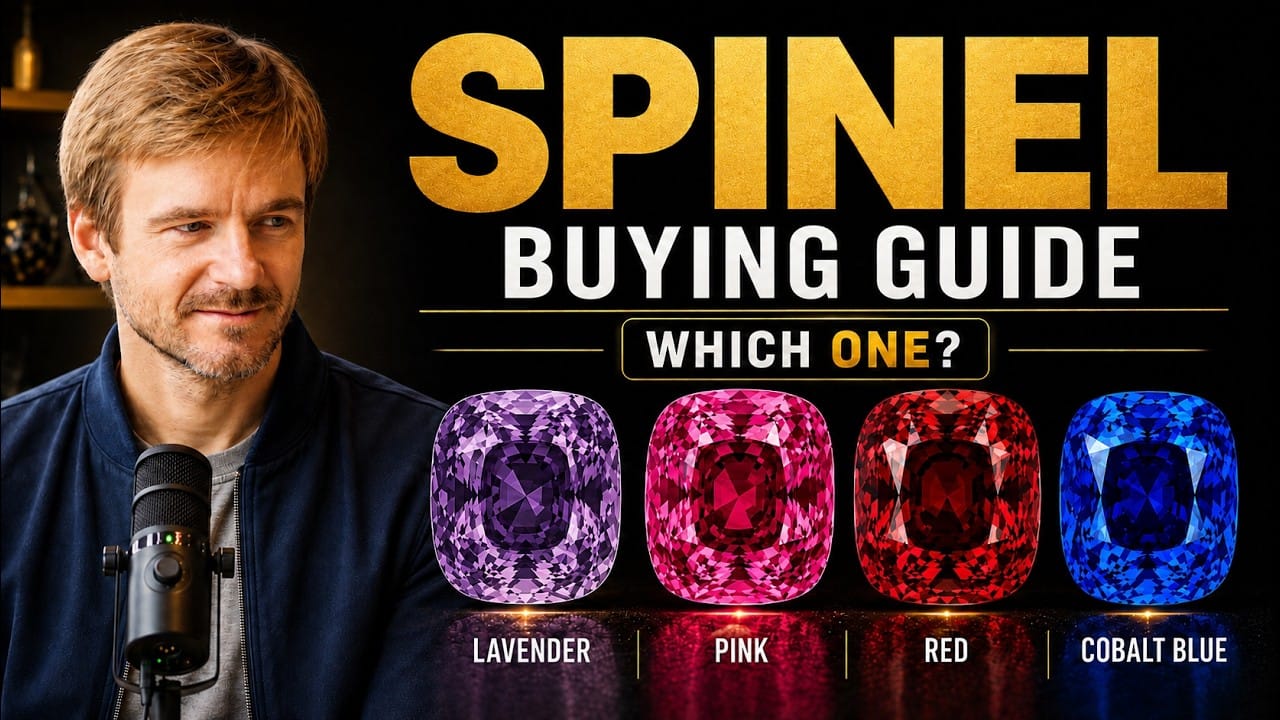
Spinel Engagement Rings: Colors, Cut, Durability and Buying Advice

Spinel is one of the most interesting gemstones you can choose for an engagement ring.
But it is also easy to buy wrong.
Some stones are beautiful value. Some are serious collector pieces. This is where buyers get confused.
A vivid red stone, a soft pink one, a lavender one, a gray one, and a true cobalt blue are not the same buying decision. The name may be the same, but the price logic behind each one is completely different.
So if you are considering spinel for an engagement ring, the questions are practical.
Is it durable enough for daily wear?
Why is one option accessible while another costs thousands of dollars per carat?
Does origin actually matter?
Do you need a certificate?
And how do you know the spinel is natural, not synthetic or treated?
By the end, you should understand which colors are smart for engagement rings, which ones deserve a premium, and where I would slow down before spending serious money.
Choose the spinel you can see, then verify the premium. Spinel can suit daily-wear rings, but cut, tone, fractures and the setting still matter. Judge rare-color and origin claims through appropriate documentation rather than photographs alone.
At a glance · Is spinel good for an engagement ring? · What spinel actually is · The main spinel colors and how to judge them · Cut and brilliance
Watch the NinaVova discussion
Watch the original NinaVova video on YouTube.
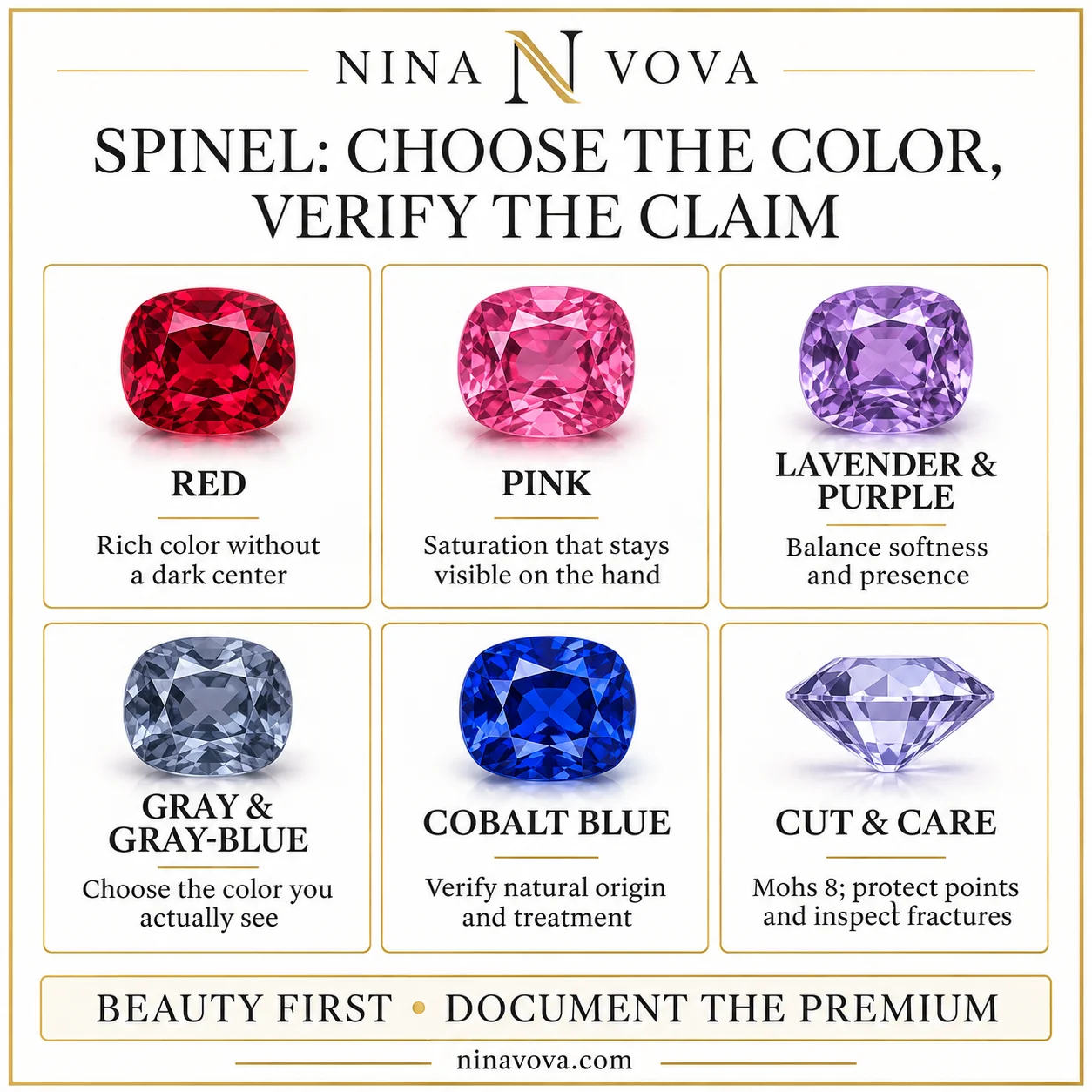
Spinel color choices at a glance
| Color direction | What can make it appealing | What to check |
|---|---|---|
| Red | Rich color and collector interest | Avoid a dark or muddy face-up appearance; verify premium claims. |
| Pink | A broad range from soft to vivid | Enough saturation to remain present after setting. |
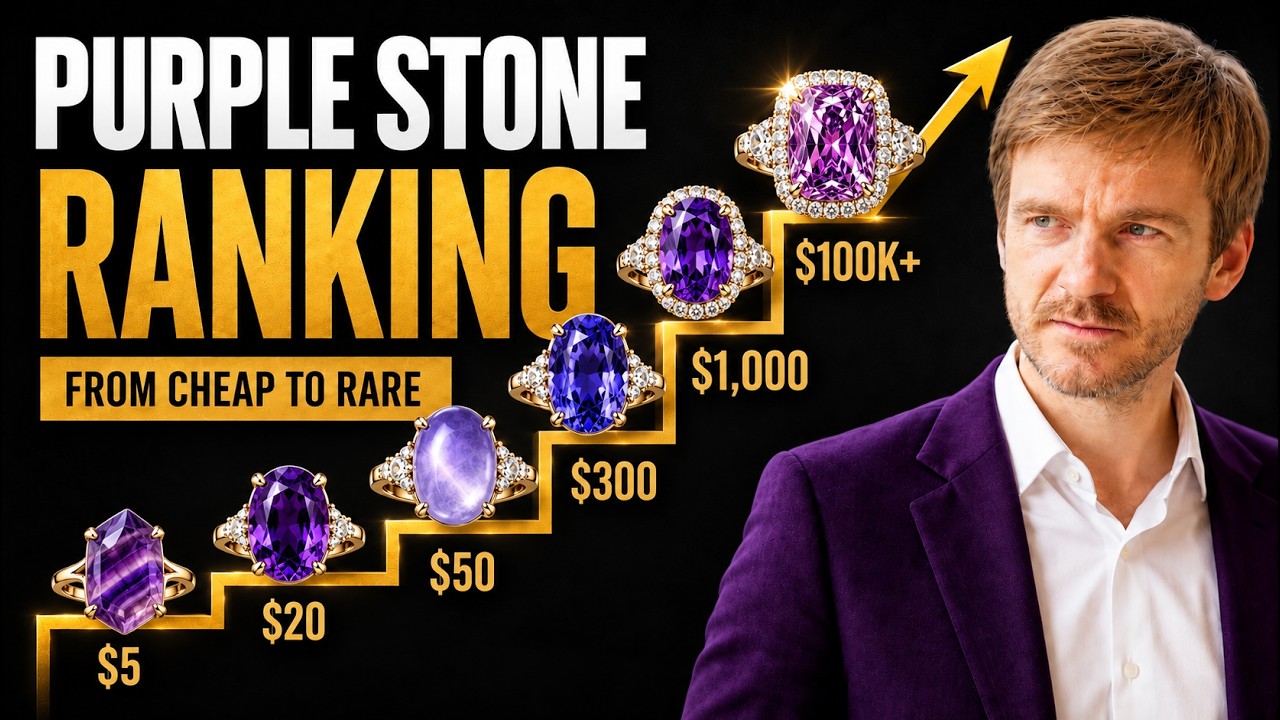
| Lavender and purple | Personal color without necessarily paying top collector premiums | Balance lightness, gray modifiers and an open face-up appearance. |
| Gray and gray-blue | A quiet, moody alternative | Choose the actual everyday color, not a rare-sounding description. |
| Cobalt blue | Exceptional vivid blue can be highly sought after | Verify natural material and treatment; cobalt presence alone is not a quality grade. |
Is spinel good for an engagement ring?
Let's answer the biggest question first.
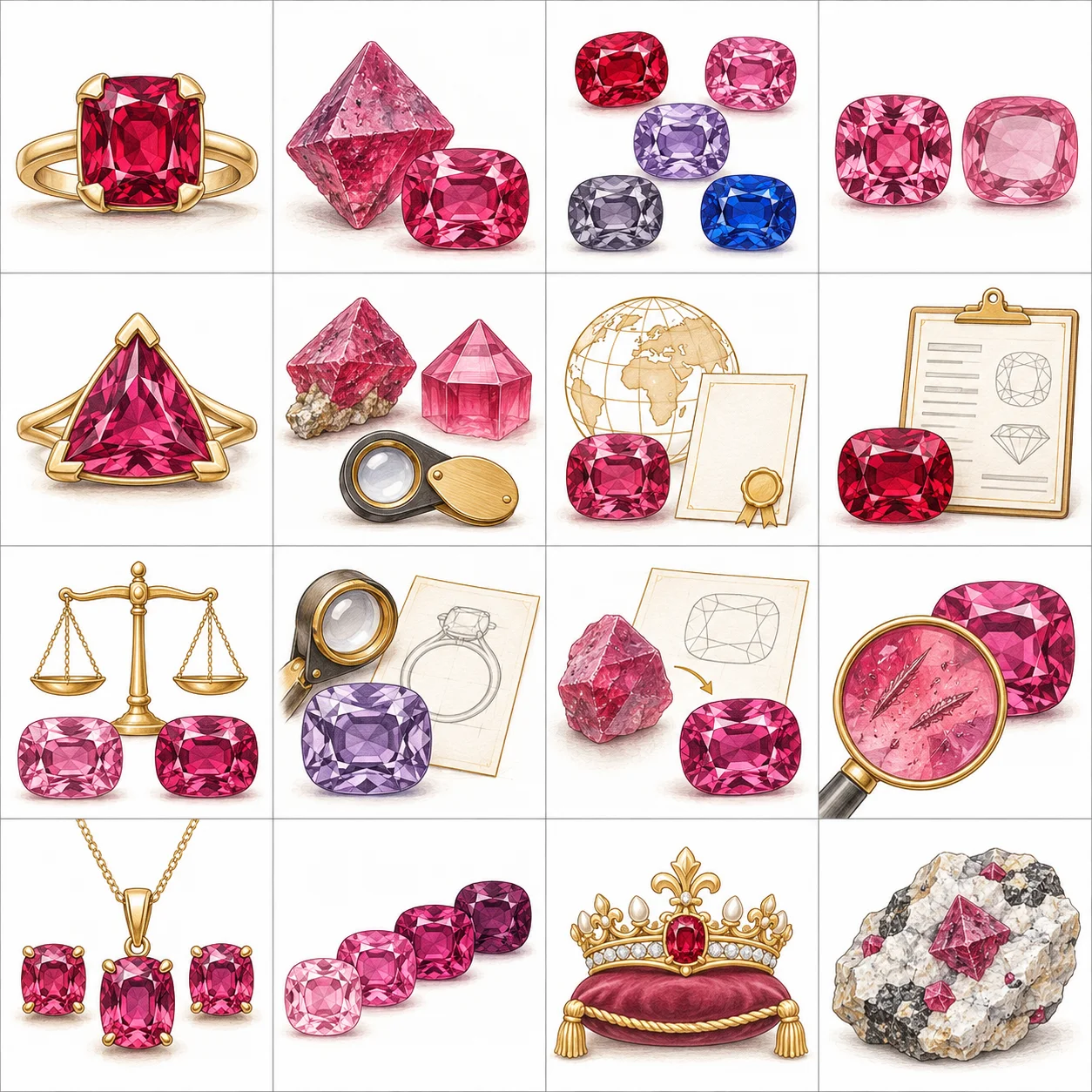
Yes, spinel can be a good gemstone for an engagement ring.
It has a Mohs hardness of 8 and good toughness, which puts it in a strong category for colored gemstones.
It is not as hard as diamond, sapphire, or ruby, but it is still durable enough for many engagement rings when the setting is designed correctly.
For daily wear, I would think about the stone and the setting together.
A beautiful spinel in a fragile design is not automatically a smart ring.
If the person is hard on their hands, I would be more protective: stronger prongs, a lower setting, or a bezel, depending on the shape.
This is still a natural colored gemstone, and the ring has to be designed for real life.
What spinel actually is
Spinel is a natural gemstone. It is not fake ruby. It is not imitation sapphire. It is its own mineral.
Chemically, spinel is magnesium aluminum oxide. It comes in red, pink, purple, lavender, gray, blue, orange, and black.
Historically, some famous stones once believed to be rubies were later identified as spinel. That does not make the gemstone less valuable. It shows how close fine red material can look to ruby.
For a buyer, the point is simple: spinel has its own identity.
The real question is, which spinel makes sense for your ring?
That depends on color, cut, clarity, treatment, origin, and certification.
Let's start with color, because this is where most of the value is.
The main spinel colors and how to judge them
Color is the biggest factor in spinel, but the color name alone does not tell you enough. When gemologists evaluate color, they look at three things: hue, tone, and saturation. Hue is the color itself — including any modifying color that shifts it away from pure. Tone is how light or dark the stone is. Saturation is the strength of the color. Those three factors determine beauty, rarity, and price — and once you understand them, you will know exactly what you are looking at when you shop.
Red spinel is the classic collector color, most often compared to ruby. Hue matters immediately here. Red can lean purplish, pinkish, orangey, or brownish — and those modifiers are not small distinctions. A slightly pinkish or purplish red can be beautiful. A brownish red can feel heavy and muddy, and that shift alone can separate a desirable stone from one that is genuinely hard to recommend.
With red, tone is where many buyers get surprised. I want richness — but not so dark that the stone loses life. A deep red can look stunning in a close-up photo and go almost black in normal lighting. This is where face-up appearance matters more than almost anything else. A stone that looks alive in a well-lit video might read flat and heavy on the hand. I would not judge red spinel by the word red alone, or by carat weight. I would want to see it in conditions close to real life — ideally outdoors or in mixed lighting — before deciding. And if the cut is too deep, the problem compounds. A deep cut can make a color look richer on paper and darker in practice.
In red spinel, strong saturation combined with the right hue and tone is what creates those standout stones. But saturation alone is not enough. A stone can be deeply saturated and still be too dark, or carry the wrong modifier. All three factors have to work together. I would pay a serious premium for red only when the color, the cut, and the report all support the price.
Pink spinel is one of the strongest categories for engagement rings. Hot pink can be vivid, bright, and valuable. Lighter pink can be softer, more romantic, and easier to wear every day. The question is always presence — whether the stone will hold attention once it is set in a real ring and worn in real light.
If the saturation is too weak, the stone can lose impact once it is mounted, especially next to white diamonds or a bright metal. For pink, I want enough saturation to feel intentional and present, but not so much darkness that the stone loses that fresh, open quality that makes pink spinel worth choosing.
Lavender and purple spinel are some of the most interesting choices for a real engagement ring. They are not always the top collector category, but for a personal, wearable stone with genuine character, they can be exceptional.
Lavender feels soft, modern, and personal. Purple feels richer and more dramatic. Grayish lavender can be elegant and understated. Tone is especially critical here — more so than with almost any other spinel color. Too light, and the stone looks washed out on the hand. Too dark, and it loses the openness that makes lavender and purple worth choosing in the first place. I would also look carefully at how the stone faces up, not just the listed weight. A slightly deeper stone can give the color more body and presence. But too deep, and the center starts to go dark and lifeless. This is one of the best color ranges available if you want something personal and beautiful without paying collector-level prices.
Gray and gray-blue spinel are a different category altogether. These stones can be beautiful for alternative engagement rings — moody, quiet, modern. But they need to be judged honestly.
A gray-blue stone can have a blue direction and still read mostly as gray in normal conditions. If you choose gray or gray-blue, choose it because you love that color — not because a listing makes it sound like something rarer than it is.
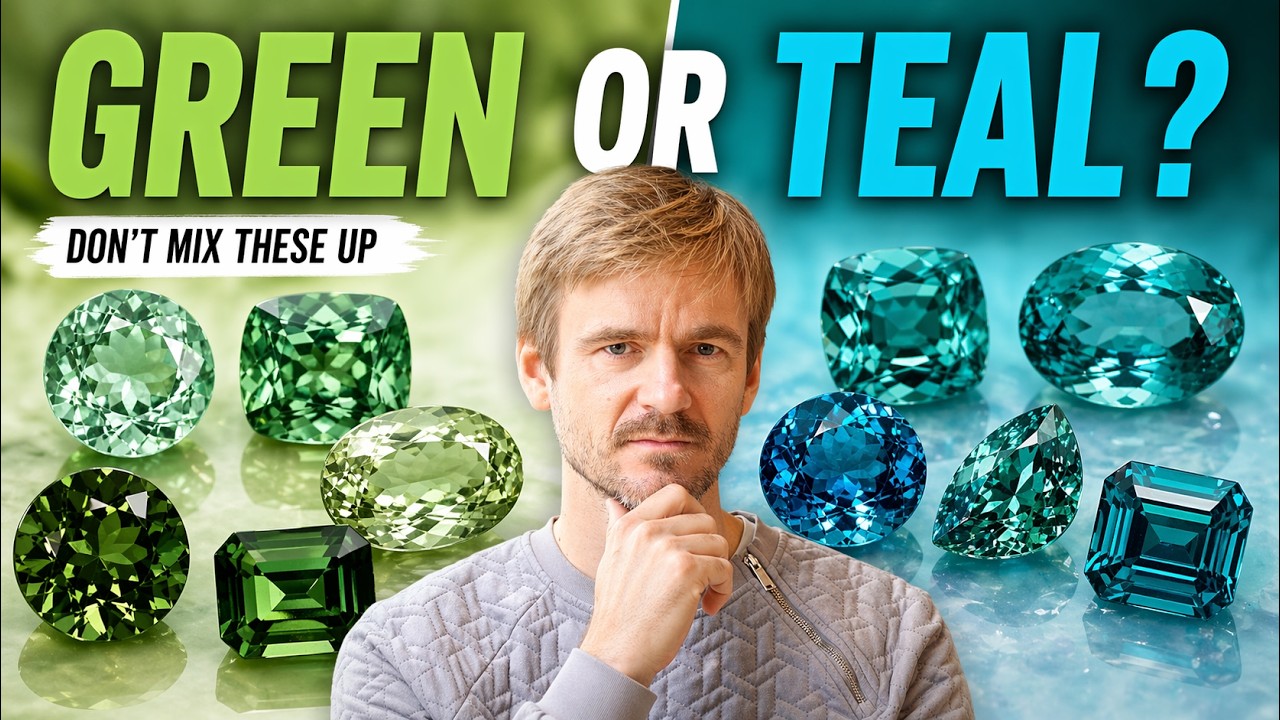
Fine vivid blue spinel can be in a category of its own. The color should remain convincing in ordinary lighting, rather than looking slightly bluish gray with a compelling description attached to it. GIA stresses that the quality of the blue—not cobalt presence by itself—is what makes the stone desirable.
Because natural cobalt blue can be expensive, this is where I would be most strict about documentation. Cobalt blue is one of the most misrepresented colors in the spinel market. A stone can photograph beautifully in the right light and still be closer to gray-blue in everyday conditions. If someone is charging cobalt-blue money, I want a serious lab report — not just a compelling video, not just a seller's word. The report needs to confirm what is being sold, because the price is built on qualities that are easy to misrepresent and genuinely hard to verify without one.
To make this easier when you are actually shopping, I think about spinel in three buying tiers. Accessible spinels — softer color, lighter saturation, more gray, or a less rare hue — can still be beautiful and personal. Standard-quality spinels are where color, cut, and clarity feel balanced. They may not be collector-level, but they look right, they have enough life, and they make sense for a serious engagement ring. This is usually the sweet spot for real buyers. Exceptional spinels — vivid red, strong hot pink, true cobalt blue — are where rarity and saturation combine at a high level. These stones deserve more scrutiny, better certification, and more careful buying, because the price is built on qualities that need to be verified, not assumed.
And across all colors: do not compare only by carat weight. A smaller spinel with better color, better tone, and better cutting can easily be a stronger ring stone than a larger one that faces up dark, flat, or poorly proportioned. Size is the easiest thing to see in a listing. It is rarely the most important thing in the ring.
Cut and brilliance
Spinel can be very lively when it is cut well.
It does not sparkle like diamond, and it does not look like sapphire. A good spinel has a crisp, bright, clean look. But you usually do not have a simple cut grade to rely on. You have to judge what you see.
Start with the center. If the middle looks empty or see-through, that is windowing. The stone is probably too shallow, or the angles are not returning light well.
The opposite problem is extinction — parts of the stone that look too dark or dead. Some contrast is normal, but large dark areas in normal lighting can make the stone feel lifeless.
Then look at the weight. Some stones sound impressive on carat weight, but too much of that weight is hidden in the depth. You are paying for weight that does not show up on the hand.
Spinel is often cut in non-standard sizes. For custom rings, that can be a good thing — more interesting shapes and proportions. But the setting should be built around the actual stone. I would not force an unusual spinel into a generic pre-made mounting.
Color gets your attention. Cut decides whether the spinel still looks good after the first look.

Clarity and daily wear
Spinel is often relatively clean compared with many other colored gemstones.
For an engagement ring, I would look for an eye-clean stone. That means no obvious inclusions when looking at it normally. I would not chase microscopic perfection — this is not a diamond.
But I would avoid stones that look hazy, sleepy, fractured, or obviously included. A small natural inclusion might not matter. A large inclusion across the center, or a surface-reaching fracture near a corner, matters much more.
For daily wear, the setting matters as much as the stone.
Ovals and cushions are generally forgiving because there are no sharp exposed corners. If the shape is emerald cut, kite, princess, shield, or anything with points, I would be more careful. Those corners need protection.
A high setting with exposed corners might look beautiful in a photo, but it may not be the smartest daily ring. A lower profile, stronger prongs, or a bezel can make more sense depending on the stone and the person wearing it.
A spinel ring can be beautiful and still practical.

Treatments and synthetic spinel
Spinel is different from sapphire here.
With sapphires, treatment is an everyday conversation because heat treatment is very common. With spinel, many fine natural examples are traded as untreated, and that is one of the reasons gem people value it.
But that does not mean you can ignore verification.
The main concern is synthetic material and certain treatments, especially in blue stones. Synthetic spinel has existed for a long time and has historically been used as a substitute for other natural gemstones. So if you are buying natural material, you want confirmation — especially as the price goes up.
For vivid red, hot pink, or cobalt blue, the report becomes much more important.
There is cobalt diffusion-treated material in the market. The treatment can create or intensify blue color, and that matters because natural cobalt-blue spinel can be very valuable.
The practical rule is simple. If the price is high because of a claim — natural, untreated, cobalt blue, Burma origin, Vietnam origin — that claim needs to be on paper, not just in a product description.
With spinel, the certificate is not just paperwork. It can be the difference between paying for the right stone and paying collector money for the wrong one.
Origin: when it matters, and when it does not
Origin matters in spinel, but only when the stone itself is good enough.
A weak spinel from a famous origin is still weak. A beautiful spinel from a less famous origin can still be the better buy. Start with beauty. Then use origin to understand rarity and price.
Myanmar is historically important for fine red and pink material. Good stones from this region can carry a premium, but I would not pay that premium if the color, cut, and clarity do not support it. Sourcing from Myanmar can also be complicated because of the political situation — if that matters to you, ask direct questions about sourcing. For a serious Burma spinel, especially red or vivid pink, I would want proper documentation.
Vietnam, especially Luc Yen, is extremely important for vivid blue material. This is one of the sources people mean when they talk about fine cobalt blue. The best examples have a vivid blue appearance that feels completely different from ordinary gray-blue stones. If someone says the spinel is Vietnamese cobalt blue, I would want that confirmed by a respected lab. With blue spinel, I care more about actual color than size. A small vivid blue stone can be much more significant than a larger grayish-blue one.
Tanzania — Mahenge specifically — is known for beautiful pink to red material. Cobalt-bearing blue from the Lukande area near Mahenge has also received serious gemological attention. If I were looking for strong pink or red for an engagement ring, I would consider this origin.
Tajikistan is historically important, especially for red to pink material. For most engagement ring buyers, I would not start here unless the stone is exceptional or the origin has personal meaning.
Sri Lanka and Madagascar can produce softer colors — lavender, purple, gray, blue-gray, pastel tones. For custom engagement rings, these can be very attractive. A pretty gray-lavender from Sri Lanka can be a beautiful engagement ring choice. It should not be priced like top red or cobalt blue.
Certification
For spinel, a certificate protects you from three things: synthetic material, treatment, and unsupported claims about origin or cobalt.
The level of documentation should match the price and the claim.
For a lower-priced spinel from a trusted jeweler, basic gemological confirmation may be enough. For vivid pink, red, or blue, I would want a respected lab report. For expensive collector-level material where origin is part of the price, I would be strict.
GIA colored stone report can confirm whether the material is natural or lab-grown and identify detectable treatments. Red spinel can also be submitted for an origin report.
For collector-level stones — cobalt blue, important origin claims — labs like SSEF, Gübelin, and GRS are also commonly seen in the trade.
The key is not the logo alone. The key is what the report actually says.
If the price is high because of a specific word, that word needs to be on paper. Otherwise, you are buying a story.
Price logic and common mistakes
With spinel, the biggest driver is color — not the name, but the quality. Then cut. Then clarity. Then size. Then origin. Then certification.
Most buyers put origin too early in that order. I would not.
I would rather have a beautiful, well-cut stone from a less famous origin than a dull spinel from a famous one.
This is where buyers overspend. They hear words like Burma, cobalt, rare, untreated, collector stone — and assume the premium is automatically justified. Those words matter only when the actual stone supports them.
Spinel is good value when you are paying for beauty. It stops being good value when you are paying for vague rare-sounding language.
The biggest mistakes: thinking it is just a cheaper ruby, assuming every blue is rare, buying cobalt blue without a report, choosing size over color, ignoring cut, prioritizing origin over beauty, and putting the spinel into a setting too delicate for daily wear.
This is a ring someone is supposed to live with. The design has to protect the stone.
Final decision guide
Choose spinel if you want a colored engagement ring that feels different from sapphire, diamond, or moissanite.
Choose it if you like pink, lavender, purple, gray, red, or rare blue — and you want a natural colored gemstone with good durability and real personality.
Be careful with expensive stones built on claims without documentation: cobalt blue, collector-level red, gray-blue marketed as rare blue. Be careful with fragile settings and exposed corners.
If this were my money, for most engagement rings I would look seriously at pink, lavender, purple, and well-cut gray stones. For red and cobalt blue, I would slow down, check the report, compare several stones, and make sure the premium is earned.
Frequently asked questions
Is spinel durable enough for an engagement ring?
Spinel has Mohs hardness 8 and good toughness. Protect vulnerable points, inspect significant fractures and choose a setting suited to the wearer.
Does blue spinel automatically deserve a cobalt-blue premium?
No. Judge the actual blue and request documentation appropriate to the natural-material, treatment and origin claims behind the asking price.
Build the ring around the color you love
We can help compare spinels in realistic lighting and develop a setting around the chosen stone’s shape, proportions and intended wear.
Book a NinaVova consultation or explore our custom design process.
Continue reading: Designer vs custom engagement rings · Sapphire engagement ring guide.
Sources and further reading
- GIA: Spinel buyer’s guide
- GIA: Spinel quality factors
- GIA: Spinel care and cleaning
- GIA: Cobalt diffusion treatment in natural spinel
Availability, prices and service terms can change. Evaluate the individual stone and confirm the current written terms before ordering.