
Morganite vs Sapphire: Peach, Salmon and Pink Engagement Rings

If you’re shopping for a pink or peach engagement ring, you’ll probably run into 2 stones very quickly: morganite and sapphire.
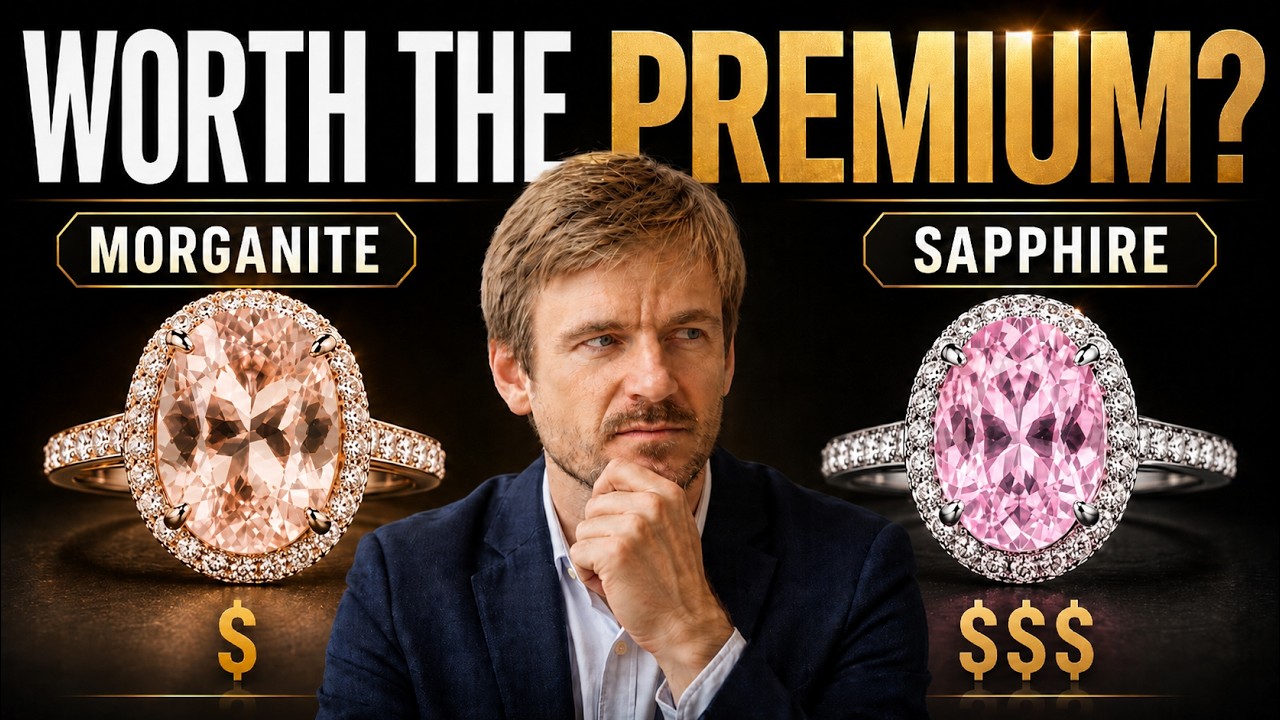
At first, the decision can feel confusing. Morganite can give you this soft peach, salmon, or pink look for a much friendlier price. Sapphire can look similar, but often costs more. So the real question is simple: are you paying more for something that actually matters, or are you just paying for the sapphire name?
This guide compares morganite and sapphire in three color families: peach, salmon and pink. We’ll consider how they look in ordinary lighting, what daily wear asks of them, how to compare size and price, and which I would choose for different priorities.
And here’s the short version. Morganite may win the first impression. Sapphire usually wins the long-term engagement-ring decision. But the smartest choice depends on which color you actually want.
Compare the actual color and ring, then decide which trade-off suits you. Morganite often offers a larger pastel center for the budget; sapphire has stronger scratch resistance for frequent wear. Natural or lab-grown sapphire may suit a different balance of size, origin and price. Neither material name guarantees the best-looking individual stone.
At a glance · Quick basics · Peach morganite vs peach sapphire · Salmon morganite vs padparadscha-style sapphire · Pink morganite vs pink sapphire
Watch the NinaVova discussion
Watch the original NinaVova video on YouTube.
Morganite and sapphire at a glance
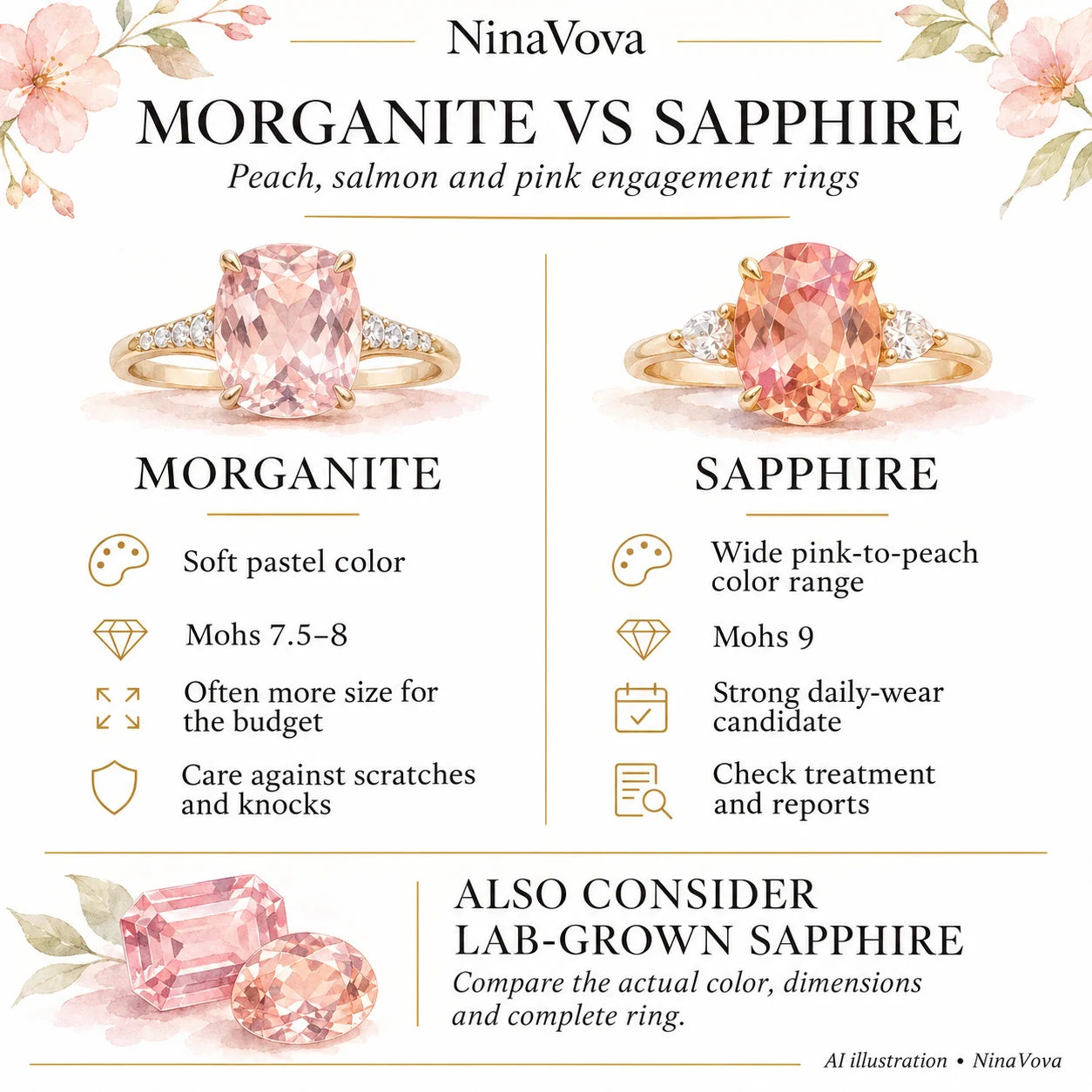
| Decision | Morganite | Sapphire |
|---|---|---|
| Color direction | Often soft pink, peach or salmon pastels. | Pink-to-orange-pink colors can offer stronger presence, but vary. |
| Scratch resistance | Mohs 7.5–8; protect against scratches and hard knocks. | Mohs 9; still needs protection and appropriate construction. |
| Size and price | Often gives more visible size for the budget. | Compare natural and disclosed lab-grown options separately. |
| Treatment | Heat commonly reduces yellow/orange components. | Ask about heat, diffusion, filling and the scope of any report. |
| What to compare | Actual millimeter size, light behavior and maintenance. | Actual millimeter size, light behavior and supporting claims. |
Quick basics
Morganite is a pink to orange-pink variety of beryl. That is the same mineral family as aquamarine and emerald. It is usually soft, pastel, warm, and romantic.
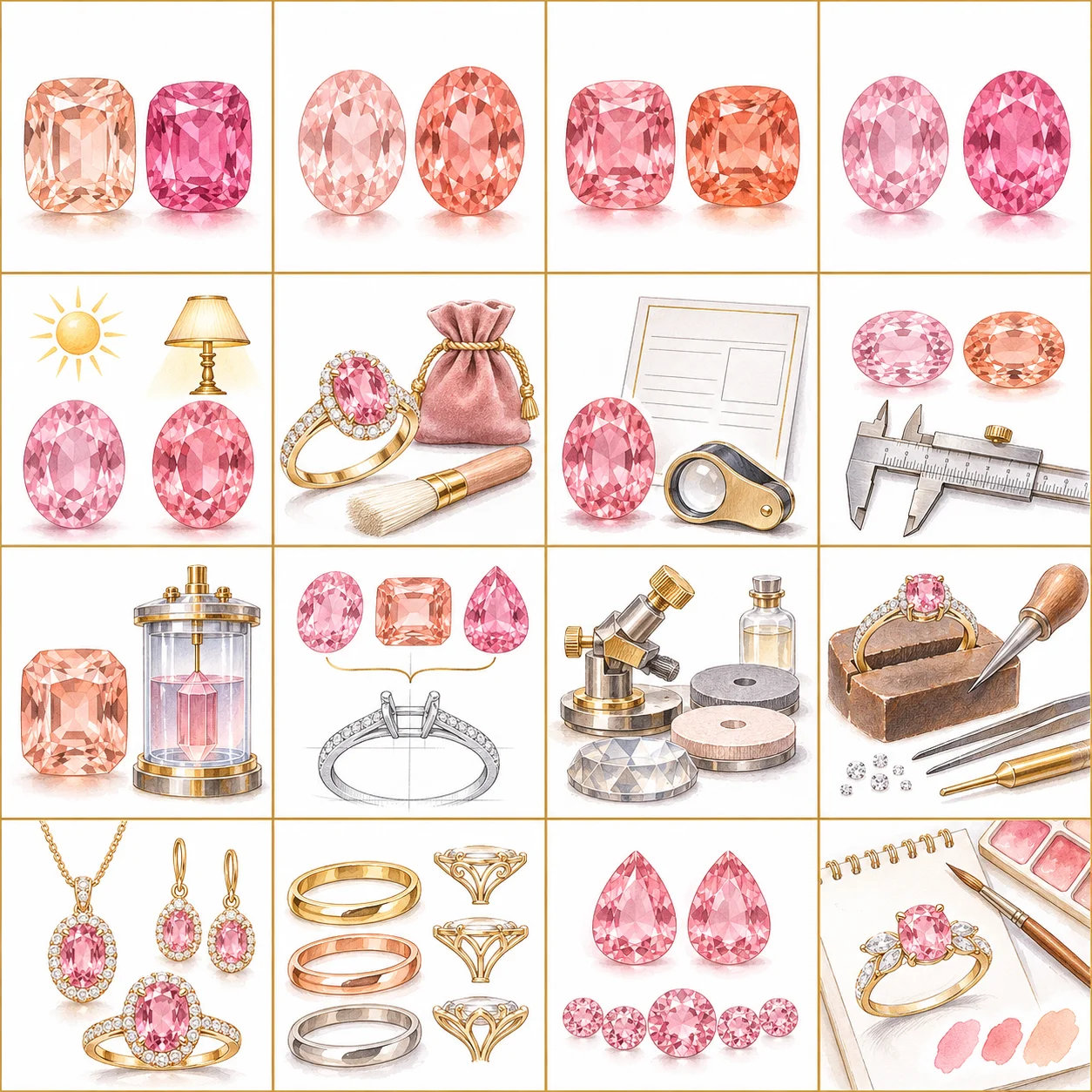
Sapphire is corundum. Most people think of blue sapphire, but sapphire comes in many colors: pink sapphire, peach sapphire, orange-pink sapphire, and at the rare end of that color world, padparadscha sapphire.
For daily wear, sapphire has the stronger durability profile. Morganite is about 7.5 to 8 on the Mohs scale. Sapphire is 9. That difference matters in a ring. Not because morganite is unusable, but because an engagement ring is a hard job. It gets worn on the hand every day, around metal, stone, countertops, door handles, bags, workouts, and normal life.
Peach morganite vs peach sapphire
Let’s start with peach. This is probably the most common comparison.
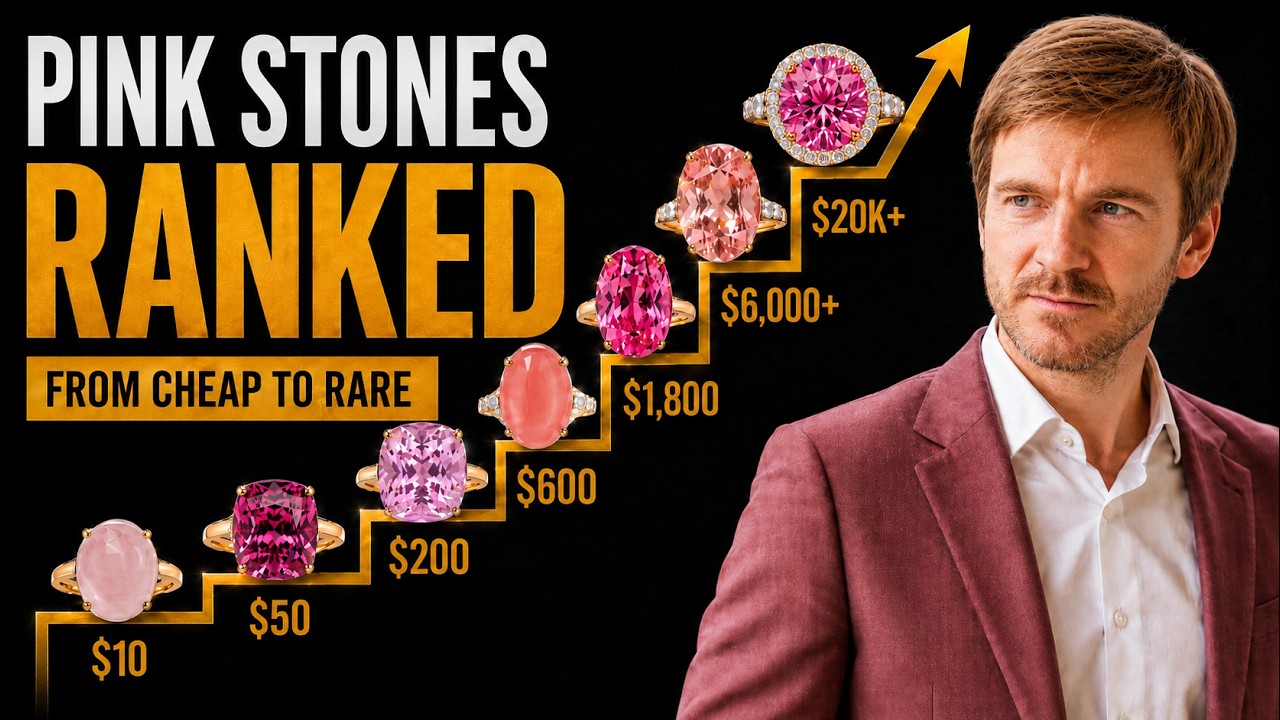
Peach morganite has a very soft, romantic look. It can be blush, peach, champagne-pink, or rose-gold warm. This is why people love it. It feels gentle. It does not scream for attention. And for the money, morganite often gives you a larger center stone than natural sapphire.
But there is a catch. The same softness that makes morganite beautiful can also make it disappear. A pale peach morganite can look amazing in a close-up product video. Then on the hand, especially against warm skin or rose gold, it can become very quiet. Sometimes too quiet.
A well-chosen peach sapphire can feel more defined in color, although both materials vary. It may lean peach, apricot, pink-orange or slightly salmon. Judge that presence in the actual stone rather than assuming every sapphire will outperform every morganite.
But I would not buy either stone just because the listing says peach. A weak peach sapphire can look beige. A weak morganite can look washed out. The word peach is not enough. You have to see the actual stone. If this were my money, I would compare them on the hand, not in a white-background photo.
Salmon morganite vs padparadscha-style sapphire
Next is salmon. This is where the comparison gets more interesting.
Morganite naturally lives very comfortably in this salmon-to-peach color world. That warm orangy-pink tone can be beautiful. It can feel soft, sunset-like, antique, and romantic. And for many buyers, this is the exact mood they want when they first start looking at peachy pink engagement rings.
Sapphire has its own version of this color world. This is where people start using words like padparadscha. And this is where buyers need to slow down.
Padparadscha sapphire can be very beautiful and very expensive. But not every peach or salmon sapphire is padparadscha. And not every stone described with romantic sunset language deserves a major premium.
This is where I would be careful. A beautiful salmon morganite may give you the emotional color you actually want. An average sapphire with expensive padparadscha language may not. If the price depends on the word padparadscha, the report needs to support the claim.
I would not pay a padparadscha premium for a stone that is simply peach, champagne, or light pink with good marketing.
Pink morganite vs pink sapphire
Now let’s talk about pink. This is the third color lane.
Morganite can be pink, rose-pink and purplish pink, usually in a pastel range, though stronger colors exist. Heat treatment commonly reduces a yellow or orange component toward a purer pink. Treatment disclosure and the actual appearance matter; the color alone does not prove whether it has been heated.
But visually, pink morganite still usually has a softer personality. It can be delicate and beautiful. But if you want a strong pink engagement ring, pink sapphire usually has the advantage.
Pink sapphire can have more saturation, more crispness, more presence, and better long-term wear. For a true pink engagement ring, I would usually choose pink sapphire over morganite. But if the buyer wants a quieter, softer, more delicate pink, morganite can be lovely.
The real-light test
That brings us to one of the most important tests. Do not judge these stones in one perfect video.
Look at them in real light: open-shade daylight, warm indoor light, direct light if possible, and most importantly, on the hand.
Morganite can go very pale. It can blend into rose gold. It can look more champagne than pink. It can lose contrast against skin. That does not always make it bad. Some people want that quiet, barely-there color. But you should choose it intentionally.
Sapphire can change too. A peach sapphire can go more orange. A salmon sapphire can look flatter indoors. A weak pink sapphire can look watery. A champagne-peach sapphire can look elegant, or it can just look beige.
The question is not whether the stone looks pink in one perfect video. The question is whether it still looks beautiful in the light where the wearer will actually use it.

Daily wear
Now let’s talk about daily wear. This is where sapphire pulls ahead.
Morganite can be worn in jewelry. It can be used in rings. But compared to sapphire, it needs more care. Over time, a morganite ring is more likely to show surface wear: small scratches, softened facet edges, and a duller look.
This is where the “cloudy morganite” complaint comes from. Sometimes it is just dirt. Soap, lotion, oil, and daily buildup can make any stone look tired. If that is the issue, cleaning helps. But if the stone has actual surface wear, cleaning will not reverse that.
That is the difference buyers need to understand. A dirty stone can be cleaned. A worn surface may need professional attention.
Morganite is not a mistake. It is just a softer choice for a harder job.
Sapphire is more forgiving. It is harder. It has excellent toughness. It has no cleavage. For a ring worn every day, that matters. If this were a pendant or earrings, I would be much more relaxed about morganite. For an engagement ring, I would be more careful.
Treatments and reports
Now, treatments.
For morganite, heat treatment is common. It is often used to reduce yellow or orange tones and create a purer pink. For most buyers, this is not the scary part. The bigger issue is whether the stone actually has good color, whether the price makes sense, and whether the buyer understands the maintenance.
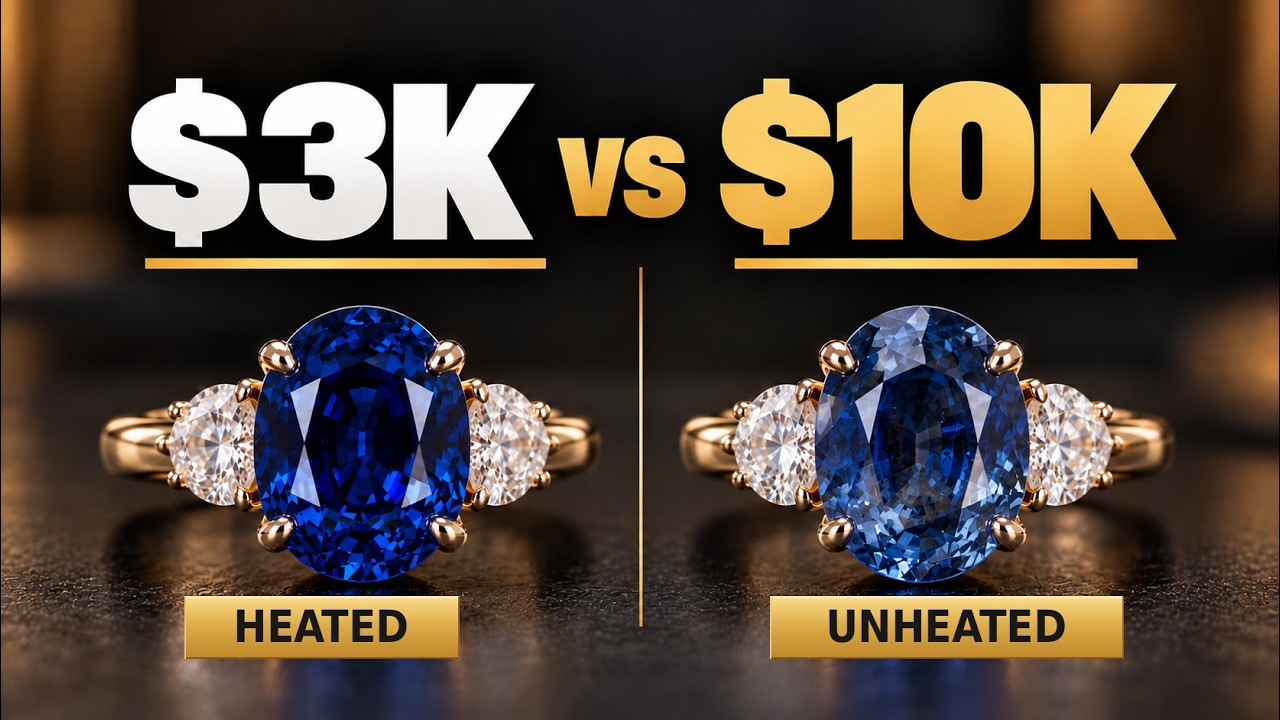
For sapphire, heat treatment is also common. Normal heat treatment is widely accepted. But with sapphire, the report matters more when the price is high. Especially if the seller is using words like untreated, padparadscha, origin, or rare. If those words are part of the price, they need to be supported on paper.
For a natural sapphire, I would want a report from a respected lab. The report should confirm that the stone is natural sapphire and describe treatment. If someone is charging extra for padparadscha, I would want that supported too.
Price and size
Now let’s talk about price and size. This is where morganite makes a very strong case.
Morganite often gives you more visual size for the money. It is also less dense than sapphire, so a 1 ct morganite will often look larger than a 1 ct sapphire if the shape and cut are similar.
That is why you should not compare only carat weight. Compare millimeter size. How large does the stone actually look on the finger?
For buyers who want a larger soft pink center stone without pushing the budget too high, morganite can be very attractive.
Natural sapphire can cost more, especially when an individual stone has attractive color, size and supporting documentation. Rarity and treatment claims can influence that price. The extra cost is not a guarantee of better appearance: assess the exact stone as well as its durability profile.
Those are different kinds of value. Morganite often makes visual size more accessible. Sapphire offers stronger scratch resistance. Actual prices still depend on the individual stone, so compare written offers rather than assuming the names alone decide which is better value.
Lab sapphire as the middle path
Now, there is one very practical middle path: lab sapphire.
If a buyer loves the morganite color world but wants fewer daily-wear concerns, lab sapphire is probably the first compromise I would look at.
You can get peach. Pink. Sometimes salmon or padparadscha-style color. You get sapphire durability. And the price can be much more approachable than natural sapphire.
This is not for everyone. Some buyers really want a natural stone. That is fine. But if the priority is color, size, durability, and budget, lab sapphire can make a lot of sense.
Final choosing guide
So how would I choose?
Choose morganite if you love softness. If you want peach, salmon, or delicate pink. If you want a larger stone for the money. If you are careful with jewelry. And if you understand that it may need more maintenance over time.
I like morganite more for someone who understands the trade-off, not for someone who thinks they found a cheaper sapphire.
I would usually choose natural sapphire for a frequently worn engagement ring when its appearance, condition and price suit the brief. Its scratch resistance is an advantage, but a report and the complete setting still deserve attention.
For peach and salmon colors, be especially careful with marketing language. The stone has to earn the premium.
Choose lab sapphire if you want the morganite color mood, but with sapphire durability and a better size-to-price balance. That may be the smartest option for a lot of buyers.
So the final answer is this.
Morganite wins softness, size, and romance for the money. Sapphire wins durability, structure, and long-term confidence.
The smarter choice depends less on the name and more on the color lane you are actually choosing: peach, salmon, or pink.
If this were my money for a daily engagement ring, I would usually choose sapphire. Natural or lab, depending on the budget and priorities.
But if someone truly loves morganite, I would not talk them out of it. I would just make sure they understand what kind of beauty they are choosing: soft, romantic, more affordable, but not as forgiving as sapphire for everyday wear.

Frequently asked questions
Will cleaning fix cloudy morganite?
Cleaning may remove soap, lotion and oil. It will not reverse actual abrasion or chipped facets. Have a jeweler assess persistent dullness and confirm care for the particular stone and setting.
Is every peach sapphire padparadscha?
No. Padparadscha is a specific color designation with laboratory criteria, not a general name for any peach or salmon sapphire. Ask what the report actually says.
Choose the color mood and the wear plan together
We can compare the stones you are considering, assess the dimensions and surrounding metal, and develop a personal ring around the trade-offs you are comfortable making.
Book a NinaVova consultation or explore our custom design process.
Continue reading: Your complete guide to morganite · Heated vs unheated sapphire · Lab-grown gemstone comparison.
Sources and further reading
- GIA: Morganite quality factors
- GIA: Morganite care and cleaning
- GIA: Sapphire quality factors
- GIA: Sapphire care and cleaning
- GIA: Synthetic gem materials
Availability, prices and service terms can change. Evaluate the individual stone and confirm the current written terms before ordering.