
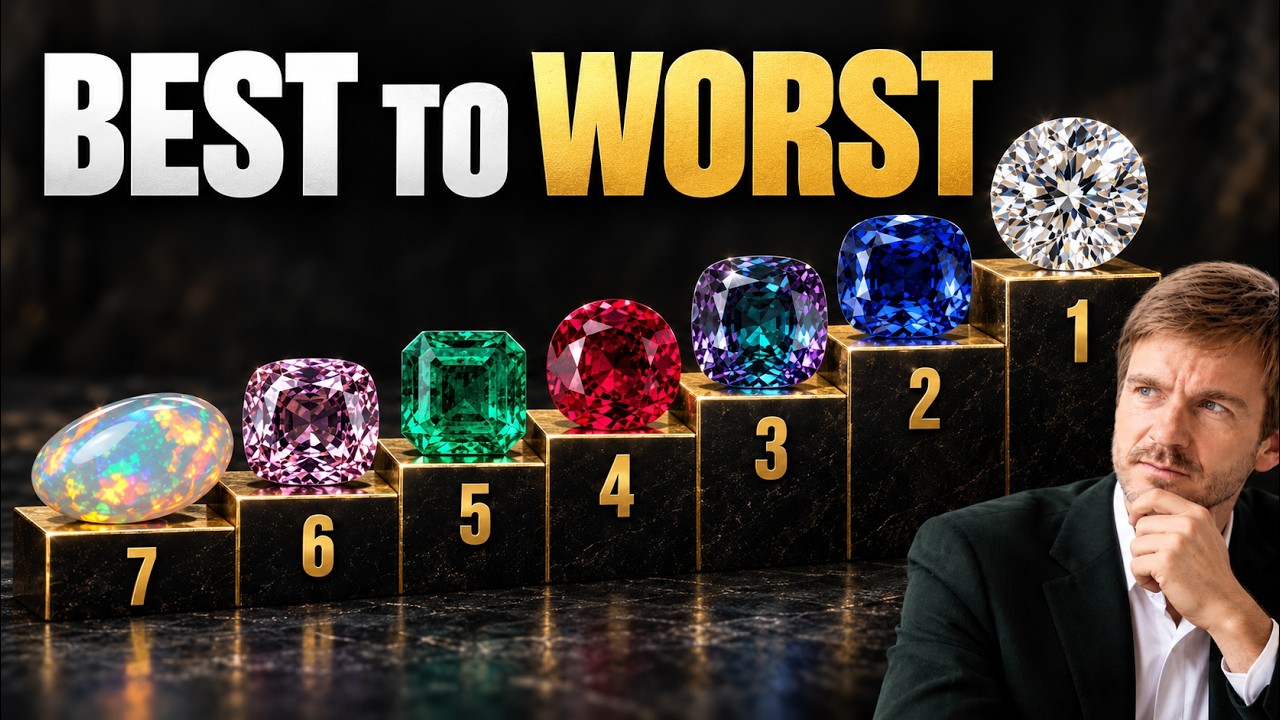
7 Lab-Grown Gemstones for Engagement Rings: A Practical Comparison

Lab-grown gemstones are usually discussed too simply.
People either say lab is exactly the same as natural, so natural makes no sense, or they call everything grown in a lab fake.
For an engagement ring, the better question is:
What does the lab version actually give you, how close can it look to natural, and what do you give up?
These are my practical preferences for engagement-ring design, ranked from seven to one. Your taste, priorities and wearing habits can change the order.
This is not a price ranking.
I am looking at durability, visual similarity, growth method, availability, value, and whether lab actually solves a real buyer problem.
One quick distinction.
A lab-grown gemstone is the same gem material grown artificially.
A simulant is a different material made to imitate it.
That becomes especially important with alexandrite.
Choose lab-grown when it solves a problem you actually have. Size, color, matching and availability can make a laboratory-grown gem useful. Natural origin may still matter personally. Inspect the actual stone, distinguish a synthetic gemstone from a simulant, and verify claims appropriate to the purchase.
At a glance · #7 — Synthetic Opal · #6 — Lab-Grown Spinel · #5 — Lab-Grown Emerald · #4 — Lab-Grown Ruby
Watch the NinaVova discussion
Watch the original NinaVova video on YouTube.
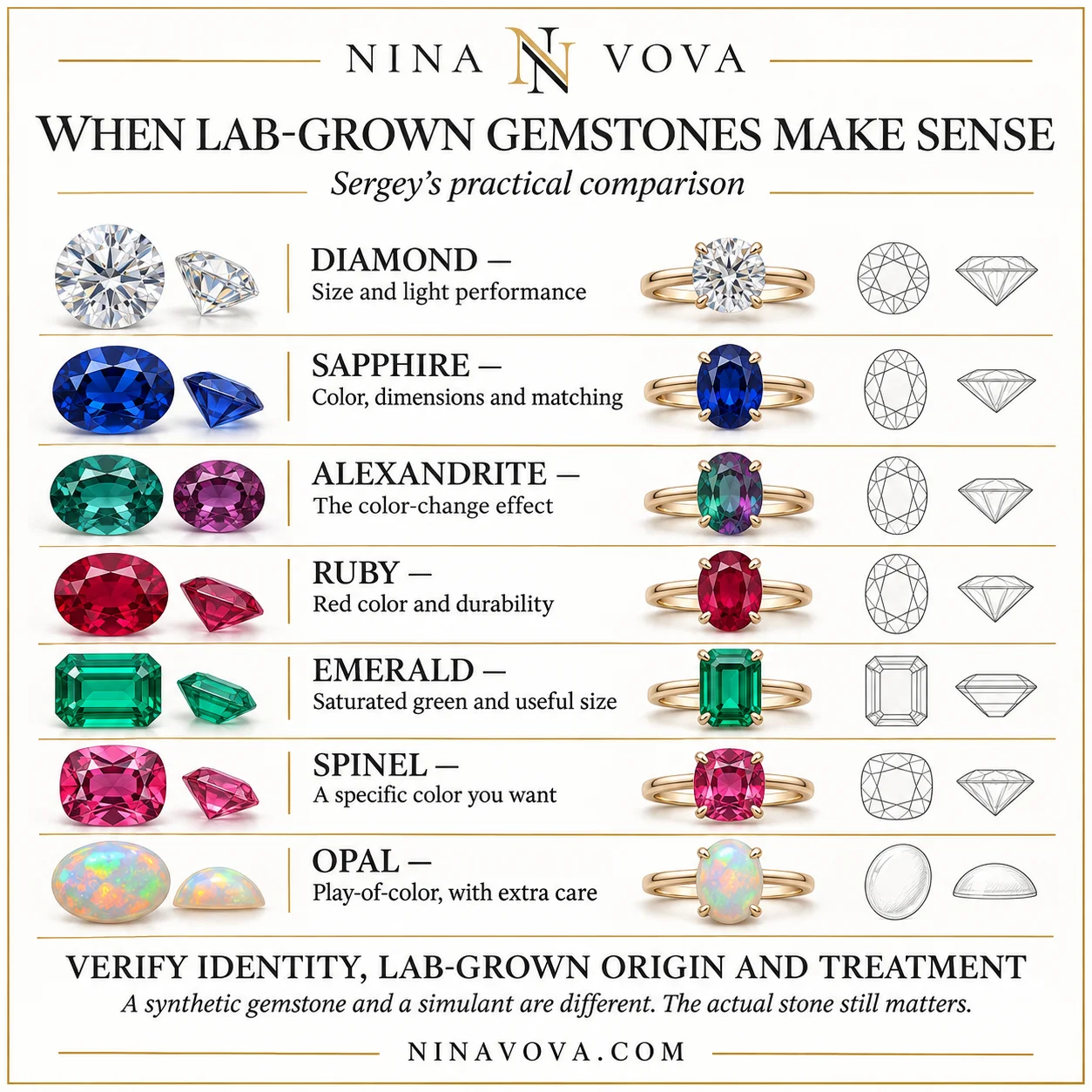
Sergey’s practical comparison at a glance
| Option | Where lab-grown can help | What still needs judgment |
|---|---|---|
| Diamond | Access to size and useful specifications | Light performance, transparency and the actual report’s scope. |
| Sapphire | Color direction, proportions and matching | Tone, cutting and the appearance you prefer. |
| Alexandrite | A color-change look in useful sizes | True synthetic chrysoberyl identity and attractive change in known light sources. |
| Ruby | Red color with corundum durability | Color, internal appearance, cutting and whether a growth-method premium matters. |
| Emerald | Saturated green, size and potentially cleaner material | Condition, inclusions, care and appearance; it remains emerald. |
| Spinel | A specific color or look that is hard to source naturally | Whether lab-grown meaningfully improves the actual choice. |
| Opal | Predictable play-of-color and matching | Exact manufactured material and extra care requirements. |
#7 — Synthetic Opal
Opal is at the bottom because lab solves appearance and availability much better than it solves the main engagement-ring problem.
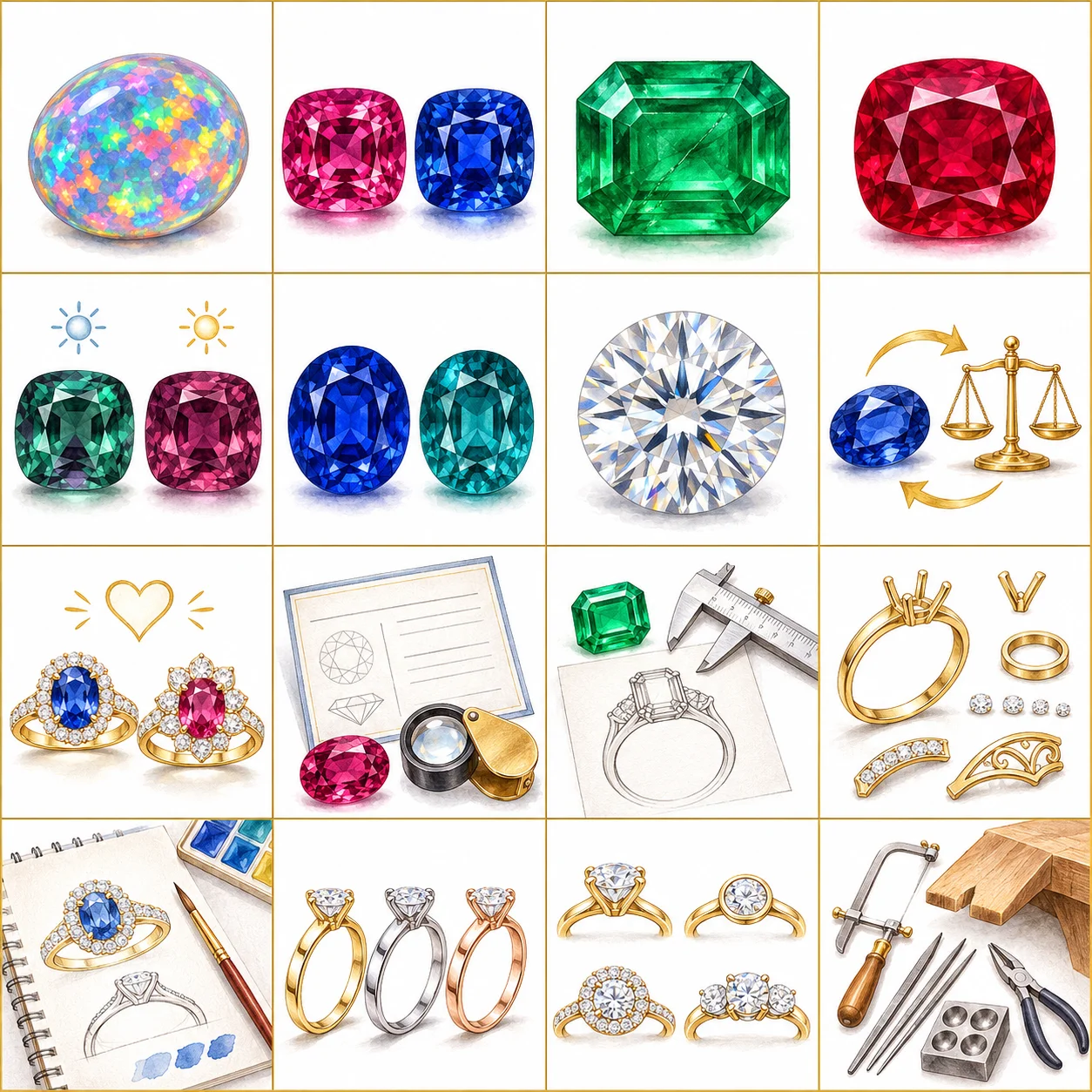
Synthetic opal can give you strong play-of-color, large pieces, and matching material much more predictably than natural opal.
The visual difference is usually pattern.
Natural opal can be chaotic and highly individual.
Gilson-type synthetic opal is also built from silica spheres, but under controlled conditions. That can create more organized columnar, mosaic, or lizard-skin type patterns.
From normal viewing distance, some synthetic opal can still look very convincing.
But if part of what you love about natural opal is that every stone feels completely individual, lab can lose some of that.
The bigger issue is durability.
Opal is still relatively soft, around 5 to 6.5 on the Mohs scale.
Some manufactured opal contains polymer that can make it somewhat more stable or tougher in practical use.
But then you need to know what you are actually buying because the market includes true synthetic opal, polymer-containing material, and outright imitation opal.
So ask the seller what the material actually is, not simply whether they call it lab opal.
The value advantage also depends on what you are comparing.
Against exceptional natural black opal, synthetic can change the budget dramatically.
Against ordinary white or Ethiopian opal, the reason to go lab is much weaker.
For me, lab opal makes sense when you specifically want the look and accept the extra care.
It stays at #7 because lab does not remove the main reason I hesitate to use opal as an everyday engagement-ring center.
#6 — Lab-Grown Spinel
Spinel is much easier to recommend for daily wear.
It is around 8 on the Mohs scale, has good toughness, and natural spinel already comes in a huge range of colors.
Lab spinel can also look different depending on how it was grown.
The most common inexpensive material is flame-fusion spinel.
Flame fusion is fast and relatively inexpensive. The crystals often grow extremely clean, and under magnification you can see curved growth features or gas bubbles.
For the buyer, the main visual effect is that the material can look very uniform.
Flux-grown synthetic spinel is different.
Flux growth is slower and can create more internal texture, including wispy, fingerprint-like, or flux-related inclusions.
That can make some flux-grown material feel more natural internally.
The bigger buying question is still this:
Why are you choosing lab spinel at all?
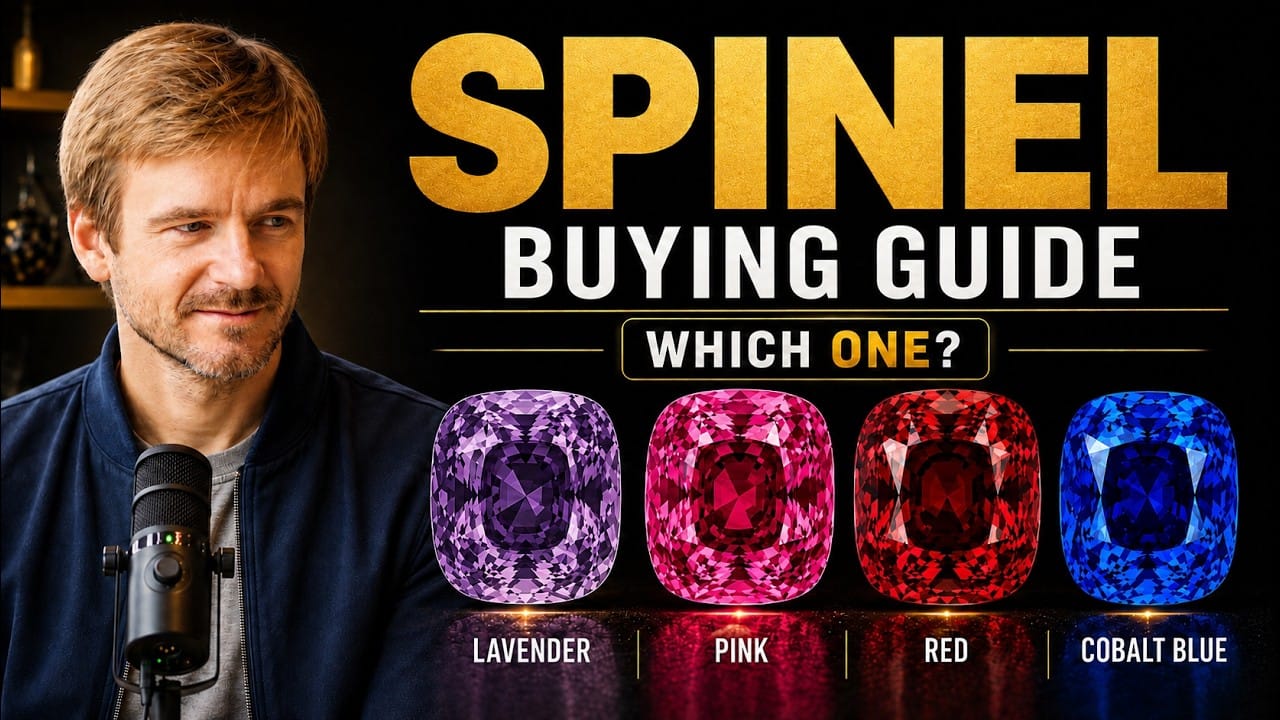
If you want gray, lavender, or another relatively accessible natural color, good natural spinel can already be affordable and is commonly untreated.
In that situation, lab may solve almost nothing.
But fine cobalt-blue spinel can become rare and expensive very quickly.
Exceptional vivid red or hot-pink material can also move into a completely different part of the market.
If one of those colors is the reason you want spinel, lab becomes much more interesting.
So I would not choose lab spinel because someone tells me flux is better than flame fusion.
I would first choose the color I actually want, compare the natural market, and then decide whether lab solves a real problem.
That conditional value keeps spinel at #6.
#5 — Lab-Grown Emerald
Emerald is where growth method becomes genuinely important to the look.
The 2 main methods buyers are most likely to encounter are hydrothermal and flux growth.
Hydrothermal emerald is grown in a high-pressure water-based solution, usually on a seed plate.
It can produce very clean and transparent material.
Depending on the stone, gemologists may see seed-related growth structures, color zoning, oriented tubes, chevrons, or nail-head type features.
For the buyer, the important thing is that hydrothermal emerald can look extremely crisp and clean.
Sometimes too clean.
A large emerald with perfectly even color and almost no internal character can feel less like the natural emerald people are used to seeing.
Flux-grown emerald develops differently.
The ingredients dissolve in a molten flux, and the crystal grows much more slowly.
Flux-grown material can trap wispy veils, fingerprint-like features, flux-filled cavities, or other inclusions.
Those inclusions are synthetic, but they can create more of the internal texture people associate with natural emerald.
That is why some buyers prefer flux-grown emerald when the goal is not simply maximum clarity, but a more natural-looking internal character.
Hydrothermal and flux are not quality grades. A beautiful hydrothermal emerald can look better than a mediocre flux-grown one, so I would choose based on the actual color, transparency, and internal character rather than the growth method alone.
If I want a clean, saturated green center, hydrothermal may be exactly what I want.
If I want more internal texture and something closer to the appearance of an included natural emerald, flux-grown material may make more sense.
Lab also changes one practical issue.
Natural emerald commonly contains surface-reaching fractures, and oil or resin treatment is extremely common.
A cleaner synthetic emerald can avoid much of that fracture-related weakness.
But it is still emerald.
It is still beryl, around 7.5 to 8 on the Mohs scale.
Cleaner material can make it more forgiving, but lab growth does not turn it into sapphire.
The value advantage can be substantial if you want a large, saturated, clean emerald.
Natural material with that combination can become expensive very quickly.
Natural still gives you geological origin, natural inclusions, and sometimes meaningful geographic provenance.
That puts lab emerald at #5.
#4 — Lab-Grown Ruby
Ruby is one of the strongest lab options because natural ruby becomes expensive very quickly as color, transparency, and size improve.
Ruby is corundum, so you keep the important engagement-ring advantages: Mohs 9, excellent toughness, and no cleavage.
But “lab ruby” can describe very different material.
Most inexpensive synthetic ruby is flame-fusion, also called Verneuil.
It can be extremely clean and uniform.
Classic microscopic clues include curved growth striae and round gas bubbles.
For the buyer, that means a large flame-fusion ruby can sometimes look almost too perfect compared with natural ruby.
Flux-grown ruby is slower and much more expensive to produce.
It can contain wispy flux fingerprints, translucent residues, and other inclusions that create more natural-looking internal character.
Hydrothermal ruby also exists.
It can show seed-related structures, zoning, or other hydrothermal growth features, although it is much less common in the jewelry market than flame-fusion ruby.
Pulled, or Czochralski-grown, ruby can produce large, very consistent crystals with uniform color.
That is useful when consistency matters, but not necessarily when you want natural-looking internal character.
So I would not tell someone to buy flux ruby automatically.
If you want a very clean contemporary red center, flame fusion or pulled material may look excellent.
If you specifically want the appearance of fine natural ruby, flux-grown material may give you more believable internal texture.
And if someone charges more because the ruby is hydrothermal or flux-grown, ask what the premium changes visually.
Do not pay for manufacturing vocabulary.
Natural ruby is expected to have inclusions, and completely clean natural stones are unusual.
So do not shop lab ruby by maximum clarity.
Compare the actual red, transparency, cut, and internal character.
The value advantage becomes very strong once you compare against large, transparent natural ruby with attractive color and minimal treatment.
Lab removes much of that scarcity while preserving durability.
Natural ruby still offers rarity, natural internal character, treatment status, and sometimes geographic origin.
For someone who mainly wants beautiful red and excellent daily-wear durability, lab ruby is extremely strong.
That puts it at #4.
#3 — Lab-Grown Alexandrite
Alexandrite is one of the clearest cases where lab growth can completely change what is realistic.
Fine natural alexandrite is genuinely scarce, especially when you want useful size, attractive colors, and a strong color change.
True synthetic alexandrite is chrysoberyl.
Documented production methods include Czochralski pulling, floating-zone growth and flux growth. The method can influence internal features, but it is not a quality grade.
Pulled, or Czochralski-grown, alexandrite can produce very clean and uniform crystals.
Floating-zone material can also be extremely clean because it is grown without a conventional crucible or flux.
Flux-grown alexandrite can contain flux-related inclusions and more internal texture.
But with alexandrite, I care much less about internal texture than I do with emerald or ruby.
The color change is the product.
A technically perfect synthetic can still disappoint if the colors are weak, unattractive, or spend most of the time in muddy intermediate tones.
So never buy alexandrite from one green photo and one red-purple photo.
Ask for video under different known light sources and watch what happens during the transition.
The second issue is identity.
Color-change synthetic sapphire has been sold for decades as an alexandrite imitation.
You may also see confusing terms such as “alexandrite sapphire.”
That is not synthetic alexandrite.
If you are paying specifically for lab-grown alexandrite, verify that the material is actually synthetic chrysoberyl.
A report can be useful here because the distinction changes what you are buying.
Alexandrite itself is excellent for daily wear: around 8.5 on the Mohs scale, excellent toughness.
So lab solves the scarcity problem without creating a durability penalty.
If you want the color-change phenomenon, lab is one of the smartest synthetic-gem purchases available.
If you want natural alexandrite because geological rarity is part of the attraction, then lab is not replacing the thing you value.

#2 — Lab-Grown Sapphire
Lab sapphire is probably the easiest colored synthetic gemstone for me to recommend broadly.
It has almost everything I want in an engagement-ring center: Mohs 9, excellent toughness, no cleavage, a huge range of colors, and extremely flexible availability.
But growth method changes what you may actually see.
Most inexpensive lab sapphire is flame-fusion.
Like ruby, it often grows extremely clean and can show curved color banding, curved striae, or gas bubbles under magnification.
Face-up, the bigger issue is how uniform it can look.
A very large sapphire with extremely even saturation and almost no internal character may feel less natural simply because that combination is unusual in natural sapphire.
Flux-grown sapphire can contain wispy fingerprint-like inclusions or flux-filled cavities that may resemble natural healed fractures.
Hydrothermal sapphire can also be very convincing and can show seed-related structures, zoning, or other growth features.
Pulled, or Czochralski-grown, sapphire tends to be extremely consistent and can produce large clean crystals with controlled color.
If someone charges more for flux-grown, hydrothermal, or pulled sapphire, ask what that premium actually changes.
Do not assume more complicated automatically means better.
For most buyers, the first questions are still color and cut.
Does the blue go too dark indoors?
Is there a window through the center?
Does the color actually work against the metal and skin tone?
Then think about whether the internal appearance matters to you.
Sapphire is also where lab becomes extremely useful for custom design.
Natural sapphire does not arrive on demand.
You can find the right color in the wrong proportions, the right dimensions in the wrong shade, or a beautiful center without matching side stones.
Lab gives you much more control over shape, dimensions, matching, and color.
But natural sapphire is still widely available at many price levels.
So unlike fine alexandrite, lab is not automatically necessary just because you want a 2 or 3 ct center.
Natural sapphire can also give you natural zoning, inclusions, geographic origin, and the rarity of exceptional untreated material.
I choose lab sapphire when the buyer prioritizes a specific color, shape, dimensions, or matching set, or when natural sourcing keeps forcing compromises.
That puts it at #2.
#1 — Lab-Grown Diamond
Lab diamond is my number-one choice in this comparison because a well-chosen stone can change the buying equation substantially while preserving the appearance and wearability buyers want from diamond.
The 2 main growth methods are HPHT and CVD.
HPHT grows diamond under very high pressure and temperature using a metal flux.
That can create metallic inclusions, geometric growth-sector zoning, distinctive fluorescence, or phosphorescence.
CVD grows diamond layer by layer from carbon-rich gas.
CVD material can show dark graphite-type inclusions, banded strain, and layered growth patterns.
Historically, some CVD material also came out with noticeable brown or gray color.
Modern production is much better, and post-growth HPHT treatment is commonly used to improve color in CVD-grown diamonds.
That does not make either HPHT or CVD automatically better.
Those growth clues matter to gemologists.
A well-grown colorless diamond from either method can look essentially identical to natural face-up.
So I would not pay a premium simply because somebody tells you CVD is better than HPHT, or the other way around.
I would evaluate the diamond itself.
Check cut, proportions, transparency, face-up dimensions, and actual light performance.
This is especially important with lab diamond because the lower price makes it easy to chase specifications instead of beauty.
You can buy very high color, very high clarity, and large carat weight without spending natural-diamond money.
But a D VVS stone with mediocre proportions is not automatically better than a lower-grade diamond with excellent performance.
Diamond reports can help compare specifications, but the laboratory and service matter. For example, GIA’s current Laboratory-Grown Diamond Quality Assessment uses Premium or Standard categories; other reports may present different information. Read the actual document rather than assuming every service uses identical grades.
It still does not replace looking at the diamond.
The value advantage is enormous because lab production makes sizes and grades accessible that can move natural diamonds into a completely different budget.
For a well-chosen stone, the main distinction is laboratory-grown rather than natural origin. Condition and actual performance still need inspection.
That is why lab diamond is #1.
What About Resale and Long-Term Value?
I would not buy an ordinary lab-grown gemstone expecting scarcity-driven appreciation.
Natural stones can derive value from geological rarity.
Lab-grown stones can be produced again.
That does not mean every lab stone has zero resale value.
Buy it for the ring it allows you to make today. Neither a natural nor a lab-grown gemstone guarantees a particular future resale value.
Will You Regret Choosing Lab?
If what you care about is appearance, size, color, durability, and the finished design, lab may give you exactly what you want.
But if natural origin, geographic source, natural inclusions, or rarity are part of why you want that gemstone, do not assume those feelings disappear because the synthetic version costs less.
And do not pay substantially more for natural rarity if you personally do not value it.
When Do You Need a Report?
For lab stones, I would use reports selectively.
You do not need an expensive laboratory report for every inexpensive synthetic sapphire.
A report becomes useful when identity materially affects what you are paying for.
Alexandrite is the obvious example because true synthetic chrysoberyl and color-change synthetic sapphire are different products.
Reports can also establish natural versus laboratory-grown origin and identify detectable treatments.
But a report cannot tell you whether a sapphire has beautiful color, whether an emerald looks too artificial, whether an alexandrite has an attractive color change, or whether a ruby has the internal character you want.
Those decisions still require seeing the actual stone.
Choose lab when it solves the right problem
So choose lab when it solves an actual problem—size, color, availability, quality, or budget—without removing the part of the gemstone you actually care about.
Choose natural when the natural origin and individuality are part of what you want.

Frequently asked questions
Is lab-grown alexandrite the same as color-change sapphire?
No. True synthetic alexandrite is chrysoberyl. A laboratory-grown sapphire can imitate a color-change appearance while remaining a different gem material.
Does a more complicated growth method guarantee a better ring stone?
No. Compare actual color, transparency, cutting, condition and appearance. Professional identification may be needed for material, origin or treatment claims.
Start with the ring you want to create
We can help compare natural and lab-grown choices around your priorities, then develop the setting around the actual stone rather than manufacturing vocabulary alone.
Book a NinaVova consultation or explore our custom design process.
Continue reading: Designer vs custom engagement rings · Spinel buying guide.
Sources and further reading
- GIA: Introduction to synthetic gem materials
- GIA: Laboratory growth of gem materials
- GIA: Laboratory-grown diamond service
- GIA: Alexandrite sapphire terminology
- FTC: Jewelry advertising and disclosure
Availability, prices and service terms can change. Evaluate the individual stone and confirm the current written terms before ordering.