
Ruby vs Spinel for Engagement Rings: Color, Care and Value

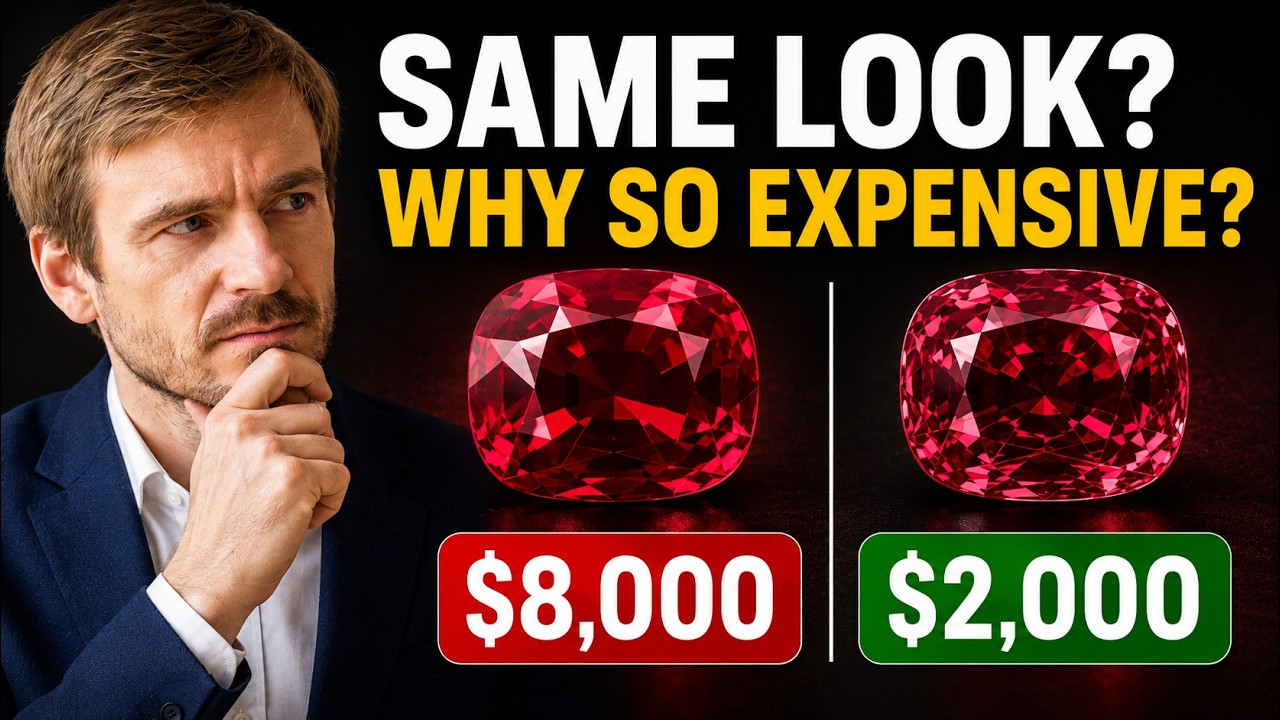
If you’re looking for an engagement ring and you’ve been scrolling through red gemstones, you’ve probably seen two names pop up a lot: ruby and spinel. They look almost exactly the same, but the price tags can be very different. So what gives? Here we compare the real difference between ruby and spinel—no gem-expert knowledge needed. We’ll talk looks, durability, price, and which one is actually better for your ring.
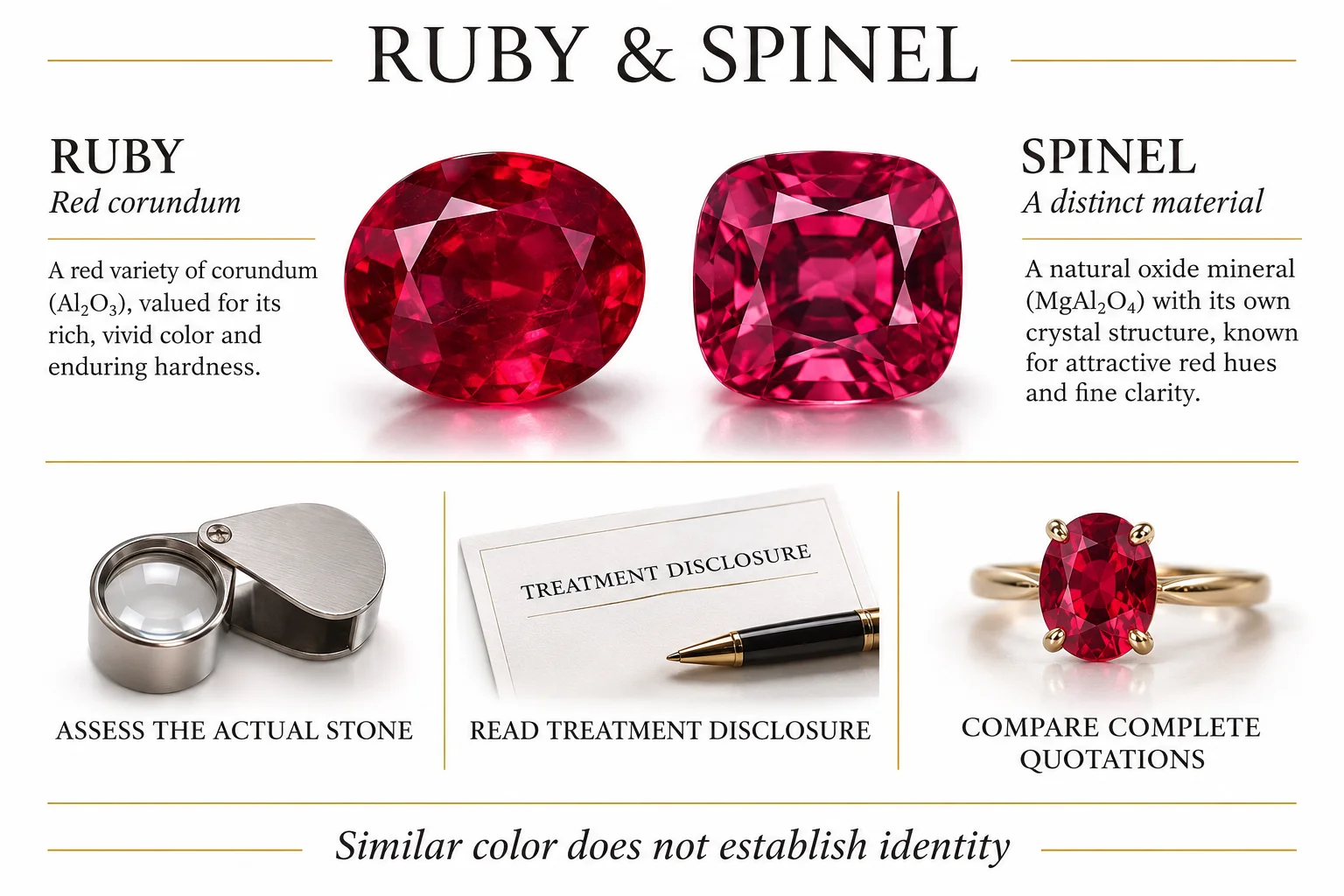
Similar red color does not make ruby and spinel the same material. Both occur naturally and both have laboratory-grown counterparts. Assess each actual stone’s appearance, condition and treatment, then compare suitable settings and current quotations rather than buying by name alone.
At a glance · Spinel is a distinct gemstone · Ruby and its history · Compare color and sparkle · Clarity and actual condition
Watch the NinaVova discussion
Watch the original NinaVova video on YouTube.
The original NinaVova discussion accompanies this guide. Historical price examples are not current quotations, and written material and laboratory disclosures govern the actual stone.
Ruby and spinel: the meaningful comparison
| Factor | Ruby | Spinel |
|---|---|---|
| Material | Red corundum | Distinct spinel material |
| Scratch hardness | Mohs 9 | Mohs 8 |
| Appearance | Color, inclusions, cut and fluorescence vary | Color, inclusions, cut and fluorescence vary |
| Origin | Natural and laboratory-grown material exist | Natural and laboratory-grown material exist |
| Treatment | Heating, diffusion and filling are different disclosures | Untreated, heated and other treated material exist |
| Value | Obtain a quotation for the actual stone | No universal fraction of a comparable ruby’s price |
Spinel is a distinct gemstone
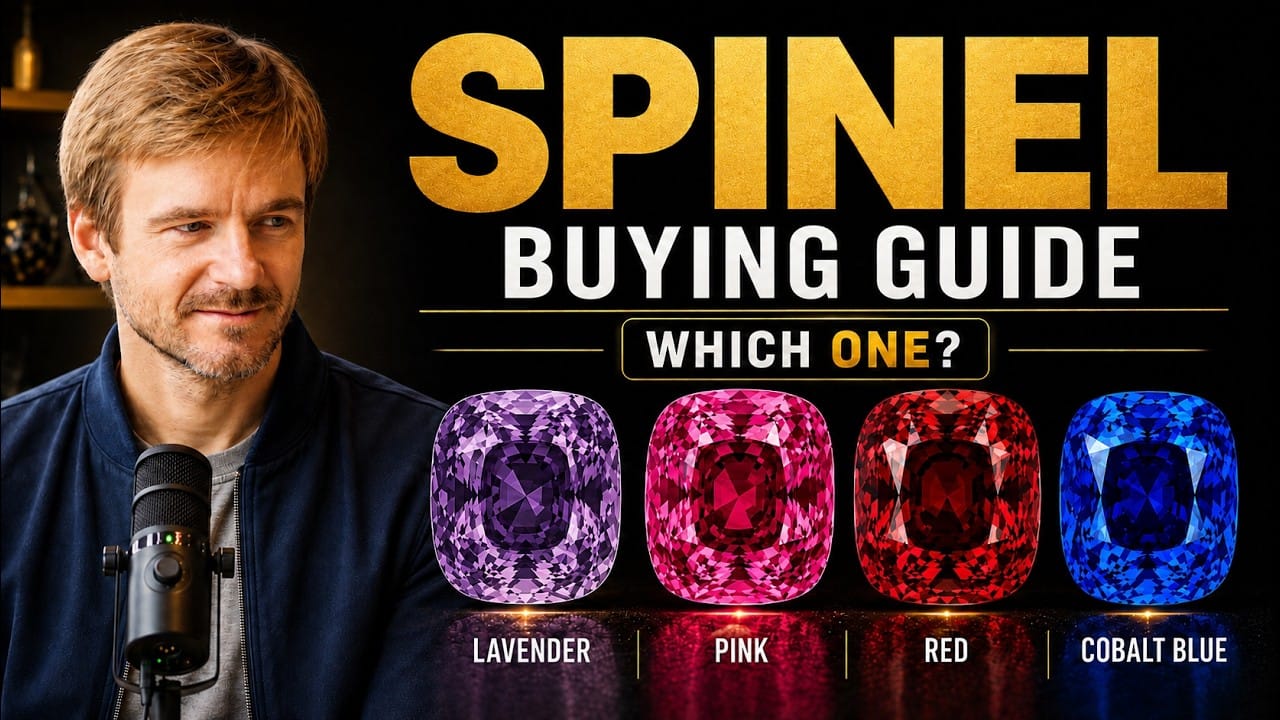
Let’s start with the underdog: spinel. If you haven’t heard of it, you’re not alone—many people haven’t. Spinel occurs naturally and has a long jewelry history. For centuries it was mistaken for ruby. Even in royal crowns, famous “rubies” turned out to be spinel. The most famous example is the Black Prince’s “Ruby” in the British Crown Jewels—it isn’t a ruby at all; it’s a gorgeous red spinel. Gemological identification now distinguishes these different minerals. Natural spinel forms underground, but laboratory-grown spinel also exists. The name of the material alone does not establish natural origin. Visually, spinel can be just as red and just as eye-catching, and when it’s well cut it often looks very bright and crisp.

Ruby and its history
Now, ruby. Ruby is part of a gem family called corundum. When corundum is red, we call it ruby. If it’s any other color—like blue—it becomes sapphire. Ruby’s been treasured for thousands of years. It’s known as the stone of love, passion, and power, which makes it a natural pick for engagement rings. Visually, ruby often reads as a deep, warm crimson with a soft, velvety feel that many people find incredibly romantic.
Compare color and sparkle
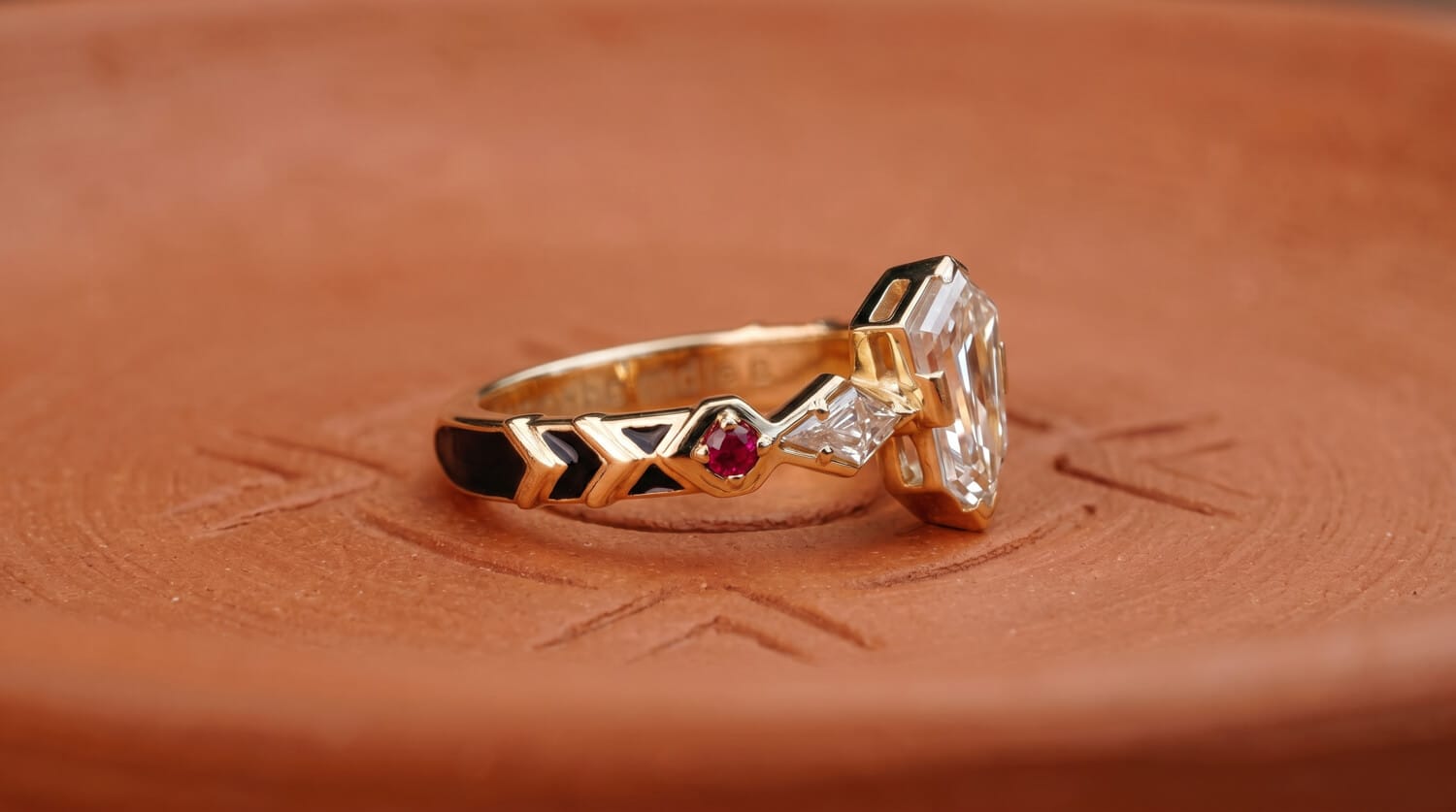
Let’s compare these two the way you’ll experience them in real life, starting with color and sparkle. Ruby usually shows a deep, warm crimson, and the best stones can look like they glow a little in daylight. Spinel often leans raspberry or cherry, and when it’s well cut, it looks crisp and bright. Here’s the important part: “sparkle” is driven far more by cut, clarity, and polish than by the gem species. A top-cut, clean spinel will out-sparkle a sleepy ruby, and a well-cut ruby will out-sparkle a poorly cut spinel. When you compare stones, look for sharp facet reflections, minimal haze under the table, and a mirror-like polish. Those are the things that make a stone dance.
Clarity and actual condition
Now clarity—think of the tiny natural birthmarks inside the gem. Rubies commonly have more visible inclusions. That’s normal for ruby, and it’s part of its character, but inclusions can sometimes soften the look or reduce that crisp, mirror-like reflection. Spinels are often cleaner to the eye. When a spinel is both clean and well cut, it tends to look bright, glassy, and very lively.
Fluorescence and lighting
You might also notice fluorescence—basically, how a stone reacts to UV light in sunlight or under certain lamps. Some rubies and many pink or red spinels fluoresce. If your stone does, you’ll see an extra vivid “pop” in bright conditions. Not every gem fluoresces, and the effect varies by stone and by origin, so treat it as a pleasant bonus rather than a requirement.
Durability and appropriate wear
Let’s talk durability, because this is an engagement ring and you’ll wear it every day. Ruby is 9 on the Mohs scale—extremely hard and a proven everyday performer. Spinel is 8—also a durable stone for daily wear. Neither ruby nor spinel has a natural “break line,” which gemologists call cleavage. Prong, halo and bezel designs can be explored, but the actual stone’s fractures, treatment, dimensions and structural support still matter. Hardness compares scratch resistance rather than every durability factor. Remove either ring for activities involving impact or substantial pressure, and agree on realistic care.
Treatment disclosure
Treatments are common in colored gems. They’re not automatically bad, but they must be disclosed because they affect price and sometimes durability. In ruby, heat treatment to improve color and clarity is very common and widely accepted. Some rubies are diffused, meaning the color has been modified at very high temperature; that should always be disclosed. There’s also lead-glass filling, which fills surface-reaching cracks to make the stone look clearer. Lead-glass-filled rubies can look attractive, but they’re more fragile and not ideal for a lifetime ring, so I recommend avoiding lead-glass-filled rubies for engagement wear. In spinel, a lot of stones are sold untreated—that’s one of spinel’s big selling points. Heated spinel exists, and other treatments are possible, though they’re less common. The takeaway is simple: always ask about treatment and request an appropriate laboratory assessment; not every treatment can always be detected.
Read and verify the report
Let’s talk about the lab report. Ask for an independent report from a reputable lab—examples include GIA, AGL, GRS, SSEF, Gübelin, and Lotus Gemology. Here’s what to look for:
• Identity. If you want natural material, the report should identify the actual ruby or spinel as natural, using the issuing laboratory’s wording. If you want a natural stone, avoid anything labeled synthetic or man-made.
• Treatment. For ruby, look for “Heated” or “Unheated,” and avoid “lead-glass filled” for engagement rings. For spinel, “No indications of treatment” is ideal; if the stone is treated, read the actual treatment wording and any limits of the examination.
• Origin (optional). You might see countries like Myanmar, Mozambique, Tanzania, Sri Lanka, or Tajikistan. Only pay extra for origin if it matters to you; origin is not a durability guarantee.
• Verify the report. Use the report number or QR code on the lab’s website to confirm it matches your stone. Confirm what identification, treatment and optional origin services the particular laboratory currently offers.
Compare current quotations
There is no universal ruby-to-spinel price ratio. Color, size, transparency, cut, condition, treatment, documented origin and seller terms all affect value. Compare actual stones of similar appearance and dimensions, then ask for a dated complete quotation. An attractive spinel can offer a different allocation of the budget without replacing every particular ruby.
Choose the actual stone
Let’s pull it together with a quick choosing guide. If you love the classic name, the deep romantic red, the heritage, and the symbolism of love, passion, and power, a particular ruby may fit that preference. If you want a vivid red look that’s often untreated, you like that crisp and lively face-up appearance, and you prefer a different price allocation, you should take a serious look at spinel. In either case, ask for the lab report, check the treatment line, and choose the stone that makes you smile the second you put it on.
Compare them side by side
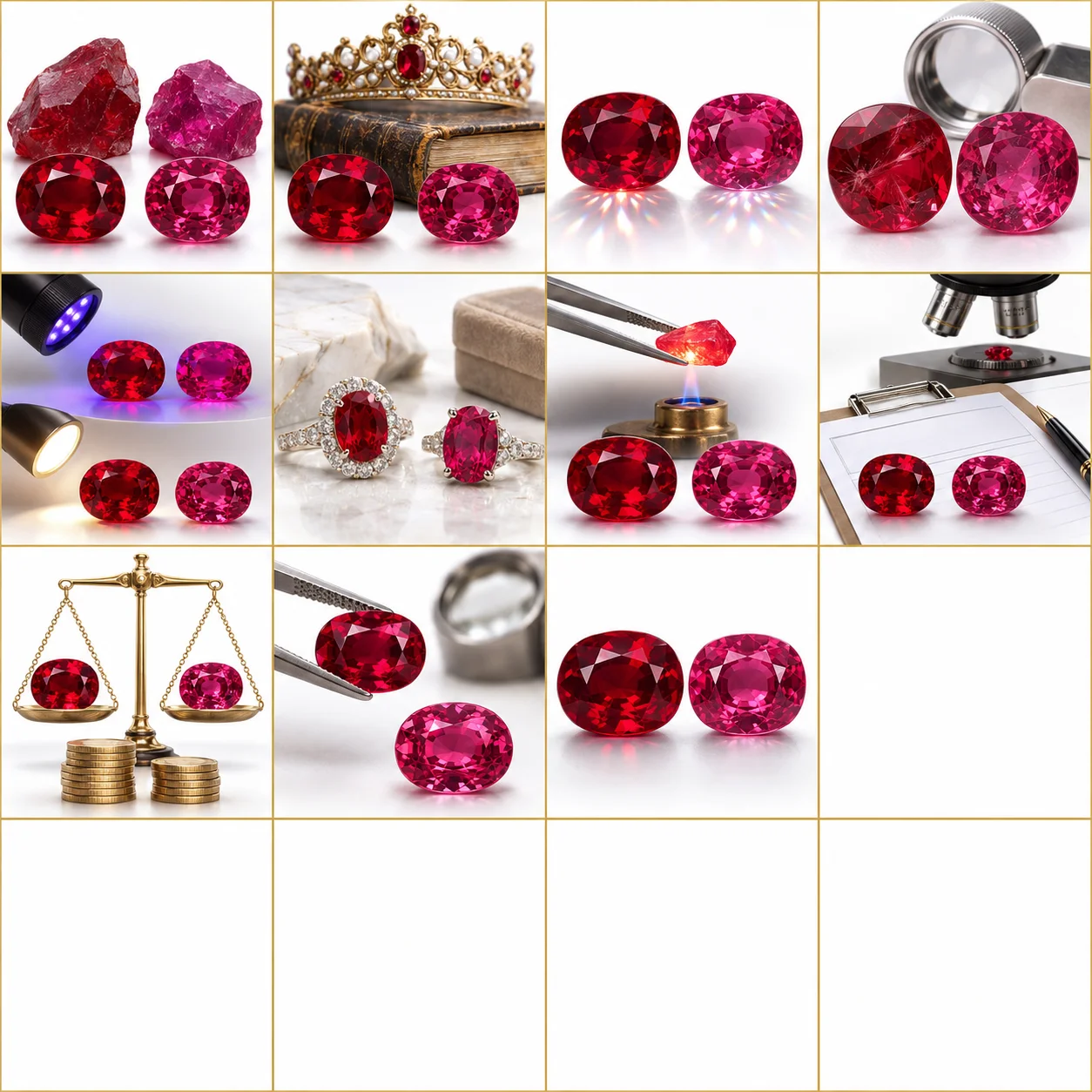
To wrap up: ruby and spinel can look incredibly similar, but they offer slightly different personalities. Ruby brings that velvety depth, history, and prestige. Spinel brings brightness, excellent everyday wear, and strong value, especially when it’s clean and well cut. Remember, sparkle is mostly about cut, clarity, and polish. Trust your eyes, use good lighting, compare stones side by side, and let your heart choose.
Frequently asked questions
Does spinel mean natural and untreated?
No. Natural spinel exists, but laboratory-grown and treated material also exist. Confirm the actual origin and treatment disclosure.
Is every spinel cheaper than every ruby?
No. Price depends on the actual stones, quality, size, condition, treatment and documentation. There is no universal price ratio.
Does fluorescence prove identity?
No. It can affect appearance, but a visual reaction alone does not replace a suitable gemological examination.
Compare the actual stones for your ring
Tell us the color, face-up size and wearing needs you have in mind. We can discuss specific stones, their documentation and a considered setting before you decide.
Book a NinaVova consultation or explore our custom design process.
Continue reading: Natural ruby guide · Garnet guide · Treatment and origin questions.
Sources and further reading
- NinaVova: Original discussion
- GIA: Ruby care and treatment limits
- GIA: Ruby buying guide
- GIA: Durability beyond scratch resistance
- GIA: Spinel buying guide
- GIA: Spinel care
- GIA: Heated spinel research
- GIA: Additional spinel treatments
Compare current quotations, actual stone condition, origin and treatment disclosure. Natural and laboratory-grown materials have different growth histories; neither a size formula nor a material name establishes the quality of every ring.