
Engagement Ring Guides
Lab-Grown vs Natural Sapphire: Color, Budget and Ring Design

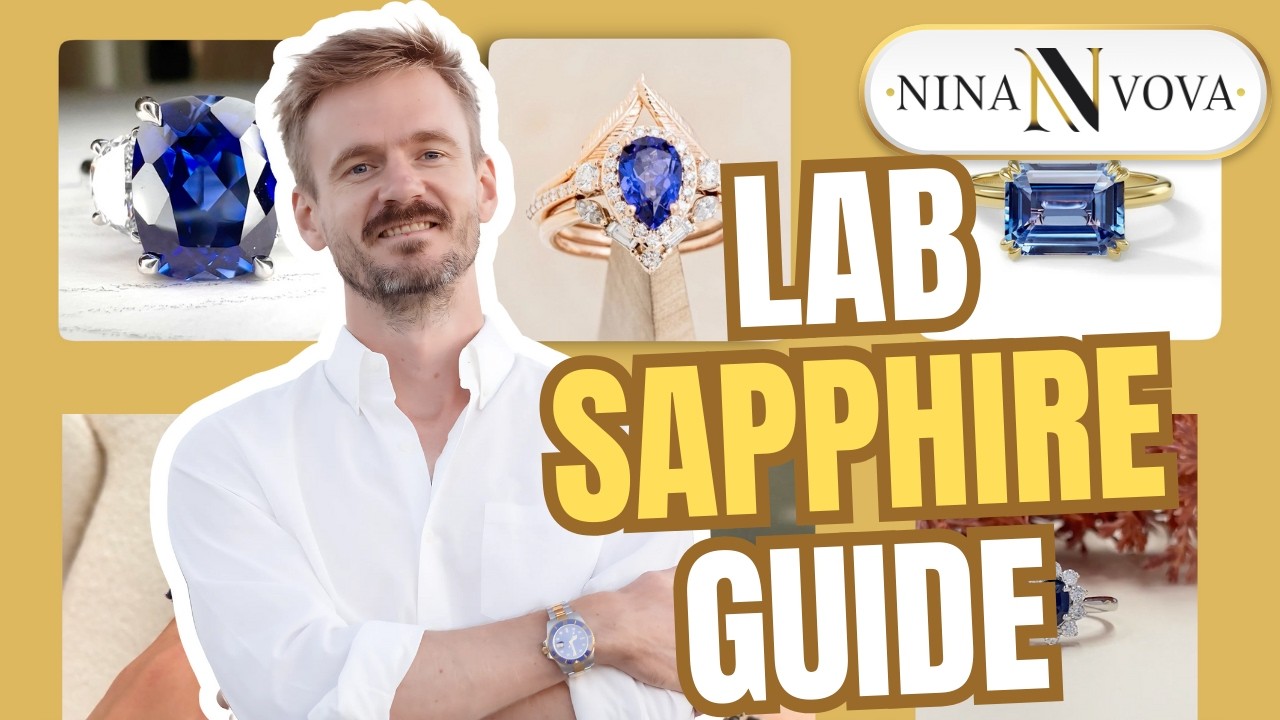
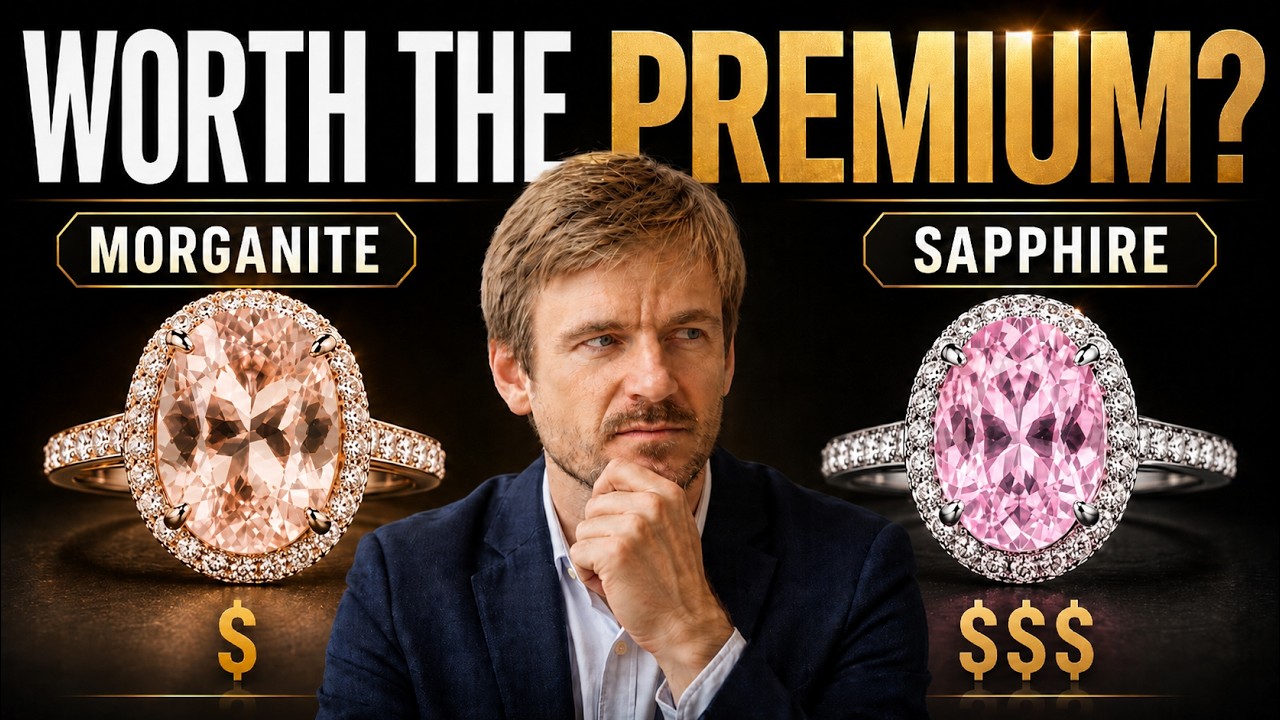
If you're choosing between natural and lab-grown sapphire for an engagement ring, the price difference can reach thousands of dollars. What would you actually get for spending more?
Maybe you want a classic blue oval, or you've fallen in love with the unusual teal of a natural stone. Both choices can make a beautiful ring, but I'd approach them differently.
This article compares natural and lab-grown sapphire, explains the growth methods I prefer, and sets out the checks I make before selecting a stone. The $3,000, $5,000 and $8,000 ring examples are illustrative budget allocations, not current inventory offers or promises of a particular size and quality.
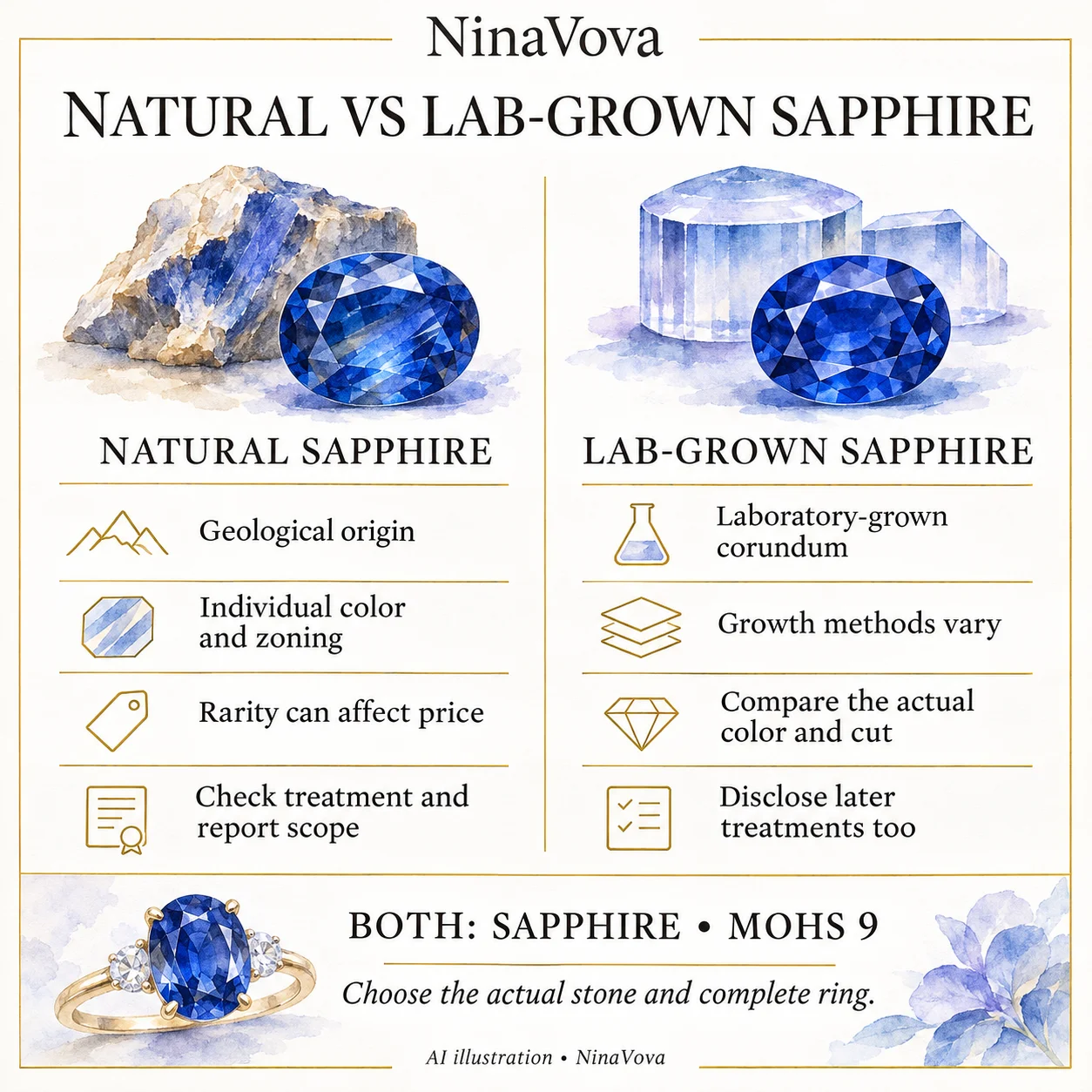
Both are sapphire; decide which actual stone best serves the ring. Lab-grown sapphire can make a particular color and size more accessible. A natural sapphire can offer individual color zoning, character and geological origin. Compare color, cut, condition, disclosure and the complete design; growth-method preferences are part of NinaVova’s selection approach, not universal quality grades.
At a glance · What Are You Actually Choosing? · Which Lab-Grown Sapphire Would I Recommend? · What Makes Natural Sapphire Special? · How I Check The Stone'S Quality
Watch the NinaVova discussion
Watch the original NinaVova video on YouTube.
The related NinaVova laboratory-grown sapphire video provides manufacturing background. This article focuses on the natural-versus-laboratory-grown comparison.
Natural versus lab-grown sapphire at a glance
| Question | Natural sapphire | Lab-grown sapphire |
|---|---|---|
| What is it? | Geologically formed corundum. | Laboratory-grown corundum. |
| What can attract the buyer? | A particular color, zoning, character or natural origin. | A chosen color and clean appearance at a different cost structure. |
| What does origin not guarantee? | Beauty, durability of a damaged stone, or resale return. | Good cutting, a specific growth method, or a universal ethical claim. |
| What to verify? | Identity, detectable treatment and relevant origin claims. | Synthetic corundum identity, later treatments and claimed growth method. |
| How to design? | Use the actual dimensions and color distribution. | Use the actual dimensions and finished appearance. |
| How to budget? | Compare current stones and total ring specifications. | Compare current stones and total ring specifications. |
What Are You Actually Choosing?
Natural and lab-grown sapphires are both genuine sapphire. They're the same mineral, corundum, with Mohs hardness 9 and essentially the same optical and physical properties.
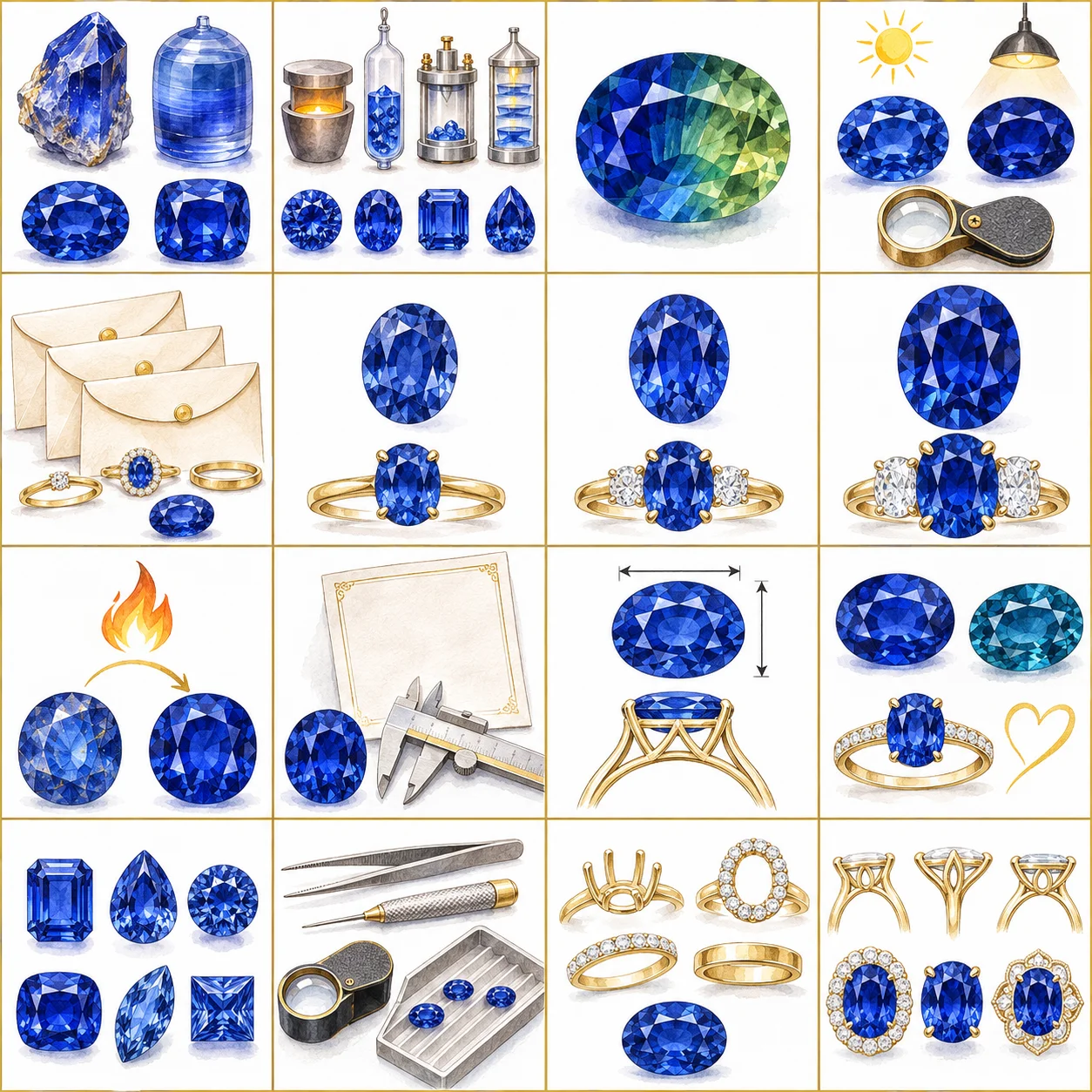
Both work well for everyday engagement rings. They resist scratching, but a strong impact can still chip an exposed corner or edge. The setting should protect vulnerable areas in either case.
“Synthetic sapphire” is the correct gemological term for lab-grown sapphire. It isn't a glass imitation or synthetic spinel, which are different materials. If you're paying for sapphire, the stone needs to be identified as corundum.
Natural sapphires form with trace elements that create different colors, sometimes unevenly distributed through a single crystal. Laboratory production can create attractive, consistent colors and calibrated sizes, without the natural-rarity premium.
But natural origin doesn't guarantee beauty, and lab origin doesn't guarantee good cutting. I still judge the actual sapphire's color, brightness, and proportions.
Which Lab-Grown Sapphire Would I Recommend?
Lab-grown sapphire can be produced in several ways. Four methods are worth understanding because they affect color distribution and internal appearance. I recommend two for the engagement-ring centers I select.
Flame fusion, or Verneuil, grows sapphire by melting powder in a flame. In some blue crystals, color concentrates toward the outside, so a cut stone may look evenly blue face-up but pale from the side. Curved growth bands and gas bubbles may appear under magnification; those are identification features, not necessarily visible defects. I'd request side-view video to check the color. I don't recommend flame fusion for engagement-ring centers.
Czochralski, or pulled sapphire, grows by drawing a crystal from molten material. It can produce large, clean crystals with relatively uniform color, useful for precision cutting. Such stones may look clean without the natural-looking veils associated with flux growth. Some pulled crystals also contain color bands or tiny bubbles. I don't recommend pulled for my engagement-ring centers; for a clean blue appearance, I prefer hydrothermal.
Hydrothermal sapphire grows from a water-based solution under high temperature and pressure. It can produce beautiful blue color and excellent transparency, often with a clean appearance. This is my recommendation for clients who want a clear, evenly colored center. Hydrothermal stones can still have internal growth features, so I check the actual gemstone's cutting and appearance under normal lighting.
Flux-grown sapphire crystallizes slowly from a molten solution. It may contain fine veils and tiny crystals resembling inclusions found in natural sapphire. Some are visible only under magnification, so a particular stone may appear very clean. When a client wants natural-looking internal character, this is my recommendation, and I select the stone based on the inclusions they can actually appreciate in the finished ring, rather than just the growth-method label.
One separate concern is color treatment. Some synthetic sapphires begin nearly colorless and receive blue later through lattice diffusion. In certain stones, that blue is shallow enough that repolishing can remove it. I avoid these for my engagement-ring centers. A growth method and a later color treatment are different things, and both need to be identified correctly.
The related NinaVova laboratory-grown sapphire video provides manufacturing background. This article focuses on the natural-versus-laboratory-grown comparison.
What Makes Natural Sapphire Special?
The strongest reason I see to choose a natural sapphire is often its individual color.
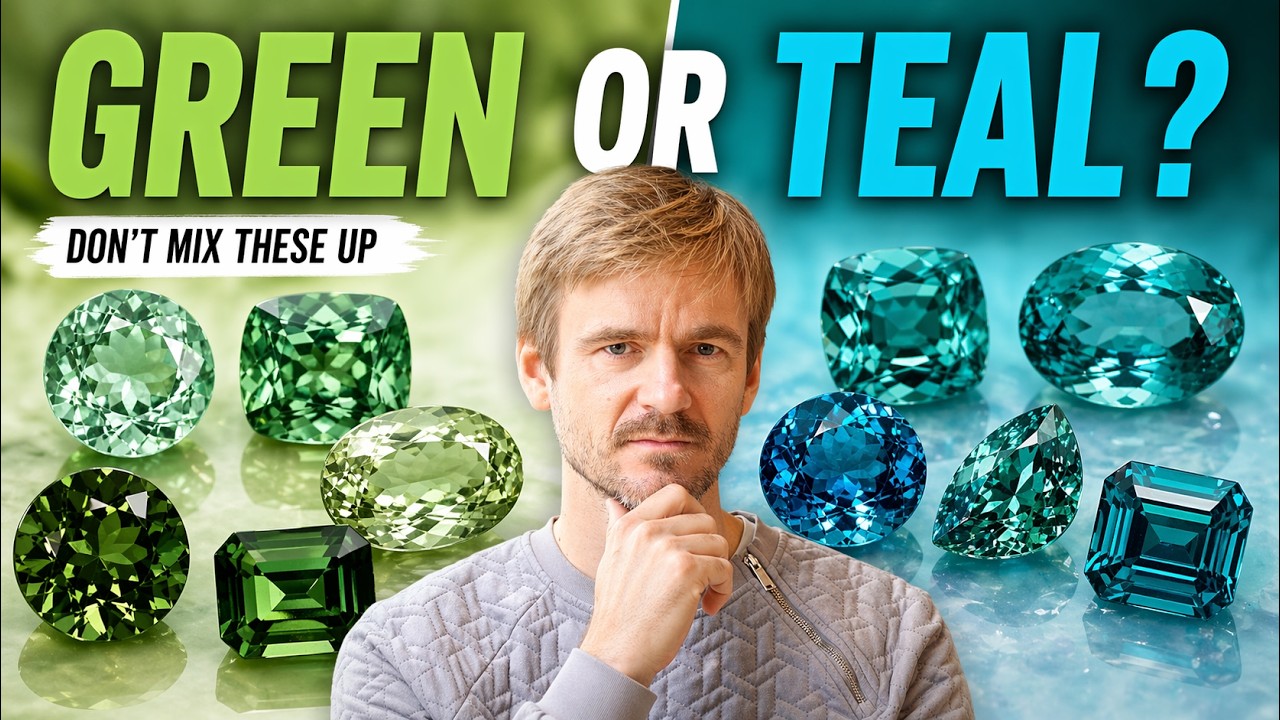
Natural sapphire isn't limited to classic blue. It can be very light blue, pale aqua, green, yellow, teal, lavender, or parti-colored. Some of these colors are far more accessible than fine saturated blue.
A parti sapphire has different colors in the same crystal. One end may look blue while the other is green, or yellow and blue may blend through the center. Cutting determines how those zones appear from above, and the pattern can be difficult to replace once you've selected a particular stone.
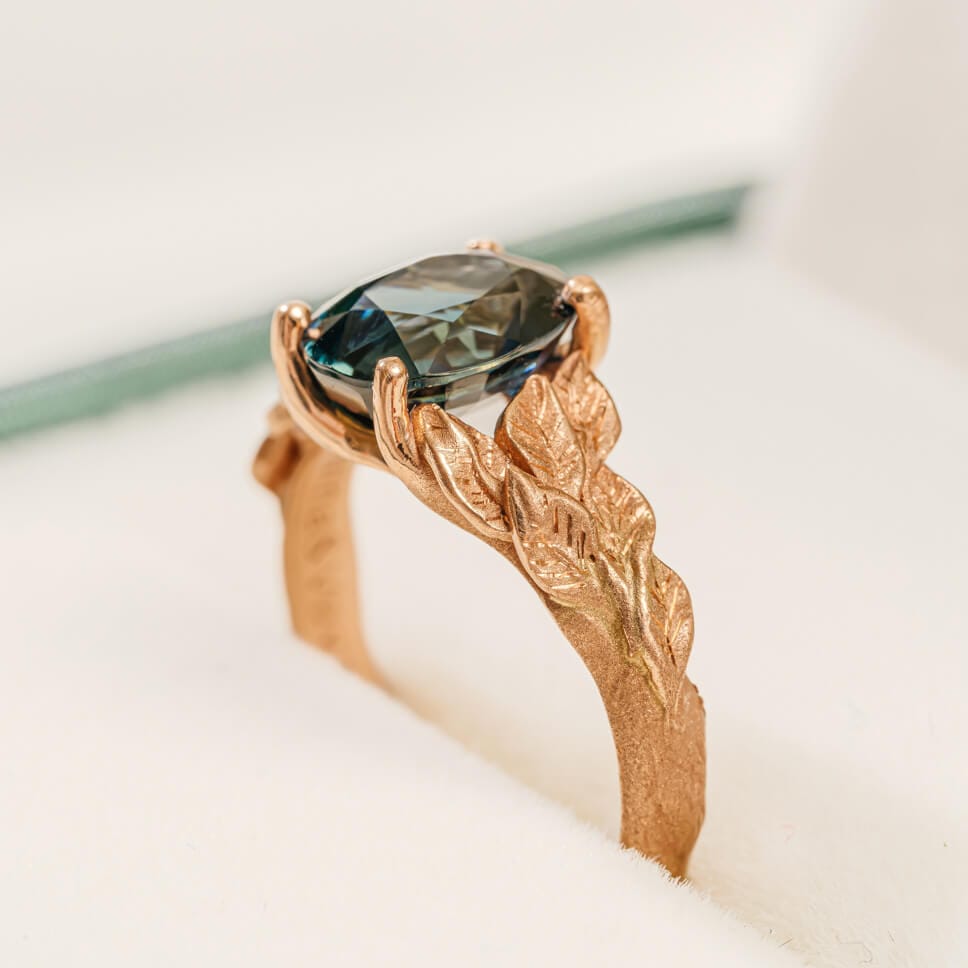
That matters to the design. If an important color zone sits near the edge, a bezel or large prong might cover it. I consider the color pattern when deciding how the finished ring should hold the sapphire.
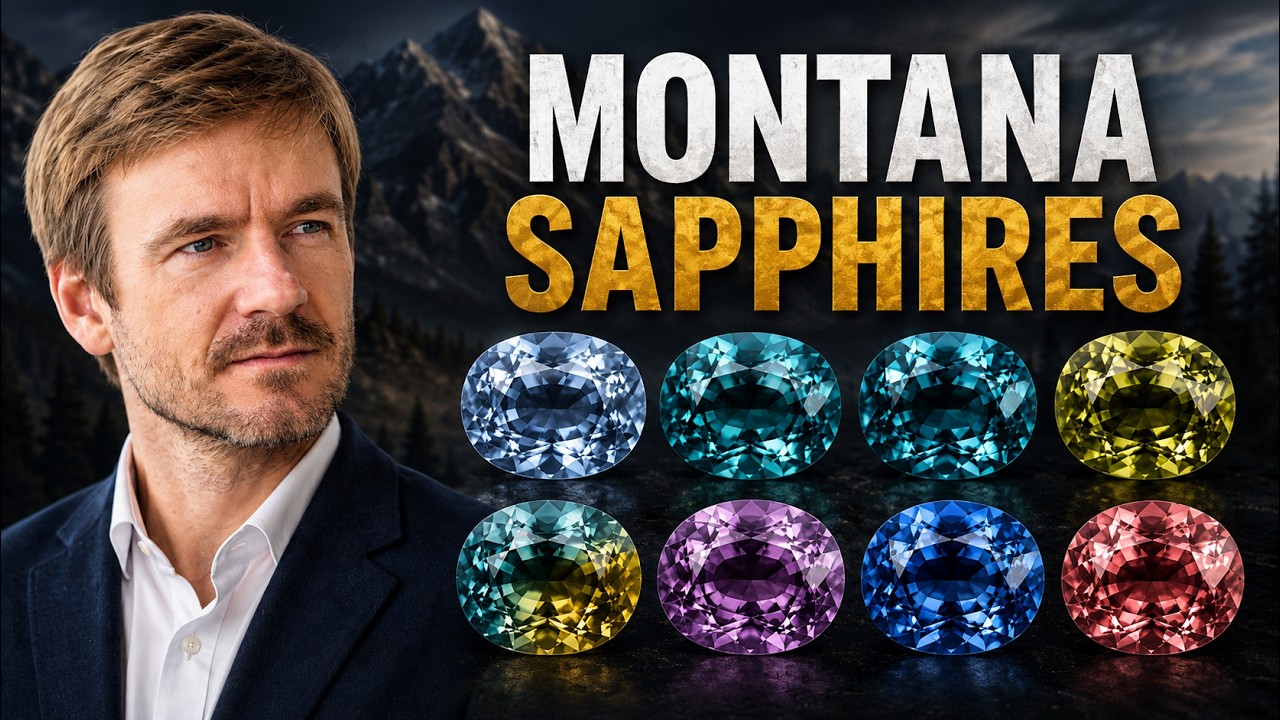
Montana can be interesting for softer blue-green, green and grayish colors, among other possibilities. Color alone does not establish geographic origin, and the actual appearance varies from stone to stone.
Some natural blue sapphires also contain very fine rutile needles called silk. They can scatter light and create a soft, velvety appearance. Too much silk makes a stone cloudy, so I want the effect to improve the actual appearance, not simply exist under magnification.
A well-selected lab sapphire can look natural to the naked eye too. The appeal of a particular natural stone is its own color and character, not a guarantee that every natural sapphire looks better.
How I Check The Stone'S Quality
First, I look at color under ordinary lighting. A sapphire may look rich blue in bright studio light and almost black indoors. Tone tells you how light or dark it appears; saturation describes the strength of its color. Strong saturation isn't an advantage if the stone becomes too dark to enjoy.
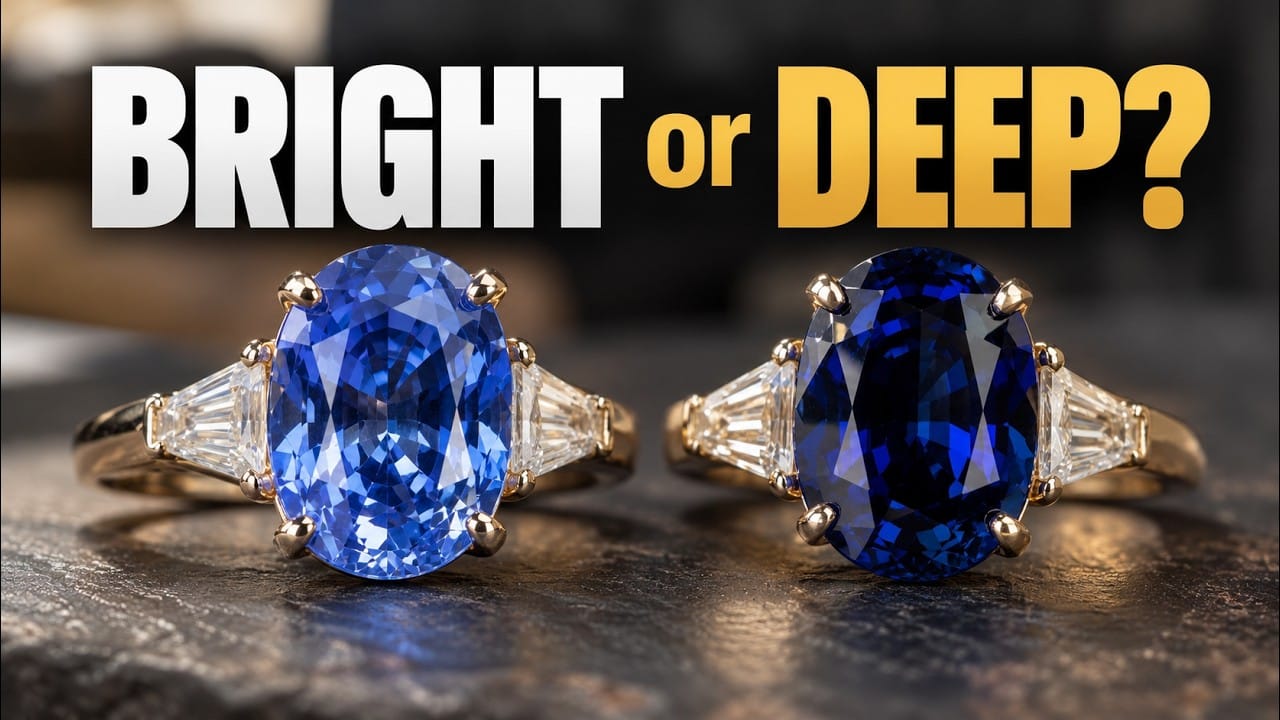
Royal blue generally describes a deeper, richer blue, while cornflower blue often suggests a brighter, somewhat lighter appearance. Neither is a universal beauty grade. I have a separate video comparing them in real stones.
For remote selection, I want the actual sapphire moving in ordinary indoor light and daylight. A spotlight or a backlit photograph can hide problems with darkness.
Then I examine cutting. A window is a transparent area where light passes through rather than returning to your eye. If a large window stays visible through the center when a sapphire faces forward, I normally reject it. A small window seen only when tilted is less concerning.
Extinction is different. Some facets appear dark because little light returns toward your eye. A little dark contrast is normal; broad patches that remain black as the stone moves can make it look lifeless. Neither effect is graded for beauty on a standard sapphire report, so actual-stone video matters.
I also compare face-up length and width in millimeters. A deep pavilion can add carat weight without making the sapphire look bigger on the finger. Two ovals of 2 ct may have different dimensions because of their proportions. Natural and lab sapphire have the same density, so origin itself doesn't produce a size advantage.
Finally, inclusions need context. A small internal crystal may be harmless or attractive; a surface-reaching fracture near a corner or girdle can complicate setting. I'd inspect that more carefully before committing to the ring.
Three Complete Engagement-Ring Budgets
For the following planning examples, assume $2,000 is allocated to a moderately detailed custom setting. That is an illustrative assumption, not a current NinaVova quote. Metal, dimensions, labor, side stones, tax and the final specification can change the actual amount.
In a $3,000 ring that leaves about $1,000 for the sapphire. In a $5,000 ring it leaves $3,000, and in an $8,000 ring it leaves $6,000. Those are starting points, not amounts that have to be spent. I'll use ovals as visual size references.
$3,000 Total — About $1,000 For The Center
For a hypothetical $1,000 center allocation, I would first explore what natural stones are actually available, then compare them with a well-cut lab sapphire. Do not accept an overly dark stone just to satisfy the word natural.
Flexibility about lighter green, yellow, aqua or blue can broaden the natural-stone discussion. I would compare actual dimensions, transparency and condition rather than promising a fixed carat size for that allowance.
But my recommendation at this budget is lab-grown sapphire.
I'd start with a clean hydrothermal blue oval around 7 × 5 or 8 × 6 mm, focusing on attractive color and good cutting. I'd verify the growth method rather than assume that any inexpensive blue lab sapphire is hydrothermal.
We have about $1,000 for the center, and the point isn't to use every dollar. It's to choose a sapphire that looks good without leaving too little for a properly made setting.
If natural origin matters more than setting complexity, another option is a simpler $1,500 solitaire. That leaves about $1,500 for the sapphire and broadens the selection without raising the total budget.
But for a classic blue engagement ring around $3,000, I'd choose hydrothermal lab-grown sapphire.
$5,000 Total — About $3,000 For The Center
With a hypothetical $3,000 center allowance, I would compare a wider range of actual natural blue, teal and green-blue candidates. Current offers, treatments and individual color determine what is available; the allowance itself does not guarantee a size or grade.
I wouldn't spend more simply to reach 2 ct. For blue, I'd rather choose a smaller sapphire that stays bright indoors than a heavier stone that looks almost black. For teal or parti-color, I want the pattern to remain attractive after setting.
If a client wants a clean classic blue oval around 8 × 6 or 9 × 7 mm, I recommend hydrothermal lab-grown sapphire. We can put more of the $5,000 budget toward side diamonds, a more substantial band, or detailed metalwork. The total ring may also cost considerably less than $5,000.
For natural sapphire, I'd spend more on the center if a particular color is why the client wants that stone. A distinctive natural teal, for example, can work beautifully in a simpler setting that keeps the focus on the sapphire.
At $5,000, both approaches can produce a well-designed ring. The useful decision is whether you want to pay for a particular natural stone or put more of the money into the ring around a clean lab-grown blue.
$8,000 Total — About $6,000 For The Center
A hypothetical $6,000 center allocation gives us more room to compare natural options, but not a guaranteed carat range. I would use current offers to assess the improvement in color, cutting, condition and documentation, rather than starting with an expectation of maximum weight.
For teal, green and parti-color choices, I would still focus on the actual color arrangement and useful dimensions. A smaller stone with an attractive pattern may suit the design better than a heavier one that goes dark indoors.
This is also where I'd discuss an unheated natural sapphire as a deliberate choice. If 2 stones look similarly beautiful and one costs more because there is no evidence of heat, the extra money is buying rarity rather than an automatic improvement in appearance. I would want that treatment status independently verified.
With a clean hydrothermal blue, an oval around 9 × 7 mm can give us a substantial center without using the entire $6,000 reserved for the stone. The price depends on the actual crystal and cutting, but choosing lab-grown means we don't have to make the center enormous to build a substantial ring.
I'd also consider an elaborate three-stone design rather than simply increasing carat weight. For example, we could put around $4,500 into a natural sapphire and $3,500 into a custom setting with well-proportioned side diamonds.
With hydrothermal sapphire, we can make a similarly substantial design while spending considerably less on the center. I'd show both finished-ring approaches before deciding whether natural origin justifies the difference.
Natural Sapphire Treatments
For natural engagement-ring sapphires, my selection policy is straightforward: untreated is fine, and ordinary heat treatment is fine. I avoid diffusion-treated and fracture-filled sapphires.
Ordinary heating is common and accepted. It can improve color and transparency by changing internal features, including rutile silk. The resulting appearance is generally stable. I would choose a beautiful heated sapphire over an unheated alternative that costs more but looks worse.
No evidence of heat can command a significant rarity premium, particularly for fine blue stones. That doesn't mean better cutting or color. I'd recommend paying the premium only when untreated origin matters to the client, and only with independent confirmation.
I avoid lattice diffusion. It introduces color-causing elements from outside the stone during high-temperature treatment. In some cases, the added color sits near the surface and can be removed during recutting or repolishing. Other diffusion treatments penetrate deeply, so not every stone has that risk. I still prefer natural sapphire that is untreated or conventionally heated.
I also avoid fracture-filled sapphire. Glass or another filler can conceal surface-reaching fractures, but it may be damaged by chemicals or heat during repairs and requires extra care. For an engagement ring worn daily, I'd select a stone without that complication.
Reports: What They Can Verify
If you're paying for natural origin or unheated status, those claims should be supported by an independent laboratory report.
GIA and AGL can identify natural or laboratory-grown sapphire and report detectable treatments. Certain report services can also offer an opinion about geographic origin when the evidence supports it. That may matter if a particular source is part of the stone's premium.
But a report isn't a beauty grade. GIA doesn't assign sapphire an overall quality grade like diamond's 4Cs. A report won't tell you whether the blue is too dark indoors or whether a central window is distracting. That's why I compare the report with video or direct inspection.
For lab-grown sapphire, I want confirmation that it's synthetic corundum and that additional color treatments are disclosed. The growing method may not appear on a standard report. If I'm sourcing hydrothermal or flux-grown material, I need reliable documentation of that method rather than an unsupported label.
I check the report number, measurements, and weight against the actual stone. Independent testing may cost more than it adds for an inexpensive lab sapphire. For a natural stone costing several thousand dollars, especially one sold as unheated, I consider appropriate documentation essential.
How The Center Affects The Design
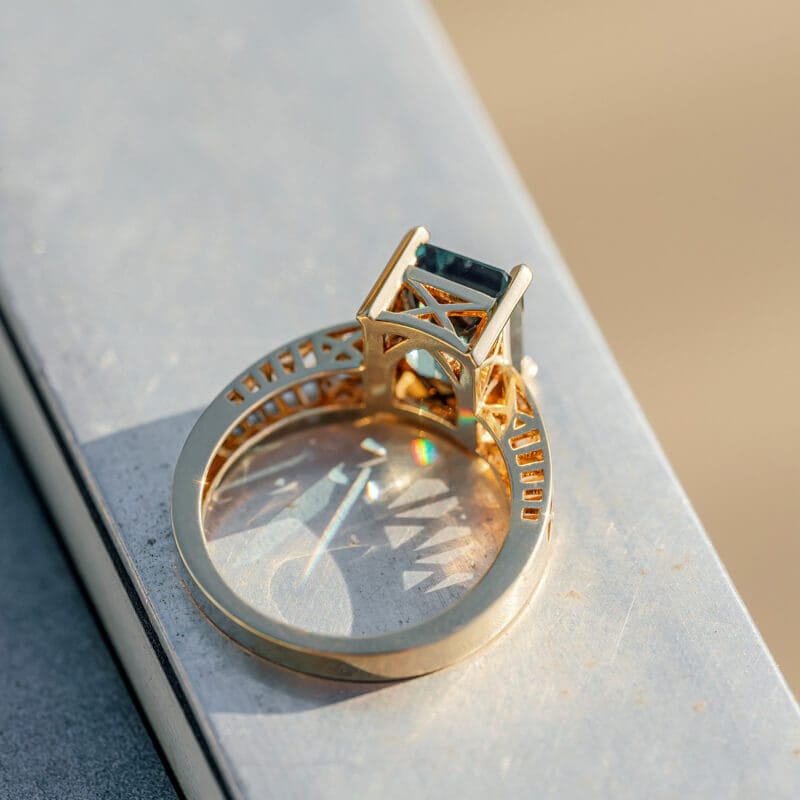
I select the center sapphire before finalizing the ring. Its actual measurements determine the gallery, prongs, setting height, and the proportions of any side stones.
An 8 × 6 mm oval and a 12 × 8 mm oval can't simply be dropped into the same design. A larger center may need a different mounting and more metal in the gallery, so the ring's cost can change too.
This also matters if you're considering a future replacement. A sapphire with similar dimensions might fit after adjustments. A significant change in size or shape can mean rebuilding the center mounting. I'd settle on the visible size before approving the model.
Long-Term Value And My Recommendation
Natural origin and exceptional documented characteristics can matter in resale, but no sapphire ring guarantees recovery of its retail price. The eventual buyer, condition, market and transaction costs all matter.
I would not select lab-grown sapphire on the assumption that its purchase price will be recoverable later. Choose it for the ring it enables and the appearance you want, rather than a promised financial return.
For a classic blue center that looks clean and bright, my first choice is hydrothermal lab-grown sapphire. If the client wants natural-looking inclusions, I recommend flux-grown instead.
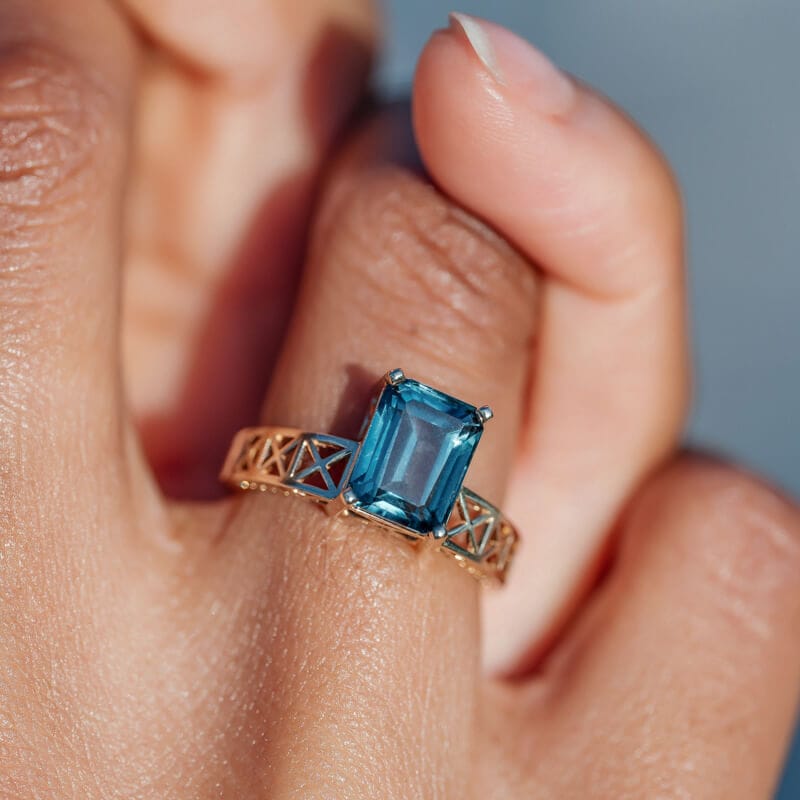
For a client who loves a particular natural teal, parti-color, or velvety blue, I'd explore natural sapphire. I'd also choose natural when its origin itself has personal meaning, or when someone specifically wants an unheated stone and understands the premium.
Both natural and lab-grown sapphires can last for generations in a well-designed ring. I wouldn't use resale speculation to choose between them.
At NinaVova, I prefer to narrow the choice to a few stones with the right color, dimensions, cutting, and documentation. We can compare what each does for the finished ring and where the money goes, without asking the client to sort through hundreds of stones alone.
Frequently asked questions
Is lab-grown sapphire a glass imitation?
No. Properly identified synthetic sapphire is corundum, like natural sapphire. Glass and synthetic spinel can imitate sapphire but are different materials.
Does every laboratory report state how a synthetic sapphire was grown?
No. Read the service scope and actual findings. A claimed hydrothermal or flux growth method may need separate reliable documentation.
Compare the stone and the finished-ring options
We can show how a natural or laboratory-grown center changes the color, proportions and budget, then develop the ring around the option you prefer.
Book a NinaVova consultation or explore our custom design process.
Continue reading: Existing lab-sapphire manufacturing guide · Heated versus unheated sapphire · Montana sapphire guide.
Sources and further reading
- GIA: Synthetic sapphire growth and diffusion-treated synthetics
- GIA: Laboratory growth of gem materials
- GIA: Sapphire buyer’s guide
- GIA: Sapphire care
- GIA: Colored stone report service updates
Dollar figures illustrate allocations based on assumed setting costs; they are not live quotes, current inventory offers or guaranteed size/quality combinations. Obtain a written proposal for actual stones and the final ring specification.
Contact Sergey.
Have a question about ring settings, gemstones, or creating a custom ring? Send me a message and I’ll be happy to help.
Book a time to talk through the ring.
Meet remotely for a focused 30-minute call about your design, stones, timeline, and budget. No jewelry terms needed.
When you schedule the meeting, you can also include a short message before the call — the idea, budget, timeline, saved links, or anything you want us to know first.