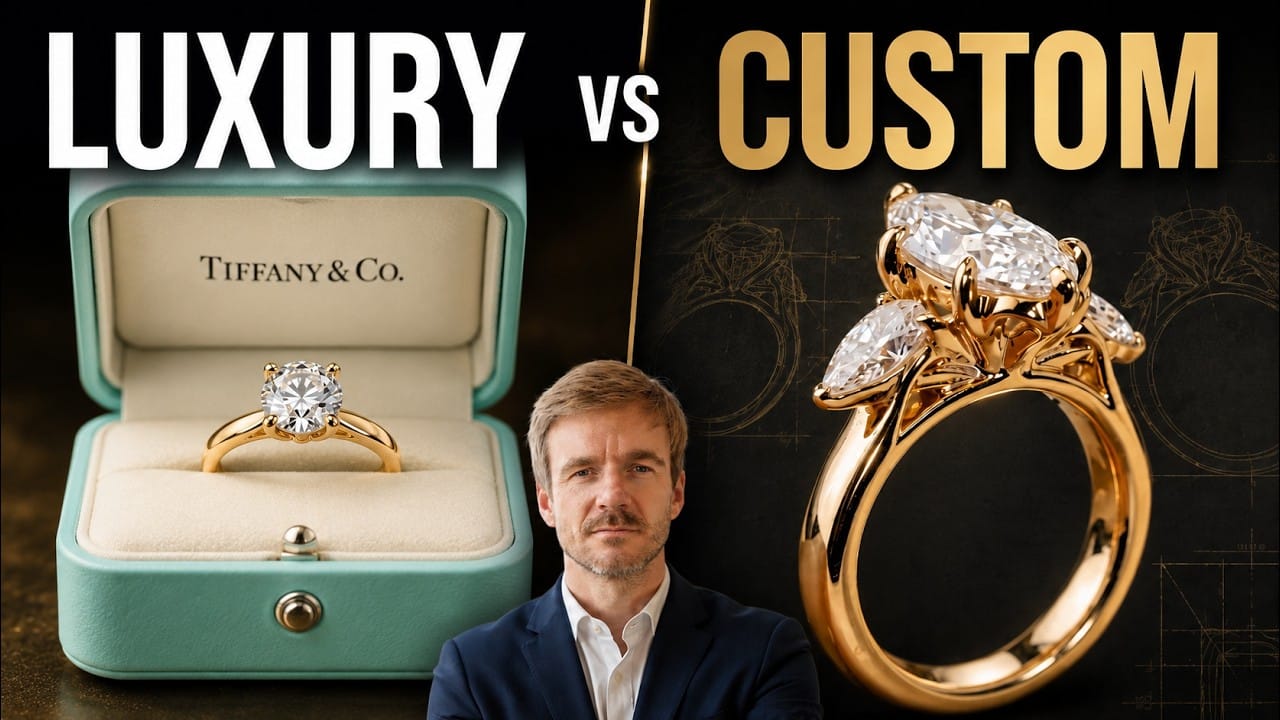

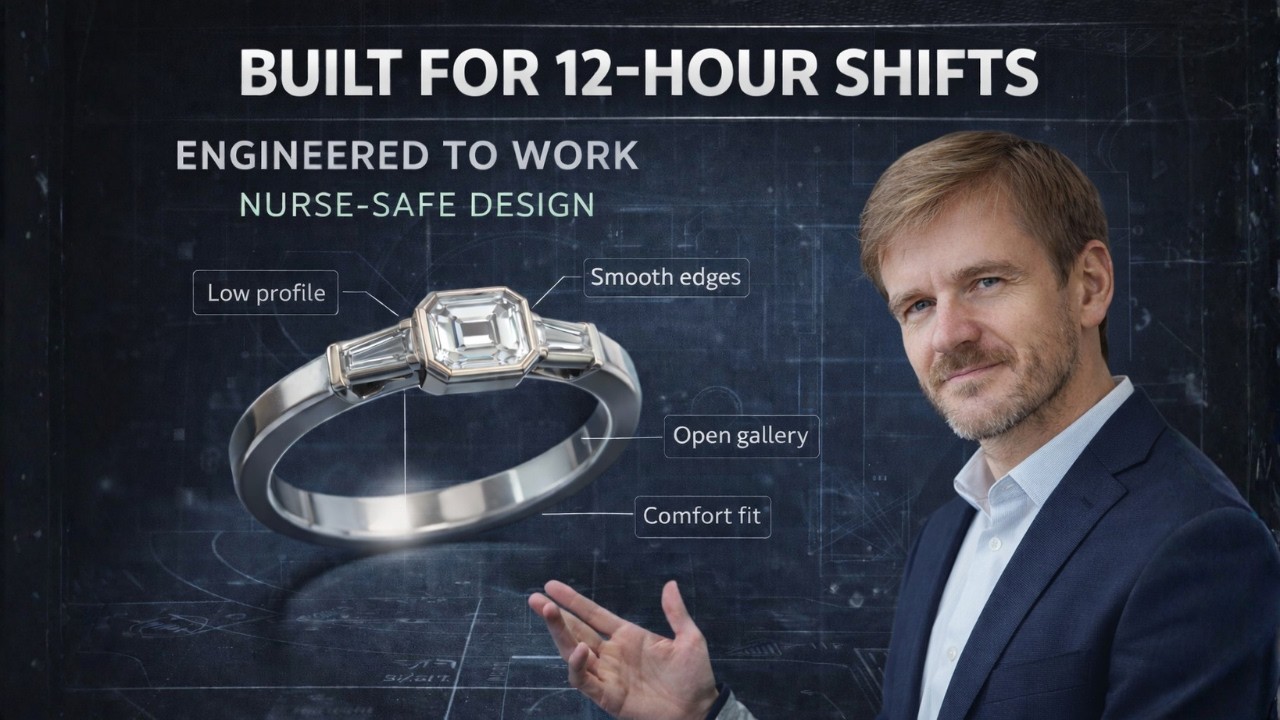
Engagement Rings for Nurses: Design, Comfort and Workplace Rules

If you are planning an engagement ring for a nurse or another healthcare professional, start with the way your partner actually works. A beautiful ring should fit their life, and that includes the possibility that it will be removed during clinical duties.
You may be worried about choosing a plain band when they want something expressive, or choosing a detailed ring that spends much of its time in a locker. Custom design can help address profile, comfort and maintenance, but the first decision belongs to the workplace’s jewelry policy.
We have made rings for nurses and heard recurring concerns about gloves, cleaning-product residue, knocks and comfort during long shifts. I would use that feedback as a design brief, not as a promise that any ring is suitable for every clinical role.
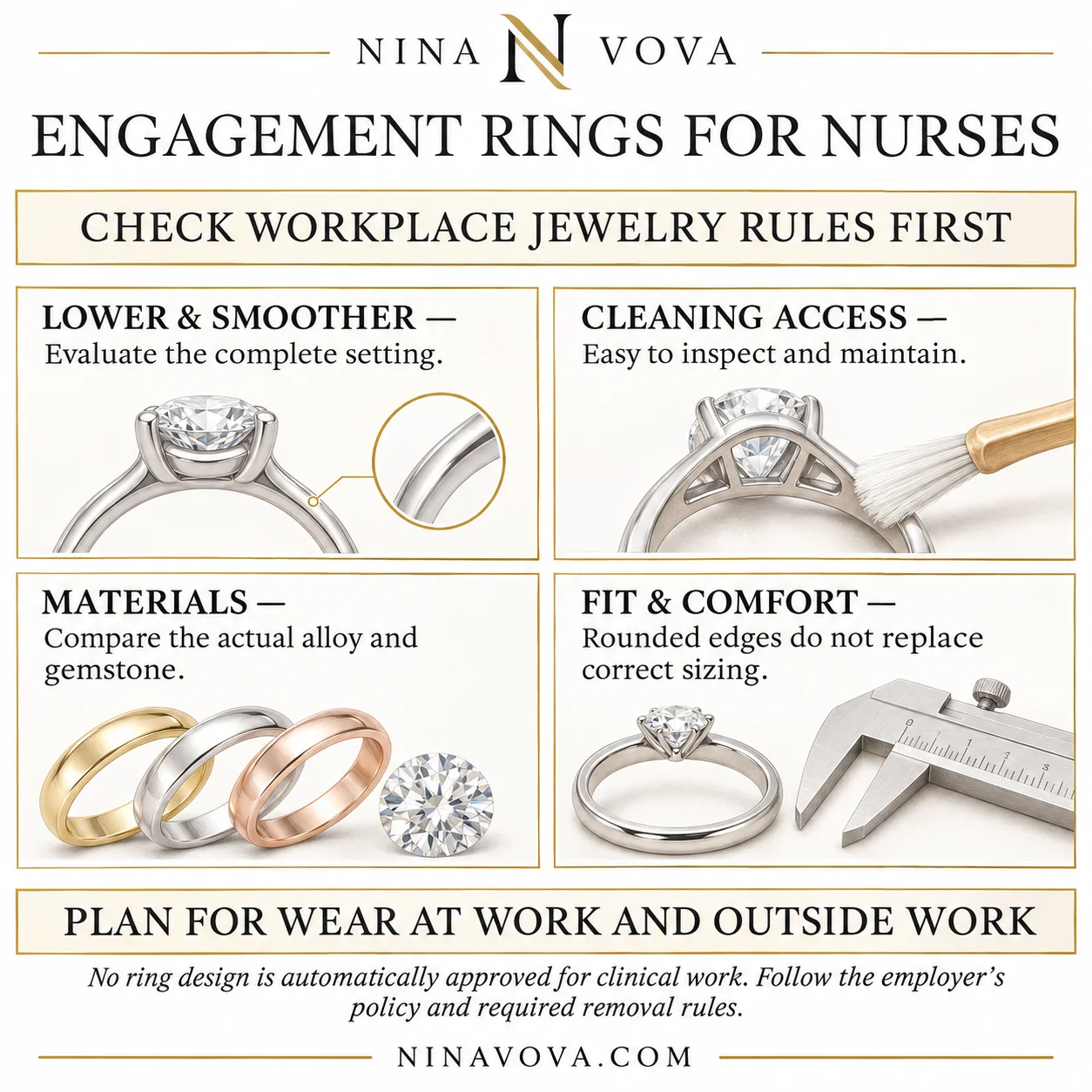
Check workplace rules before designing for work-wear. A lower, smoother ring may address some practical concerns where jewelry is permitted. Cleaning access, the actual alloy, stone condition and fit matter too. No design overrides clinical jewelry rules or makes a ring self-cleaning, snag-proof or unbreakable.
At a glance · Start with workplace jewelry rules · Reduce projections with a lower, smoother setting · Review the whole ring, not just its center · Make cleaning access part of the design
Watch the NinaVova discussion
Watch the original NinaVova video on YouTube.
Practical design decisions at a glance
| Priority | Design discussion | What it does not establish |
|---|---|---|
| Workplace policy | Permitted jewelry, required removal and secure storage | A jeweler cannot approve a ring for a clinical role. |
| Setting profile | Lower outlines, smooth edges and the complete setting | Bezel does not mean snag-proof. |
| Cleaning access | Accessible surfaces and material-specific care | An open gallery is not self-cleaning or bacteria-free. |
| Materials | Actual alloy, construction and gemstone condition | No metal is scratch-proof and no gemstone is unbreakable. |
| Fit and comfort | Interior shape, band width, weight and correct size | Comfort-fit does not automatically expand with the finger. |
Start with workplace jewelry rules
Ask which jewelry is permitted for the actual role, unit and tasks before choosing a work-wear design. A plain band may be treated differently from a stone-set engagement ring, and some activities require all hand jewelry to be removed.
CDC guidance calls for removing rings, watches and bracelets before surgical hand antisepsis. That is not something a lower setting or different metal can override. Plan secure storage and an off-duty way to enjoy the engagement ring if the workplace requires removal.
Reduce projections with a lower, smoother setting
Where wearing a ring is permitted, a lower profile and smoother outline can reduce projections that catch. A close-fitting bezel is one option because a metal rim follows the stone’s perimeter instead of leaving tall exposed prongs around the center.
But bezel does not mean snag-proof. Edges, shoulders, side stones and workmanship all matter. I would inspect the complete design with the wearer rather than relying on the setting’s name or promising it cannot damage a glove.
Review the whole ring, not just its center
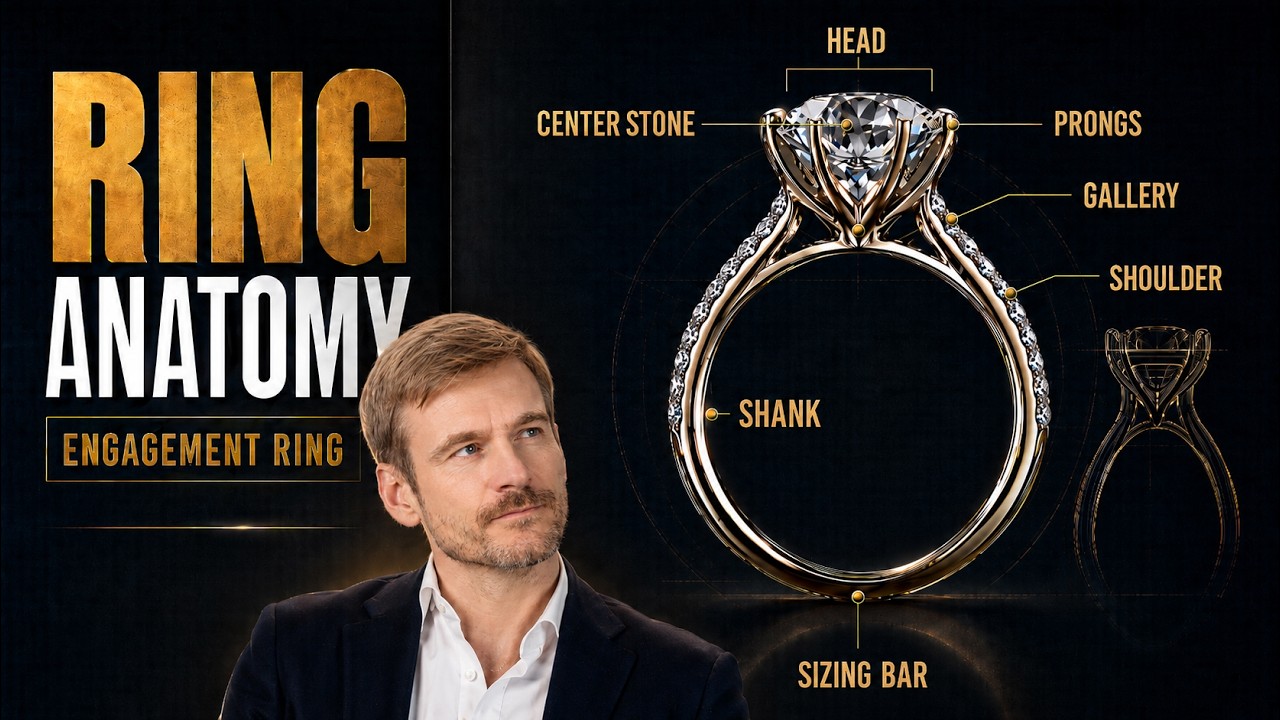
A ring can have a bezel-set center and still include a raised halo, small prongs or a diamond-set band. Those details may be beautiful for the intended ring, but they need their own assessment.
The NinaVova example below illustrates that distinction: a bezel around the pear diamond is one feature of a more detailed composition. It is a design reference, not a claim that this ring is approved for clinical wear.

Make cleaning access part of the design
A setting with accessible surfaces can make residue easier to inspect and remove. That is why I pay attention to the underside of the center stone and areas that are difficult to reach.
An open gallery is not self-cleaning, and no jewelry architecture makes a ring bacteria-free. CDC notes that skin beneath rings can carry more germs. Follow the employer’s hand-hygiene rules and obtain care instructions for the actual stones, treatments and metal. Household jewelry-cleaning advice does not replace clinical infection-control procedures.
Compare the actual metal and alloy
Platinum and gold can both be appropriate jewelry materials, but neither is scratch-proof. Platinum can develop a visible patina; gold alloys also show wear. The particular alloy, dimensions, construction and maintenance matter alongside the metal name.
I would compare suitable platinum, 14k gold and 18k gold options for the proposed design rather than automatically rejecting one karat or assuming platinum is always harder to scratch. Weight and cost depend on the alloy and design as well, so there is no universal twice-the-price rule.
Choose a gemstone for the whole wear pattern
Diamond and sapphire are strong starting points for many frequently worn rings, but hardness does not make either unbreakable. Points, thin edges, fractures and the way the stone is set deserve attention.
Emerald, opal and pearl have different care considerations; they should not be grouped together simply as soft stones. If your partner specifically loves a more delicate material, consider an off-duty ring or another piece of jewelry instead of promising it will tolerate every clinical task. Choosing a tougher gem still does not grant permission to wear it at work.
Treat comfort fit and sizing as separate decisions
Hands and finger size can vary over a long day. A rounded comfort-fit interior may feel smoother against the finger, but it does not expand automatically or prevent a ring from becoming tight.
Discuss sizing, band width, weight and removal with the wearer and a jeweler. The goal is a comfortable, manageable ring with an appropriate fit, not a heavy piece that becomes inconvenient when their hands change. Workplace removal rules remain part of that plan.
Design for work and life outside work
The most thoughtful ring acknowledges both the person’s taste and the reality of their job. That might mean a smoother, lower design where permitted, a separate plain band if policy allows it, or keeping the engagement ring for time outside clinical work.
We can develop the silhouette, stone selection and personal details together. Understanding the wearer’s life should guide the design just as much as choosing a beautiful center stone. A good brief includes what they love, how they wear jewelry and when the ring will need to come off.

Frequently asked questions
Does a bezel setting make an engagement ring acceptable for nursing work?
No. It may change the ring’s outline, but workplace policy and the actual duties determine what jewelry is permitted. Review the complete setting, not only the center.
Is an open-gallery ring self-cleaning?
No. Access can help inspection and maintenance, but residue still needs appropriate cleaning. Follow workplace hand-hygiene and jewelry-removal rules.
Design around the person’s whole life
We can develop the stone, proportions and personal details around your partner’s preferences, practical wear needs and workplace constraints.
Book a NinaVova consultation or explore our custom design process.
Continue reading: Designer vs custom engagement rings · Aquamarine care and buying guide.
Sources and further reading
- CDC: Clinical safety and hand hygiene
- GIA: Platinum alloy identification and characteristics
- Stuller Bench Jeweler: Metal comparison
- GIA: Protecting diamonds from chipping
- GIA: More than the Mohs scale
Workplace jewelry and hand-hygiene policies vary by employer, role and procedure. Confirm the applicable current rules directly with the workplace; jewelry design does not replace them.