
Yellow Diamonds: Color Grades, Color Origin and Buying Checks

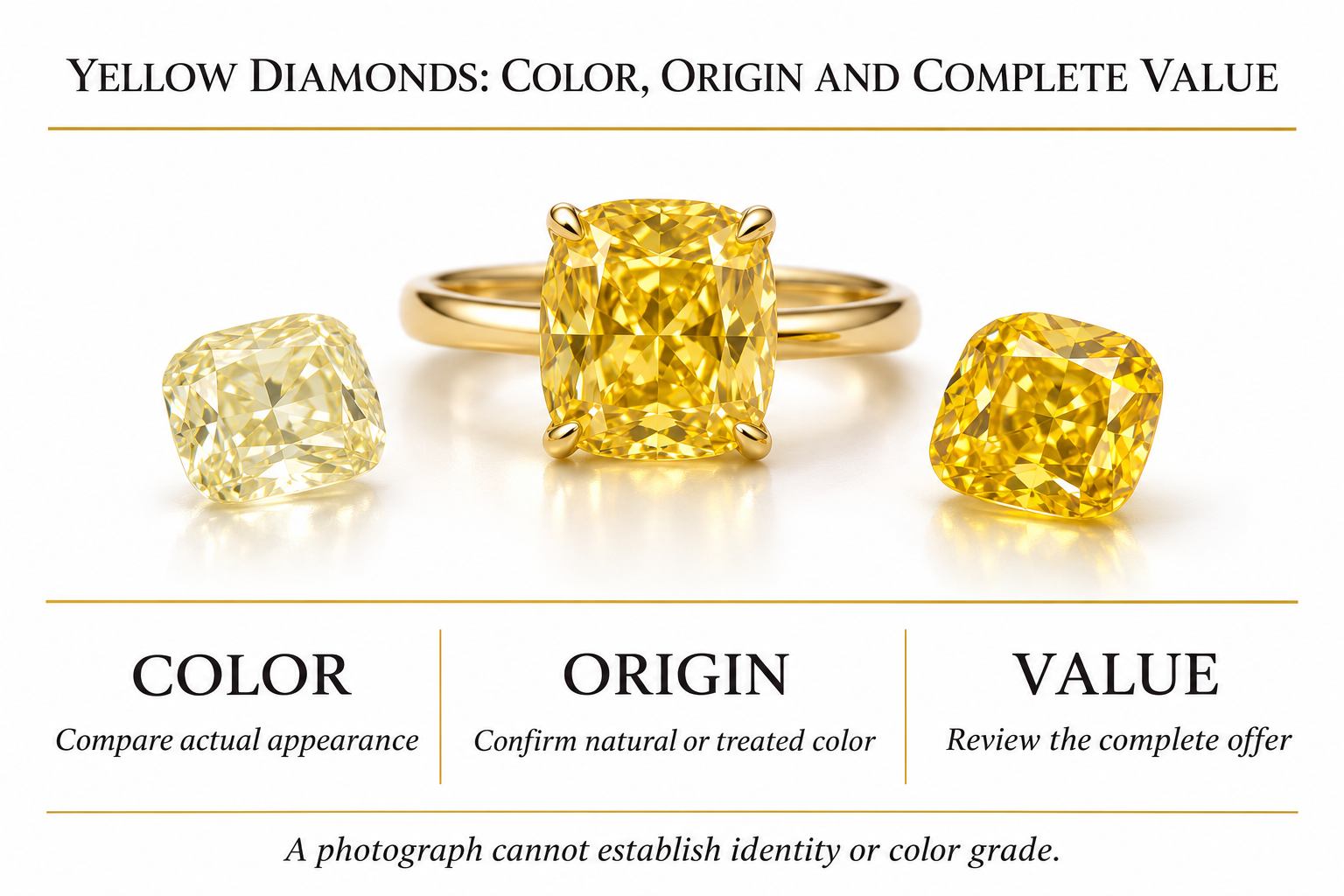
Yellow diamonds range from pale appearances within the D-to-Z system to colors evaluated on a fancy-color scale. Choosing one calls for more than a vivid photograph: confirm whether the diamond is natural or laboratory-grown, whether the color is natural or treated, and what the actual report establishes. Then compare appearance, condition, setting and the complete price.
Confirm the material and color origin before comparing the ring. A vivid image is not a grade. Read the actual report, distinguish diamond identity from natural or treated color, then compare appearance, condition and the complete offer.
At a glance · Separate a yellow diamond from other yellow gemstones · Understand the relevant color-grading framework · Confirm color origin and report scope · Compare shape, cutting and the color you see
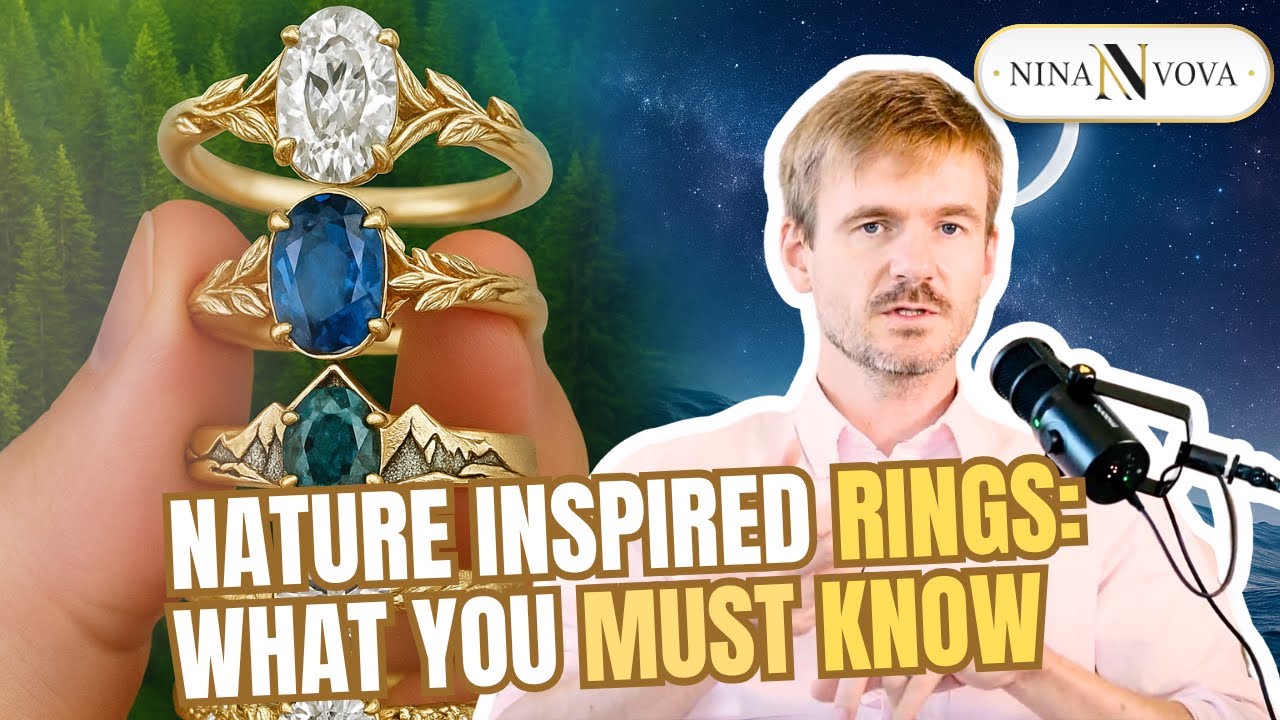
Watch the NinaVova discussion
Watch the original NinaVova video on YouTube.
The NinaVova fancy-colored-diamond discussion accompanies the color and buying decisions. This written guide focuses on yellow diamonds and the scope of color-origin claims.
Yellow diamonds: facts to separate before buying
| Question | Check | Avoid assuming |
|---|---|---|
| Diamond identity | Natural or laboratory-grown status | Yellow appearance identifies the material |
| Color grade | Exact report description | A screen reproduces a laboratory grade |
| Color origin | Natural or treated color | Natural diamond always means untreated color |
| Geographic source | Relevant separate evidence | Color origin names the mine |
| Design | Actual dimensions and setting | One shape or metal always looks best |
| Value | Equivalent complete quotation | Rarity guarantees resale profit |
Separate a yellow diamond from other yellow gemstones
Yellow describes a color rather than a complete identity. Yellow sapphire, moissanite and other materials should not be described as yellow diamond simply because their appearance is similar.
A natural diamond and a laboratory-grown diamond also require clear descriptions. Neither can be identified conclusively from a dramatic ring image.
Nitrogen-related defects are responsible for much natural yellow diamond color, but a simple more-nitrogen-means-better rule is inaccurate. The atomic arrangement and other factors matter.
Begin with accurate material identification. A nickname such as canary is a trade description, not a substitute for a laboratory color grade.

Understand the relevant color-grading framework
Pale yellow diamonds can remain within the D-to-Z range. Fancy-color assessment addresses a different appearance and should not be reduced to one letter on that scale.
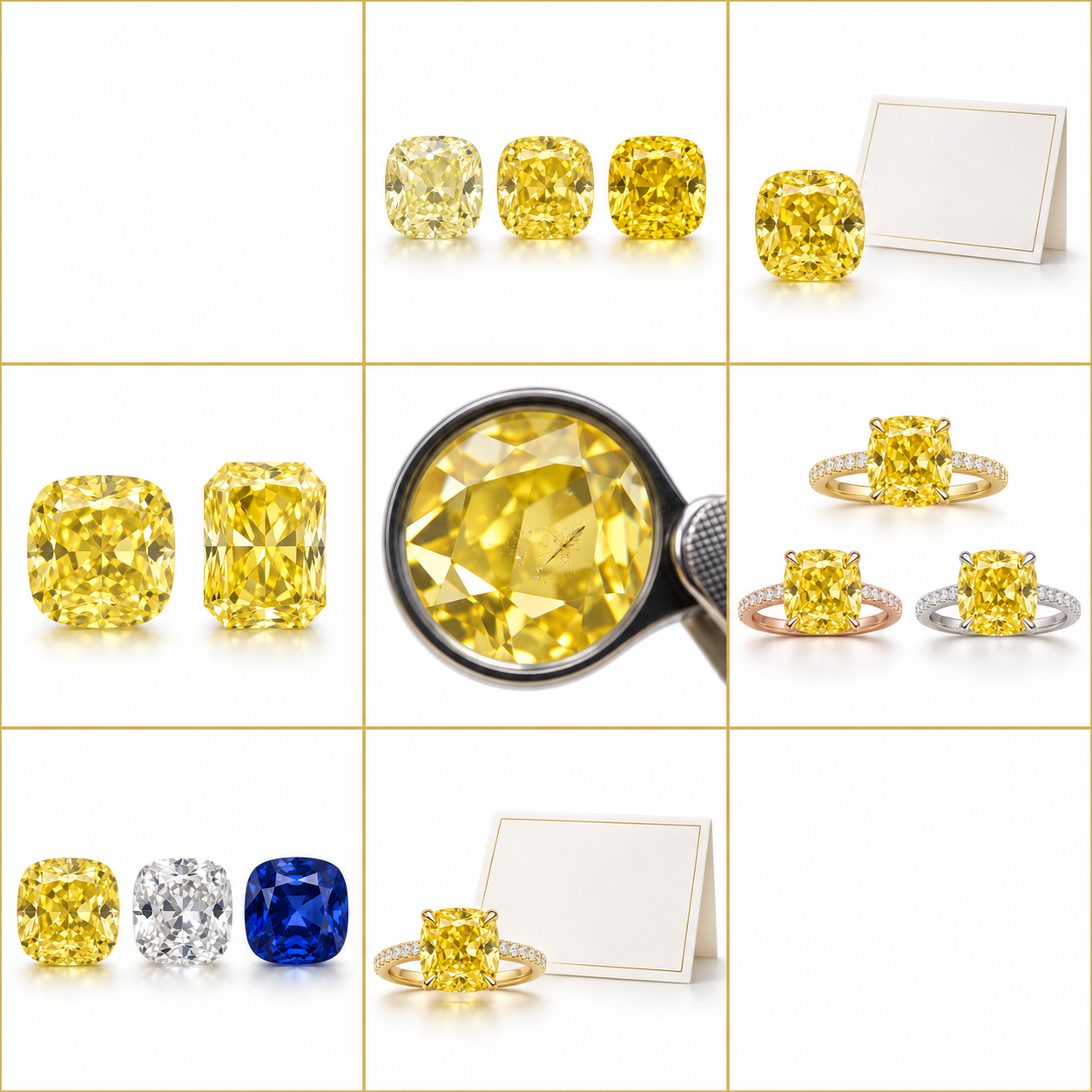
Fancy-color descriptions consider hue, tone and saturation. Grade terminology includes distinctions such as Fancy Light, Fancy, Fancy Intense, Fancy Vivid, Fancy Dark and Fancy Deep where applicable.
These terms should not be treated as one simple ladder from less valuable to more valuable in every stone. Actual color appearance and the rest of the diamond still matter.
Read the exact report rather than inferring a grade from a screen. Photography and illustrations here cannot reproduce a controlled laboratory comparison.
Confirm color origin and report scope
Natural or treated color is a separate question from natural or laboratory-grown diamond identity. Ask for both descriptions rather than one vague claim of authenticity.
A colored-diamond report may address color origin, but that wording does not necessarily identify the mine or establish an environmental or human-rights audit.
Check the issuing laboratory, report details and relationship to the actual stone. Verify relevant information through the issuer’s official service where appropriate.
If a document is an appraisal or a seller’s description, do not assume it carries the same scope as a laboratory report. Each answers different questions.
Compare shape, cutting and the color you see
Cushion, radiant and other forms can create different color presentations. The actual facet arrangement and proportions matter more than a shape-name guarantee.
View the diamond from several angles and in ordinary lighting as well as the seller’s presentation. A color that looks strong in one still may appear different in motion.
Carat weight is not a fixed visible size or a promise of stronger color. Compare actual dimensions and appearance alongside weight.
Choose an outline and pattern you enjoy. A yellow diamond does not need to fit a celebrity style or a predetermined personality category.
Inspect clarity and condition alongside color
Appealing color does not remove the need to assess inclusions, surface condition and vulnerable areas. Their location and character can matter as well as a grade.
Ask whether an inclusion near an edge or point affects the proposed support or wearing expectations. Diamond’s scratch resistance does not make it unbreakable.
A high clarity grade does not automatically correct an appearance you dislike, and not every visible characteristic makes a stone unsuitable.
Compare the actual diamond and available documentation with qualified guidance. Magnification is useful, but also consider the view at normal wearing distance.
Choose metal as a design decision, not a regrading tool
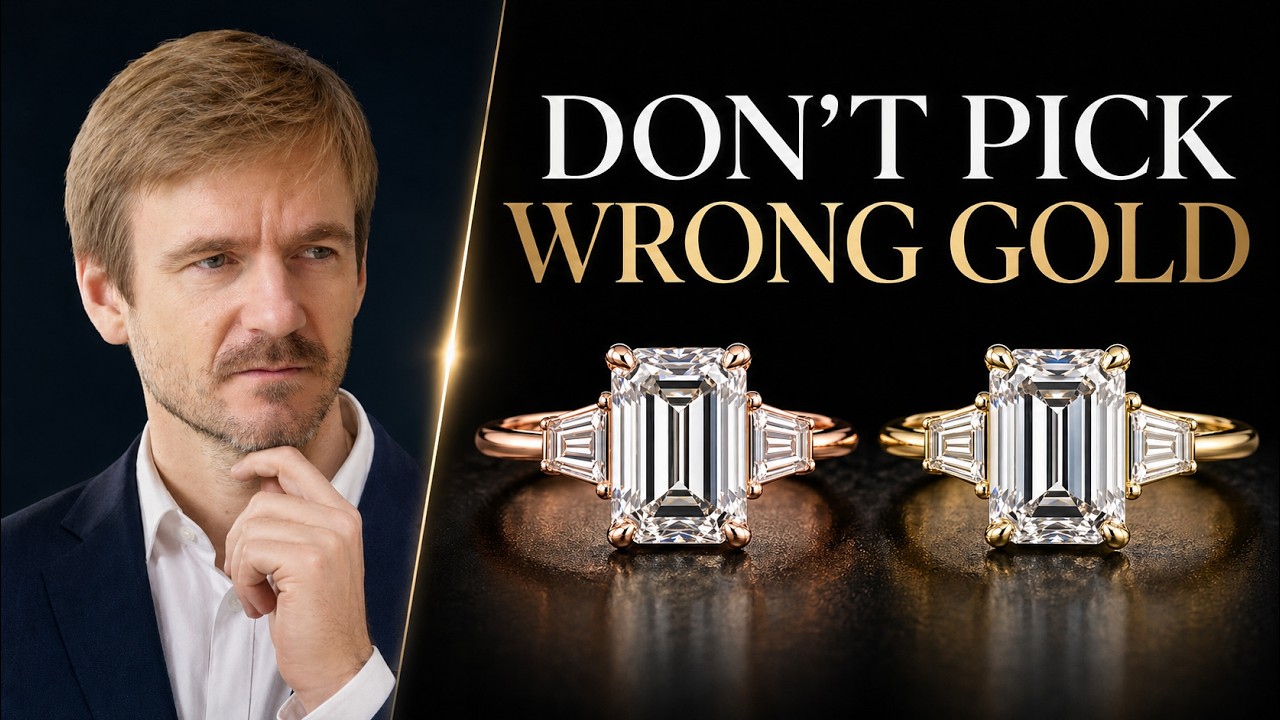
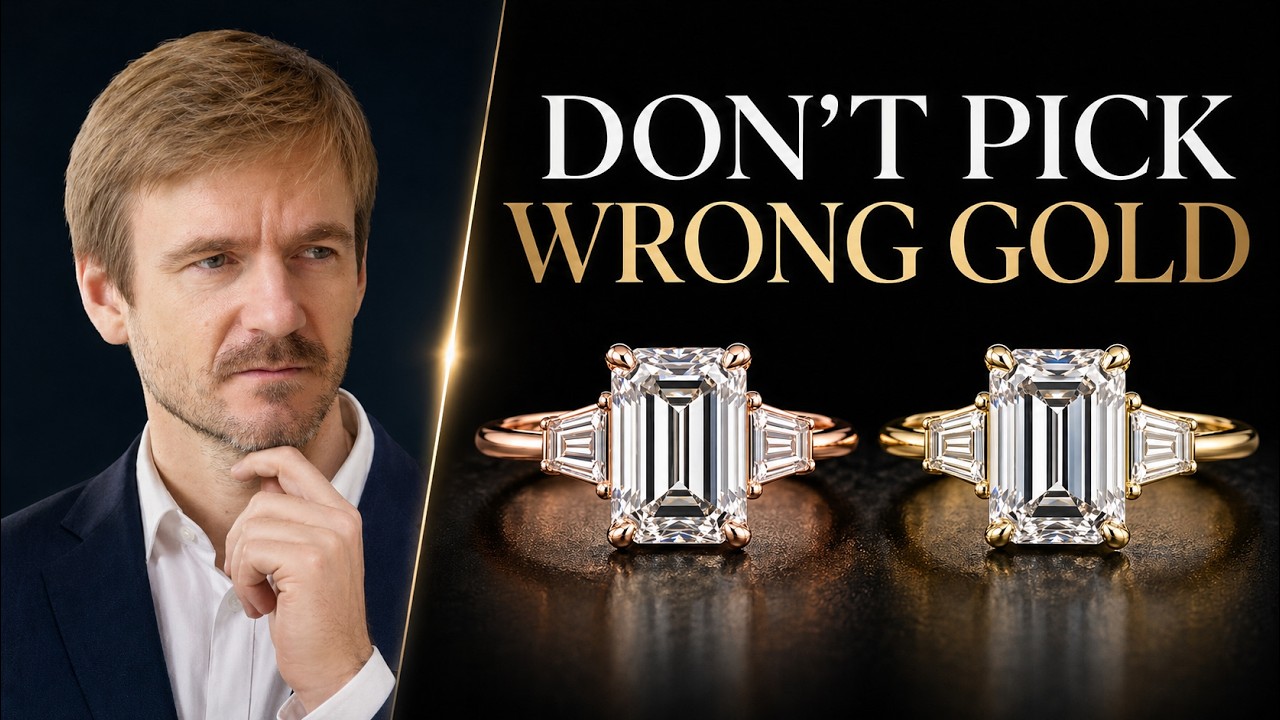
Yellow metal can create a warm frame, while white tones can provide contrast. Rose tones or a mixed-metal design offer other visual relationships.
The setting can influence perceived color without changing the diamond’s laboratory grade or color origin. It should not be presented as turning one grade into another.
Review realistic views of the actual center and proposed ring. A drawing cannot perfectly predict reflections from a metal cup, prongs or neighboring stones.
Specify the alloy, finish and any plating as well as the visible color. Suitable support and future service remain part of the design.
Compare yellow with colorless and other colored choices
The appropriate comparison depends on the appearance the wearer enjoys. A yellow diamond is not universally rarer, more expensive or more meaningful than every colorless diamond.
Yellow sapphire can offer a different material and optical appearance, while laboratory-grown diamonds introduce another origin category. Each deserves accurate naming and its own evaluation.
Sourcing and environmental claims need evidence for the actual offered materials. Color and production category alone do not establish a responsible supply chain.
Personal associations with warmth or a remembered place are valid design references. They do not guarantee prosperity, luck or an emotional effect.
Compare complete offers without a resale promise
Compare color description, origin, weight, dimensions, condition and included setting work. Two yellow diamonds with similar photographs can represent very different offers.
Use current quotations rather than an assumed universal price premium. The actual specification and market availability affect the comparison.
Ask what reports, service, alteration and applicable charges are included. Keep the complete purchase conditions in writing.
Do not treat a color grade or rarity claim as a guarantee of investment return. Purchase value, personal meaning and future resale proceeds are different matters.
Build a ring around a particular yellow diamond
At NinaVova, the actual center can guide proportions, metal contrast and the surrounding details. Existing photographs show individual projects rather than guaranteed matching stock.
Confirm material identity, relevant treatment, dimensions and design approvals before production. Any requested source claim needs its own supporting evidence.
Plan cleaning and inspection appropriate to the full ring, especially where other gemstones or treatments are present.
A considered yellow-diamond choice combines a color you enjoy with a clear report scope, suitable support and realistic ownership terms.

Frequently asked questions
Does canary identify a laboratory grade?
No. Read the exact report description.
Is color origin the same as the mine of origin?
No. Natural or treated color and geographic source are separate questions.
Does yellow gold change a diamond’s grade?
No. It may influence perceived appearance without changing the laboratory grade.
Begin with a particular yellow center
We can consider actual color, proportions and a feasible setting, with clear material descriptions and realistic ownership terms.
Book a NinaVova consultation or explore our custom design process.
Continue reading: F vs G color · Emerald vs princess · Design consultation.
Sources and further reading
- GIA: Yellow diamond buying guide
- GIA: Nitrogen and yellow diamond color
- GIA: D-to-Z diamond color
- GIA: Protecting a diamond from chipping
Confirm the actual materials, condition, evidence and current written terms for the offered ring. Illustrations do not establish identity, provenance, certification or an environmental footprint.