
Simple Engagement Rings: Design, Structure and Everyday Fit

Simple engagement rings emphasize a clear outline, a restrained setting or one main gemstone. Their appeal is a matter of preference rather than proof of a more authentic relationship or a universally growing cultural trend. Evaluate the actual materials, construction and ownership needs: a minimal appearance does not automatically mean a lower price, greater durability or a smaller environmental footprint.
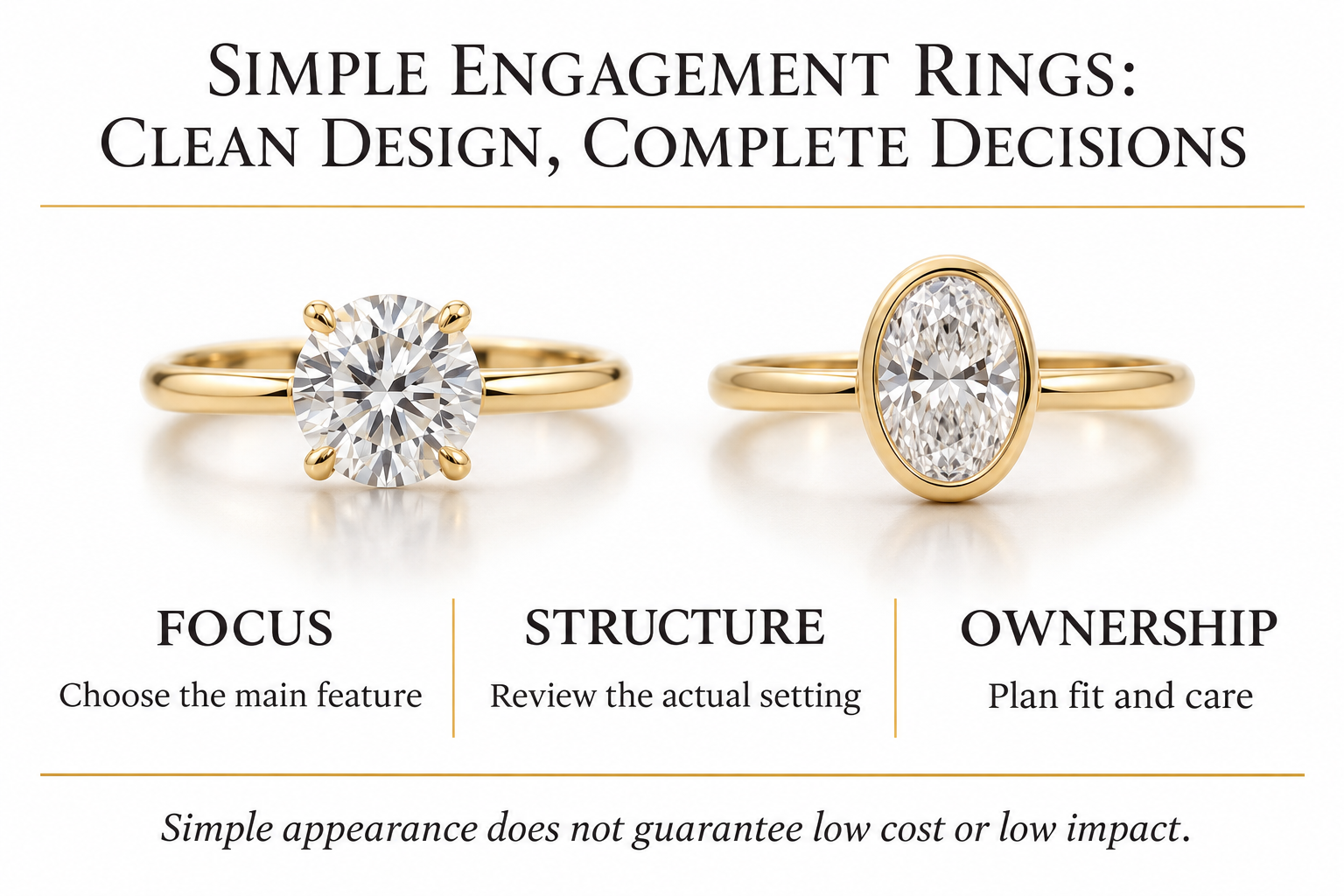
Choose a clear focal point, then assess the complete ring. A restrained appearance does not guarantee lower cost, greater durability or lower impact. Review actual materials, dimensions, support, fit and evidence for any claim.
At a glance · Define the kind of simplicity the wearer prefers · Distinguish overall style from the way a stone is held · Choose the actual center rather than a shape stereotype · Review the structure beneath the clean outline
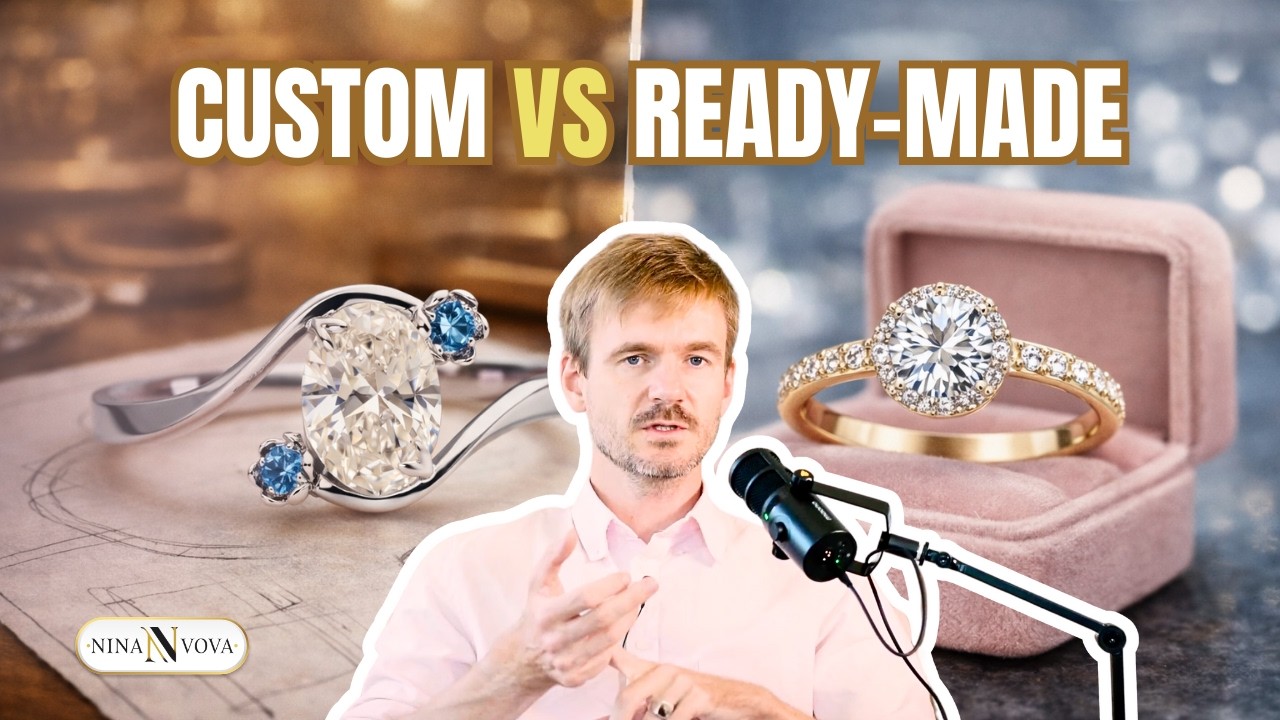
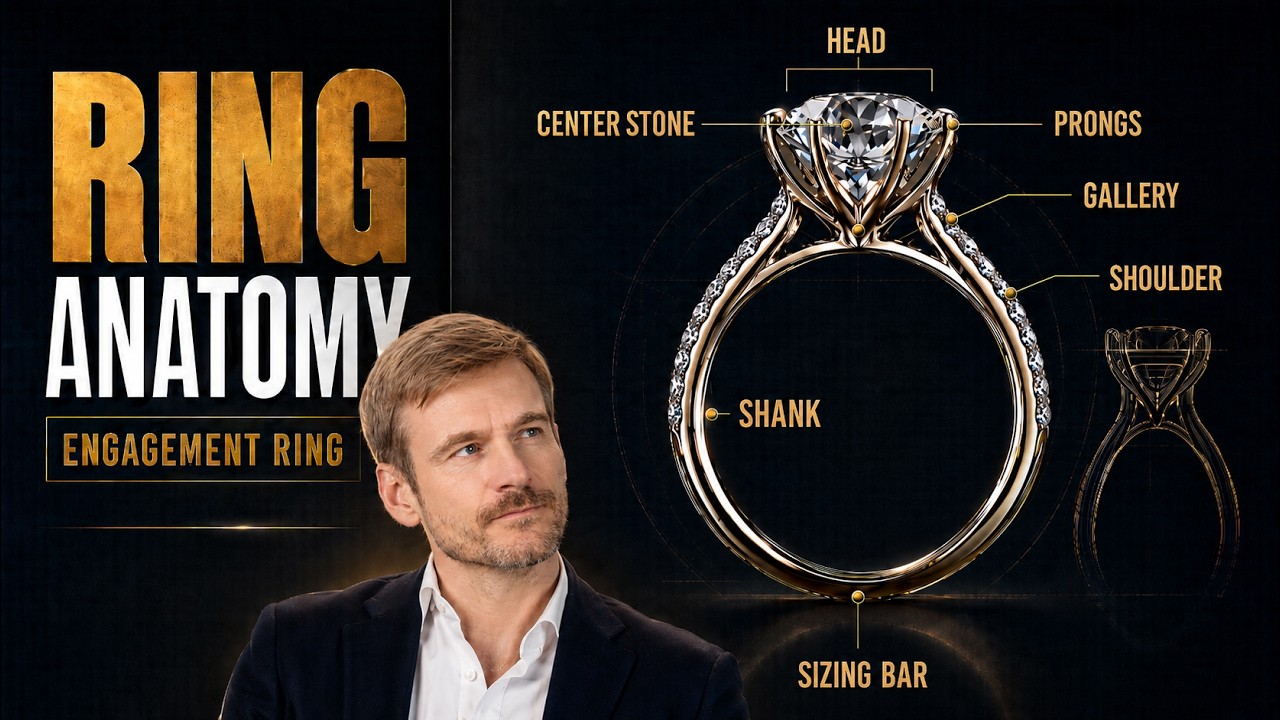
Watch the NinaVova discussion
Watch the original NinaVova video on YouTube.
The NinaVova ring-anatomy discussion is a related companion for understanding setting and gallery structure. This guide focuses on clear, restrained design and practical ownership.
Simple engagement rings: decisions beyond appearance
| Decision | What to compare | What not to assume |
|---|---|---|
| Composition | Single stone, bezel or plain band | Simple means one fixed style |
| Gemstone | Actual identity and dimensions | Shape proves quality |
| Structure | Shank, gallery and support | Fewer details guarantee durability |
| Metal | Alloy, finish and plating | Color alone identifies material |
| Fit | Profile and band clearance | Every low setting stacks flush |
| Price and claims | Equivalent offers and evidence | Minimal always means cheaper or greener |
Define the kind of simplicity the wearer prefers
For one person, simplicity means a single round stone. For another, it means a clean bezel, a geometric center or an understated band without a gemstone.
Start with the feature that should receive attention and decide which details can remain quiet. A ring can be individual without adding many decorative elements.
Do not infer someone’s values or relationship from the amount of ornament they enjoy. A decorative ring can be as meaningful as a restrained one.
Use reference images to explain proportions, outline and setting preferences. The word simple alone does not provide enough information for a precise design brief.

Distinguish overall style from the way a stone is held
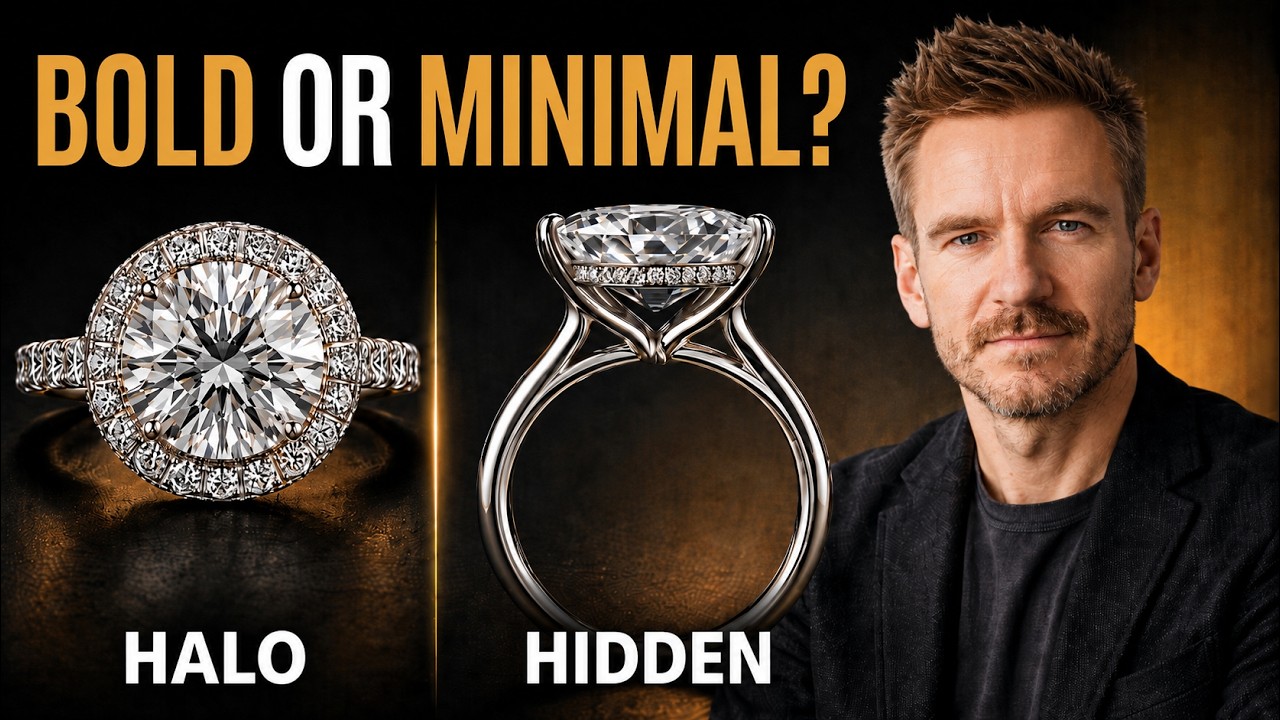
A solitaire describes a composition with one principal stone, while prongs and bezels describe ways of securing it. A solitaire can use different setting structures.
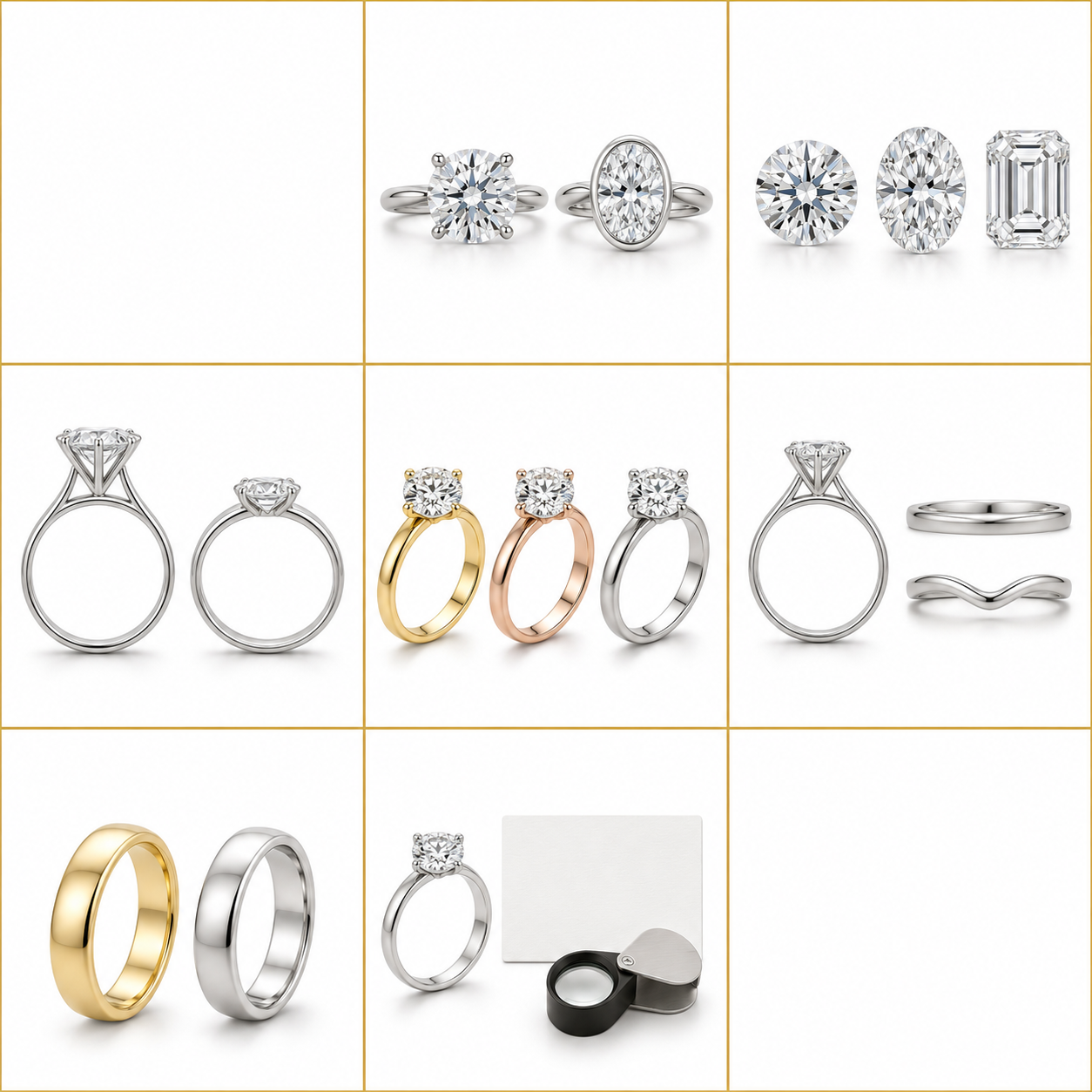
A plain-looking band can still contain complex construction, and a clean bezel can have a substantial gallery underneath. Review more than the front view.
Choose the actual outline and relationship between stone and metal. A setting label is a starting point, not a complete account of quality or fit.
A restrained design can be contemporary or historically inspired. It need not imitate one famous ring or claim a universal timeless appeal.
Choose the actual center rather than a shape stereotype
Round, oval, rectangular and other outlines can all work in simple designs. Compare the actual dimensions and appearance rather than assigning a personality to each shape.
Diamond and colored gemstones have different quality and care considerations. Confirm identity, natural or laboratory-grown status and relevant treatments.
A clear layout can make a particular stone the focus, so view it in motion and ordinary lighting where possible. Enlarged photography does not reproduce every real-life view.
If a report is provided, read its scope and compare it with the actual offered stone. Simple styling does not certify gemstone identity or provenance.
Review the structure beneath the clean outline
The actual stone, dimensions and construction determine practical suitability. Fewer decorative elements do not automatically make every ring more durable.
A very narrow shank or delicate-looking support may have limitations. Ask what dimensions and structure suit the particular material and intended design rather than choosing the thinnest possible line.
Inspect the profile, support and any exposed points or corners. Low-looking photography does not establish protection from impact.
Jewelry should be removed for heavy work, machinery and other unsuitable activities. No clean design is immune to damage or a substitute for appropriate care.
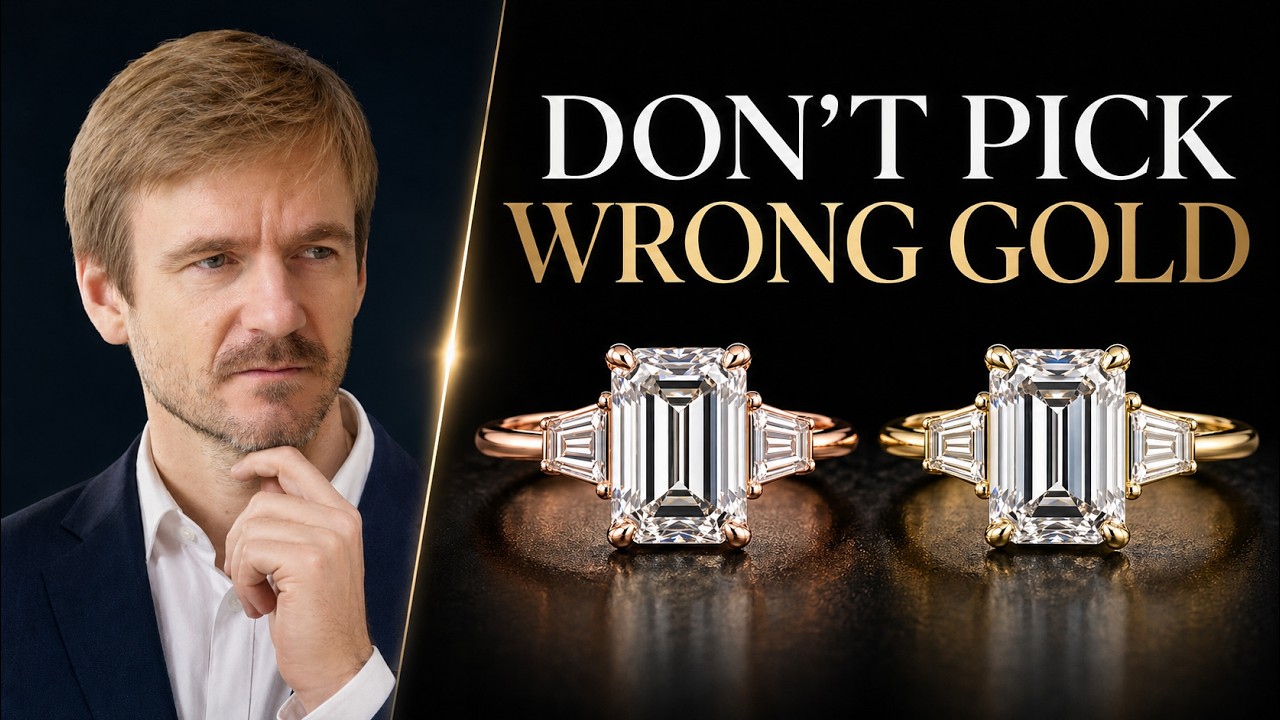
Specify metal color, alloy and finish
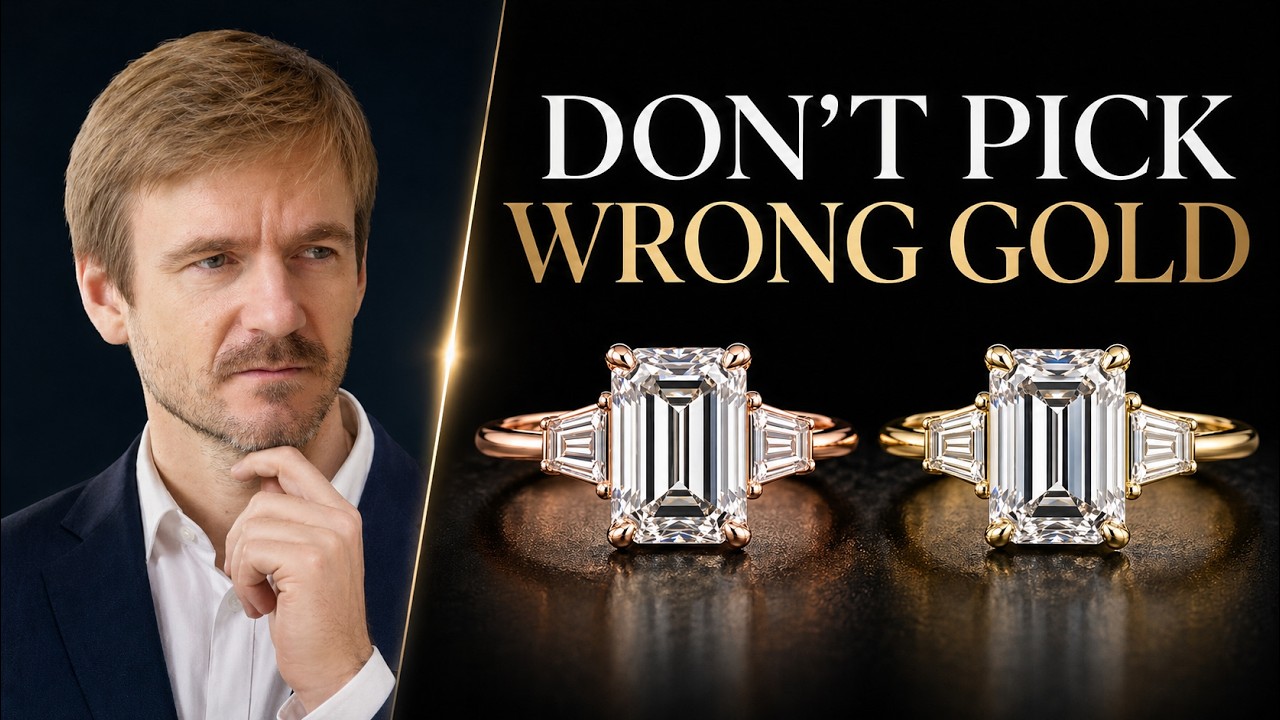
Yellow, rose and white tones can each provide a restrained frame. Compare the actual alloy and any plating rather than relying on a digital color alone.
Polished, satin and other finishes create different surfaces and may show wear differently. Ask how the chosen finish can be maintained over time.
Known skin sensitivities call for discussion of actual alloy components. No precious-metal label guarantees suitability for every wearer.
An understated ring does not need all components to be visually identical, but the final material specification should be clear in writing.
Check comfort and wedding-band clearance
Compare the intended width, interior profile and height during sizing. A slim appearance on screen does not establish a comfortable fit on the hand.
If a wedding band will be worn beside it, review gallery clearance and potential rubbing. A low solitaire may call for a shaped partner or a deliberate gap.
A simple silhouette can still catch on clothing if details are raised or rough. Evaluate the actual piece and the wearer’s routine.
Ask about resizing limits before ordering, particularly where stone coverage or unusual construction is involved. Do not assume a plain surface guarantees unlimited alteration.
Use personal details without losing the main idea
A discreet engraving, a subtle line or one small accent can provide personal meaning while keeping the overall composition restrained.
Choose the detail because the wearer welcomes it. A circle, curve or rectangle can carry a personal association without proving a universal meaning about trust or commitment.
Check the detail at realistic scale and confirm exact wording where applicable. A long inscription may not suit the available surface.
Keep the scope clear: personalizing an existing design and creating a new model involve different work. Neither route makes the relationship more or less meaningful.
Compare price and environmental claims separately
A simpler setting may reduce some work or material, but the actual gemstone, metal, construction and included service determine the complete price.
Compare equivalent offers rather than assuming that every minimal ring is affordable or every decorative ring wasteful. A substantial solitaire can cost more than a smaller detailed design.
Fewer visible elements do not establish a measured environmental benefit. Recycled-content, origin and other claims need specific evidence and scope.
A laboratory-grown stone does not automatically prove zero impact either. Ask for documentation relevant to the actual claim rather than treating visual style as evidence.
Choose a clear design with realistic ownership expectations
At NinaVova, the actual gemstone and the wearer’s preferences can guide a restrained ring with suitable support and proportions. Previous photographs illustrate individual outcomes.
Confirm the final dimensions, materials, finish and current order terms. A rendering communicates the plan without perfectly predicting optical effects or comfort.
Keep records and follow care appropriate to every component. Arrange inspection if a stone moves, an edge catches or the ring is damaged.
The appeal of a simple ring can lie in one well-considered feature. Let that visual preference guide the design without attaching guarantees about cost, longevity or relationship quality.

Frequently asked questions
Is every solitaire held with prongs?
No. Solitaire describes the composition; different setting structures can hold the center.
Is a minimal ring always easier to maintain?
No. Actual materials, dimensions and construction determine care and service needs.
Does a simple ring automatically have a smaller environmental footprint?
No. Such claims need evidence relevant to the actual materials and production.
Build a restrained design around the right feature
We can discuss the actual gemstone, setting and proportions that matter to the wearer, then confirm a feasible, comfortable design.
Book a NinaVova consultation or explore our custom design process.
Continue reading: Bezel settings · Low-profile rings · Design consultation.
Sources and further reading
- GIA: Guide to ring settings
- GIA: Accurate finger and ring sizing
- FTC: Environmental claims and the Green Guides
- NinaVova: Current project and service terms
Confirm the actual materials, condition, evidence and current written terms for the offered ring. Illustrations do not establish identity, provenance, certification or an environmental footprint.