
Meteorite Wedding Bands: Materials, Corrosion Care and Fit

A meteorite wedding band can appeal through its metallic pattern and connection with material from beyond Earth. That story does not make the finished ring maintenance-free, universally suitable for sensitive skin or automatically lower impact. Assess the actual meteorite component, supporting materials, fit and service plan before deciding whether the band suits your routine.
Choose the pattern with a realistic maintenance plan. Iron-based meteorite can rust and contains nickel. Check the actual component, host metal, fit and maker-specific service rather than assuming universal durability or skin suitability.
At a glance · Separate a personal celestial story from material performance · Ask what meteorite material is actually being offered · Understand the inlay, core and complete construction · Discuss nickel content without a hypoallergenic promise
Watch the NinaVova discussion
Watch the original NinaVova video on YouTube.
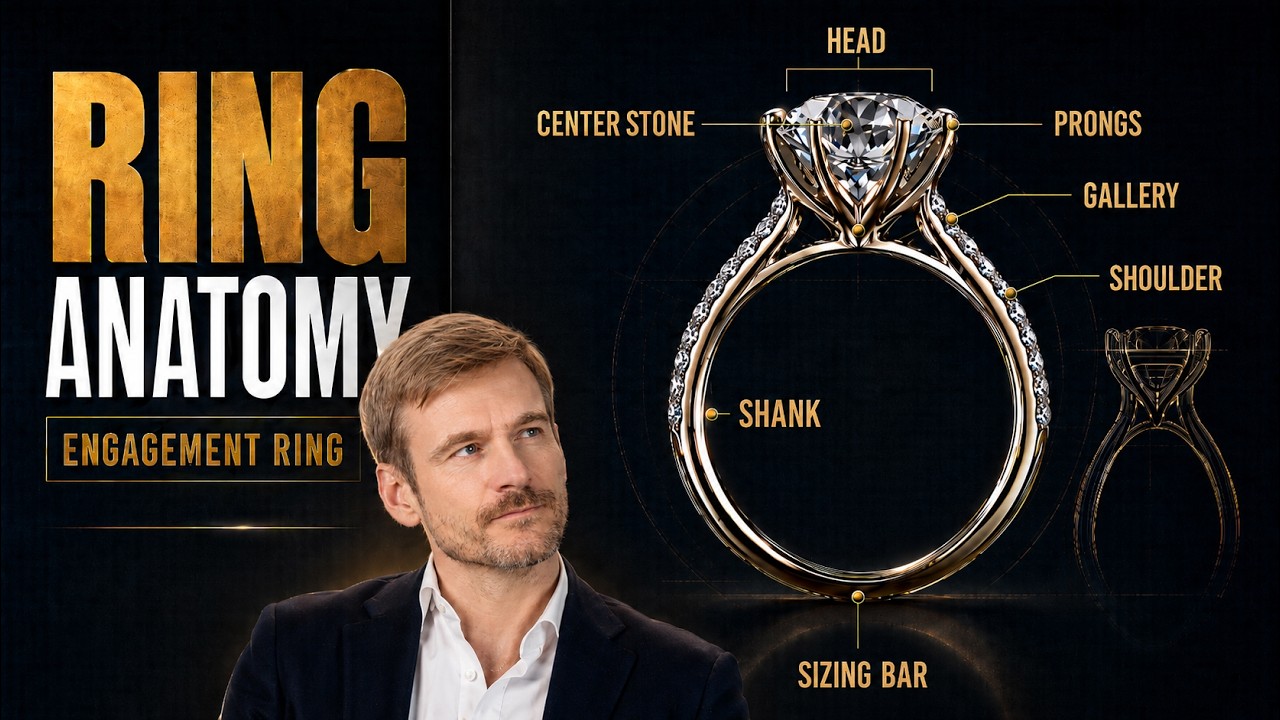
The NinaVova ring-anatomy discussion is a related companion for understanding complete ring structure. It is not a meteorite identification or a demonstration of a NinaVova meteorite product.
Meteorite wedding bands: the checks before choosing
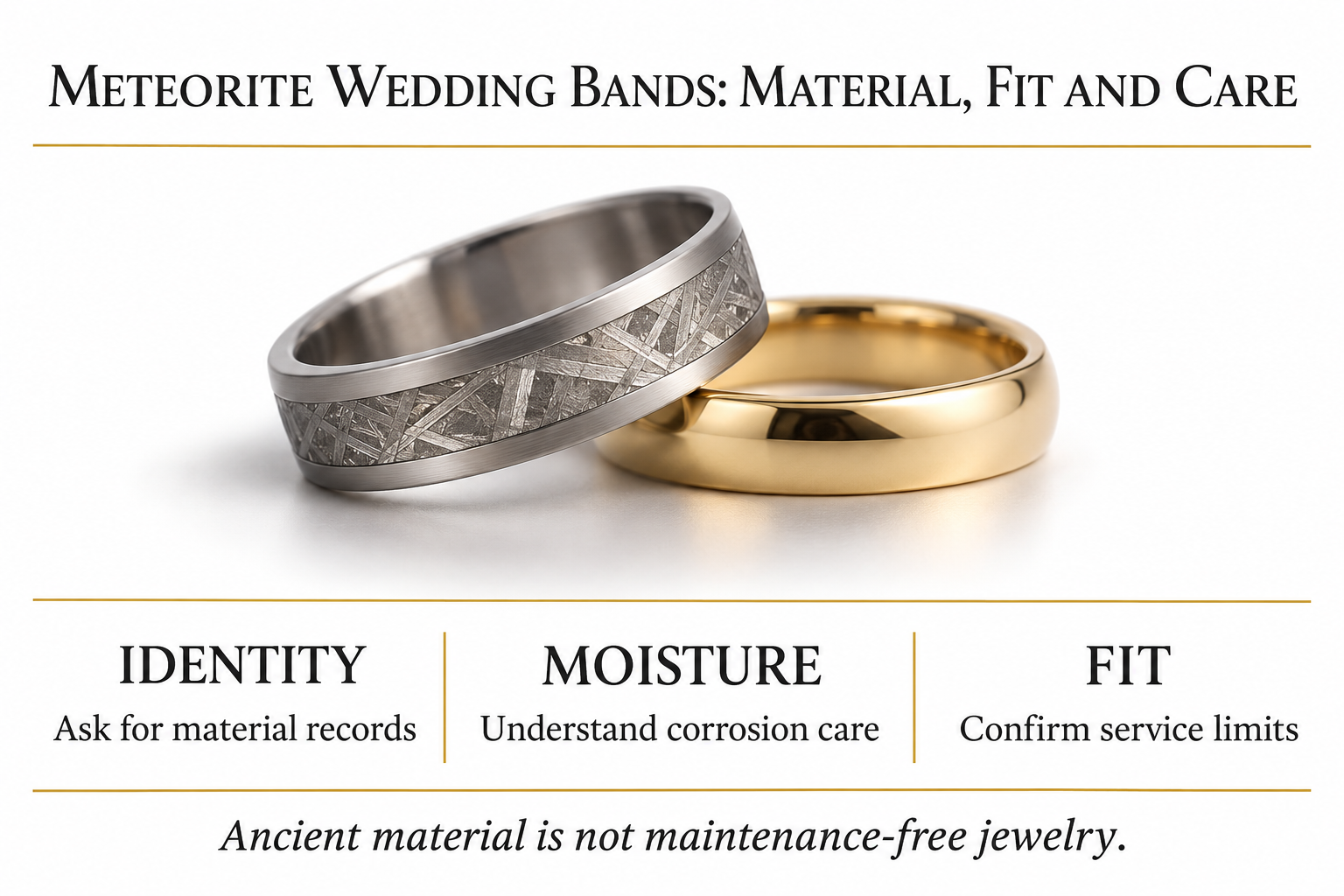
| Question | What to establish | Why it matters |
|---|---|---|
| Identity | Named meteorite and relevant records | Pattern alone is not full documentation |
| Construction | Inlay, core, liner and finish | Different components need different service |
| Nickel | All actual alloy components | No universal hypoallergenic promise |
| Moisture | Maker-specific corrosion care | Iron-based material can rust |
| Fit | Actual width and profile | Comfort and alteration limits |
| Service | Repair, remake and current terms | Realistic long-term ownership |
Separate a personal celestial story from material performance
A connection with astronomy or a remembered place under the night sky can give the band personal meaning. It does not need a universal promise about destiny or everlasting relationships.
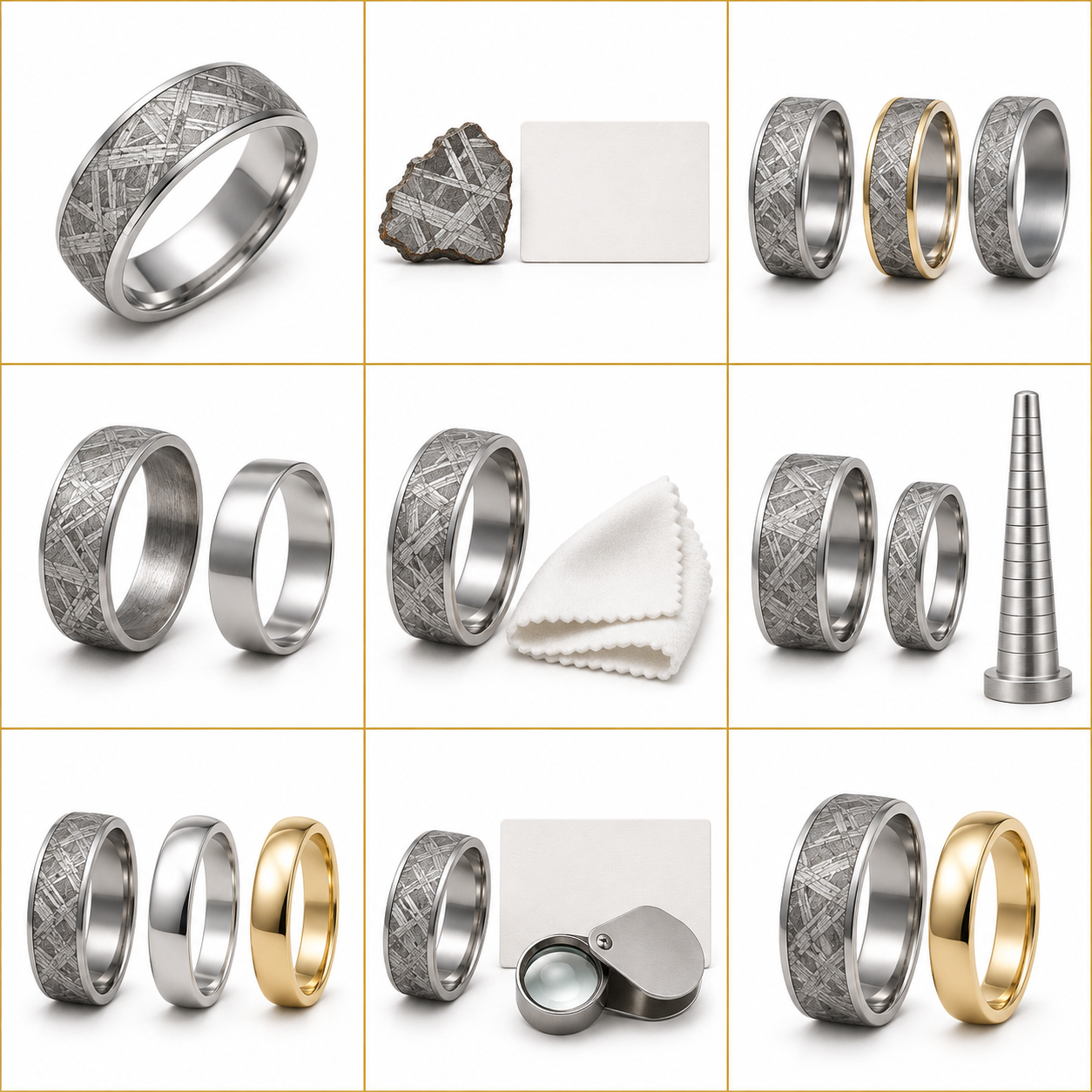
Ancient material and a durable finished ring are different questions. Age before fabrication does not establish resistance to moisture, impact or wear on a hand.
Choose the visual pattern and story because you enjoy them, then assess practical requirements separately.
The band should be described by what it actually contains. A meteorite inlay, a solid meteorite component and a decorative imitation are not interchangeable descriptions.
Ask what meteorite material is actually being offered
Iron meteorites contain iron-nickel metal, and some etched sections show the crystalline pattern commonly called Widmanstätten structure. Not all meteorite types or sections present the same appearance.
Ask for the named material and available supplier or origin records. A dramatic pattern in a sales image is not sufficient documentation for the particular ring.
A seller’s certificate should be read for its issuer, scope and connection to the offered component. It should not be treated as an independent laboratory conclusion merely because it is called a certificate.
Keep material descriptions with the order. They are useful for evaluating the claim and planning later work.
Understand the inlay, core and complete construction
Meteorite may form a visible inlay within a different metal band. The supporting structure, interior surface and any adhesive or coating are relevant parts of the product.
Ask which materials contact the skin and which remain exposed. A precious-metal liner does not automatically mean every other component is isolated in every wearing condition.
A patterned metal layer is not necessarily made by melting meteorite into the host alloy. Ask how the particular ring is assembled rather than assuming all combinations use the same process.
Review the edges, joins and finish on realistic views of the complete band. Appearance alone does not establish construction quality.
Discuss nickel content without a hypoallergenic promise
Because iron meteorite contains nickel, it should not be advertised as a universally nickel-free or hypoallergenic alternative.
Ask about all components, including the interior alloy, solder, coating and inlay. A general material label may not answer a wearer’s specific concern.
If nickel sensitivity is known, do not rely on a promise based only on a liner or protective-looking finish. Choose using accurate material information and appropriate personal advice.
Neither a meteorite’s origin nor its age makes it automatically suitable for every skin. Keep the conversation specific to the actual ring and wearer.
Plan for moisture and corrosion care
Iron-based meteorite can rust. A pattern that survived geological time can still change under ordinary jewelry conditions.
Follow the maker’s instructions for the complete ring, particularly exposure to water, chemicals and storage conditions. Coatings and finishes have their own maintenance limits.
Jewelry by Johan, for example, explicitly discusses rust potential and moisture precautions for its meteorite products. Those instructions demonstrate a real care issue; they are not automatically the instructions for every maker’s ring.
Ask who will inspect discoloration, refresh the finish or address corrosion. Avoid improvising acids, oils or abrasive treatments that could damage another component.
Measure the actual width and establish alteration limits
A broad band may fit differently from a narrow one. Size for the intended width and interior profile rather than copying a number from an unrelated ring.
Ask whether the actual construction can be resized, remade or exchanged. An inlay and supporting core can make alteration more complicated than a plain precious-metal band.
Confirm what happens if finger size changes later. A promised exchange or remake should have clear current conditions rather than being assumed.
Check comfort at edges and with neighboring fingers. Remove the band for machinery, impact and other tasks where jewelry is unsuitable.
Compare alternative bands on specific trade-offs
Gold, platinum, titanium and other materials have different properties and service options. Meteorite is not universally stronger, lighter or more scratch-resistant than all of them.
Compare actual dimensions, weight, finish, construction and service rather than assigning one durability ranking to every product.
A plain precious-metal band may offer a different alteration route, while an inlaid band offers a particular surface and story. Neither is automatically the better choice for every wearer.
Ask for evidence behind recycled-content or environmental claims. Material arriving from space does not establish a measured footprint for recovery, transport and fabrication.
Confirm maintenance, price and written terms
Compare the complete band and included service. Price can reflect materials, construction and customization rather than the visible width of meteorite alone.
Ask what inspection, surface renewal or corrosion service is available and what it costs under the maker’s current terms.
Confirm delivery, alteration and return conditions before approving personal details. Keep records of the actual material and finish.
A striking pattern is not a guarantee of investment performance or easy replacement. An exact matching section or future surface appearance may not be available.
Choose a band you are prepared to own and maintain
A meteorite wedding band can be a considered choice for someone who enjoys its story and accepts the particular care and service requirements.
For a coordinated pair, the other partner need not choose the same material. A common line, finish or discreet detail can connect different practical choices.
Ask NinaVova about current material feasibility before assuming a meteorite commission is available. Educational concepts shown here are not an inventory or manufacturing promise.
Let the celestial association remain personal while the purchase rests on clear materials, comfortable fit and realistic maintenance expectations.
Frequently asked questions
Is meteorite automatically nickel-free?
No. Iron meteorite contains iron-nickel metal; check every component.
Can a meteorite ring rust?
Yes. Follow instructions for the actual complete ring and ask about professional service.
Does space origin prove a lower environmental footprint?
No. Recovery, transport and fabrication claims still need evidence.
Discuss a feasible material choice before commissioning
Bring the visual reference and your wearing routine. We can discuss current feasibility and alternative ways to express the idea; meteorite availability must be confirmed.
Book a NinaVova consultation or explore our custom design process.
Continue reading: Meteorite engagement rings · Matching bands · Design consultation.
Sources and further reading
- Natural History Museum: Meteorite types
- ASU: Iron meteorites
- Jewelry by Johan: Product-specific meteorite care
- FTC: Environmental claims
Confirm the actual materials, condition, evidence and current written terms for the offered ring. Illustrations do not establish identity, provenance, certification or an environmental footprint.