

Matching Wedding Bands: Shared Details and Individual Fit

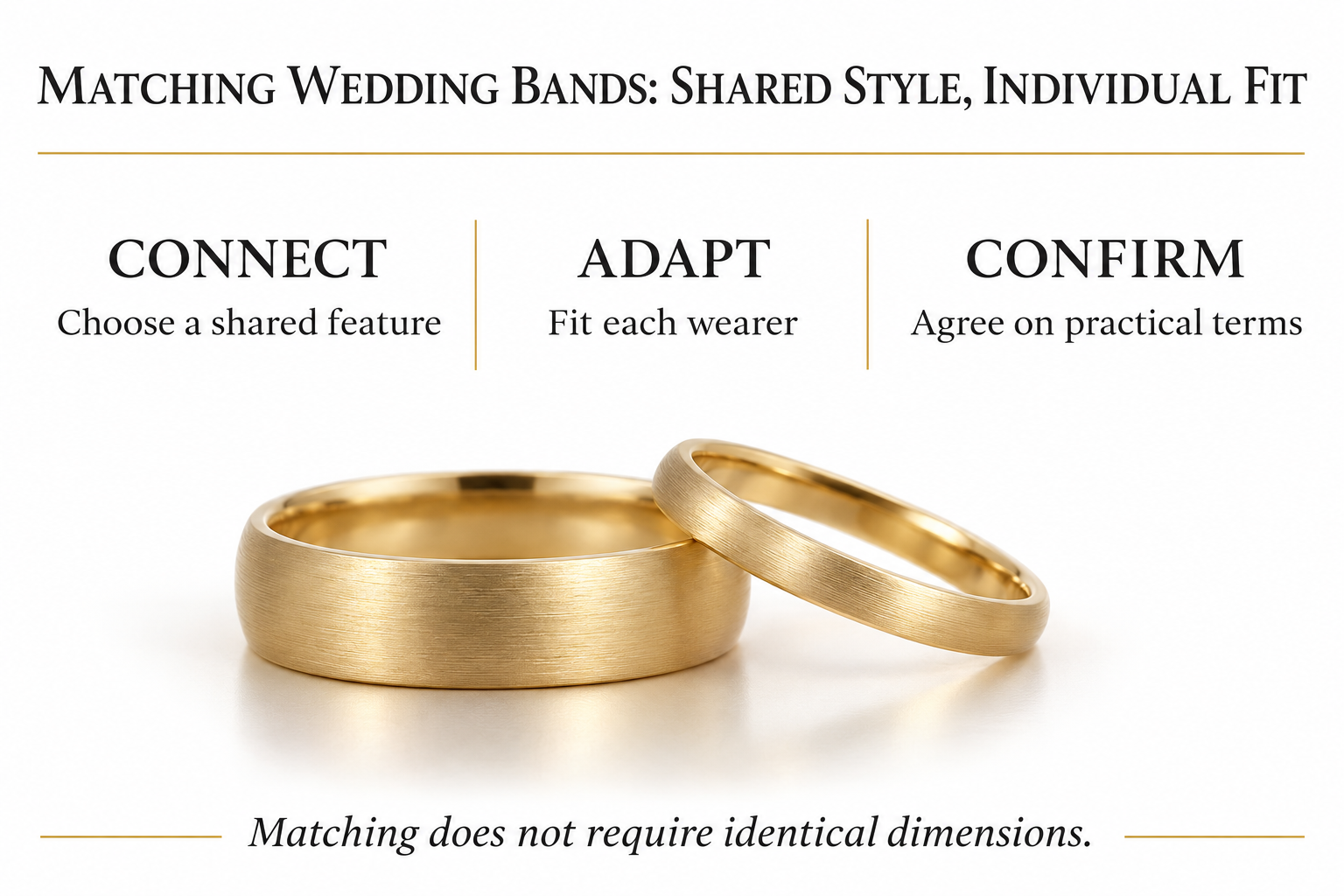
Matching wedding bands can share a shape, color, texture or private detail while fitting each partner differently. They do not need identical widths, materials or prices, and choosing separate designs is equally valid. Start by deciding what you want the pair to have in common, then assess each ring on its own merits.
Share a feature while fitting each wearer individually. Matching can mean the same finish, motif or private detail. Each band still needs suitable dimensions, materials and service terms for the person wearing it.
At a glance · Define what matching means for the two of you · Treat historical examples as inspiration rather than rules · Choose a shared metal color, finish or motif · Personalize discreetly without overcrowding the design
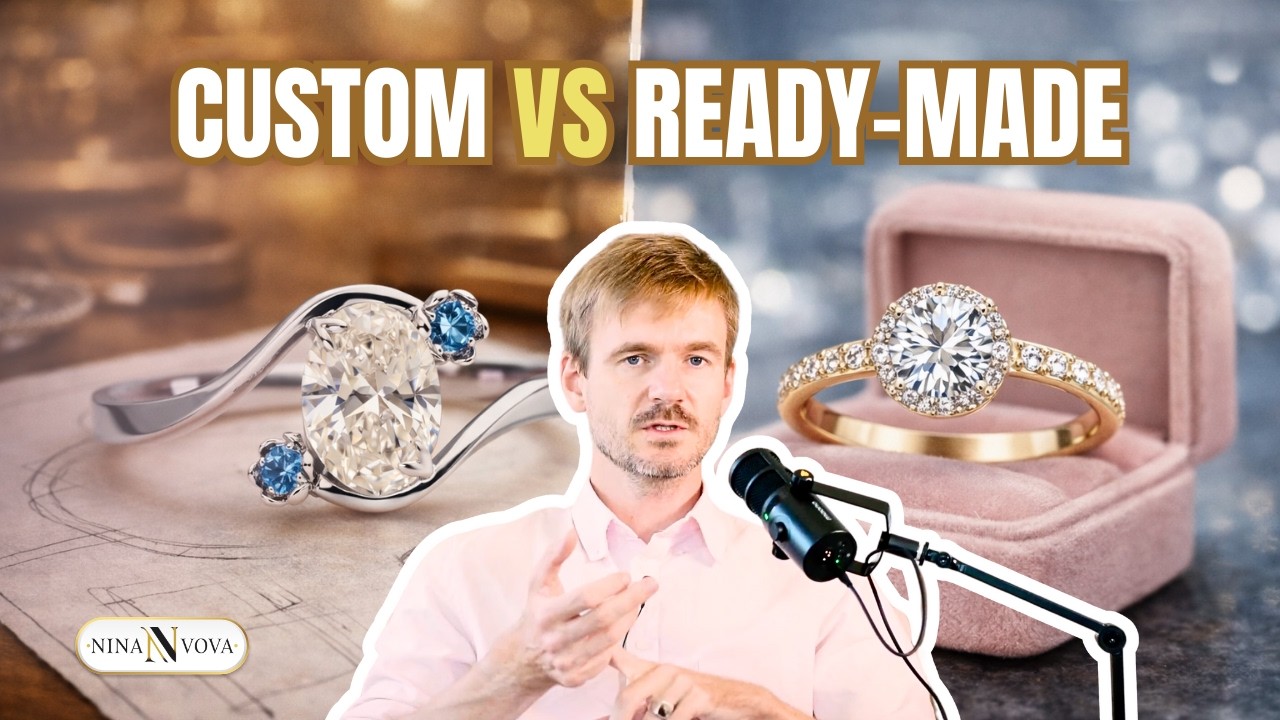
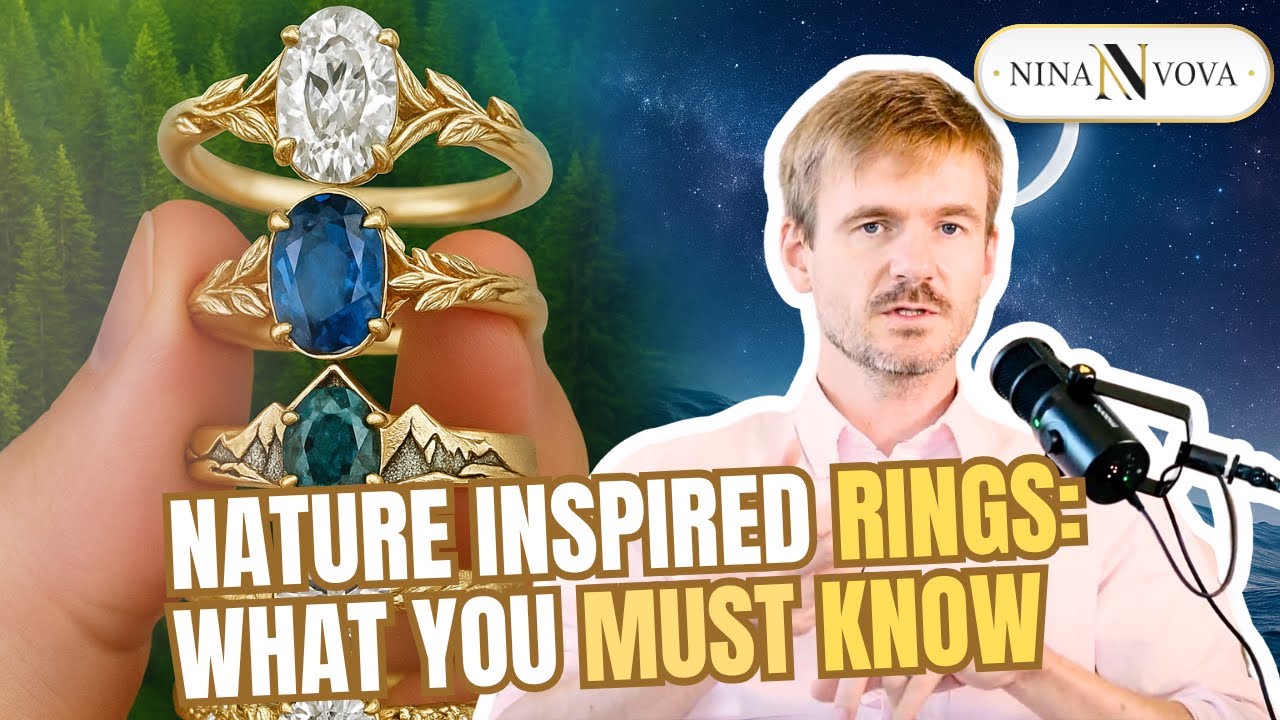
Watch the NinaVova discussion
Watch the original NinaVova video on YouTube.
The NinaVova custom-process discussion is a related companion for agreeing on a design and approvals. This guide focuses on coordinating wedding bands while preserving individual fit.
Matching bands: decide together, fit individually
| Shared choice | Individual choice | Practical check |
|---|---|---|
| Metal color | Actual alloy and finish | Clear material description |
| Surface motif | Scale and width | Comfortable edges |
| Private inscription | Personal wording | Exact approval for each ring |
| Gemstone accent | Material and size | Appropriate care |
| Overall style | Finger size and profile | Independent measurement |
| Order plan | Different use and service needs | Terms for both pieces |
Define what matching means for the two of you
An identical pair is one possibility, but a coordinated pair can share only a small feature. The useful question is which connection both partners actually enjoy.
A restrained finish, a repeated line or the same interior phrase may be enough. Decide which features are shared and which remain individual before comparing examples.
A matching pair can symbolize unity if that meaning appeals to you. It does not provide evidence about equality, fidelity or the strength of a relationship.
Neither partner needs to compromise comfort or personal preference to make the pair appear identical. The rings can work as a set without becoming interchangeable objects.

Treat historical examples as inspiration rather than rules
Wedding-ring traditions vary across periods and communities. A single story about ancient origins should not be used to explain every present-day custom.
Museum collections document gimmel rings with interlocking hoops, including Renaissance examples associated with marriage. They offer one specific historical reference for a linked design.
That historical object is different from a modern pair of separate bands chosen to coordinate. Describe the connection honestly rather than calling every matching set an unchanged ancient tradition.
A cultural or family practice may matter to the couple, but ask how they wish to interpret it. There is no universal requirement to use one metal, hand or exact pattern.
Choose a shared metal color, finish or motif
Two bands can share yellow, white or rose tones, or repeat the same texture across different colors. Review actual alloys and samples where available.
Metal color alone does not identify the alloy, fineness, plating or care needs. Ask for clear descriptions of both rings rather than treating visual similarity as a material guarantee.
A motif can be scaled differently to suit each band. A line visible on a wide surface may need a different treatment on a narrow one.
Finishes can change with wear and maintenance. Discuss how the proposed texture might be refreshed and whether the two bands are expected to age differently.
Personalize discreetly without overcrowding the design
An inscription, date or private symbol can connect two otherwise different rings. Agree on exact wording, spelling, placement and orientation for each piece.
Gemstone accents can echo a shared color without requiring identical quantities or sizes. Confirm the actual material, relevant treatment and suitable care.
Birthstone associations are personal or traditional meanings, not promises about health, fortune or relationship outcomes.
Check the feasibility of handwriting, sound-wave patterns or detailed symbols before building the whole concept around them. Small-scale engraving has practical limits.
Fit each wearer independently
Measure each partner for the intended width and interior profile. Matching appearance does not mean the same numerical size or the same amount of metal.
A wider band may feel different from a narrow one, and individual hands and preferences vary. Use appropriate samples and professional measurement rather than copying another ring’s size blindly.
Check contact with neighboring fingers and whether the band rotates or catches. Comfortable edges matter even when the visual design is restrained.
For a surprise purchase, ask about feasible sizing and alteration options before approving permanent personalization. An estimated size is not a guarantee of fit.
Review an engagement-ring pairing where relevant
One partner may wear the wedding band beside an engagement ring while the other wears a single band. The coordinated set can accommodate those different uses.
Assess the actual gallery, clearance and potential rubbing. A straight band, shaped partner or deliberate gap can each be appropriate in a particular arrangement.
Check the combined width and fit rather than assessing each piece only in isolation. Continuous stone coverage may create additional service considerations.
A rendering can communicate the idea, but it cannot fully establish real-world contact or comfort. Confirm the practical relationship with the jeweler.
Plan for different routines and service limits
The two wearers may have different work and activity patterns. The same appearance is not a reason to ignore one person’s practical requirements.
Remove rings for machinery, impact and tasks where jewelry is unsuitable. No material should be promoted as universally safe for every activity.
Ask about resizing, engraving preservation and repair for the actual construction. Some alternative materials or continuous designs have limited alteration options.
If a lost band is replaced later, an exact match in color, texture or stone appearance may not be available. Keep records without assuming replacement is guaranteed.
Compare the complete pair and approve each specification
Compare the two finished-ring specifications, included work and current service terms. Different widths and materials can lead to different prices within a coordinated pair.
One band does not need equal monetary value to express equal commitment. Decide on a budget that works for the actual choices rather than a symbolic pricing rule.
Check each approval separately for size, materials, finish and personal details. Similar names in an order should not obscure differences between the two rings.
Confirm the current delivery plan and alteration or return conditions before production. Timing and policies should be specific to the actual order.
Make coordination serve the people wearing the rings
At NinaVova, a shared visual reference can guide a pair while allowing individual fit and proportions. Earlier project photographs show possibilities rather than one compulsory formula.
Bring a short explanation of the feature you both enjoy and the needs that differ. That is often more useful than trying to combine many unrelated examples.
Keep the approvals and care records for both pieces. Future finishing or repair decisions should consider each ring’s actual materials and condition.
The most suitable matching pair is one both people want to wear. A modest shared detail can carry the connection without sacrificing comfort or individuality.

Frequently asked questions
Must matching bands have identical widths?
No. A shared finish or motif can connect different widths.
Do coordinated bands need to cost the same?
No. Price differences do not measure commitment.
Is a gimmel ring the same as two separate matching bands?
No. A gimmel ring uses linked or interlocking hoops; a modern coordinated pair is a different arrangement.
Find the shared feature you both enjoy
We can consider a coordinated pair with individual widths, proportions and practical requirements, then confirm each specification clearly.
Book a NinaVova consultation or explore our custom design process.
Continue reading: Personalized bands · Active-lifestyle rings · Design consultation.
Sources and further reading
- The Met: Renaissance gimmel ring
- London Museum: Posy, fede and gimmel ring
- GIA: Accurate finger and ring sizing
- NinaVova: Current project and service terms
Confirm the actual materials, condition, evidence and current written terms for the offered ring. Illustrations do not establish identity, provenance, certification or an environmental footprint.