
Rose Gold Wedding Bands: Color, Fit, Personalization and Care

Rose gold wedding bands bring a warm pink-to-copper tone to a personal design. The useful choice is the actual ring, not a universal color formula: compare the alloy, finish, width, fit and how it will sit beside other jewelry. A meaningful inscription or detail can be added when the construction supports it.
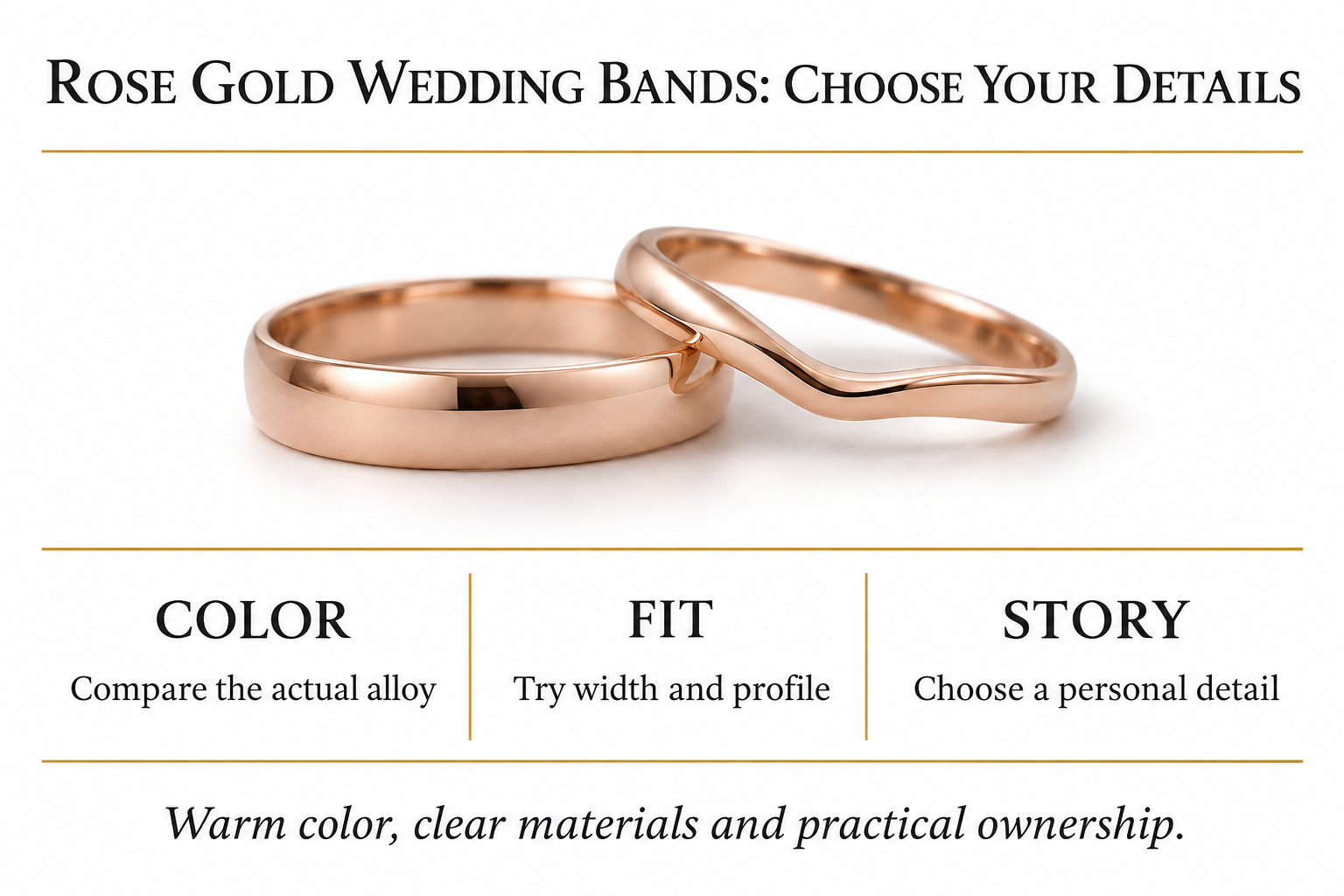
Choose the actual shade and complete band. Rose gold formulas and finishes vary. Compare fit, personal details, neighboring rings and service terms rather than relying on a universal color or symbolism rule.
At a glance · Choose a warm color the wearer enjoys · Compare the actual alloy and shade · Coordinate or contrast with other metals · Personalize the band with feasible detail
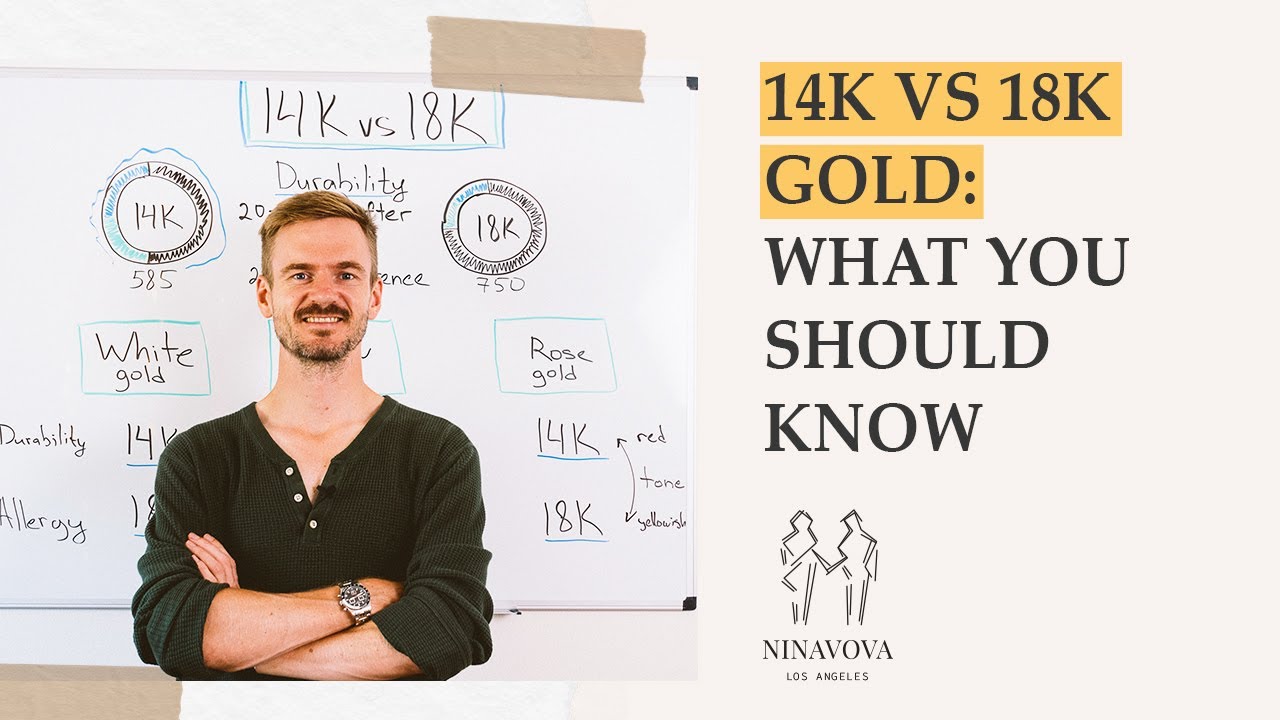
Watch the NinaVova discussion
Watch the original NinaVova video on YouTube.
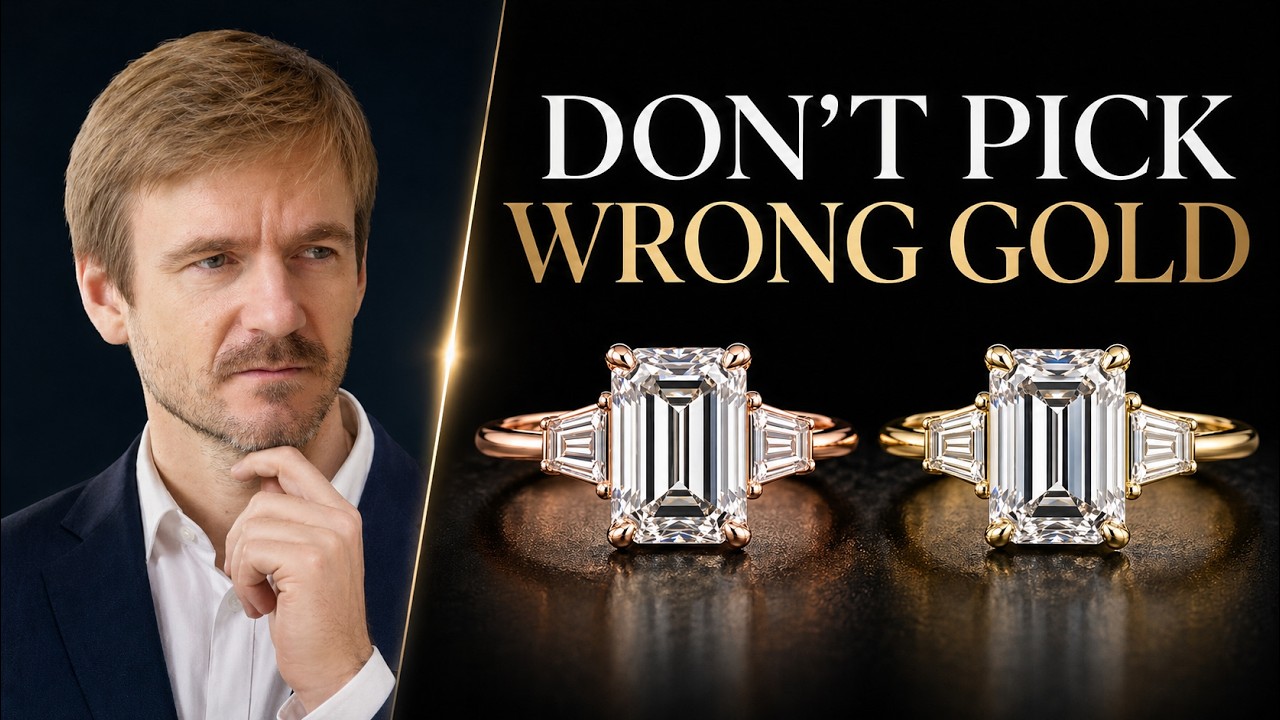
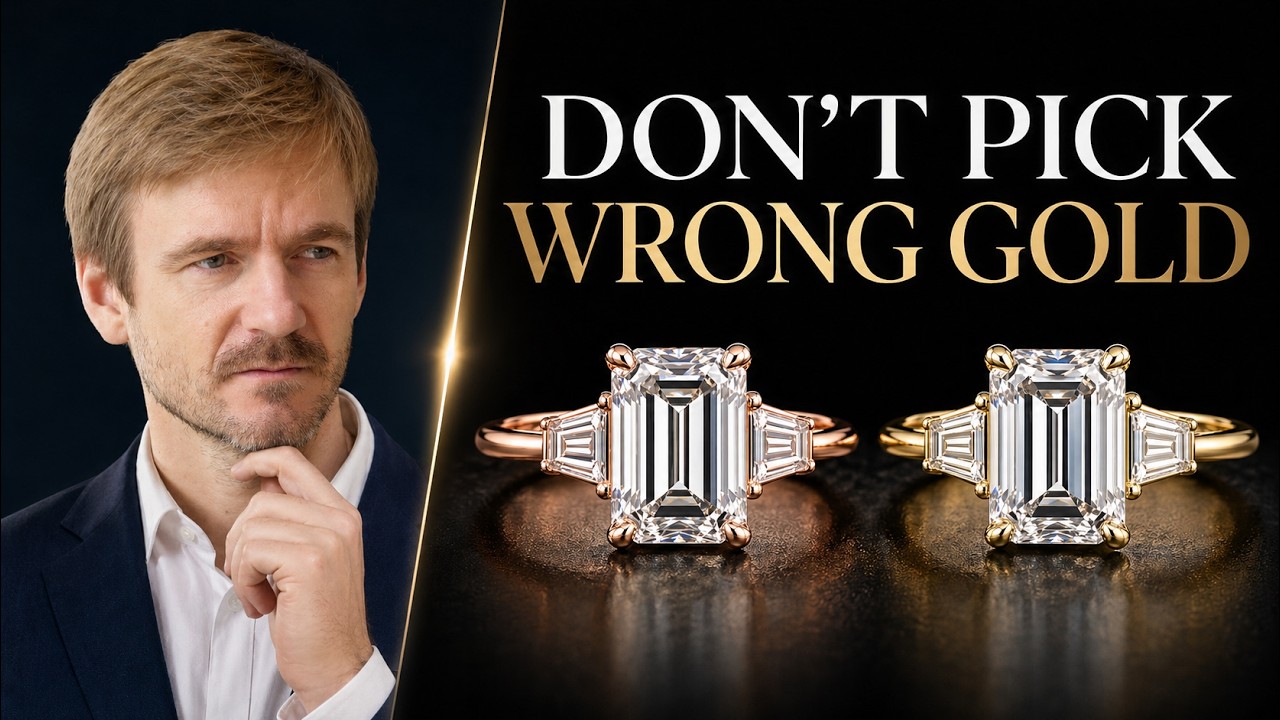
The NinaVova rose-versus-yellow-gold discussion supports comparing actual color and ownership preferences. This written guide focuses on wedding-band design and pairing.
Rose-gold wedding band: decisions to confirm
| Decision | Compare | Confirm |
|---|---|---|
| Shade | Actual alloy and reference | Color can vary between formulas |
| Finish | Polished, brushed or textured | Expected wear and maintenance |
| Personal detail | Engraving or pattern | Legibility and alteration limits |
| Gemstones | Identity and setting | Care for every component |
| Pairing | Actual profiles and contact | A shaped band or gap may suit |
| Fit | Width and interior profile | Measurement for the intended design |
Choose a warm color the wearer enjoys
Rose gold can be understated in a narrow band or more prominent in a broad sculptural shape. Compare the actual proportions rather than assuming the color determines a particular style.
Its romantic associations can be part of a personal story, but the metal does not carry a compulsory meaning or guarantee an enduring relationship.
A wedding band can be chosen together, separately or with known preferences guiding a surprise. There is no required color or gender rule.
An enjoyable design does not need a prediction that rose gold will always be fashionable. Consider whether the wearer likes the piece now and understands its care.

Compare the actual alloy and shade
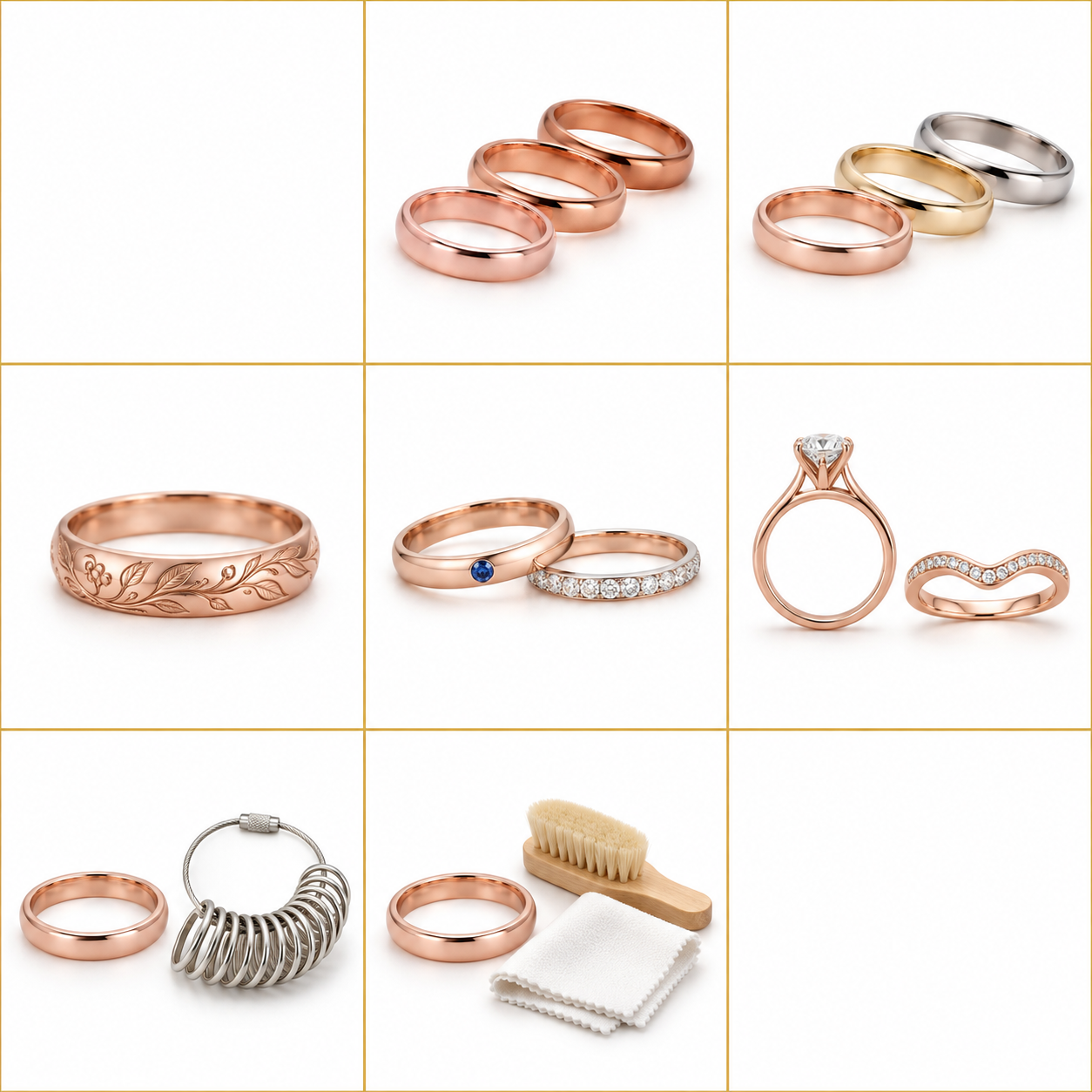
Rose gold is made by alloying gold with other metals, with copper contributing to the warm color. Formulas and shades vary rather than forming one identical pink material.
Karat describes the gold proportion, while the remaining metals influence color and working properties. Ask for the proposed alloy and any additional finish.
A photograph taken in warm light may exaggerate the pink tone. Compare realistic images or a physical reference with the maker’s material description.
Do not assume that two rings described as rose gold will be an exact color match. If matching an existing piece matters, discuss the actual items.
Coordinate or contrast with other metals
Rose gold can sit beside yellow gold, white gold or platinum when the wearer enjoys the combination. Matching every metal color is an option rather than a requirement.
For partners’ bands, a shared detail can connect pieces with different colors or widths. A common engraving or related profile can be more meaningful than identical dimensions.
If mixed metals appear within one ring, clarify each material and how the construction will be serviced. A visual contrast does not establish compatible future resizing.
Judge the completed combination in the setting where it will be worn. Skin tone can inform preference without becoming a rigid rule about who should choose a metal.
Personalize the band with feasible detail
Initials, a date, a phrase or a discreet symbol can make a band personal. Confirm space, legibility and placement before approving an inscription.
A brushed, polished or textured surface changes the appearance of the warm alloy. Ask what normal wear may do to the chosen finish.
Fine patterns and milgrain should remain comfortable and appropriately supported. An enlarged drawing can make details appear larger than they will be on the finished ring.
Personalization can affect alteration or return terms. Settle the details in writing rather than assuming every later change is simple or included.
Consider gemstones as part of the complete design
Small diamonds, colored accents or a birthstone reference can be considered when suitable for the ring. Establish the actual identity and any treatment separately from its personal meaning.
Rose gold may create a warm visual contrast with a colorless stone or another gemstone, but it does not physically improve the stone’s clarity, cut or origin.
Compare the actual stone and setting together. A palette that works in one reference image may look different with another stone, light or metal finish.
Care must suit every component, and extensive stone coverage can introduce additional service needs. A plain band and a fully stone-set one are different ownership choices.
Check the side profile and engagement-ring pairing
A wedding band can be straight, curved or shaped around another ring when the geometry supports it. Compare actual side views rather than judging only the outlines from above.
Look for likely contact between stones, settings and the adjacent band. A deliberate gap can be preferable to forcing two pieces to sit flush.
The combined width and weight of multiple rings can change comfort. Try a suitable representation of the whole arrangement where possible.
A photograph of a previous NinaVova pair illustrates that project’s construction, not a guarantee that the same band shape will fit every engagement ring.
Measure width, fit and resizing expectations
A broad band can feel different from a narrow sizing sample, and interior profile also affects the experience. Measure for the actual design rather than copying a size without context.
Check smooth edges and comfortable contact between neighboring fingers. The ring should suit the wearer’s practical preferences as well as the visual brief.
Ask about resizing before choosing patterns, stone coverage or a complex mixed-material construction. Alteration may affect those details or be limited.
Follow appropriate wearing habits, including removal for unsuitable work and impact. No gold color makes a ring safe for every activity.
Plan surface care and condition checks
Rose gold can acquire scratches, residue or discoloration depending on the actual piece and exposure. Avoid both a promise of an unchanged surface and an assumption that every change is tarnish.
Follow cleaning instructions for the whole ring. Mild methods may be suitable for a plain band while a treated gemstone or coating needs a different approach.
Avoid abrasive household pastes and attempts to refinish the ring yourself. Ask whether professional maintenance is appropriate for the finish and decoration.
If a setting catches, a stone moves or the ring becomes distorted, arrange an inspection. Surface beauty is only one part of the condition check.
Confirm the personalized purchase
Review the alloy, finish, dimensions, engraving, gemstone details and complete price before ordering. Ask which decisions are confirmed at each approval stage.
If recycled content or another sourcing priority matters, request information specific to the project. Metal color alone does not establish environmental or ethical performance.
At NinaVova, available materials and current delivery and service terms should be confirmed for the individual order. Earlier photographs are references rather than fixed-price offers.
A rose gold wedding band can combine warmth, personal meaning and practical comfort when the complete specification suits the wearer. Keep the records so its story remains clear over time.

Frequently asked questions
Do all rose-gold bands have the same pink shade?
No. Alloy formula, finish and lighting can affect appearance.
Must a wedding band match the engagement-ring color?
No. Coordinate or contrast according to the wearer’s preference.
Can every engraved band be resized without affecting detail?
No. Ask about the actual design’s alteration limits.
Develop the warm-toned band around your preferences
We can discuss a personal detail, actual alloy options and comfortable proportions alongside an existing engagement ring where relevant.
Book a NinaVova consultation or explore our custom design process.
Continue reading: Rose-gold surface care · Rose versus yellow gold · Design consultation.
Sources and further reading
- GIA: Yellow, white and rose gold
- Stuller: Gold-alloy choices
- GIA: Accurate ring sizing
- NinaVova: Current project and service terms
Confirm the actual materials, condition, evidence and current written terms for the offered ring. Illustrations do not establish identity, provenance, certification or an environmental footprint.