
Art Deco Reproduction Rings: Design, Authenticity and Choosing Well

Art Deco reproduction rings are newly made pieces that draw on an earlier design language. They can offer geometric detail, contrasting color and a preferred fit without being original 1920s or 1930s jewelry. The distinction matters: style, manufacture date and provenance should each be described accurately.
Distinguish the design reference from the manufacture date. A reproduction is newly made. Review the actual stone, geometric details, condition, fit and quotation without treating an antique look as proof of historical provenance.
At a glance · Reproduction, inspired design and original period jewelry · Use geometry as a design tool · Choose stones and color for the actual piece · Milgrain, filigree and surface detail
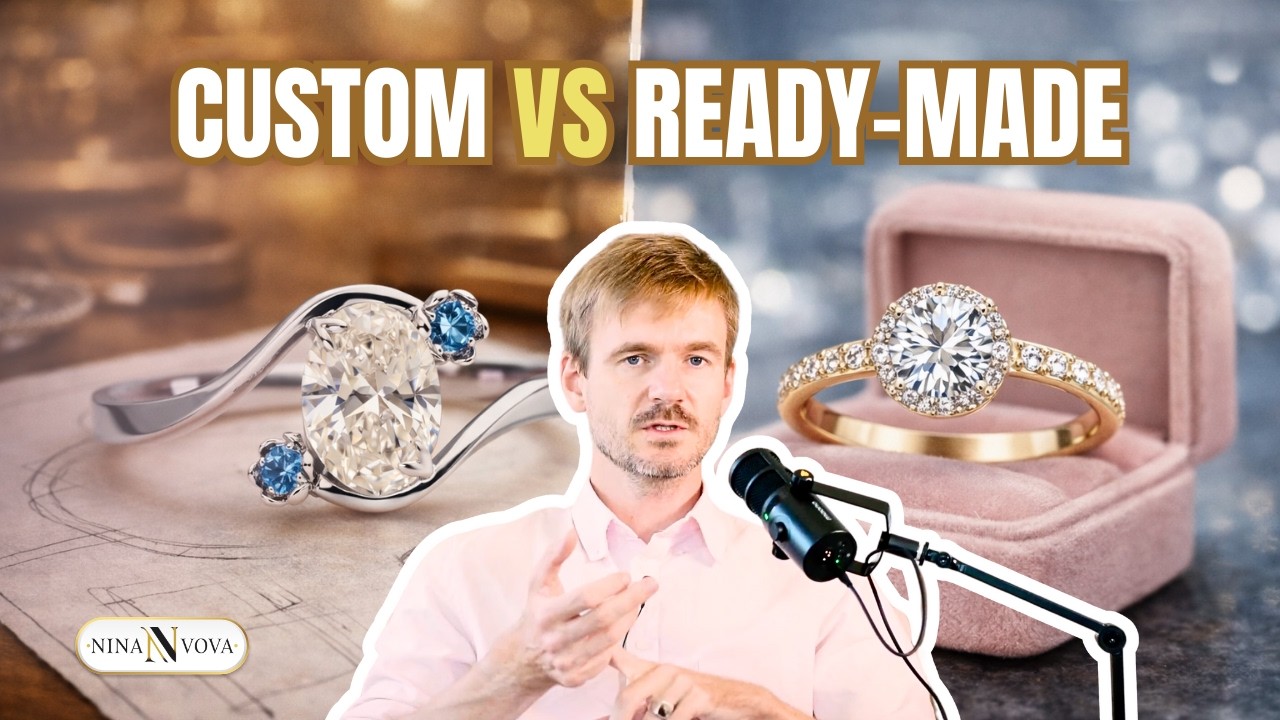
Watch the NinaVova discussion
Watch the original NinaVova video on YouTube.
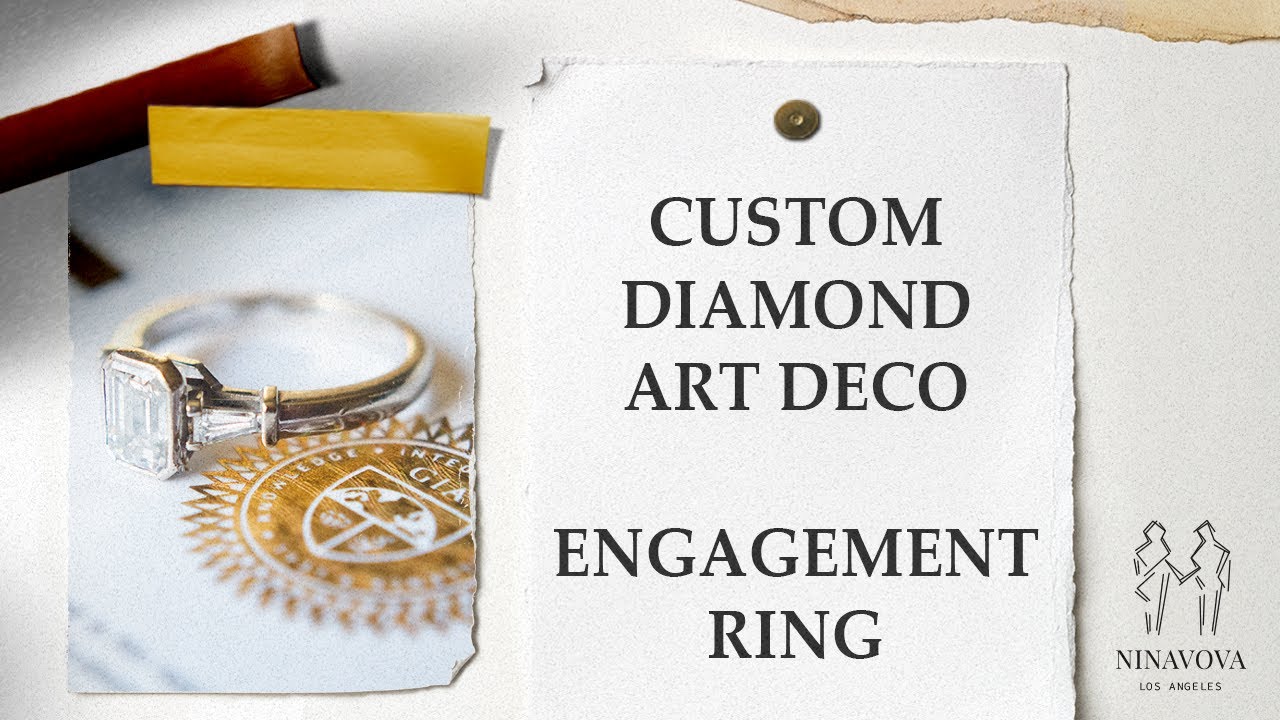
The NinaVova Art Deco ring discussion shows a contemporary project developed around its wearer. It is an individual example rather than a claim that newly made rings are historical antiques.
Art Deco reproduction: compare the complete specification
| Decision | What to compare | Avoid assuming |
|---|---|---|
| Age | New reproduction or original period | Geometry proves a 1920s date |
| Center | Identity, dimensions and condition | An emerald cut is mandatory |
| Detail | Milgrain, openwork and finish | Fine texture proves hand manufacture |
| Fit | Face, profile and neighboring bands | Every design sits flush |
| Price | Complete material and work specification | Reproductions are always cheaper |
| Service | Resizing and repair limits | Any stone swap is straightforward |
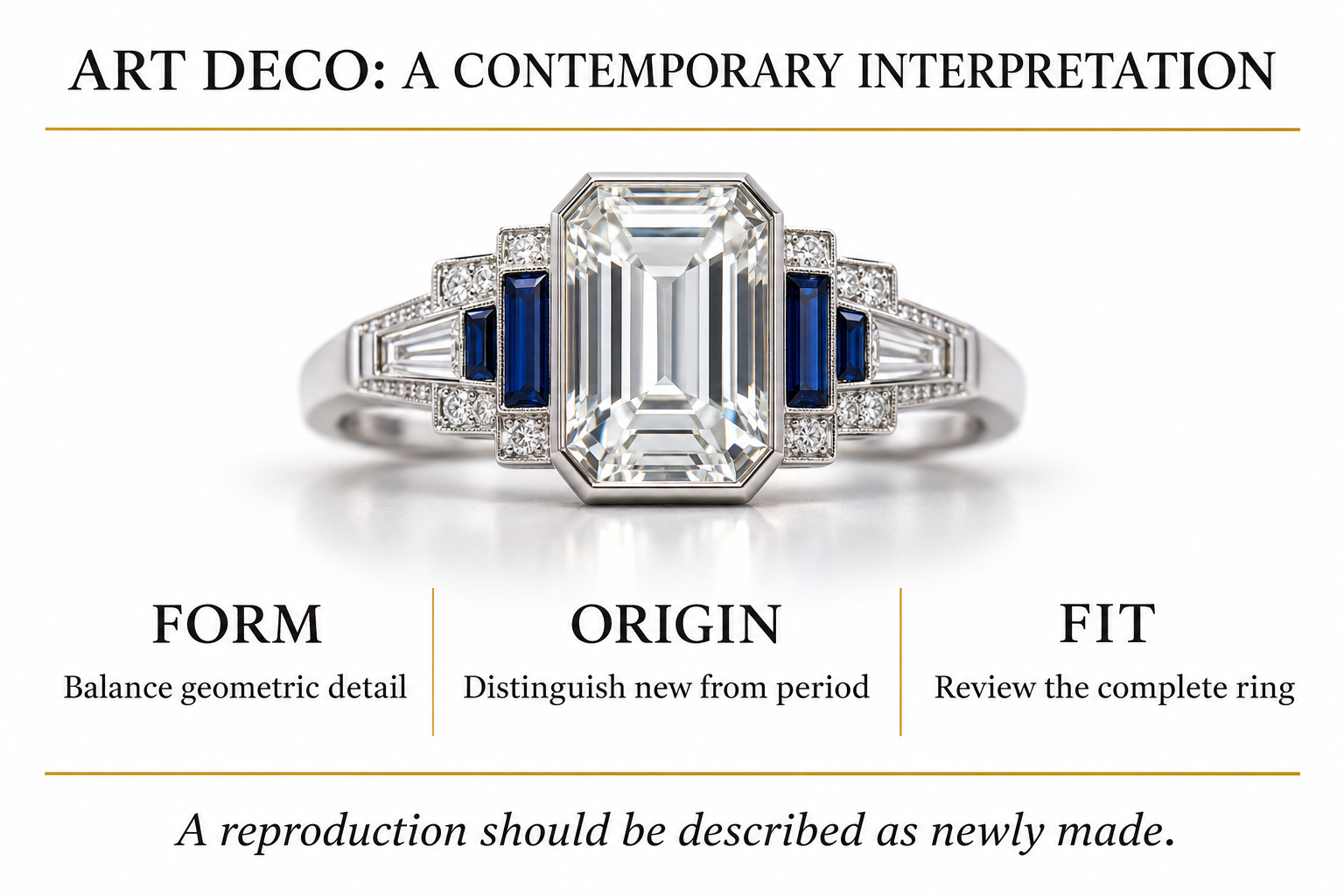
Reproduction, inspired design and original period jewelry
A reproduction recreates an earlier design, while an inspired piece interprets selected features more freely. An original period jewel was made in the claimed historical period.
These terms should not be exchanged merely to make a description sound more impressive. A newly made ring can be attractive and carefully constructed without pretending to be an antique.
If an original period attribution is important, request evidence and condition details. If you want a contemporary commission, establish the references and how closely the design will follow them.
Changing the stone, dimensions or manufacturing method can change both the appearance and practical structure. Confirm what is being reproduced rather than assuming the word guarantees an exact match.

Use geometry as a design tool
Art Deco is associated with geometric organization, contrasts and streamlined forms. The 1925 Paris decorative-arts exhibition was an important moment for the movement, although its development extended beyond that single event.
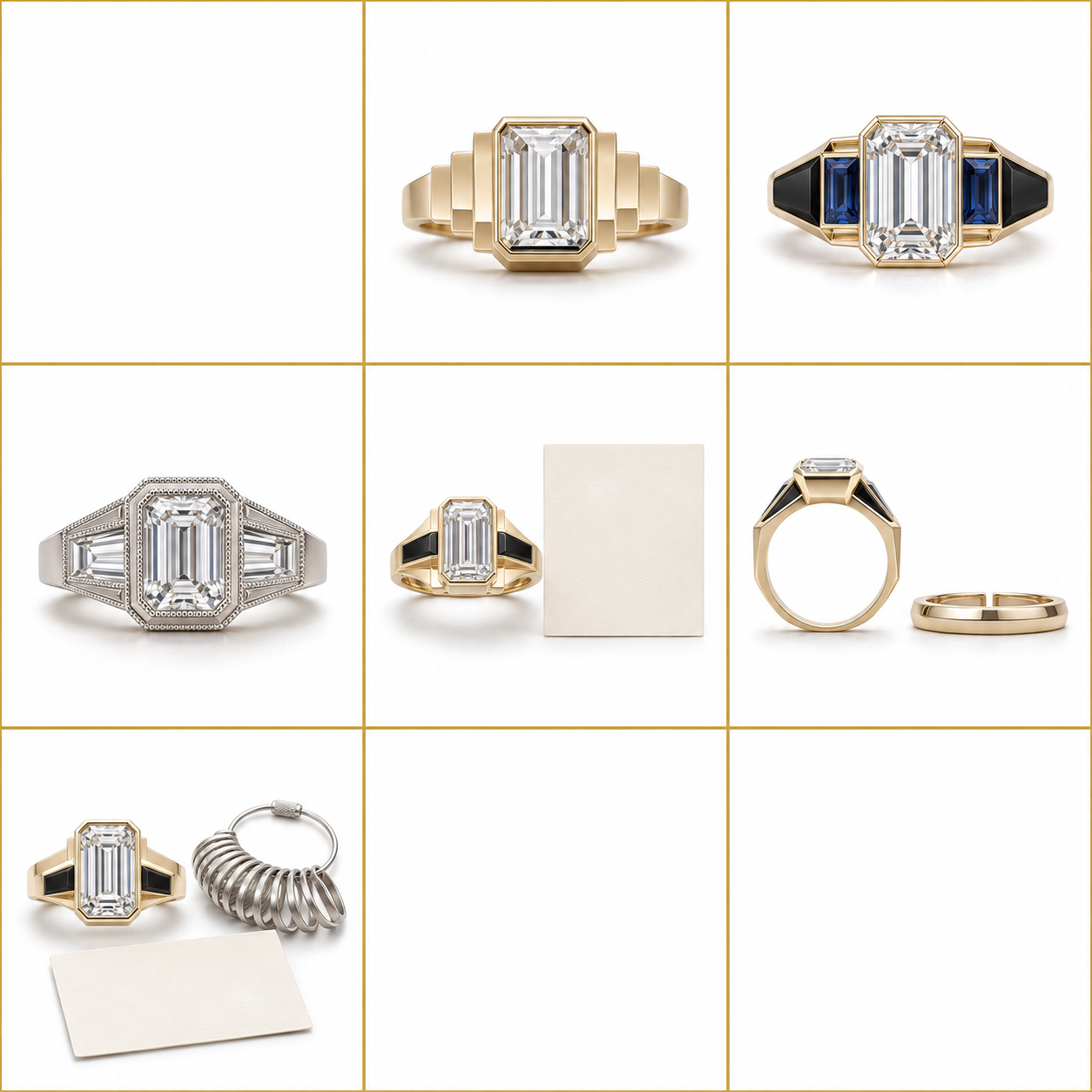
For a ring today, stepped shoulders, balanced shapes or a defined outline can suggest that direction. The composition need not contain every recognizable feature at once.
Look at the complete ring from a realistic viewing distance. Tiny details that dominate an enlarged rendering may be much quieter on the hand.
Geometry should also support the actual center stone and construction. Avoid choosing a fragile proportion solely because it looks precise in a drawing.
Choose stones and color for the actual piece
Diamonds with colored accents, contrasting dark material and arrangements of different shapes can create a geometric composition. Museum examples show that the period was more varied than a single all-white formula.
An emerald-cut center is one option, not a requirement or an authentication test. Evaluate the actual stone’s appearance, dimensions and condition alongside the chosen setting.
Establish whether each gemstone is natural, laboratory-grown or an imitation and ask about relevant treatment. A vintage-inspired appearance does not prove that a stone is untreated or old.
Compare color relationships in suitable lighting and confirm what is included in the quotation. Images of a previous project do not establish availability of a matching gemstone.
Milgrain, filigree and surface detail
Milgrain refers to small beaded detail along an edge; filigree involves delicate wire-based ornament. Neither detail alone proves that a ring is an original Art Deco jewel.
Ask how the proposed details will be made and finished. Delicate texture should remain legible at the actual scale without creating roughness against the skin or neighboring rings.
A polished surface, matte area and openwork can change the way a composition reads. Review these choices alongside the metal alloy and any plating.
Handwork and digital planning can coexist in a modern interpretation. Judge the final execution and the clarity of the specification instead of assuming a production label guarantees quality.
Check age, attribution and condition claims
For original period jewelry, seek a description of the evidence supporting its date, maker and materials. Ask whether any stones, settings or structural sections have been replaced.
A hallmark or signature needs knowledgeable interpretation. A familiar motif or stamped name is not conclusive proof on its own, particularly if the object has been altered.
For a new ring, request a straightforward statement that it is newly made. Contemporary work should not be sold with a fabricated family history or unsupported historical attribution.
Keep the invoice, photographs and material description. If a report or valuation is supplied, understand which question it answers and which claims remain outside its scope.
Comfort, profile and future band clearance
A broad face, long center or pointed outline needs assessment on the intended finger. Width and side profile can affect comfort as much as the front view.
Compare the actual gallery with any planned wedding band. A straight band may leave a gap or contact the setting; a shaped band can be considered when suitable.
Stone corners and small accent settings should have appropriate support. No style name makes a ring immune to impact or guarantees suitability for every activity.
Ask about resizing limits and future repairs before choosing fine patterns or extensive stone coverage. Alteration can affect details, and some constructions offer little flexibility.
Budget and approvals for a newly made ring
Compare complete quotations for the actual materials, dimensions and fabrication, including relevant design work and other applicable charges. A reproduction is not automatically less expensive than an original or another modern ring.
Agree on the stone selection and what a drawing, model or prototype is intended to confirm. A rendering can communicate the plan without reproducing real color and optical behavior exactly.
Review the current delivery and service terms for the specific order. A future alteration or stone swap may require a different setting rather than a simple replacement.
If a reference comes from another maker, discuss a personal interpretation and feasible changes. An original brief can keep the geometric direction while developing its own proportions and details.
Make the geometric reference personal
A favorite architectural line, color pairing or family memory can guide an Art Deco-inspired design. Name the feature you appreciate instead of relying only on the broad label.
At NinaVova, the brief can develop around an actual center stone, the wearer’s preferences and practical dimensions. Earlier projects show individual examples rather than one mandatory formula.
Plan care for all components and arrange condition checks where appropriate. Remove the ring for unsuitable work or impact rather than expecting a geometric setting to protect against every risk.
A contemporary ring can honor an earlier design language while telling a new story. Clear descriptions of age, materials, process and ownership help that story remain accurate.

Frequently asked questions
Is an Art Deco reproduction an antique?
No. A reproduction is newly made; an original period piece needs supporting attribution.
Does milgrain prove age?
No. The detail can also be created on a contemporary ring.
Is a reproduction always more affordable?
No. Compare the actual materials, workmanship and complete price.
Create a geometric design around the wearer
We can develop an architectural reference or color relationship around an actual stone and practical dimensions.
Book a NinaVova consultation or explore our custom design process.
Continue reading: A NinaVova Art Deco project · Custom design process · Art Nouveau style.
Sources and further reading
- V&A: An introduction to Art Deco
- The Metropolitan Museum of Art: A period diamond and emerald bracelet
- GIA: Art Deco, the period and the jewelry
- NinaVova: Current project terms
Confirm the actual materials, condition, evidence and current written terms for the offered ring. Illustrations do not establish identity, provenance, certification or an environmental footprint.