
Fancy-Color Diamonds: Colors, Reports and Choosing Well

Fancy-color diamonds offer a different direction from the familiar colorless center: yellow, pink, blue, green, brown, black and rare red can become the focus of a personal ring. Their appeal depends on the actual color and appearance, while natural or laboratory-grown origin, treatment and appropriate reporting are separate questions to verify.
Choose the actual color and verify its description. Distinguish natural-color diamond, treated-color natural diamond and laboratory-grown diamond. Read the exact report, compare appearance in useful light and avoid treating rarity as a promise of financial return.
At a glance · Color is a feature, not a complete material description · Yellow: warmth with many actual appearances · Pink and red: rarity without a return promise · Blue: inspect the actual hue and evidence
Watch the NinaVova discussion
Watch the original NinaVova video on YouTube.
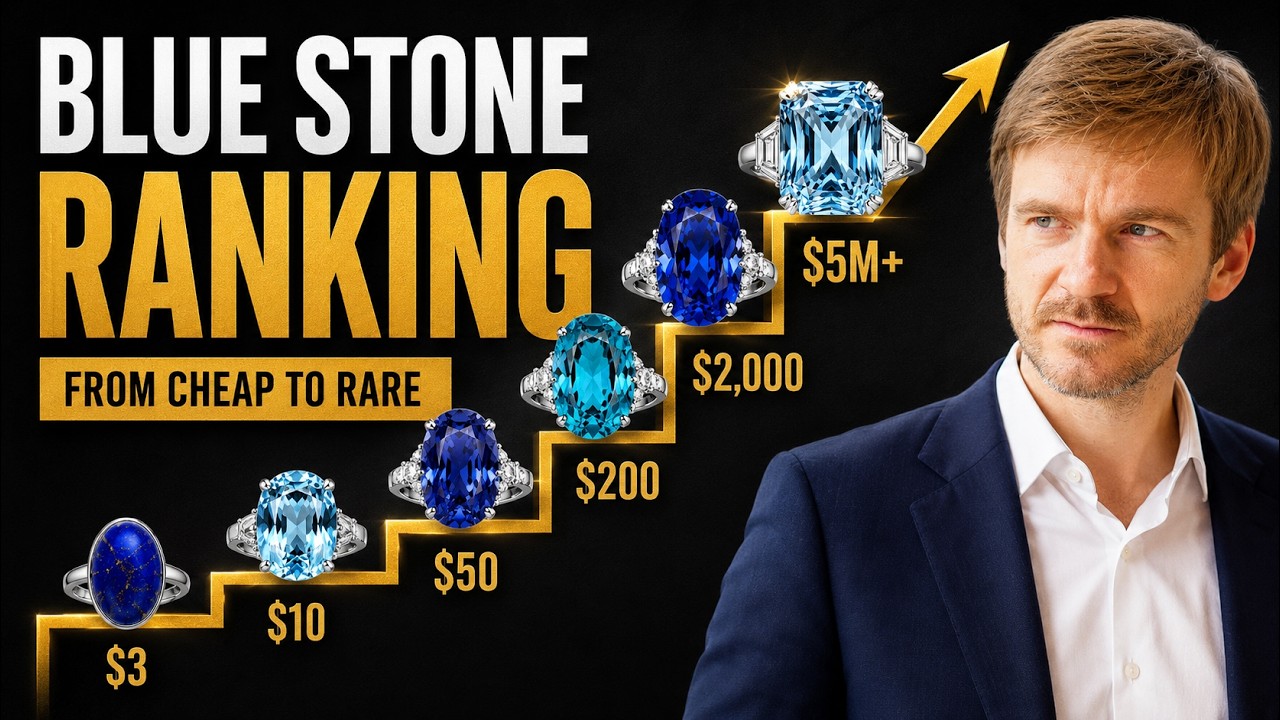
The original NinaVova discussion accompanies this written guide. Follow the written guidance on actual materials, evidence and care. Older thumbnail price examples are not current offers or a valuation of the stone you are considering.
Fancy-color diamond choices
| Question | Look for | Avoid assuming |
|---|---|---|
| Material and growth | Natural or laboratory-grown description | A photograph establishes identity |
| Color origin | Natural, treated or any stated limitation | Green always has a definitive answer |
| Color grade | Actual hue, tone and saturation terms | One linear price ladder |
| Cut | Actual pattern, dimensions and report scope | Every shape has the same effect |
| Setting | View the stone and metal together | One compulsory metal-color pairing |
| Value | Current comparable offers and clear terms | Rarity guarantees investment returns |
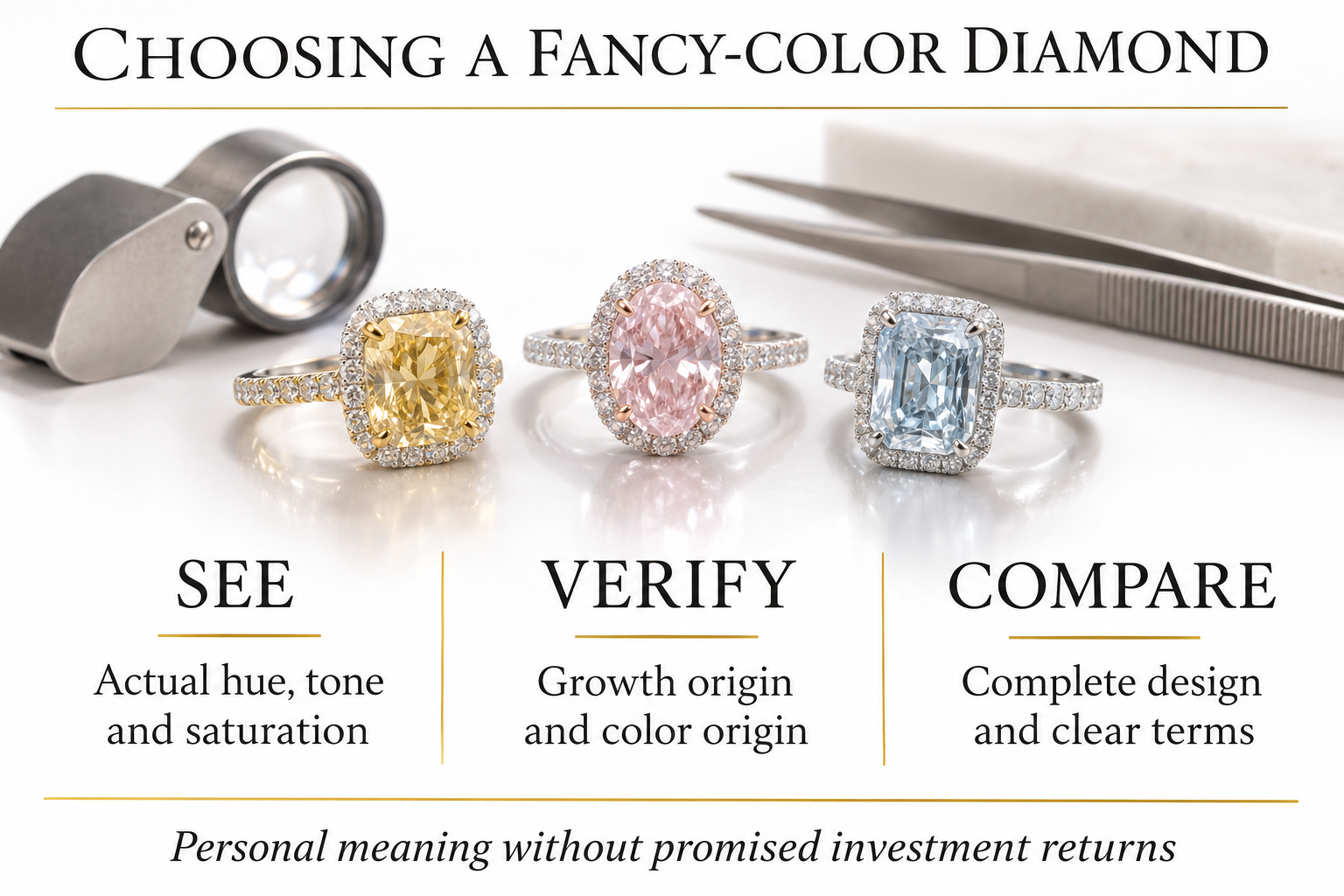
Color is a feature, not a complete material description
Diamonds can show many colors. The familiar D-to-Z scale describes the normal range of colorless through light yellow or brown, while colored-diamond grading describes color outside that range. A fancy-color description should be read in the context of the exact laboratory report.
Natural-color diamond, a natural diamond with treated color and a laboratory-grown colored diamond are different descriptions. They can all be offered in jewelry when accurately disclosed, but their histories, rarity and price comparisons are not interchangeable.
A photograph cannot establish these distinctions. Ask which actual stone is shown and which evidence supports the material, growth origin and color-origin claims.
Yellow: warmth with many actual appearances
Yellow diamonds are associated with nitrogen-related color centers, although the detailed causes and appearance can vary. They range from more delicate impressions to strong color, and should be judged in the actual stone.
A yellow center can suggest warmth or optimism to the wearer. That symbolism is a personal interpretation, not a property assigning a personality. Compare hue modifiers, tone, distribution and the way the stone moves in useful light.
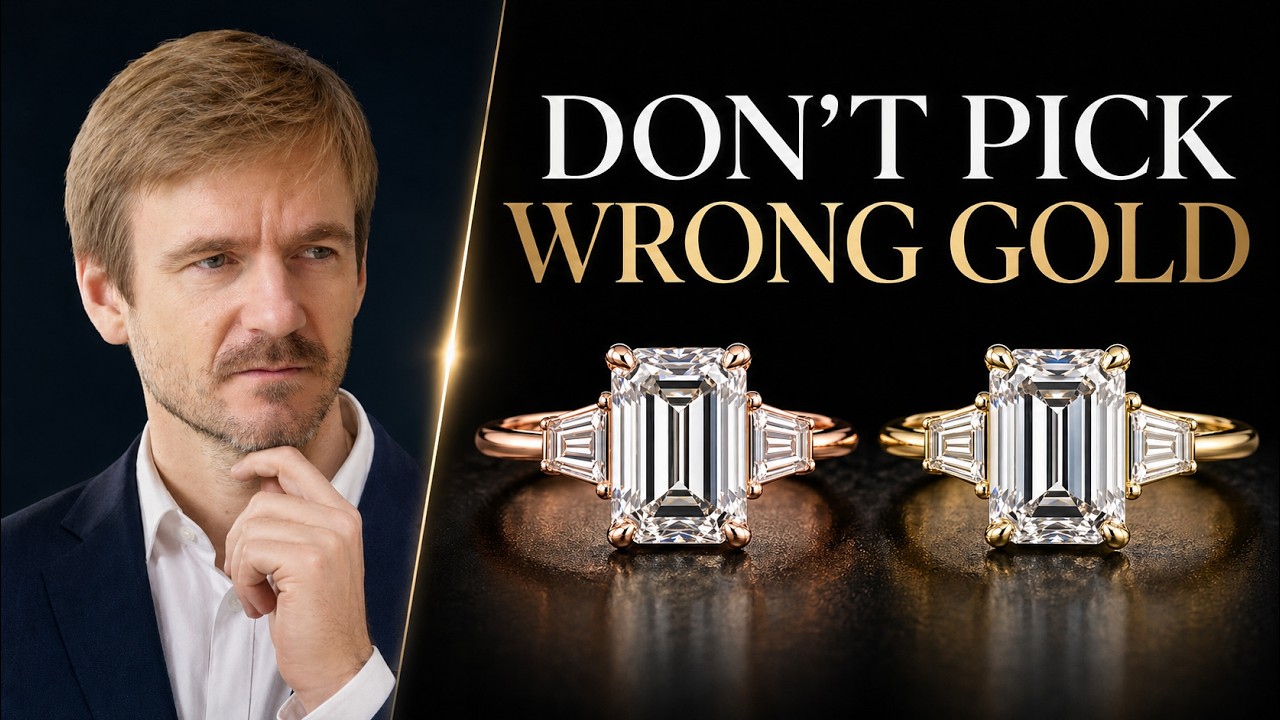
Yellow metal can influence the composition, but it is not a requirement. View the actual center and setting together before deciding which contrast you prefer.

Pink and red: rarity without a return promise
Many natural pink and red diamonds owe their color to features associated with deformation in the crystal lattice. The scientific explanation is more complex than saying every pink or red stone is produced by the same simple distortion.
Pink may feel romantic, and red may suggest intensity, but the meaning belongs to the wearer. Unusual natural colors can be rare and expensive without becoming a guaranteed investment.
Compare the actual report description and candidate. Avoid substituting a celebrity ring estimate or an old auction headline for a current valuation of a different stone. A famous mine or a historic price rise cannot promise future returns.
Blue: inspect the actual hue and evidence
Boron is a familiar cause of blue color in natural diamond, though other causes exist in the broader blue-gray-violet range. A blue photograph does not prove the material is diamond or that the color is natural.
Actual blue diamonds may have modifiers or a more muted appearance than a vivid blue sapphire. Compare the hue and tone you enjoy rather than expecting every diamond of a color name to have the same saturation.
A blue center can work in white, yellow or rose metal according to the design. The most useful decision comes from the actual combination and supported description, not a rule that one metal must accompany one color.
Green: color-origin analysis is especially important
Radiation can create green color in diamond naturally or through treatment. Other color-producing features can also be involved. The fact that a stone is green does not establish its history.
GIA notes that even advanced analysis cannot always determine color origin in green diamonds. Read the laboratory’s actual conclusion and any limits, rather than assuming every report must provide a definitive answer.
Green may suggest renewal or a connection to nature. Keep that meaning separate from the evidence needed to compare a natural-color claim, a treated-color stone or a laboratory-grown alternative.
Brown and black: distinct characters and disclosure needs
Brown diamonds can offer warm champagne-like or deeper colors. Marketing words such as champagne and cognac describe an impression rather than replacing the actual laboratory color description.
Brown color can have several causes, including features associated with deformation. Price depends on the actual stone and market comparison, so a brown label alone does not guarantee a bargain.
Black diamonds can obtain their appearance from dark inclusions and related features, or from treatment. They do not show light in the same way as a transparent colorless center. Ask about the actual material, treatment and condition rather than assuming every black diamond is simply a transparent diamond containing graphite.
Understand hue, tone and saturation
Hue describes the color and any modifiers. Tone concerns relative lightness or darkness. Saturation describes color strength. These interact to create the face-up appearance and the terminology used by the laboratory.
GIA’s colored-diamond terminology includes Faint, Very Light, Light, Fancy Light, Fancy, Fancy Intense, Fancy Vivid, Fancy Deep and Fancy Dark where applicable. These names should not be presented as a single price ladder on which every later term is more valuable than every earlier one.
A modifier can affect rarity and demand, but personal preference still matters. Two stones sharing a broad label may look different. Review the actual grade, face-up pattern and color distribution rather than trying to assign a report grade from a generated chart.
Read the report’s exact scope
A full colored-diamond grading report can include color grade, color origin, clarity, weight and finish information within its service. A color-only identification-and-origin report provides a different scope. Confirm which one accompanies the stone.
In colored-diamond reporting, color origin concerns whether the color is natural or treated. It should not be confused with a geographic-origin service based on matching a polished diamond to documented rough.
Do not assume a full report provides the same overall cut grade as a standard round brilliant. Read the particular service and any supplemental assessment. Verify the document with its issuer and arrange an appropriate physical match to the actual stone.
Cut, size and setting affect what you see
Cutting can influence color concentration and light behavior. Radiant and other mixed-cut styles can intensify the face-up color of some yellow material, but an outline does not guarantee the same effect in every stone.
Carat weight is mass, not a promise of color strength or visible size. A larger diamond is not automatically richer in color than a smaller one with the same broad grade. Compare actual dimensions, pattern, transparency and movement.
A setting can highlight or modify the visual composition. Ask for a realistic view of the actual stone with the proposed metal and accents, including whether nearby white stones create a contrast you enjoy.
Also review vulnerable points, construction, comfort and care. An appealing color does not remove the need to assess inclusions, condition and the practical requirements of the complete ring.
Compare value, alternatives and complete terms
Color, rarity, dimensions, condition, documentation and demand all affect actual offers. A dated quotation for a particular stone is more useful than a fixed price-per-carat claim applied to every red, pink or blue diamond.
Laboratory-grown colored diamonds or treated-color natural diamonds can be alternatives when clearly described. They should not be promised identical appearance, a universal discount or the same rarity as natural-color stones.
Ask about the exact treatment where applicable and what it means for care or repair. Compare the complete project cost, relevant analysis, setting and written service terms before committing.
Choose the actual color and design that fit your preferences and comfortable budget. A ring can have lasting personal meaning without a promise that its resale value will grow.

Frequently asked questions
Does a colored-diamond origin report always identify a country?
Color-origin reporting concerns natural versus treated color. Geographic-origin services are a separate question.
Is Fancy Dark always more valuable than Fancy Vivid?
No. These terms describe interacting color characteristics, not one universal price ladder.
Does a larger stone always show a richer color?
No. Actual cutting, color distribution and the particular diamond matter. Compare real candidates.
Plan a ring around the color you love
Bring the color direction, actual stone questions and complete budget that matter to you. We can discuss evidence, setting options and practical service needs.
Book a NinaVova consultation or explore our custom design process.
Continue reading: Diamond light patterns and fancy shapes · Diamond report verification · Natural diamond buying considerations.
Sources and further reading
- NinaVova: Fancy-color diamond guide
- GIA: Fancy-color quality factors
- GIA: Colored-diamond grading terminology
- GIA: Report products and color-origin distinctions
- GIA: Pink, red and brown color research
- GIA: Causes of diamond color, 2015
- GIA: Black-diamond color and treatment
Based on NinaVova’s original writing, with supporting references below. Ask for current details about the actual stone, treatment, complete design and service terms.