

Bezel Engagement Rings: Coverage, Comfort and Care

A bezel setting holds a gemstone with a rim of metal around all or part of its edge. The rim can give a ring a defined outline and reduce exposure in some areas, but it does not make the stone impact-proof or guarantee a snag-free, maintenance-free ring. Assess the actual stone, coverage, support and complete profile.
Judge the complete ring, not the rim alone. A bezel frames and secures all or part of a gemstone’s edge. The actual coverage, material, condition and construction determine suitability; the setting does not make the ring impact-proof.
At a glance · Understand the rim and the actual construction · Compare full and partial coverage · Evaluate appearance without a simple light-entry rule · Choose gemstones with identity and condition clear
Watch the NinaVova discussion
Watch the original NinaVova video on YouTube.
The NinaVova ring-anatomy discussion is a related companion for understanding setting and gallery structure. This guide focuses specifically on bezel coverage, comfort and care.
Bezel settings: decisions to review
| Decision | What varies | What to check |
|---|---|---|
| Coverage | Full or partial rim | Which edges and points remain exposed |
| Appearance | Metal frame and visible outline | Actual stone viewed realistically |
| Gemstone | Material, treatment and condition | Suitable setting and care |
| Profile | Gallery, height and underside | Comfort and cleaning access |
| Band fit | Clearance and contact | Rubbing and sizing |
| Service | Rim and replacement feasibility | Written repair and alteration terms |
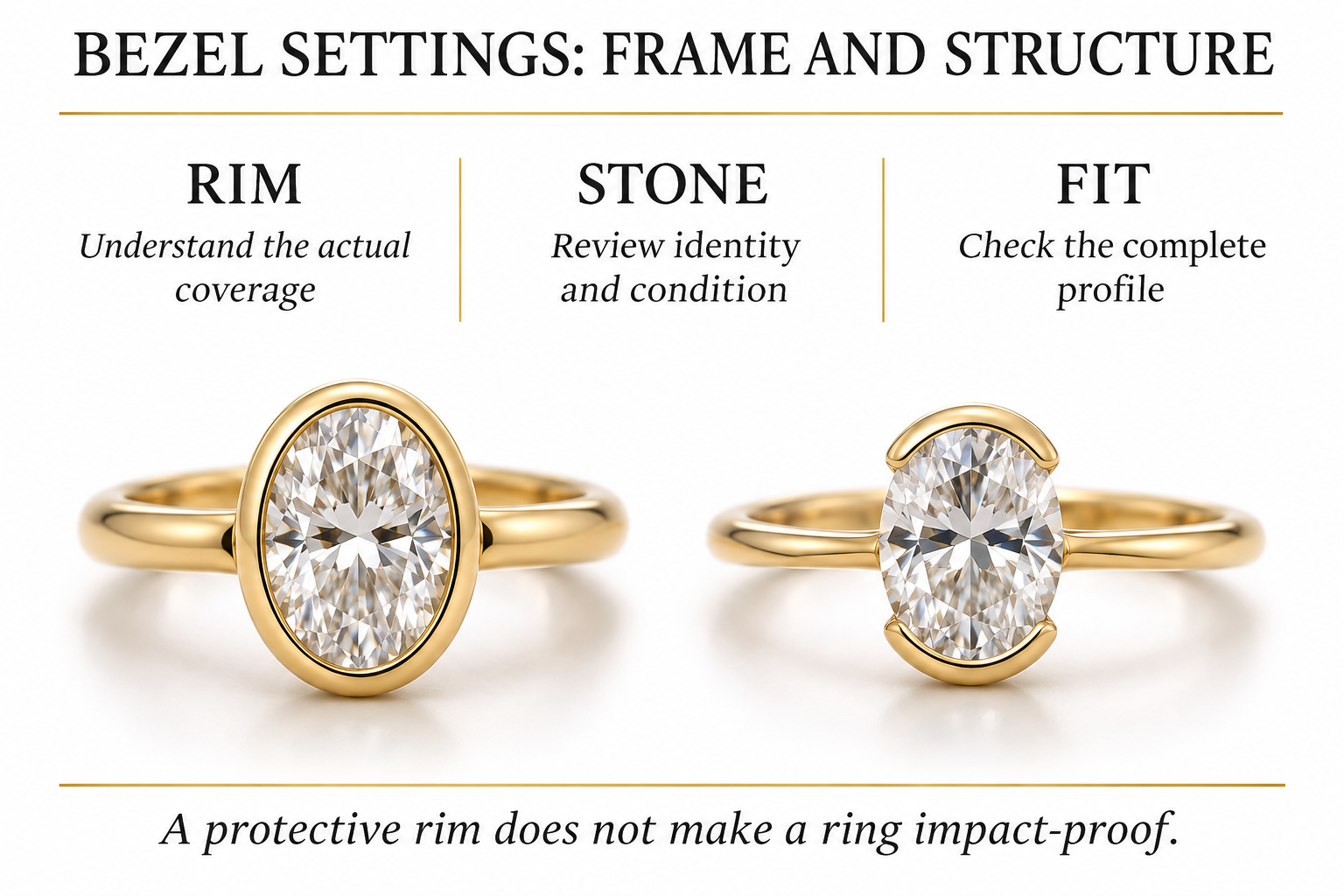
Understand the rim and the actual construction
A bezel is a way of securing a stone, not a single visual style. It can appear in restrained contemporary designs, sculptural pieces and historically inspired jewelry.
The rim must suit the stone’s dimensions and condition. A thin-looking edge in a rendering is not enough to establish secure construction.
Look at the top, side and underside of the actual design. The height and gallery affect appearance, comfort and access for cleaning.
Choose the overall result rather than assuming every bezel is low, heavy or completely enclosed underneath. Those details vary between rings.

Compare full and partial coverage
A full bezel surrounds the stone’s edge, while partial versions leave selected areas more open. Ask which sections are covered and how the stone is retained.
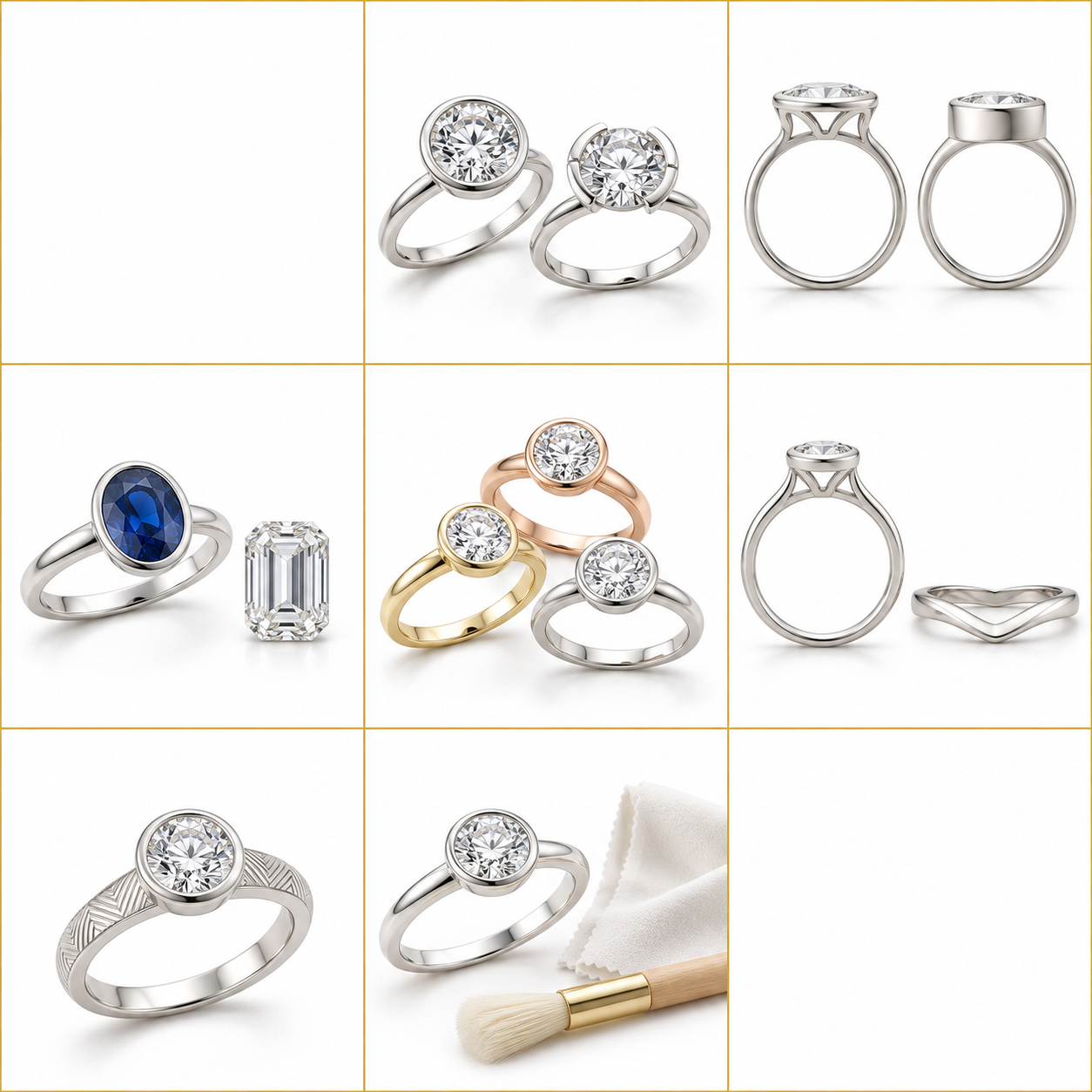
The coverage can change the outline and the amount of visible metal. Neither version should be selected solely from a broad promise about brightness or protection.
For a pointed or angular stone, review the vulnerable areas explicitly. A partial frame does not protect an exposed point merely because another part of the stone is enclosed.
The suitable approach depends on the material, condition, proportions and intended wear. Different coverage is a design and construction decision, not a universal quality ranking.
Evaluate appearance without a simple light-entry rule
A metal rim can emphasize an outline and change the visual relationship between stone and metal. Some wearers like the defined frame; others prefer a more open presentation.
Brightness depends on the actual gemstone, cutting, setting and viewing conditions. It is too broad to promise that every bezel increases sparkle or that every prong setting must look brighter.
Compare realistic views of the actual stone and proposed ring. A rendering can communicate structure without exactly reproducing optical behavior.
Also consider the apparent size of the complete face separately from the stone’s own dimensions and weight. Surrounding metal does not add gemstone carat weight.
Choose gemstones with identity and condition clear
Diamond, sapphire, emerald and other materials have different damage and care considerations. A bezel does not transfer diamond’s properties to a more vulnerable stone.
Establish gemstone identity, natural or laboratory-grown status and relevant treatment. A setting photograph cannot provide that information.
An included, treated or already damaged stone may need particular handling during setting and future service. Discuss feasibility before approving a design around it.
Sourcing and environmental claims remain separate questions. Neither a bezel nor laboratory manufacture automatically establishes an ethical or impact-free finished ring.
Compare actual alloys and metal colors
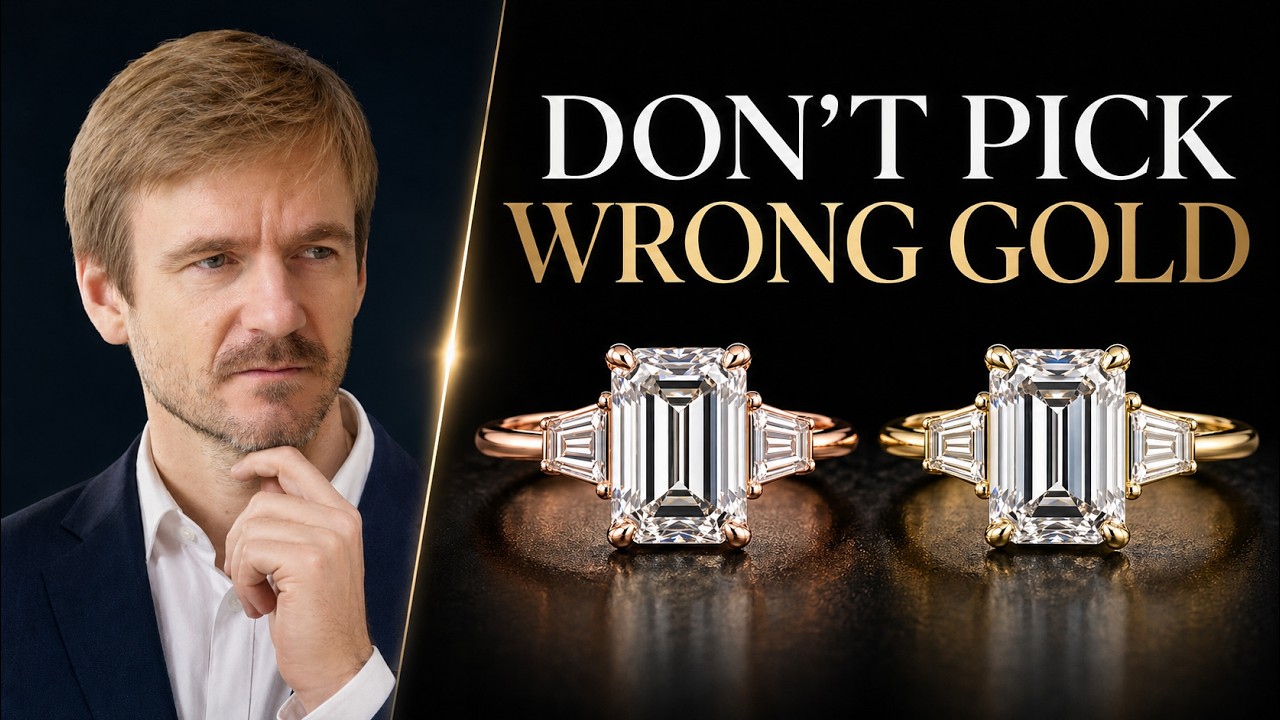
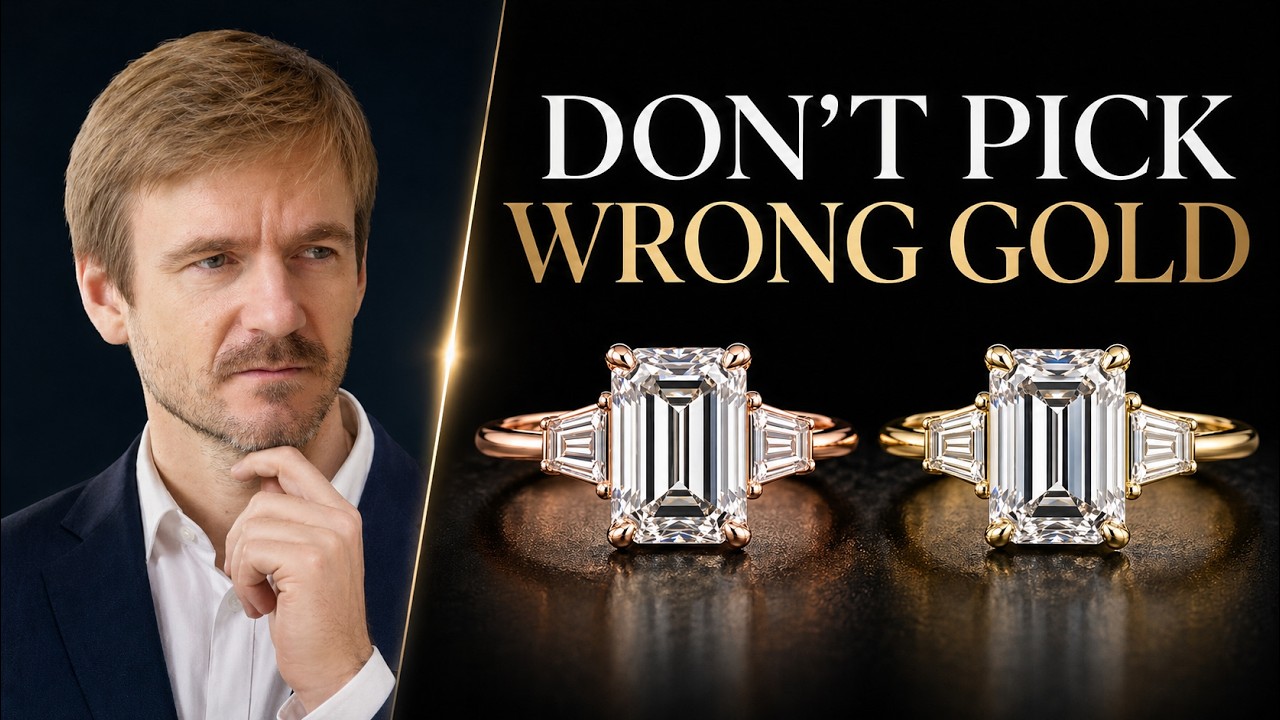
Yellow, rose and white metal colors can frame the stone differently. Review the actual alloy, finish and any plating alongside the chosen gemstone.
A heavier or denser metal does not by itself guarantee the most suitable construction. Material properties, dimensions and execution need to be considered together.
For known sensitivities, ask about relevant alloy components rather than accepting a promise that every precious-metal ring suits all skin.
Mixed-metal details may be possible when feasible, but they introduce their own service questions. Agree on a clear specification rather than relying only on color in a drawing.
Check profile, comfort and neighboring rings
A smooth rim can reduce some catching, but the entire ring still needs inspection for rough edges, raised details and comfortable contact with neighboring fingers.
Compare the intended band width and interior profile when measuring size. The stone and rim can create a broad face even where the shank is narrow.
If a wedding band will sit beside it, check actual clearance and likely rubbing. A low gallery may leave a gap or call for a shaped band.
No protective-looking ring should be treated as suitable for every task. Remove jewelry for impact, machinery and other work where wearing it is inappropriate.
Personalize within the structural and service limits
An engraved detail, contrasting surface or subtle accent can make a bezel design personal. Confirm there is adequate space and structure for the intended feature.
Changing the stone later may require a different rim or substantial work. A bezel made for one gemstone should not be assumed to accept any similar-looking replacement.
Resizing can be limited by stone coverage, patterns and the amount of adjustment needed. Ask about the actual design before ordering.
For an heirloom stone, establish what can safely be reused and document its condition. A personal connection does not remove material vulnerabilities.
Plan cleaning, inspections and repairs
Use care appropriate to all components and any treatment. A method suitable for the metal may be unsuitable for the gemstone or an assembled detail.
Discuss access for gentle cleaning around and beneath the setting. Residue can affect appearance without indicating a problem in the stone itself.
If the rim becomes distorted, an edge catches or the stone moves, stop wearing the ring and arrange inspection. Do not try to tighten it with household tools.
Periodic checks support maintenance without guaranteeing that damage or stone loss can never occur. Keep the material and service records for future work.
Compare the complete bezel-set ring
Compare actual design, stone, metal, dimensions and included service when assessing price. A bezel is not automatically cheaper or more expensive than a prong setting.
At NinaVova, the wearer’s preferences and actual gemstone can guide the proposed coverage, profile and band relationship. Feasibility should be confirmed for the particular project.
Review the current quotation, approvals, delivery and service conditions in writing. Earlier photographs demonstrate individual projects rather than a universal construction formula.
A good bezel choice brings together a defined outline, suitable support, comfortable proportions and realistic care. The rim is part of that complete design.
Frequently asked questions
Is a bezel completely damage-proof?
No. Material vulnerabilities and unsuitable impact still matter.
Is every bezel setting low profile?
No. The stone, gallery and construction determine the actual height.
Can any similar-sized stone replace the original?
No. The rim is made for particular dimensions and may need substantial work.
Develop a bezel around the actual gemstone
We can review coverage, profile and a practical band relationship, then confirm the construction and service considerations for your project.
Book a NinaVova consultation or explore our custom design process.
Continue reading: Low-profile settings · Pear-shaped rings · Design consultation.
Sources and further reading
- GIA: Guide to ring settings
- GIA: Gemstone durability and design
- GIA: Protecting a diamond engagement ring
Confirm the actual materials, condition, evidence and current written terms for the offered ring. Illustrations do not establish identity, provenance, certification or an environmental footprint.