
Pear-Shaped Engagement Rings: Proportions, Settings and Care

A pear-shaped engagement ring combines a rounded end with a pointed tip. Its outline can be broad or slender, and the same shape name can describe gemstones with different faceting and care needs. Compare the actual stone in motion, protect the point appropriately and review the finished profile and fit before choosing.
Compare the actual outline and protect the point appropriately. A pear can be broad or slender, and carat weight does not fix its visible size. View the actual stone in motion, confirm the material and condition, and review support, profile and fit.
At a glance · Choose the pear outline the wearer enjoys · Compare proportions and actual measurements · View light patterns and bow-tie contrast in motion · Protect the tip and assess the actual condition
Watch the NinaVova discussion
Watch the original NinaVova video on YouTube.
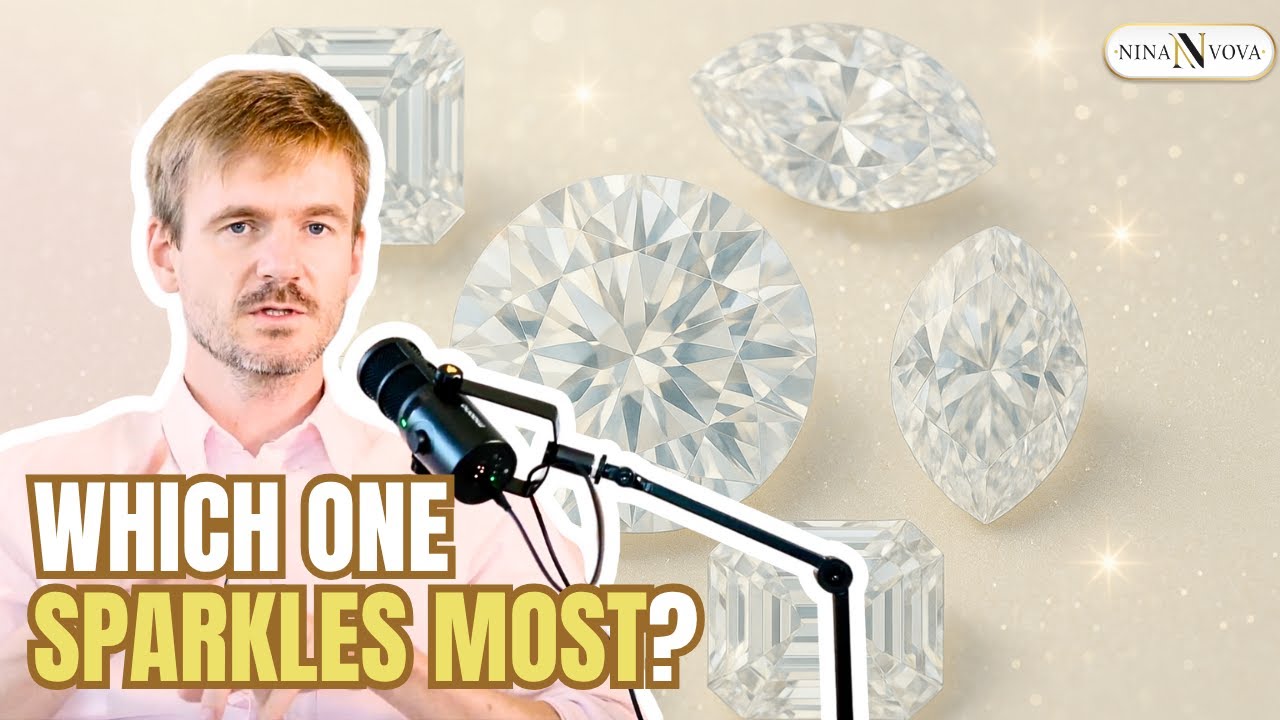
The NinaVova diamond-shape sparkle comparison is a related companion for viewing patterns in motion. This written guide focuses on the pear outline, tip protection and complete ring.
Pear-shaped rings: a practical selection checklist
| Decision | Compare | Confirm |
|---|---|---|
| Outline | Broad or slender proportions | Actual measurements and balance |
| Light pattern | Moving views in ordinary light | Contrast you enjoy |
| Point | Condition and nearby inclusions | Appropriate setting protection |
| Material | Diamond or another gemstone | Identity, treatments and care |
| Orientation | Point direction or sideways design | Comfort and composition |
| Band relationship | Gallery and clearance | Sizing, rubbing and alteration limits |
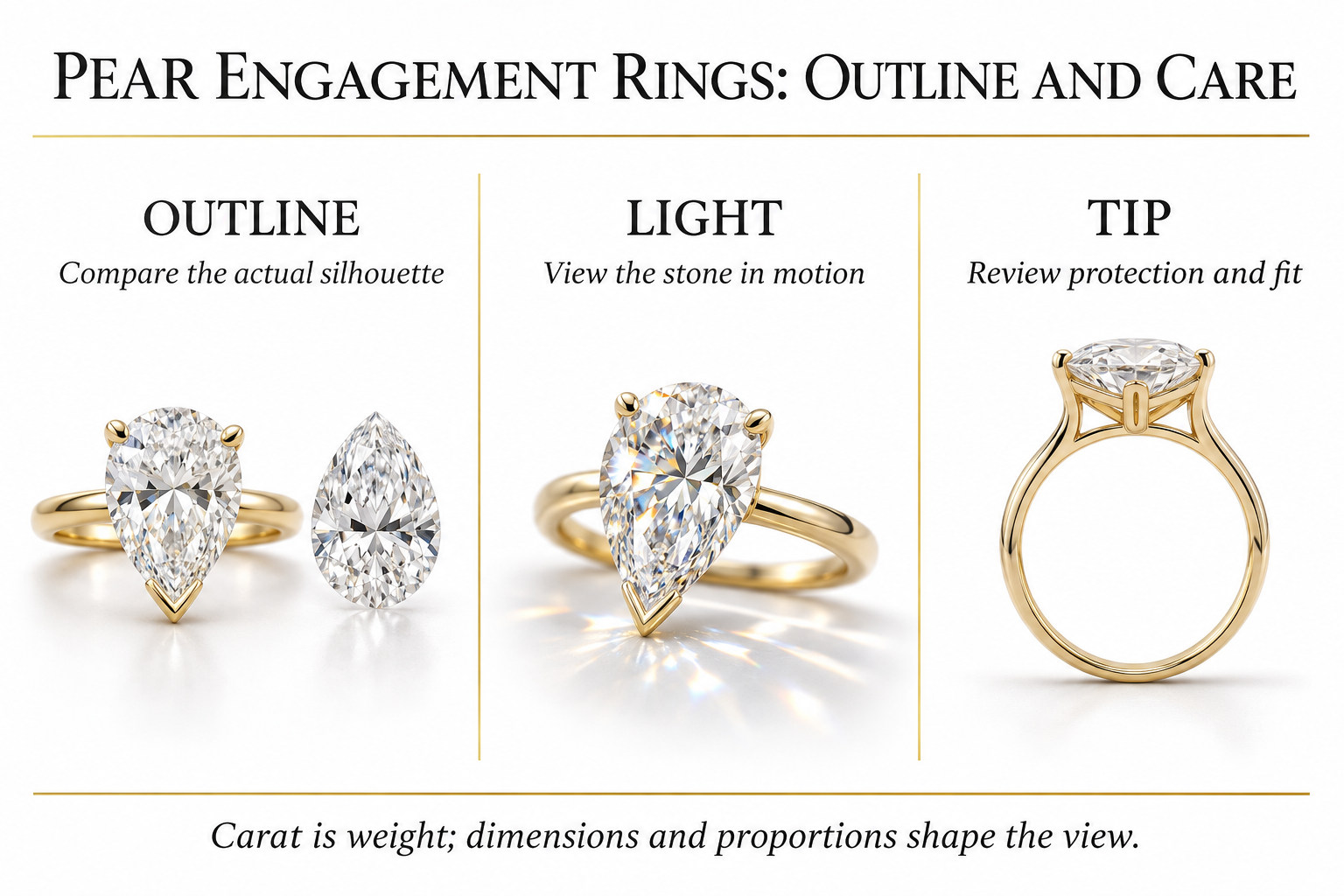
Choose the pear outline the wearer enjoys
A pear shape can be the central feature of a restrained solitaire or part of a more decorative composition. It does not carry one compulsory romantic meaning.
A droplet, leaf or other personal association may guide the story, but the wearer need not accept a universal symbol chart or personality label.
Although the rounded end and tip differ, the two sides of a conventional pear outline are usually considered for visual balance. An intentional unusual silhouette should be explained as a design choice.
Choose from the actual stones and realistic dimensions. A photograph of a celebrity’s ring is inspiration rather than proof of specifications or value.

Compare proportions and actual measurements
Length-to-width ratio helps describe whether the outline is broad or slender, but there is no single compulsory ratio for every attractive pear.
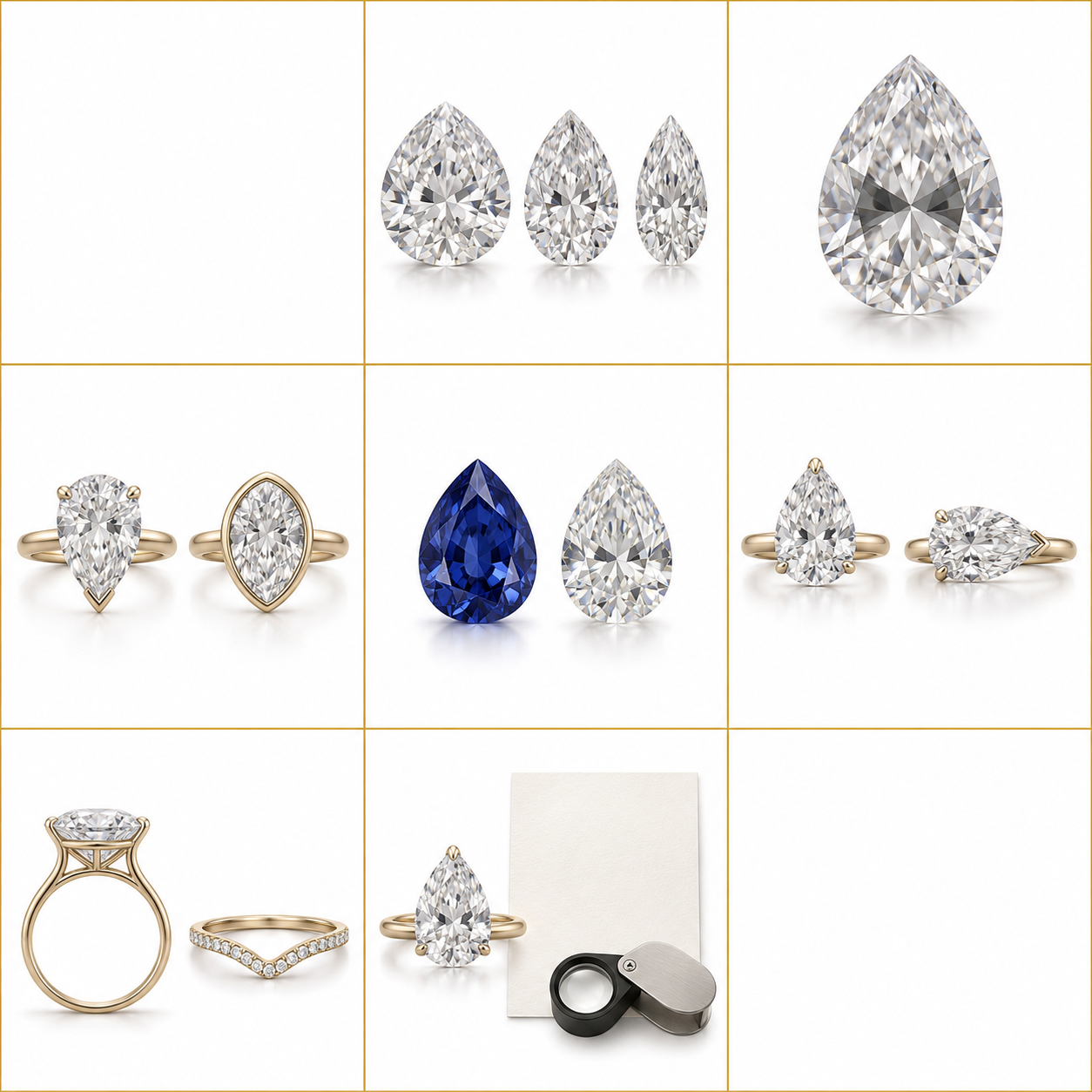
Look at the shoulders, rounded end, tip and balance of the sides. Small outline differences can change the appearance even where ratios are similar.
Carat describes weight rather than a fixed visual size. Compare measurements, depth and the proposed setting when judging presence on the hand.
A large enlarged photograph can exaggerate details, so a realistic scale reference is useful. The comfortable choice need not be the longest or heaviest stone.
View light patterns and bow-tie contrast in motion
A pear-shaped diamond can show areas of contrast, including a central pattern commonly described as a bow tie. Evaluate how noticeable it is in the actual stone.
Use movement and more than one ordinary lighting condition rather than judging a single dramatic still. A video should be useful for comparison, not a promise that every view will look the same.
Faceting style and execution influence the pattern of brightness and contrast. Shape name and polish alone do not provide a complete account of the appearance.
Choose the pattern you enjoy after comparison. Avoid a blanket claim that every dark area is a defect or that one numerical proportion guarantees an ideal result.
Protect the tip and assess the actual condition
The pointed end deserves particular attention to condition and support. Ask how the proposed setting protects it and whether any inclusion or damage near the tip needs consideration.
A suitable V-shaped prong or a bezel may be considered, depending on the actual stone and design. The label alone does not establish correct execution.
Diamond resists scratching well but can still chip. A protective setting does not make the finished ring immune to knocks or unsuitable use.
Remove the ring for heavy work and impact, and arrange inspection after damage or if a setting catches or moves. Do not attempt to tighten settings yourself.
Distinguish diamond from other pear-shaped gems
Pear describes an outline, not a material. Sapphire, ruby, emerald, opal and other gemstones can be fashioned into pear-shaped pieces with very different properties.
Establish identity, natural or laboratory-grown status and relevant treatments. A clear or colored appearance alone cannot supply those facts.
A colored stone should be assessed with its own quality and care considerations rather than forcing every diamond grading category onto it unchanged.
If a report is provided, read its actual scope and verify relevant details through the issuer. A setting style does not certify the gemstone it holds.
Consider orientation and the complete composition
The point can face toward the fingertip, toward the hand or in another direction within a suitable design. There is no required orientation for meaning or correct wear.
A sideways arrangement changes the overall silhouette and may affect width, contact and band pairing. Review those practical details alongside the visual idea.
Halos and side stones can extend the face or introduce contrast. Separate the center’s weight and dimensions from the complete arrangement.
Choose metal color with the actual stone and wearer’s preferences in mind. No design can guarantee a particular slimming effect or universal flattering result.
Check profile, sizing and wedding-band fit
The stone’s actual depth and support affect the ring height and underside. A front image does not show whether the gallery suits a planned wedding band.
Compare contact points and the combined width of the pieces. A curved band, shaped partner or deliberate gap can be part of a comfortable plan.
Measure for the intended band width and interior profile, and check smooth transitions beside neighboring fingers.
Ask about resizing before choosing extensive stone coverage or complex decoration. Being a gold or platinum ring does not mean every design can be altered without limits.
Compare complete price, reports and care
Compare the actual stone, dimensions, quality descriptions and setting work rather than assuming a pear is always cheaper or appears larger than every other shape.
A report can provide valuable information within its scope, while the appearance still deserves a moving assessment. A marketing cut label should be explained.
Use care appropriate to the material and any treatment. Advice for a diamond cannot automatically be applied to an opal or included emerald with the same outline.
Review current delivery, return, repair and alteration terms before ordering. A purchase should not rely on guaranteed future resale or a promise of an exact matching replacement.
Make the actual pear the starting point for design
At NinaVova, the chosen stone can guide tip protection, proportions, orientation and a comfortable band relationship. Earlier project images show individual solutions.
Keep the gemstone description, final dimensions, alloy and approvals in writing. A rendering communicates the plan without perfectly reproducing real optical behavior.
The ring can carry a personal association with a droplet or another reference without making a claim about luck or an inevitable relationship outcome.
A considered pear-shaped ring brings together an outline the wearer enjoys, a suitable actual stone, thoughtful support and clear care expectations.

Frequently asked questions
Is there one ideal length-to-width ratio?
No. Compare the actual outline, proportions and your preference.
Must the tip point toward the fingertip?
No. Orientation is a design choice with practical fit considerations.
Does a pear outline prove the stone is diamond?
No. Pear describes the outline, not the gemstone material.
Start the design with a particular pear
We can develop proportions, point protection and a comfortable band relationship around the actual gemstone and the wearer’s preferences.
Book a NinaVova consultation or explore our custom design process.
Continue reading: Bezel settings · Halo and hidden halo · Design consultation.
Sources and further reading
- GIA: Choosing a pear-shaped diamond
- GIA: Protecting a diamond engagement ring
- GIA: Guide to ring settings
Confirm the actual materials, condition, evidence and current written terms for the offered ring. Illustrations do not establish identity, provenance, certification or an environmental footprint.