
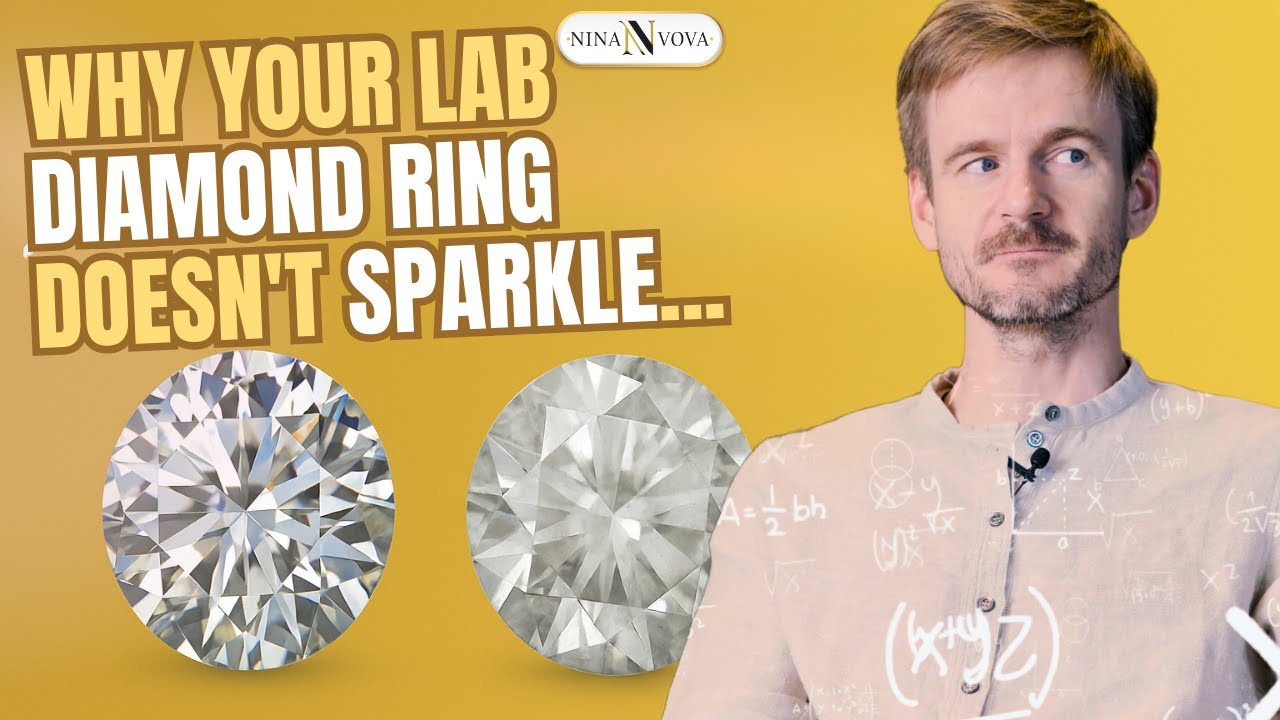
Lab-Grown Diamonds and Sustainability: Evidence Behind the Claims

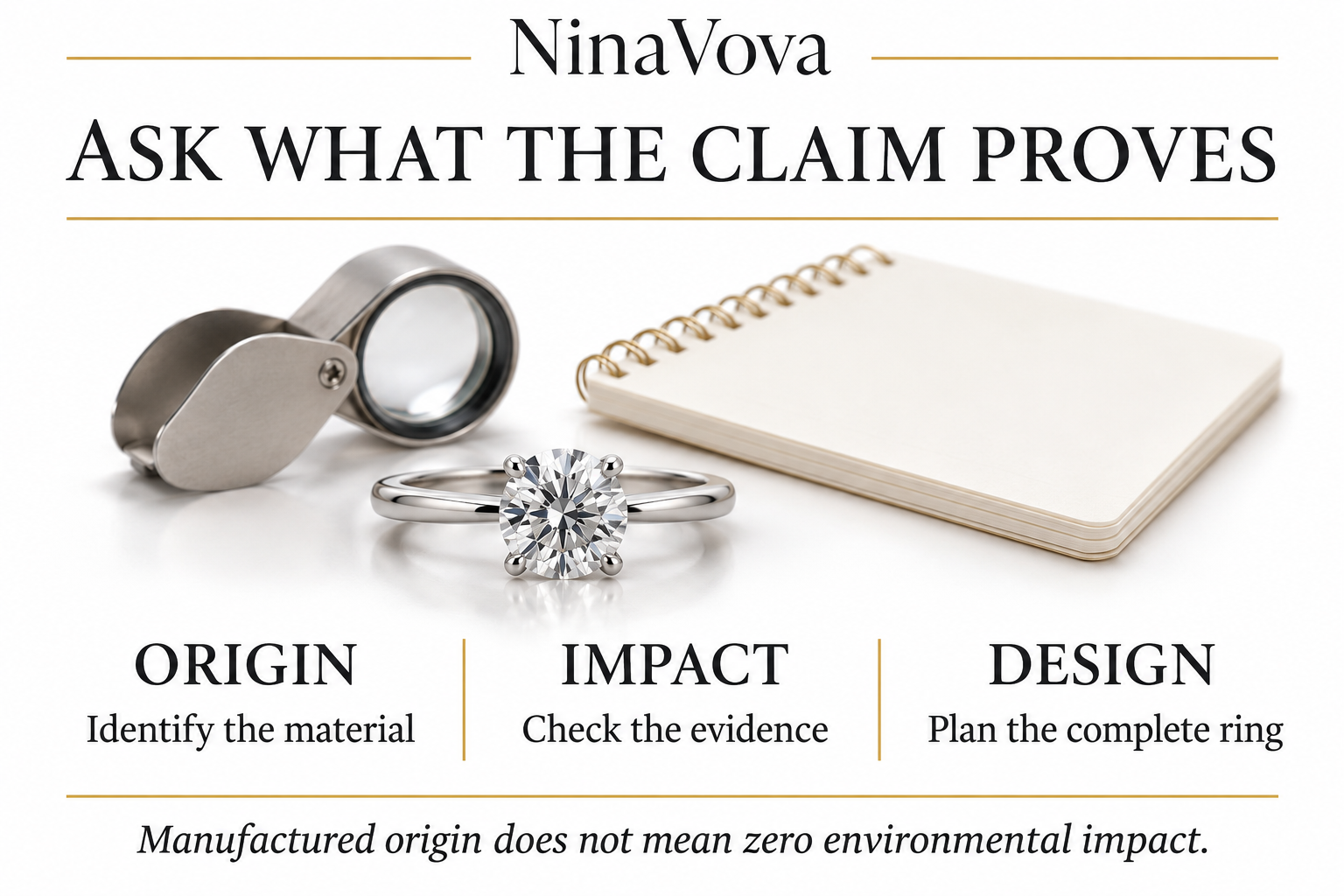
Laboratory-grown diamonds are diamond with a manufactured origin. They can offer useful price and design choices, but their origin alone does not establish zero environmental impact or universally ethical production. Evaluate the individual stone, the producer’s evidence and the complete ring before treating an attractive sustainability claim as a fact.
Manufactured origin alone does not establish an environmental result. Ask about the actual producer, study boundaries, energy, labor safeguards and documentation. Compare the stone and complete ring without zero-impact or universal ethics promises.
At a glance · What laboratory-grown diamond means · Appearance, cut and quality still vary · Identification uses more than a single trace-element rule · Mining impacts and manufacturing impacts are different
Watch the NinaVova discussion
Watch the original NinaVova video on YouTube.
Related NinaVova laboratory-grown diamond questions provide buying context. Environmental and supply-chain claims require the specific evidence discussed in this written guide.
Sustainability claims: ask for the supporting evidence
| Claim | Useful question | Avoid assuming |
|---|---|---|
| Laboratory-grown | What is the disclosed origin? | Zero total impact |
| Lower carbon | Which producer, date and boundaries? | Unrelated studies are comparable |
| Renewable energy | What supply or accounting is documented? | No other impacts |
| Ethical production | What labor due diligence is performed? | Origin proves all conditions |
| Recycled metal | What proportion and supporting records? | Every component is recycled |
| Long-term use | How is the ring built and serviced? | A label guarantees durability |
What laboratory-grown diamond means
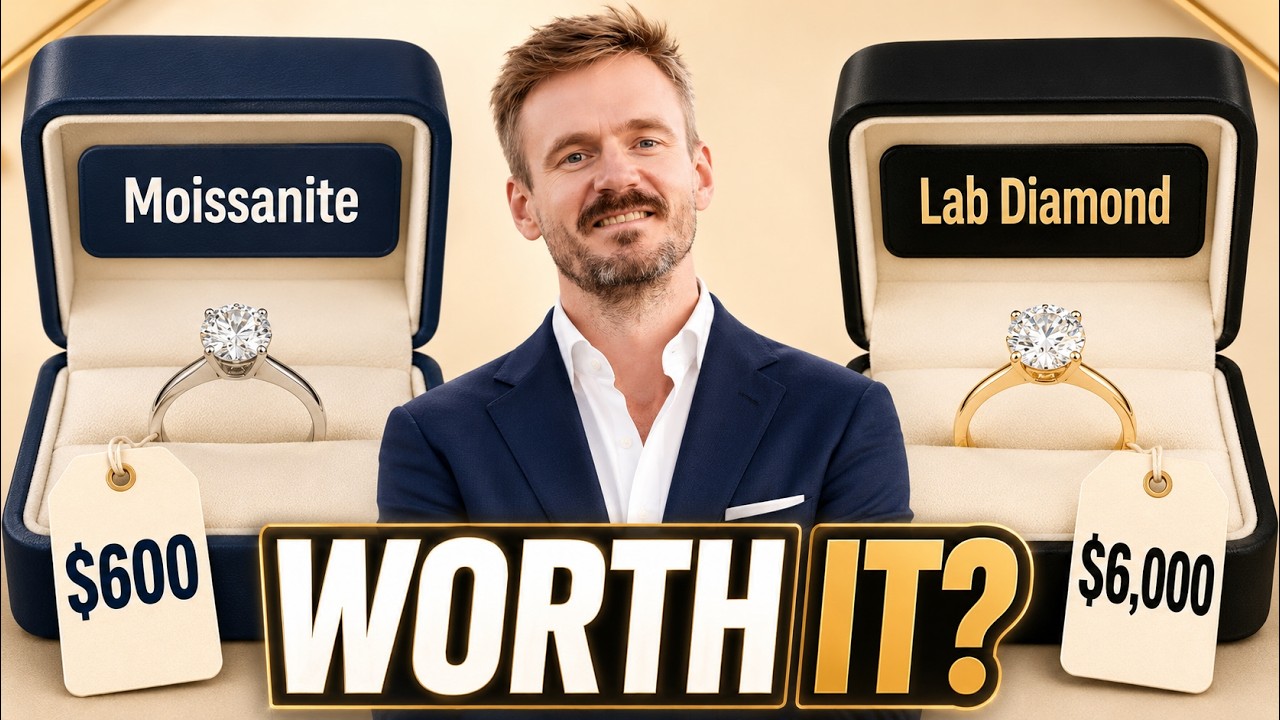
Laboratory-grown diamonds have the essential diamond crystal structure and material properties. They are different from diamond simulants such as moissanite or cubic zirconia.
HPHT and CVD are two technological growth routes. High-pressure, high-temperature growth and chemical vapor deposition create diamond under different controlled conditions.
Growth history distinguishes these diamonds from naturally formed material. Natural origin and manufactured origin should both be clearly disclosed rather than hidden behind vague alternative terminology.
You can choose either origin according to preference and priorities. A laboratory-grown diamond does not need an unsupported environmental promise to be an attractive material in its own right.

Appearance, cut and quality still vary
Laboratory-grown and natural diamonds can look alike, but each category includes stones with different color, clarity, cut and condition. The origin is not a universal beauty grade.
Assess the actual light pattern, transparency, polish and proportions. A precisely cut stone can be beautiful, while manufactured origin does not guarantee every available example is ideally cut.
Mohs hardness 10 describes high resistance to scratching, not immunity to chips or fractures. Suitable construction and wearing precautions remain important for either diamond origin.
Use actual views and relevant documentation. A promotional photograph or perfect-looking render cannot establish the characteristics of the stone that will be delivered.
Identification uses more than a single trace-element rule
Growth features, inclusions and spectroscopic evidence can help laboratories identify manufactured diamond. The relevant features vary with growth method, treatment and the individual stone.
It is inaccurate to say nitrogen is absent from all or nearly all laboratory-grown diamonds. Nitrogen-related and other defects can occur in manufactured material as well as natural diamonds.
Fluorescence, metallic inclusions or other observations may be useful in an appropriate examination. Their presence or absence is not a universal home test.
A suitable laboratory can combine methods and explain what its report establishes. A simple thermal diamond response does not determine natural versus laboratory-grown origin.
Mining impacts and manufacturing impacts are different
Mining can affect land, water, habitats, energy use and communities. The scale and management of those impacts vary by operation, location and time.
Growing a diamond avoids mining that particular diamond from a deposit, but manufacturing still uses equipment, energy and supply-chain inputs. Cutting, polishing, transport and the setting add further stages.
An environmental comparison should identify which stages and outcomes are included. Carbon emissions, water demand, land disturbance and labor safeguards are different measures.
It is misleading to treat every mine as identical or every producer as impact-free. Ask for evidence that matches the actual producer and the claim being made.
Ask about energy, boundaries and the date of evidence
If a lower-carbon claim matters, ask what data supports it, when it was collected and what activities it includes. A growth-stage number is not automatically a complete finished-ring footprint.
Location and energy supply can affect results. Renewable electricity claims should be explained, including whether they concern actual supply, certificates or another arrangement.
Comparisons should use a meaningful consistent basis and state their assumptions. Two numbers from unrelated studies can be misleading when system boundaries or methods differ.
An offset or carbon-neutral statement is also a specific claim requiring explanation. Do not assume it proves that production generated no emissions or that every other environmental concern has been addressed.
Ethical production requires supply-chain information
Manufactured origin does not independently establish fair pay, safe conditions or the absence of labor risks. Those questions apply to growing, cutting, polishing and other relevant work.
Ask which producer and suppliers are involved, what due diligence is performed and what records are available for the actual offer. Country information alone may not establish a complete history.
A business certification can provide useful evidence within its scope, but membership, certification and product-specific chain of custody are different things.
A clear statement about what is known and what remains unverified is more useful than an unconditional guilt-free guarantee. Do not infer that every natural diamond is unethical or every manufactured diamond is ethical.
Price and market context: use current quotations
Laboratory-grown diamonds often occupy a different retail price context from comparable natural diamonds. Exact differences depend on the actual stone, seller, date and complete design.
Obtain current written quotations rather than relying on an old percentage or a broad claim about what younger buyers prefer. Market conditions and available products change.
A lower center-stone cost may allow a different size, metal choice or setting brief. It does not guarantee that every finished laboratory-grown diamond ring is cheaper than every natural-diamond ring.
Neither retail price nor a reported market trend guarantees resale value. Choose the appearance and ownership experience you want with realistic financial expectations.
Recycled metal and reuse are separate design choices
A laboratory-grown diamond can be combined with newly refined or recycled metal, while a natural diamond can be reused in a new setting. The origin of the center does not dictate the history of the band.
Ask what recycled content means for the actual alloy and what records support the claim. Refining and fabrication still involve processes and inputs.
Using an existing stone or repairing a suitable ring can also be considered. Condition, dimensions, construction and treatment may limit what can safely be reused.
Organic or unusual materials are not automatically a better choice for an engagement ring. Their suitability, maintenance and eventual repair or replacement need individual consideration.
Consider the complete ring and its service life
A thoughtful ring combines the stone with sound construction, comfortable proportions and a realistic maintenance plan. A sustainability label does not compensate for weak prongs or inadequate support.
Ask whether the design can be resized and repaired, how wear will be assessed and what current written warranty terms actually cover. No ring should be promised to need no service.
A design the wearer continues to enjoy may support long use, while personal taste cannot be reduced to one universally timeless style. Simple and elaborate rings can both be considered choices.
Remove jewelry for unsuitable activities and follow care instructions for all components. The hardest center does not determine the vulnerability of every accent, finish or setting.
Make specific, documented choices
Before approval, confirm the center’s identity and origin, actual quality, available report, metal, construction, fit and complete current quotation. Keep any environmental or social claim with its supporting information.
At NinaVova, bring your sourcing and design priorities into the consultation. Ask what evidence is available for the actual candidates and what cannot presently be established.
Laboratory-grown diamonds can broaden the options for a personal ring. Choosing them with clear information respects both the material and the buyer, without promising an environmental result that has not been demonstrated.

Frequently asked questions
Is every lab-grown diamond environmentally impact-free?
No. Evaluate the actual producer and the boundaries and evidence behind the claim.
Does laboratory growth prove ethical labor conditions?
No. Labor and supply-chain practices need their own evidence.
Will a lab-grown diamond guarantee a financial return?
No. Obtain current quotations and keep realistic expectations about resale.
Bring evidence and design priorities together
We can compare actual diamonds and complete ring designs, explaining which sourcing information is available and which claims remain unverified.
Book a NinaVova consultation or explore our custom design process.
Continue reading: Ethical sourcing questions · Laboratory-grown diamond buying guide · Mining, communities and carbon.
Sources and further reading
- GIA: Laboratory-grown diamond properties and identification
- FTC: Environmental claims and certification scope
- Responsible Jewellery Council: Chain-of-custody scope
- GIA: Natural versus laboratory-grown diamond
Confirm the actual materials, condition, evidence and current written terms for the offered ring. Illustrations do not establish identity, provenance, certification or an environmental footprint.