Skip to navigation Skip to main content
  • Design Process
    • Create a Custom Engagement Ring for Your Partner
    • Design an Engagement Ring Together
    • Create Your Own Custom Engagement Ring
    • Success Stories
  • Ring Gallery
  • Diamonds
    • Natural diamonds
    • Lab-grown diamonds
    • Round
    • Oval
    • Cushion
    • Emerald
    • Pear
    • Radiant
  • Gemstones
    • Sapphire
    • Ruby
    • Emerald
    • Spinel
    • Aquamarine
    • Tourmaline
    • Tanzanite
    • Morganite
NinaVova
  • EDUCATION
  • NinaVova Reviews
  • Book Consultation
0 items / $0.00
Menu
NinaVova home
0 items

Engagement Ring Guides

Home/Engagement Ring Guide
Engagement Ring Guide

Alexandrite Engagement Rings: Natural Stones, Color Change and Design

Posted by author-avatar Sergey Degtyarenko
06.11.2026
On 27.06.2021
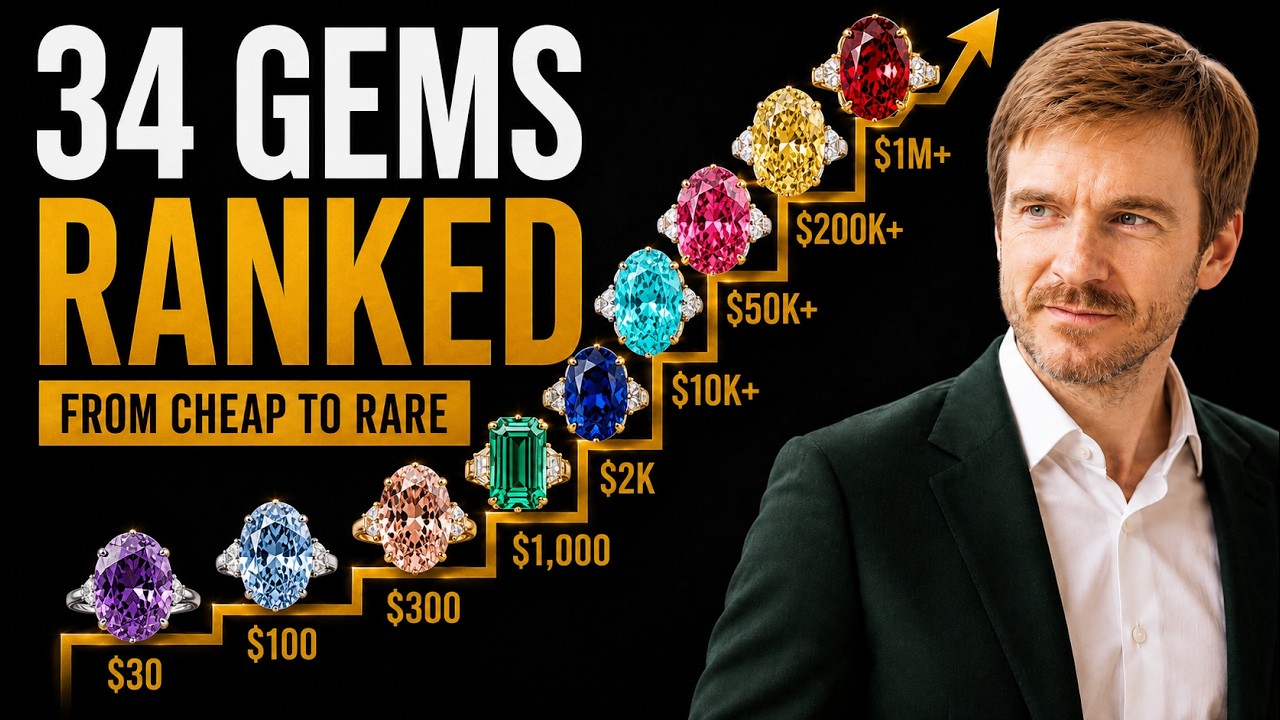
Original NinaVova video thumbnail: I Ranked 33 Gemstones for Engagement Rings—Here's What I Found

By Sergey Degtyarenko, founder of NinaVova

An alexandrite engagement ring can appeal through the changing appearance of one stone under different lighting. The important starting point is accurate identity: alexandrite is a color-change variety of chrysoberyl, not a trade name for every color-changing gem. Compare the actual change, natural or laboratory-grown status, condition and documentation before planning the ring.

The short answer

Confirm identity, then compare the actual change and complete design. Alexandrite is color-change chrysoberyl. Similar effects occur in other materials, so use accurate documentation and stated lighting rather than appearance or price alone.

At a glance · Begin with chrysoberyl identity and the wearer’s preference · Compare the actual color change under stated lights · Read the identification report within its scope · Compare natural and laboratory-grown choices honestly

Watch the NinaVova discussion

youtube placeholder image

Watch the original NinaVova video on YouTube.

The NinaVova gemstone-ranking discussion is a related companion for comparing material and wearing priorities. This guide focuses on natural alexandrite candidates, identity and complete ring design; the laboratory-created guide linked below covers that category in more detail.

Alexandrite rings: questions before design approval

A color-changing appearance is not a complete identification.
DecisionReviewConfirm
IdentityChrysoberyl or another materialPrecise description
Growth originNatural or laboratory-grownAppropriate report scope
Color changeSame stone in stated lightsRealistic viewing expectations
ConditionTransparency, inclusions and dimensionsSuitable construction
DesignMetal, accents and band relationshipCare for all components
OrderActual availability and quoteWritten approvals and service
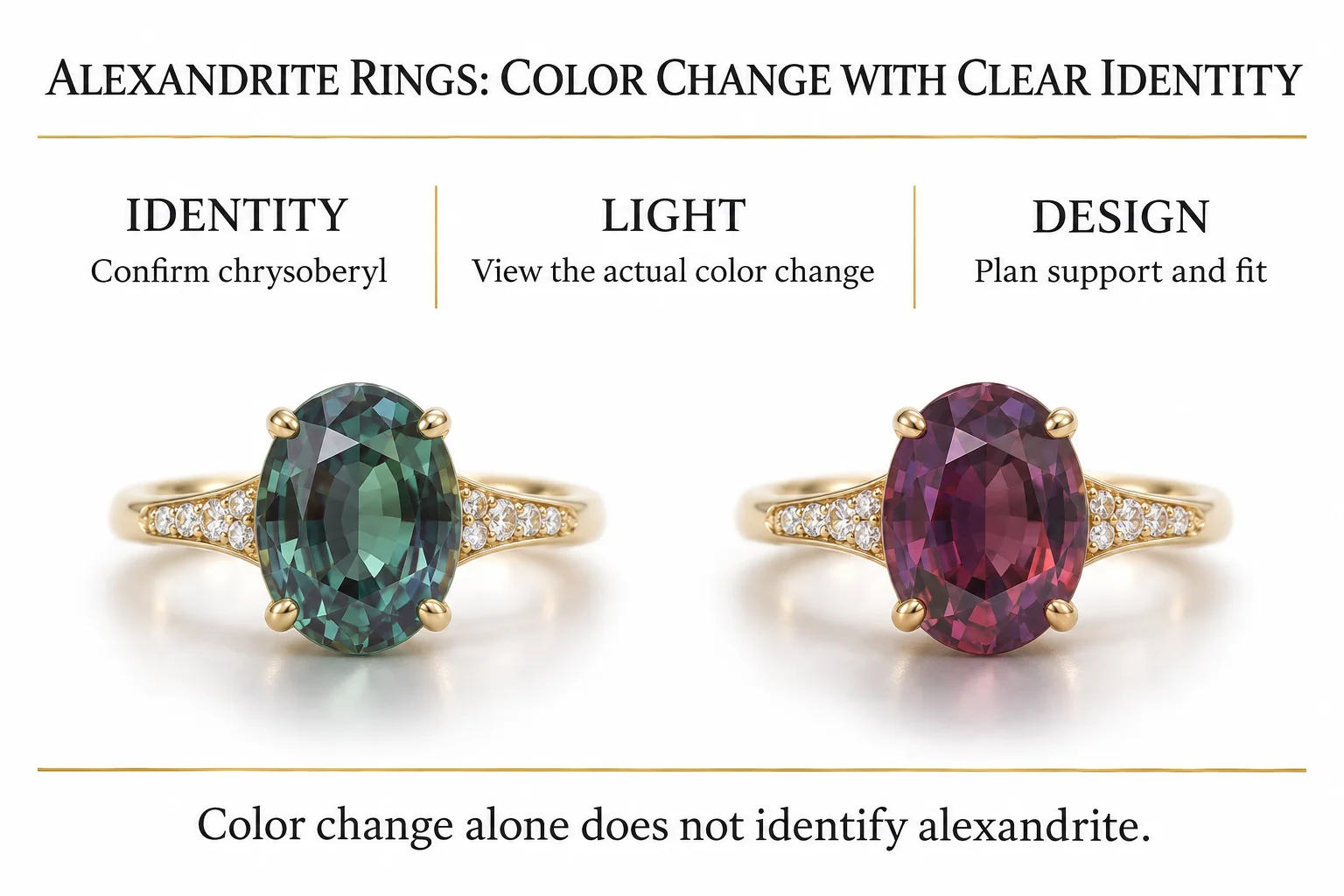
NinaVova overview: Alexandrite Engagement Rings: Natural Stones, Color Change and Design
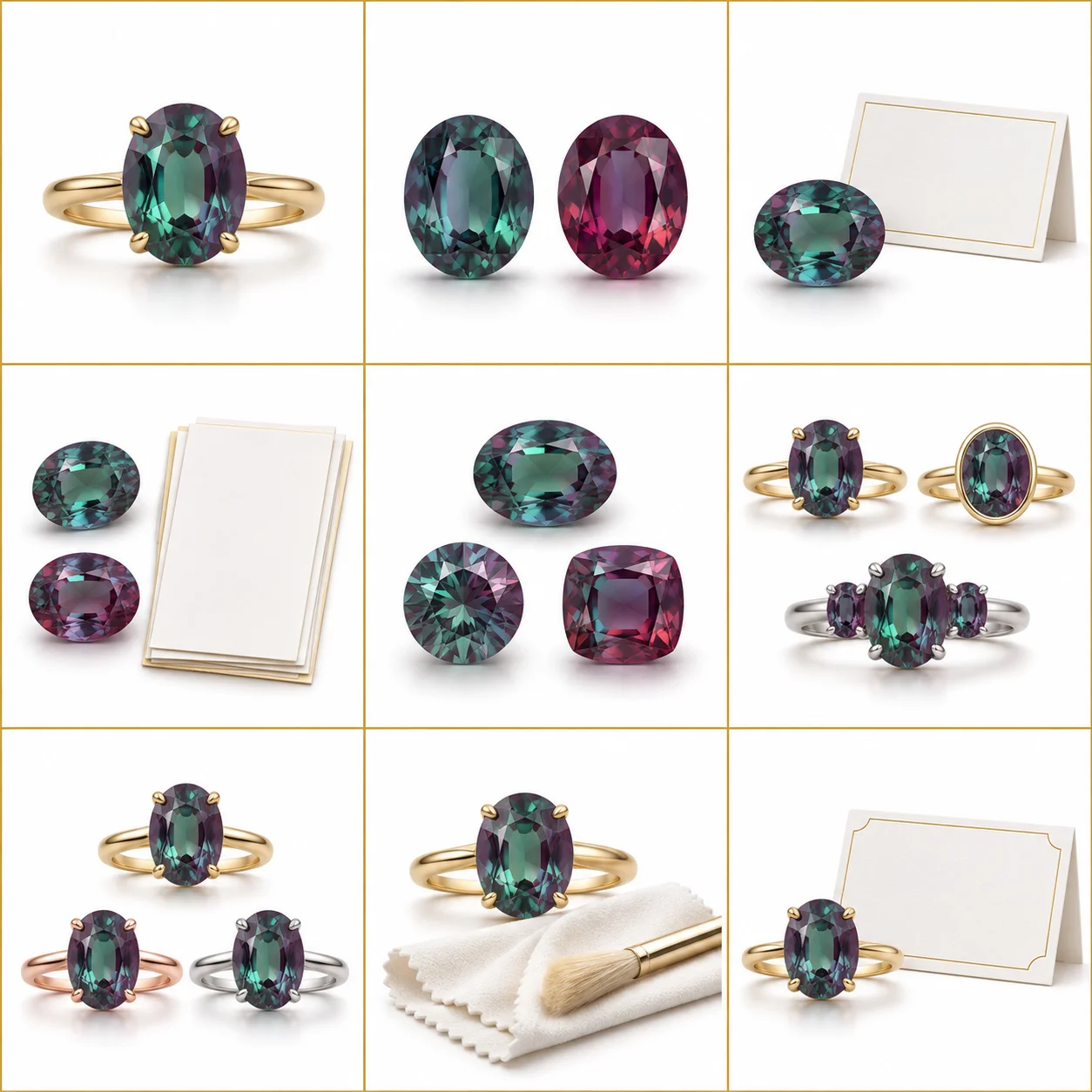
Illustrated educational overview in NinaVova’s editorial style. Jewelry shown is conceptual, not an inventory photograph. Open at full size.
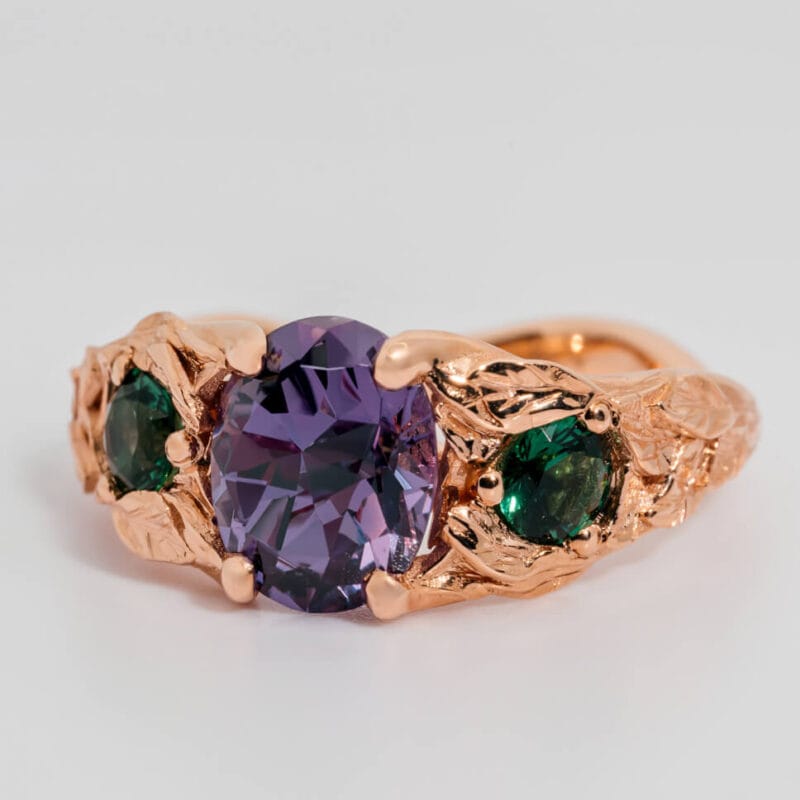
Alexandrite Nature Inspired Engagement Ring with Lab Emerald
Design your ring with NinaVova

Ready to turn your ideas into a custom ring?

Bring your inspiration, questions, or even a rough idea. We’ll work through the details together.

I’ll help you think through the details and create a ring designed around the person who will wear it. You don’t need to have everything figured out before we start.

Design directly with Sergey · Review your ring in 3D before production

Contact Sergey →

Explore this NinaVova ring

Begin with chrysoberyl identity and the wearer’s preference

Alexandrite is distinct from color-change sapphire, garnet, spinel and imitation materials. A similar visual effect does not make those stones the same mineral.
Begin with chrysoberyl identity and the wearer’s preference
Begin with chrysoberyl identity and the wearer’s preference.

The appeal may be the shift in appearance, the individual color or a personal association. It does not need to represent one prescribed personality or relationship story.

Natural and laboratory-grown alexandrite are different origin categories. Both should be described clearly, while an imitation should be named as its actual material.

Choose the stone the wearer enjoys rather than assuming every person seeking an unconventional ring wants the same dramatic effect.

Compare the actual color change under stated lights

Alexandrite is associated with green-to-bluish-green appearances in daylight-type conditions and red-to-purplish-red appearances under incandescent-type illumination. Actual stones and lights vary.

Compare the actual color change under stated lights
Compare the actual color change under stated lights.

Ask which lights were used for the offered images or video. Modern indoor lamps do not all reproduce the same spectral conditions.

Compare the same stone with stable exposure and useful scale. A heavily edited split image cannot establish the exact change you will see in everyday life.

Descriptions such as complete change or a numerical percentage need explanation. There is no single universal retail percentage that replaces viewing and suitable identification.

Read the identification report within its scope

A relevant laboratory report can distinguish material identity and natural or laboratory-grown status and address detectable treatment within the service provided.

Read the identification report within its scope
Read the identification report within its scope.

GIA also offers geographic-origin opinions for alexandrite where possible and requested. That is different from a complete mine-to-market supply-chain record.

Check the issuer, identifying details and exact conclusions against the offered stone. An appraisal and a laboratory identification are not interchangeable documents.

Do not diagnose authenticity with a color photograph, a price threshold or a single home test. If an important point remains uncertain, obtain appropriate independent guidance before purchasing.

Compare natural and laboratory-grown choices honestly

Fine natural alexandrite can be scarce and costly, but there is no universal starting price that describes every natural stone or completed ring.

Compare natural and laboratory-grown choices honestly
Compare natural and laboratory-grown choices honestly.

Laboratory-grown alexandrite has the same basic chrysoberyl identity as its natural counterpart. That does not mean every specimen has identical clarity, color change or cutting.

Synthetic color-change corundum is a different material, even if a seller describes its appearance as alexandrite-like. Ask for precise naming rather than a vague claim of real or synthetic.

Laboratory manufacture alone does not establish zero environmental impact. Compare appearance, evidence and current complete prices within the correctly described category.

Look at cutting, transparency and realistic dimensions

An oval, cushion, round or another outline can create a different ring composition. Choose from the actual stone rather than assuming one shape always maximizes the effect.

Look at cutting, transparency and realistic dimensions
Look at cutting, transparency and realistic dimensions.

Consider transparency, inclusions and the pattern of reflections as the gem moves. A characteristic may affect appearance, condition or both, so ask what matters for the particular candidate.

Carat measures weight, not a fixed face-up size. Compare length, width and depth alongside the outline and proposed profile.

A report and a realistic moving view answer different questions. Neither a high price nor a dramatic marketing image guarantees a stone you will enjoy wearing.

Develop a setting for the actual stone and routine

Alexandrite has useful scratch resistance and good practical durability, but it can still be damaged. Hardness alone does not make every high or low setting suitable.

Develop a setting for the actual stone and routine
Develop a setting for the actual stone and routine.

Prongs, a bezel or a three-stone design can each be considered when feasible. Review actual support, exposed areas and the underside profile.

A halo describes a surrounding composition rather than one compulsory way of retaining the center. Its appearance should be assessed with the actual alexandrite.

If a wedding band is planned, check clearance and potential rubbing. A rendering cannot fully establish contact or comfortable fit on the hand.

Choose metal and companion stones as a complete palette

White, yellow and rose tones frame the changing colors differently. Compare the actual alloy and intended stone instead of assigning one metal to modern designs and another to vintage designs.

Choose metal and companion stones as a complete palette
Choose metal and companion stones as a complete palette.

Clear diamond or moissanite accents can create contrast, while colored sapphire offers another direction. Confirm the identity and relevant treatment of all components.

Moonstone or pearl accents introduce different care and damage considerations. A strong center does not transfer its properties to a more delicate companion.

Keep the composition focused on the wearer’s preferences. A personal birthstone reference can be meaningful without promising luck or other effects.

Plan appropriate wear, cleaning and future service

Use instructions suitable for the actual stone, treatment and complete ring. Gentle cleaning is different from assuming steam or ultrasonic equipment is appropriate for every assembled piece.

Plan appropriate wear, cleaning and future service
Plan appropriate wear, cleaning and future service.

Remove jewelry for impact, heavy work and other unsuitable activities. Arrange inspection after damage or if a setting catches or a stone moves.

Ask about resizing limits, surface renewal and stone replacement before approving extensive coverage or complex construction.

An exact matching alexandrite may not be available later, particularly where a specific color-change character matters. Keep the material records and realistic replacement expectations.

Approve the actual project rather than a general promise

At NinaVova, the actual stone can guide proportions, setting and metal contrast. Confirm current natural or laboratory-grown availability and documentation for the offered candidate.

Approve the actual project rather than a general promise
Approve the actual project rather than a general promise.

Compare complete quotations, including relevant reports, setting work and current service terms. A loose-stone price and a finished ring price are different comparisons.

Keep final material descriptions, dimensions and approvals in writing. Illustrations show educational concepts rather than identified inventory.

A considered alexandrite ring combines an appealing actual change with clear identity, suitable support and care the wearer is prepared to follow.

Frequently asked questions

Is every color-changing stone alexandrite?

No. Alexandrite is a particular variety of chrysoberyl.

Does a very low price conclusively identify an imitation?

No. Price alone cannot establish material identity.

Can the same stone look different under different indoor lamps?

Yes. Lighting conditions affect the observed appearance; compare stated lights.

Begin with a particular alexandrite

We can discuss current candidates, the color change you enjoy and a feasible setting with suitable proportions and clear material details.

Book a NinaVova consultation or explore our custom design process.

Continue reading: Laboratory-created alexandrite · Diamond alternatives · Design consultation.

Sources and further reading

  • GIA: Alexandrite buying and report scope
  • GIA: Alexandrite care
  • GIA: Alexandrite origin research
  • NinaVova: Current project terms

Confirm the actual materials, condition, evidence and current written terms for the offered ring. Illustrations do not establish identity, provenance, certification or an environmental footprint.

Option 1Contact Sergey

Contact Sergey.

Have a question about ring settings, gemstones, or creating a custom ring? Send me a message and I’ll be happy to help.

    Option 2 Book Consultation Now

    Book a time to talk through the ring.

    Meet remotely for a focused 30-minute call about your design, stones, timeline, and budget. No jewelry terms needed.

    When you schedule the meeting, you can also include a short message before the call — the idea, budget, timeline, saved links, or anything you want us to know first.

    Open the booking calendar in a new tab

    calendly placeholder image
    Custom Engagement RingsGuide
    Newer
    Pavé Diamond Rings: Setting Types, Workmanship and Care
    Back to list
    Older High vs Low Profile Engagement Rings: Settings, Comfort and Fit

    Related Posts

    Original NinaVova video thumbnail: What If You Choose the WRONG Engagement Ring? (The Truth Nobody Tells You)
    26 Nov
    Engagement Ring Guide

    Choosing an Engagement Ring for Someone Who Never Wears Jewelry

    Posted by author-avatar Sergey Degtyarenko
    06.11.2026
    Start with whether your partner wants a ring, then explore personal design, comfort, fit, setting profile, materials and a practical wearing plan.
    Continue reading
    Original NinaVova video thumbnail: Anatomy of an Engagement Ring | Complete Guide to Every Detail
    25 Nov
    Engagement Ring Guide

    Engagement Ring Settings: Prongs, Bezels, Height and Protection

    Posted by author-avatar Sergey Degtyarenko
    26.11.2026
    Compare prongs, full and partial bezels, tension-style settings and supporting architecture, with practical questions about stone protection, height, fit and maintenance.
    Continue reading
    Original NinaVova video thumbnail: Don’t Gamble on a Custom Engagement Ring
    24 Nov
    Engagement Ring Guide

    Custom Engagement Ring Design: Inspiration Photos, CAD and Approval

    Posted by author-avatar Sergey Degtyarenko
    26.11.2026
    Turn inspiration photographs into a clear custom-ring brief, choose the actual gemstone, review CAD and approve deliberate changes before manufacturing begins.
    Continue reading
    Original NinaVova video thumbnail: 16 Engagement Ring Claims to Check Before Paying More
    20 Nov
    Engagement Ring Guide

    16 Engagement Ring Claims to Check Before Paying More

    Posted by author-avatar Sergey Degtyarenko
    06.11.2026
    Understand what sale, appraisal, handmade, GIA graded, unheated, ethical and lifetime warranty claims actually tell you before paying an engagement-ring premium.
    Continue reading
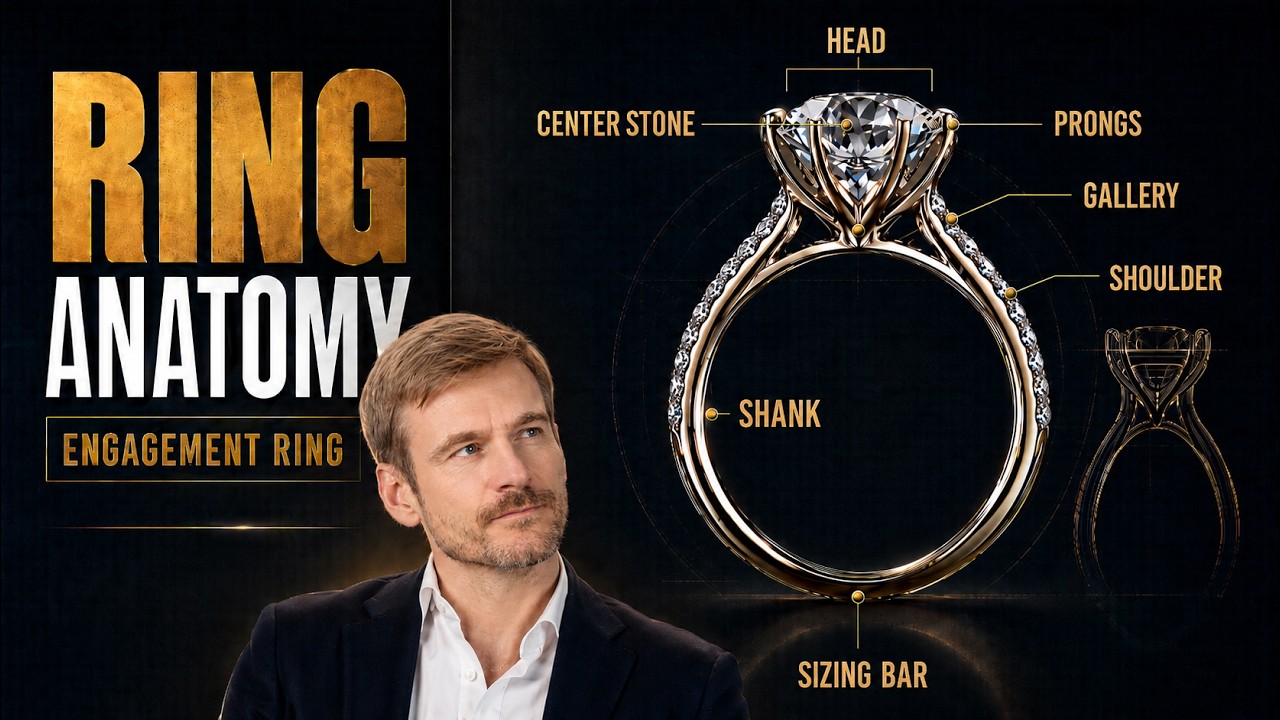
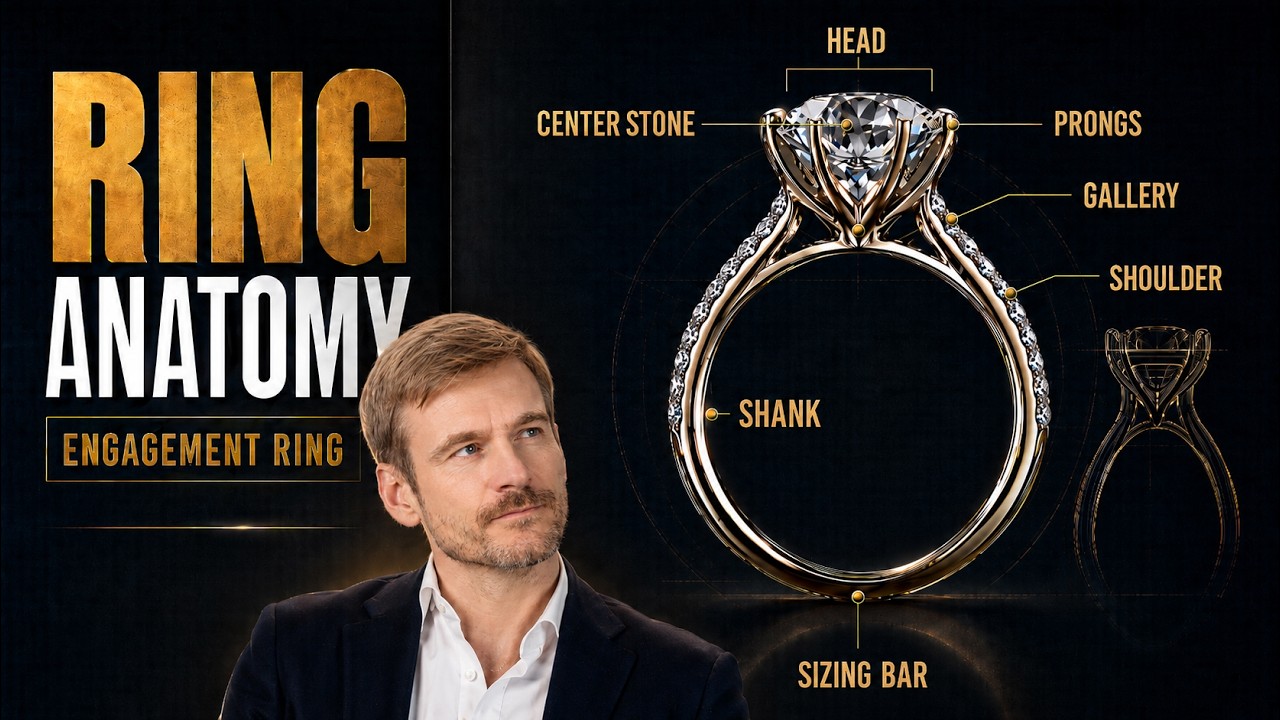
    Original NinaVova video thumbnail: Engagement Ring Anatomy: Shank, Setting, Gallery and More
    15 Nov
    Engagement Ring Guide

    Engagement Ring Anatomy: Shank, Setting, Gallery and More

    Posted by author-avatar Sergey Degtyarenko
    06.11.2026
    Understand the parts of an engagement ring, from shank and prongs to gallery, bridge and accent stones, so you can discuss a complete custom design with confidence.
    Continue reading
    Original NinaVova video thumbnail: Engagement Rings for Nurses: Design, Comfort and Workplace Rules
    14 Nov
    Engagement Ring Guide

    Engagement Rings for Nurses: Design, Comfort and Workplace Rules

    Posted by author-avatar Sergey Degtyarenko
    06.11.2026
    Plan an engagement ring for a nurse around workplace jewelry rules, setting profile, cleaning access, material choices and fit, without sacrificing personal design.
    Continue reading
    Original NinaVova video thumbnail: Green vs Teal Sapphire Engagement Rings: Color, Cut and Lighting
    13 Nov
    Engagement Ring Guide, Gemstones

    Green vs Teal Sapphire Engagement Rings: Color, Cut and Lighting

    Posted by author-avatar Sergey Degtyarenko
    26.11.2026
    Compare mint, seafoam, olive, forest-green and teal sapphire directions, and learn how lighting, cutting, trade names and origin affect the buying decision.
    Continue reading
    Original NinaVova video thumbnail: 7 Lab-Grown Gemstones for Engagement Rings: A Practical Comparison
    12 Nov
    Engagement Ring Guide, Gemstones

    7 Lab-Grown Gemstones for Engagement Rings: A Practical Comparison

    Posted by author-avatar Sergey Degtyarenko
    06.11.2026
    Compare seven lab-grown gemstone options for engagement rings, including diamond, sapphire, alexandrite, ruby and emerald, with practical guidance on appearance and identity.
    Continue reading
    Original NinaVova video thumbnail: 25 American Gemstones for Engagement Rings: Origin, Color and Care
    11 Nov
    Engagement Ring Guide, Gemstones

    25 American Gemstones for Engagement Rings: Origin, Color and Care

    Posted by author-avatar Sergey Degtyarenko
    06.11.2026
    Explore 25 gemstones associated with U.S. localities, from Montana sapphire and Oregon sunstone to American aquamarine, turquoise, red beryl and Arkansas diamond.
    Continue reading
    Original NinaVova video thumbnail: 22 Yellow Gemstones for Engagement Rings: Color, Durability and Care
    10 Nov
    Engagement Ring Guide, Gemstones

    22 Yellow Gemstones for Engagement Rings: Color, Durability and Care

    Posted by author-avatar Sergey Degtyarenko
    06.11.2026
    Compare 22 yellow gemstone options, including sapphire, chrysoberyl, citrine, pearl and diamond, with practical advice on color, durability, treatments and design.
    Continue reading
    Original NinaVova video thumbnail: 25 Purple Gemstones for Engagement Rings: Color, Care and Buying Choices
    09 Nov
    Engagement Ring Guide, Gemstones

    25 Purple Gemstones for Engagement Rings: Color, Care and Buying Choices

    Posted by author-avatar Sergey Degtyarenko
    06.11.2026
    Compare 25 purple gemstones for engagement rings, from amethyst and spinel to sapphire and alexandrite, with practical guidance on appearance, care and verification.
    Continue reading
    Original NinaVova video thumbnail: Montana Sapphire Engagement Rings: Color, Yogo, Treatment and Cut
    08 Nov
    Engagement Ring Guide, Gemstones

    Montana Sapphire Engagement Rings: Color, Yogo, Treatment and Cut

    Posted by author-avatar Sergey Degtyarenko
    06.11.2026
    Choose a Montana sapphire by real-world color, cut and treatment. Understand Yogo, parti-color stones, size tradeoffs and the documentation behind origin claims.
    Continue reading
      YouTube
      Shop Book Virtual Consultation About Blog Ethics + Sustainability Lifetime WarrantyEmail Sergey
      Ordering + Shipping Resizing + Returns Reviews Financing FAQ Terms + Returns Privacy Policy Cookie Policy Cookie Preferences

      Love defines
      our journey.

      NinaVova logo
      © 2026, NinaVova®
      Custom pieces currently take 6–8 weeks unless otherwise stated. Rush orders must be requested before ordering.

      © 2026 NinaVova. All rights reserved

      payments
      • Home
      • Ring Gallery
      • Diamonds
        • All diamonds
        • Natural diamonds
        • Lab-grown diamonds
        • Round
        • Oval
        • Cushion
        • Emerald cut
        • Pear
        • Radiant
      • Gemstones
        • All gemstones
        • Sapphire
        • Ruby
        • Emerald
        • Spinel
        • Aquamarine
        • Tourmaline
        • Tanzanite
        • Morganite
      • Create a Custom Engagement Ring for Your Partner
        • Create a Custom Engagement Ring for Your Partner
        • Design an Engagement Ring Together
        • Create Your Own Unique Engagement Ring
      • Success Stories
      • NinaVova Reviews
      • Contact Sergey
      • Blog
      • Education
      • Custom Engagement Ring FAQs
      Shopping cart
      Close