
Engagement Ring Guides
Tsavorite Engagement Rings: Color, Cut, Care and Buying Advice

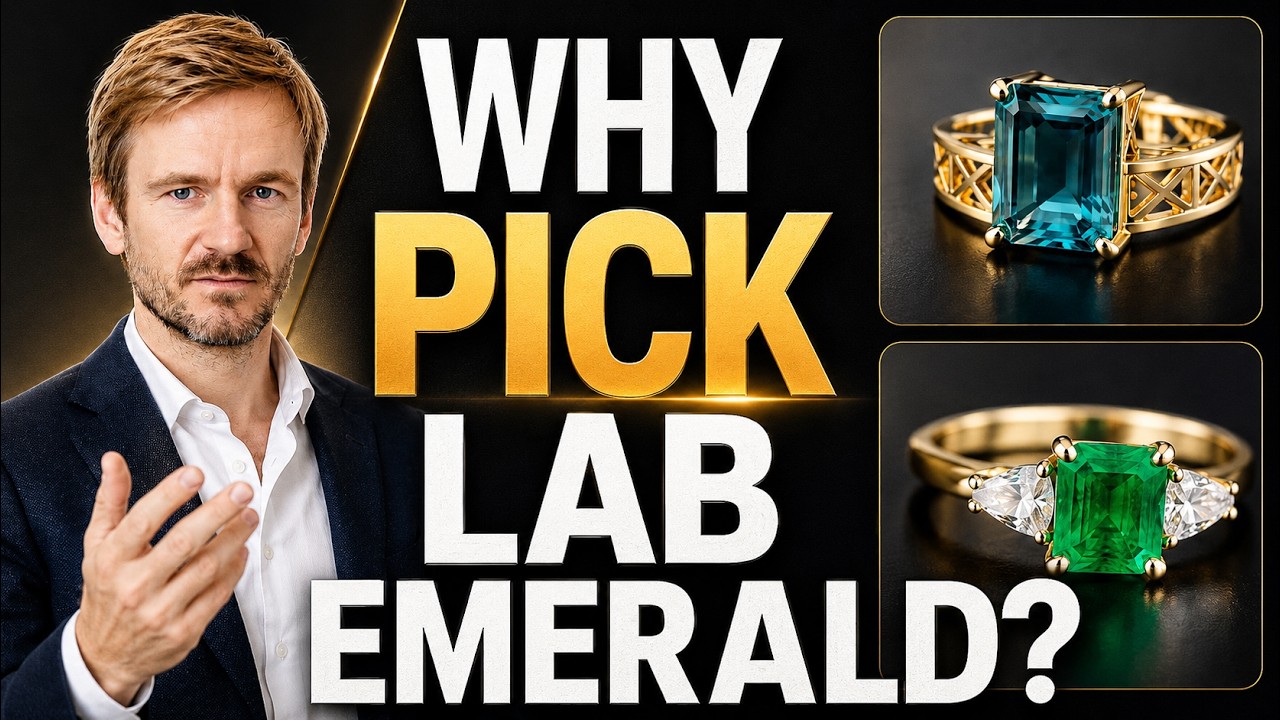
If you want a green engagement ring, emerald is probably the first gemstone you think about. But there is another natural green stone that many buyers never seriously consider: tsavorite garnet. This guide focuses on tsavorite itself, with emerald and green sapphire as useful points of comparison. This is a practical guide to buying tsavorite. Because two natural tsavorites can have the same carat weight and still be completely different stones. Color can be different. One can stay bright indoors while another becomes almost black. The cut can make one lively and another flat. And once you start looking at larger stones, the price can change very quickly.
We will cover the things that actually affect what you see and what you pay for: color, cut, clarity, size, origin, treatment, durability, reports, and price. And along the way, I am going to answer the questions buyers usually run into when they start shopping.
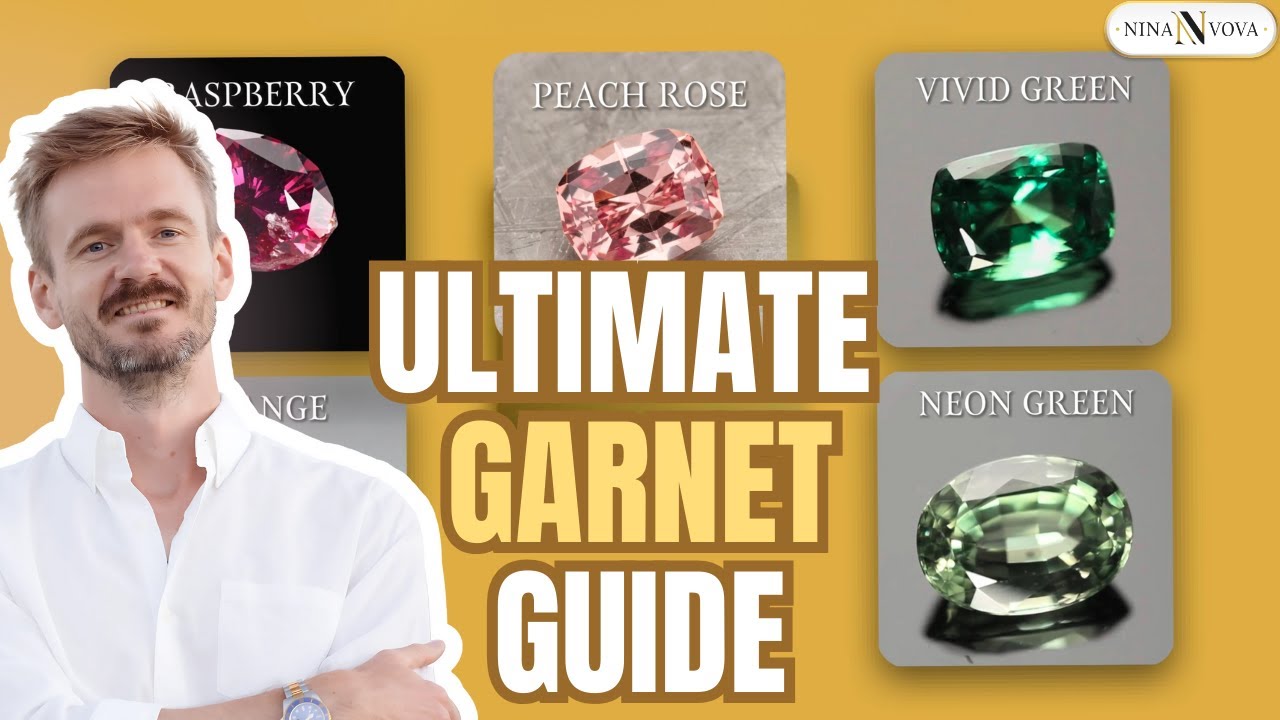
Choose a bright green you enjoy in ordinary light, then assess the whole stone. Tsavorite is green grossular garnet. Color, cut, transparency, fractures and useful dimensions matter more than an unexplained AAAA or unheated label. It can suit an engagement ring with appropriate construction and care, but it is not as scratch-resistant as sapphire.
At a glance · What tsavorite is · Color · Cut And Brilliance · Clarity
Watch the NinaVova discussion
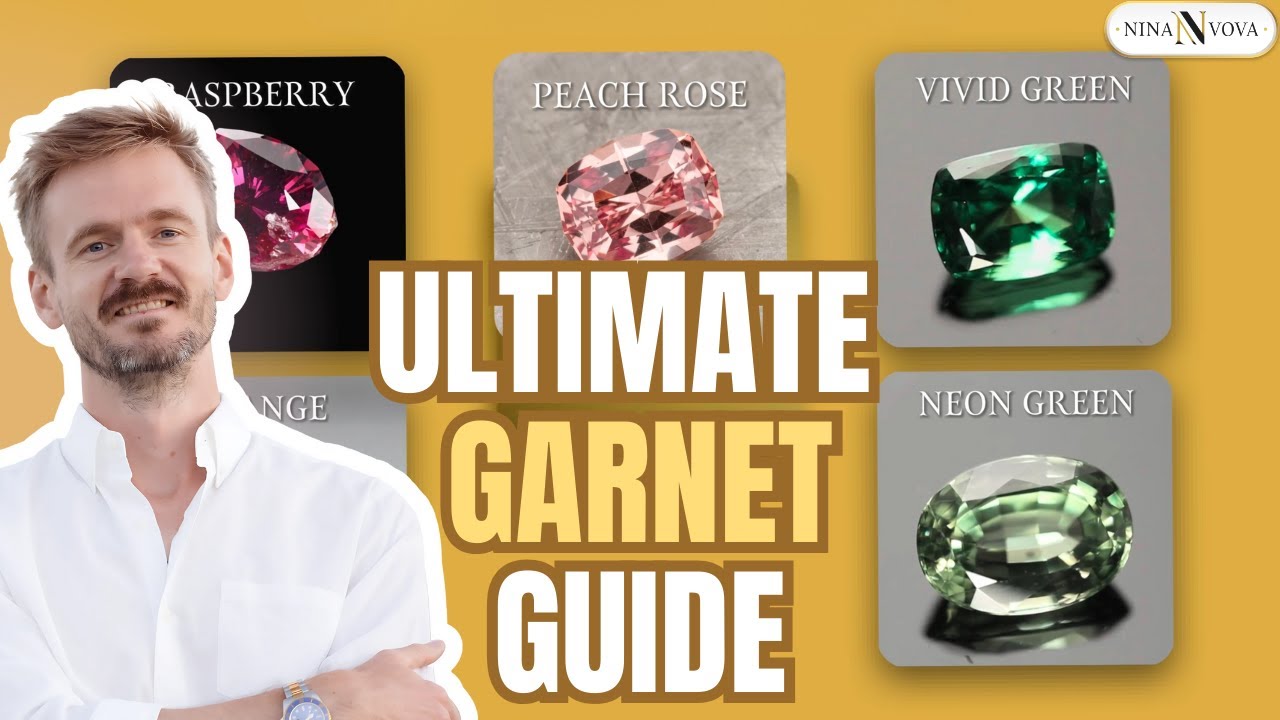
Watch the original NinaVova video on YouTube.
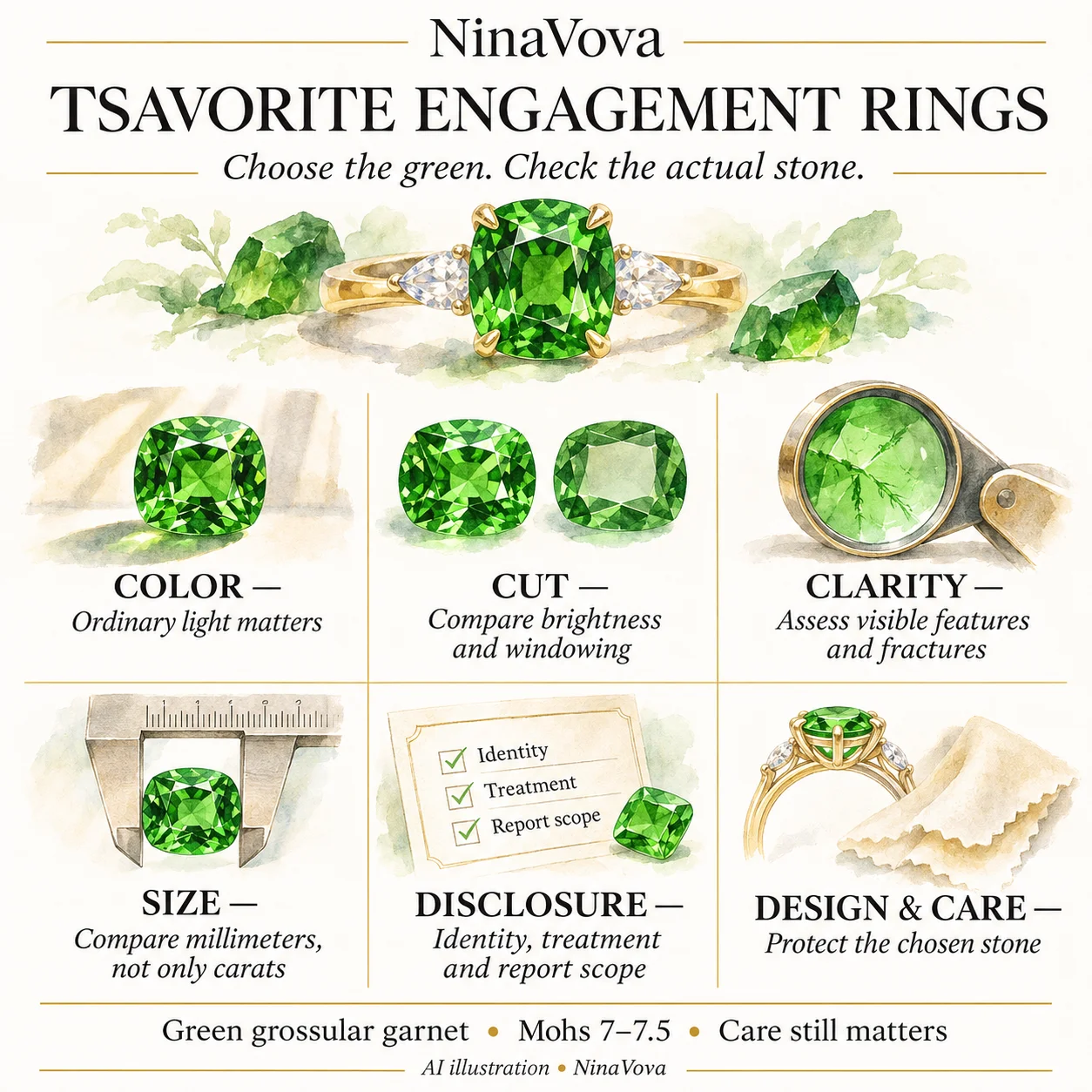
Related NinaVova video: the garnet discussion covers the broader gem family. This article focuses on tsavorite.
Tsavorite buying priorities at a glance
| Priority | What to compare | Why it matters |
|---|---|---|
| Color | Hue, saturation and tone in ordinary light | A deep green under a spotlight can look too dark elsewhere. |
| Cut | Face-up brightness, windows, movement and proportions | Carat weight can be hidden in depth. |
| Clarity and condition | Transparency, visible inclusions and surface-reaching fractures | Beauty and structural questions require different assessments. |
| Size | Length, width and depth in millimeters | Similar weight does not mean the same fit or visible outline. |
| Identity and treatment | Reliable identification and appropriate report scope | A label or country name is not documentation. |
| Setting and care | Secure support, protected points and gentle maintenance | Hardness alone does not make a ring practical. |
What tsavorite is
Tsavorite is the green variety of grossular garnet. The word garnet can be confusing because most people immediately picture the dark red January birthstone. But garnet is actually a group of related minerals that comes in many colors. Tsavorite gets its green mainly from vanadium, sometimes with chromium contributing as well. You may also see another green garnet called demantoid. That is a different variety.
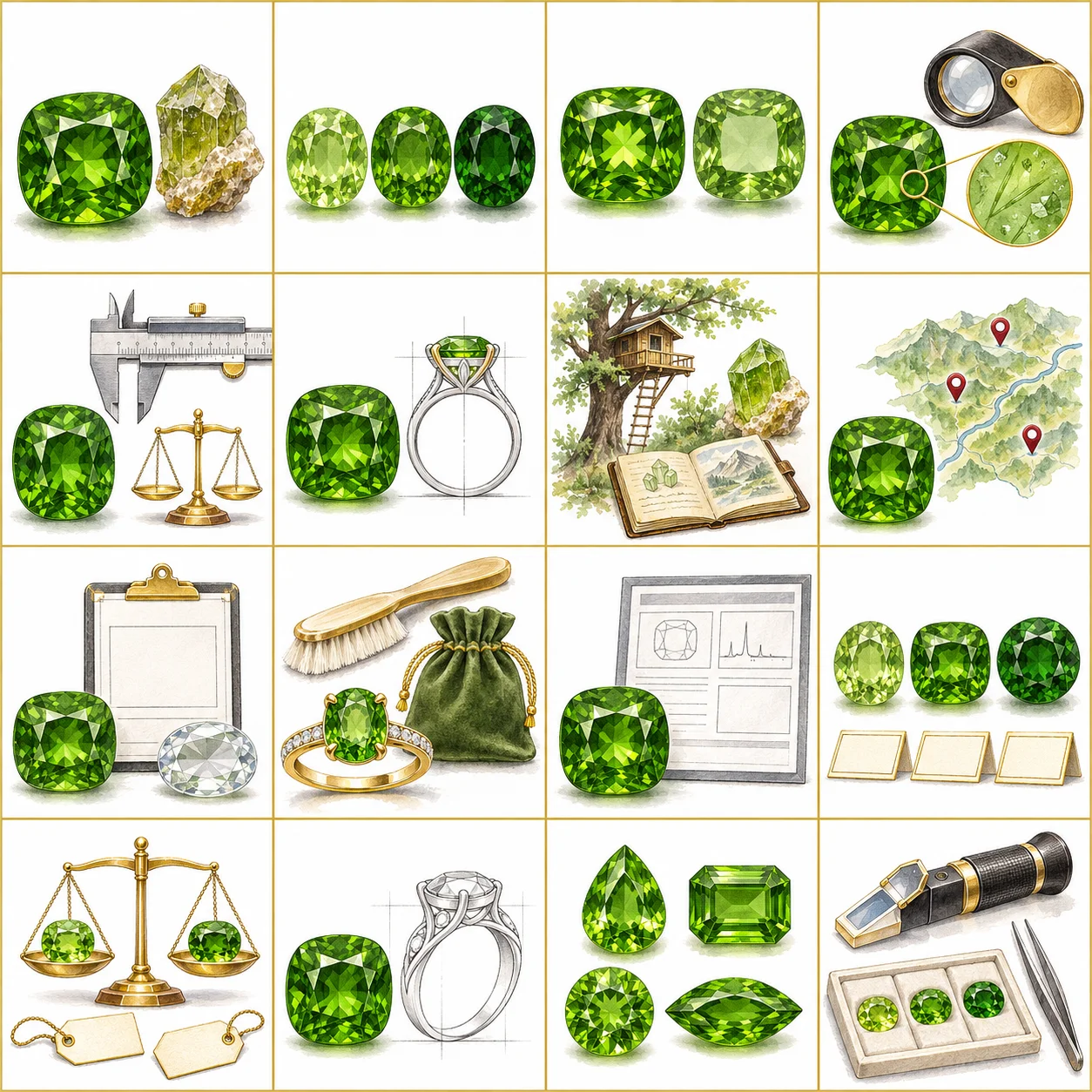
Demantoid is andradite garnet. Tsavorite is grossular garnet. You do not need to remember the mineralogy. The useful part is this: If a listing simply says “natural green garnet,” find out what it actually is. If you are paying tsavorite prices, the seller should be able to identify the stone as tsavorite or green grossular garnet.
Color
Color is the first thing to judge. Tsavorite ranges from yellowish green through pure green into slightly bluish green. Strongly saturated green and slightly bluish-green stones are generally the most desirable, but that does not mean a blue secondary hue automatically makes a stone better. A beautiful pure green can be just as attractive. The bigger issue for many buyers is tone. In other words, how light or dark is the stone?
A very dark tsavorite can look rich and dramatic under strong lighting, but lose most of that appearance in an ordinary room. This is one of the most common questions buyers ask: “Will this stone look almost black indoors?” And that is a much more useful question than asking whether the seller calls the color vivid. For tsavorite, ask to see the stone in ordinary indoor light and indirect daylight.
Not just under a light box. It also helps to see it on a hand or against a neutral background. And make sure the stone is moving. A single photograph or one perfect angle can hide a lot. For an engagement ring, the best color is not necessarily the deepest green available. It is the green you actually like under the lighting conditions where you are going to wear the ring.
Cut And Brilliance
A well-cut tsavorite can be very lively. The important cut problems to understand are windowing, extinction, and poor proportions. A window is an area, usually through the center, where you can see through the stone instead of getting light returned back toward you. Extinction is the opposite problem. Those are areas that stay very dark because little light is returning to your eye. Some tsavorites are also cut quite deep because preserving more of the original rough increases the finished carat weight.
That is not automatically bad, but it can mean more of the weight is hidden underneath the stone instead of contributing to face-up size. There is no universal table-and-depth formula for tsavorite. This is something you judge visually. Watch the stone rotate and tilt. Look at whether the center stays alive, whether large dark areas remain in the same place, and whether the stone looks balanced.
A buyer may find a tsavorite with beautiful color and ask: “Is the window acceptable because everything else is good?” A tiny amount may not matter. A large obvious window usually means the cut is compromising the appearance. That is the decision to make.
Clarity
Tsavorite can contain crystals, growth features, fingerprints, tubes, and fractures. These are normal features in natural gemstones. The goal is not microscopic perfection. For an engagement-ring center stone, eye-clean or close to eye-clean is normally enough. A tiny crystal that requires 10× magnification to find does not matter very much in the finished ring. What does matter is an inclusion that you can see easily, something that reduces transparency, or a significant fracture reaching the surface.
Location matters too. A fracture near an exposed corner deserves more attention than a tiny inclusion sitting safely inside the stone. There are buyers who find a tsavorite with great color and then discover that one central inclusion keeps catching their eye from normal viewing distance. That stone may still be completely natural and structurally fine. But if the inclusion bothers you every time you look at the ring, it is the wrong stone for you.
So do not shop tsavorite by trying to find the equivalent of VVS diamond clarity. Look at the actual stone. If it appears clean and transparent in normal viewing, that is usually enough.
Size And Carat Weight
This is where tsavorite gets especially interesting. Fine material becomes much harder to find as the stone gets larger. GIA notes that tsavorite is rarely found above roughly 2 to 2.5 carats. That does not mean larger stones do not exist. They do. But finding a larger crystal with excellent color, good transparency, and good cutting becomes increasingly difficult. That is why the price can jump quickly once you move into larger fine stones.
There is another important issue. Carat is weight. It is not visual size. Tsavorite is relatively dense, so you should not assume that a 2-carat tsavorite will have the dimensions you associate with a 2-carat diamond or emerald. Look at the actual length and width in millimeters. If the ring design needs a center that looks around 8 by 6 millimeters, that measurement is more useful than deciding in advance that the stone has to weigh exactly 2 carats.
Two tsavorites can have similar weight and noticeably different face-up size because they are cut differently. So shop for the dimensions the ring needs first, and then look at the carat weight.
Choose the stone before finalizing the setting
This is especially important with custom rings. Choose the tsavorite before the setting is finalized. Colored gemstones do not come in one standardized set of proportions. Two stones can have similar length and width but very different depth, girdle thickness, or outline. That changes the basket. It changes prong position. And it can change how high the center stone needs to sit. This matters a lot if you want a low-profile engagement ring.
A relatively deep tsavorite may need more vertical space underneath it. So if you are making a custom ring, design around the exact stone. If you are buying a finished setting instead, confirm the gemstone's length, width, and depth with the jeweler before purchasing it.
Tsavorite’s modern history
Garnets have been used for thousands of years. Tsavorite itself is much more recent. Campbell Bridges discovered gem-quality green grossular in Tanzania in 1967. A few years later, he found deposits in Kenya near Tsavo. Tiffany helped introduce the gemstone to the wider jewelry market, and the name “tsavorite” appeared in 1974, referring to the Tsavo region. Bridges later developed the Scorpion Mine in Kenya, which became one of the best-known tsavorite mines.
And the story was considerably rougher than the finished jewelry suggests. Bridges lived at the mine in a treehouse. According to the Smithsonian, a leopard sometimes entered the treehouse and ate its kill on his bed. That original campsite and treehouse were still standing decades later. There have also been some extraordinary tsavorite crystals discovered. One piece of rough from Merelani, Tanzania weighed 283.74 carats.
It was eventually cut into a 116.76-carat square cushion and unveiled in 2019. Obviously, that has nothing to do with the center stone most people are going to put into an engagement ring. But it shows how exceptional this material can become.
Origin
The main commercial sources you will usually see are Kenya, Tanzania, and Madagascar. This is different from a gemstone like sapphire, where certain origins can carry very large market premiums. For most engagement-ring buyers, origin should not come before the quality of the actual tsavorite. A Kenyan stone is not automatically better than a Tanzanian one. A Tanzanian stone is not automatically better than a Madagascan one.
Compare the stones themselves. Origin becomes more relevant when provenance, traceability, or a connection to a particular locality matters personally to you. You may also see the term “Merelani mint.” This generally refers to lighter green grossular from the Merelani area of Tanzania. There is no single universal grading boundary where mint garnet ends and tsavorite begins. So treat “mint” mainly as a color description.
If you want light fresh green, mint material can be beautiful. If you want deep saturated green, do not choose a pale stone simply because the locality sounds interesting. And if responsible sourcing matters to you, ask what the seller knows about the specific supply chain. The country name alone does not prove how the stone was mined or traded.
Treatment And Authenticity
One advantage of tsavorite is that treatment is relatively simple. Tsavorite is normally untreated. Rare fracture filling can occur, so there is still one direct question worth asking: Has this stone received any treatment or clarity enhancement? What is usually not useful is paying extra because a listing aggressively advertises “unheated tsavorite.” Heat treatment is not standard practice for this gemstone. So “unheated” should not automatically create a premium.
Do not assume a product advertised as laboratory-grown tsavorite is equivalent to the well-established lab-grown sapphire or emerald categories. Obtain reliable material identification, especially if the seller is unfamiliar. The possibility of laboratory synthesis and the identity of an actual jewelry product are separate questions. A green appearance and a reassuring label cannot settle either one. The more realistic problem is imitation or incorrect identification.
Green glass, YAG, or another material can imitate the general appearance. That becomes more important when buying from an unfamiliar seller or when the stone is expensive.
Durability — Can Tsavorite Work For An Engagement Ring?
Tsavorite is around 7 to 7.5 on the Mohs scale and has fair-to-good toughness. That makes it a reasonable gemstone for an engagement ring with sensible care. There is one point that often gets explained incorrectly. Emerald is actually harder on the Mohs scale at roughly 7.5 to 8. So tsavorite is not a better everyday stone because it is harder. The difference is that emerald commonly contains fractures and is frequently clarity enhanced with oil or resin.
That makes its practical durability more complicated. This is why tsavorite is often recommended as one of the more practical natural green gemstones for everyday jewelry. But it is still not sapphire. Tsavorite can scratch, abrade, or chip if it gets enough abuse. The setting should match the wearer's lifestyle. For normal wear, secure prongs and sensible stone height may be enough. For somebody who is hard on jewelry, more protection around the stone can make sense.
Pointed shapes such as pear and marquise cuts need particular attention around the tips. You do not automatically need a bezel. You need a setting that protects the vulnerable parts of the specific stone without making the ring unnecessarily heavy. And for routine cleaning, warm water with mild soap is the safest simple option. GIA does not recommend steam cleaning garnet.
Reports — What They Actually Tell You
For a significant purchase, an independent laboratory report can be useful. But understand what the report is doing. A GIA Colored Stone Identification Report can identify the gemstone, determine whether it is natural or synthetic, report detectable treatments, and list the weight, measurements, cutting style, color description, and photograph. What GIA does not currently provide for tsavorite is a country-of-origin determination. So if a seller claims that a GIA report proves a tsavorite is Kenyan, check the actual report.
AGL handles tsavorite origin more broadly and may use the regional designation “East Africa,” which can include Kenya, Tanzania, and Madagascar. This tells you something important. For tsavorite, exact country origin is generally not verified or valued in the same way it can be for stones such as Kashmir sapphire or Colombian emerald. For a reasonably priced stone from a jeweler or supplier you know well, a major laboratory report may not always be necessary.
For an expensive stone, an unfamiliar seller, or a purchase where identity or treatment materially affects the price, independent verification becomes much more useful.
AAA, AAAA, VVS — What Do These Labels Mean?
You will see tsavorites advertised as AAA, AAAA, VVS, super fine, investment grade, and many other things. There is no universal standardized AAA grading system for garnet. One company can call a stone AAA. Another company may use AAA for something completely different. These labels can be useful inside one seller's own inventory if they explain their system clearly. They are not a universal gemological grade.
The same applies to diamond-style clarity descriptions. A VVS label does not automatically make one tsavorite a better purchase. Use laboratory reports for identity and treatment. Use video, photographs, dimensions, and direct inspection for appearance. Those are different jobs.
Price — What Are You Actually Paying For?
Tsavorite pricing varies enormously with the individual stone. Color, transparency and cutting can make substantial differences to an offer, so compare actual stones and obtain current written prices. Fine material around 3 carats and above may occupy a different market context because good large specimens are less common.
So a simple price-per-carat chart is not very useful. A mediocre 2-carat stone can be cheaper than an exceptional 1.5-carat stone. That is not strange. The smaller stone may have stronger color, better transparency, and much better cutting. If I am increasing the budget, I want the extra money to produce a visible improvement. Better color. Better light performance. Cleaner transparency if the inclusions are visible.
Or a genuinely useful increase in face-up size. What I would not pay a significant premium for by itself is an AAAA label, microscopic clarity, the word “unheated,” or a famous country name. Those things do not automatically make the ring look better.
Who should choose tsavorite?
Tsavorite makes a lot of sense if you want a natural green center stone with strong color and a lively appearance. It is especially interesting if what originally attracted you to emerald was simply the idea of a rich green gemstone. If what you specifically love is the softer, more included visual character of emerald, then tsavorite is not a replacement for that. They look different.
Tsavorite also becomes less straightforward if your priority is a very large center stone because fine material gets much harder to source as size increases. And if maximum scratch resistance is the first priority, green sapphire deserves consideration as well. But if you want saturated natural green, good brilliance, usually no routine treatment, and reasonable practicality for an engagement ring, tsavorite is one of the strongest options available.
The important thing is to judge the individual stone properly. Check the color in real lighting. Watch how the cut performs while it moves. Make sure the inclusions are acceptable to your eye. Compare dimensions, not just carat weight. Verify treatment and identity when the value justifies it. And build the setting around the exact stone you choose. That is how you buy a good tsavorite engagement ring.
Frequently asked questions
Is tsavorite the same as demantoid?
No. Both belong to the garnet group, but tsavorite is green grossular and demantoid is andradite. Ask for proper material identification.
Does unheated tsavorite automatically deserve a premium?
No. Heating is not a standard selling distinction for tsavorite in the way it can be for fine sapphire. Judge the actual appearance, condition and disclosed treatment.
Develop the ring around your actual green stone
We can compare the selected tsavorite’s color, dimensions and condition, then build the proportions and protective details around the wearer’s life.
Book a NinaVova consultation or explore our custom design process.
Continue reading: Engagement ring anatomy · Gemstone claims to check.
Sources and further reading
- GIA: Garnet buyer’s guide
- GIA: Garnet care
- GIA: Garnet engagement-ring sizes and history
- Smithsonian: The Lion of Merelani and Campbell Bridges
- GIA: Colored stone services and 2026 updates
- AGL: Origin determinations
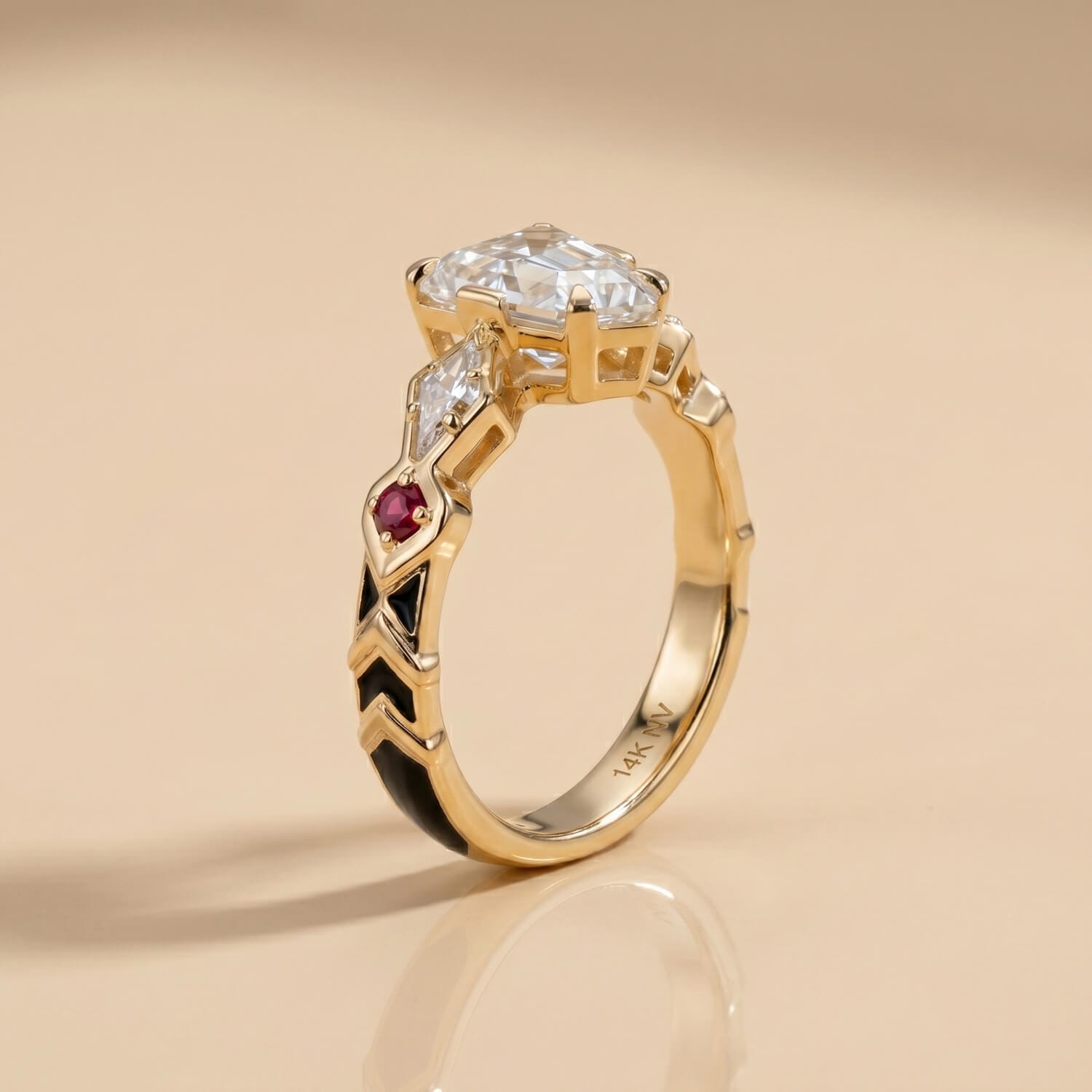
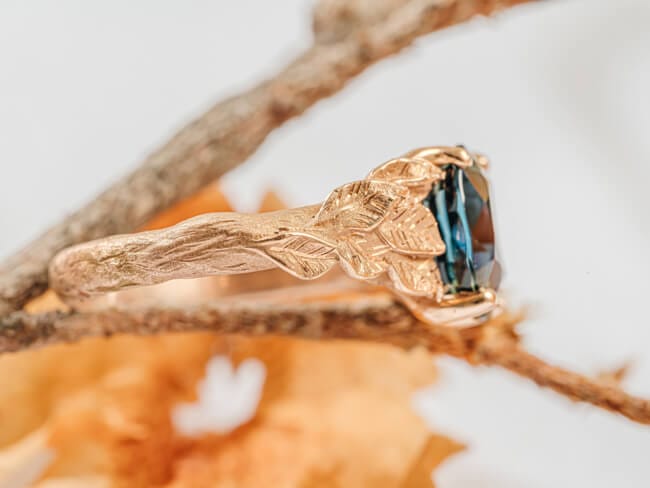
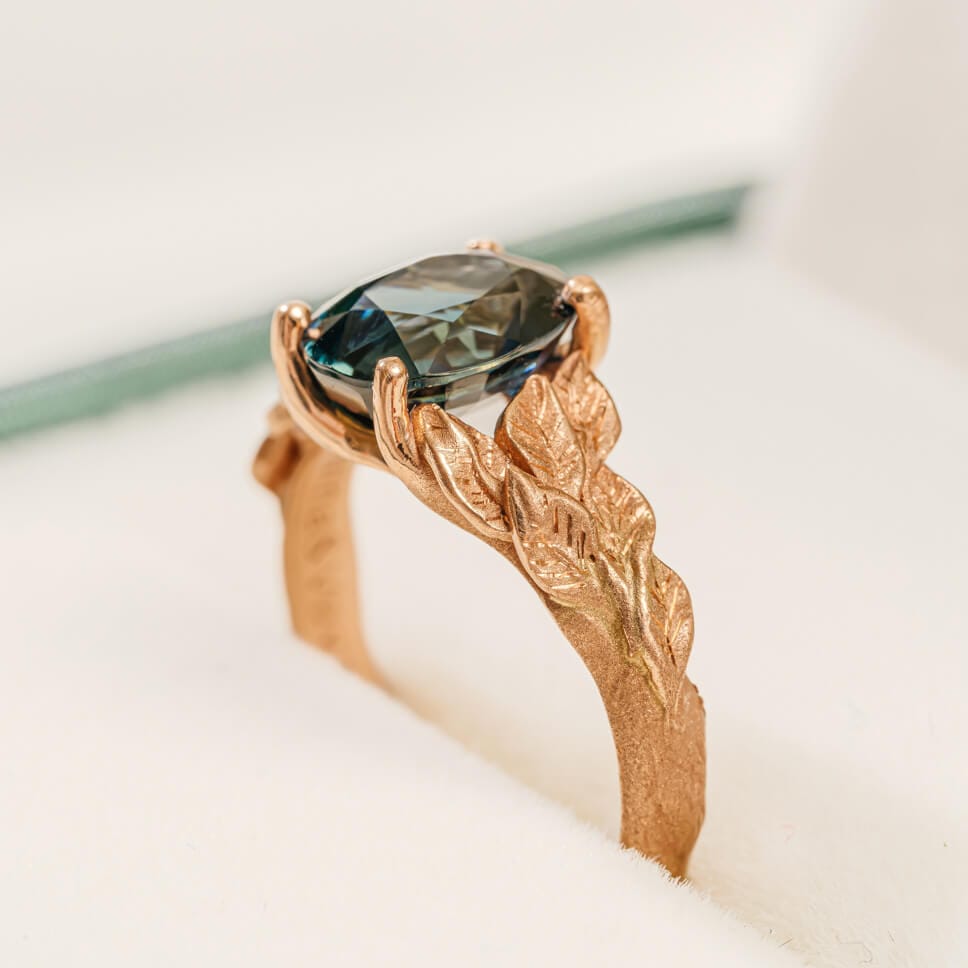
Compare actual stones and current written offers. NinaVova photographs shown as sapphire design references are explicitly identified; tsavorite illustrations are AI concepts.
Contact Sergey.
Have a question about ring settings, gemstones, or creating a custom ring? Send me a message and I’ll be happy to help.
Book a time to talk through the ring.
Meet remotely for a focused 30-minute call about your design, stones, timeline, and budget. No jewelry terms needed.
When you schedule the meeting, you can also include a short message before the call — the idea, budget, timeline, saved links, or anything you want us to know first.