
Engagement Ring Guides
Natural Emerald vs Lab Emerald vs Green Sapphire: Which to Choose?

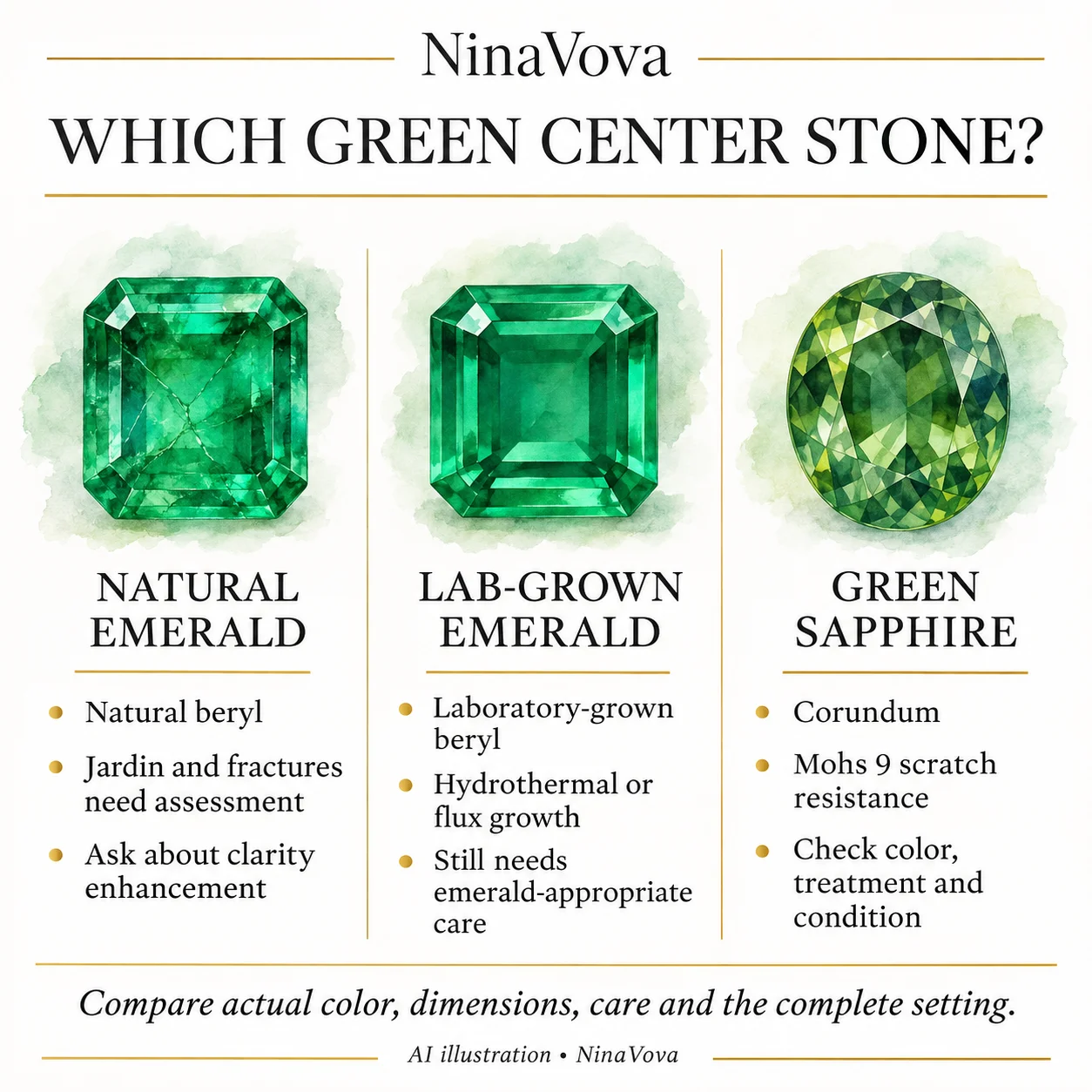
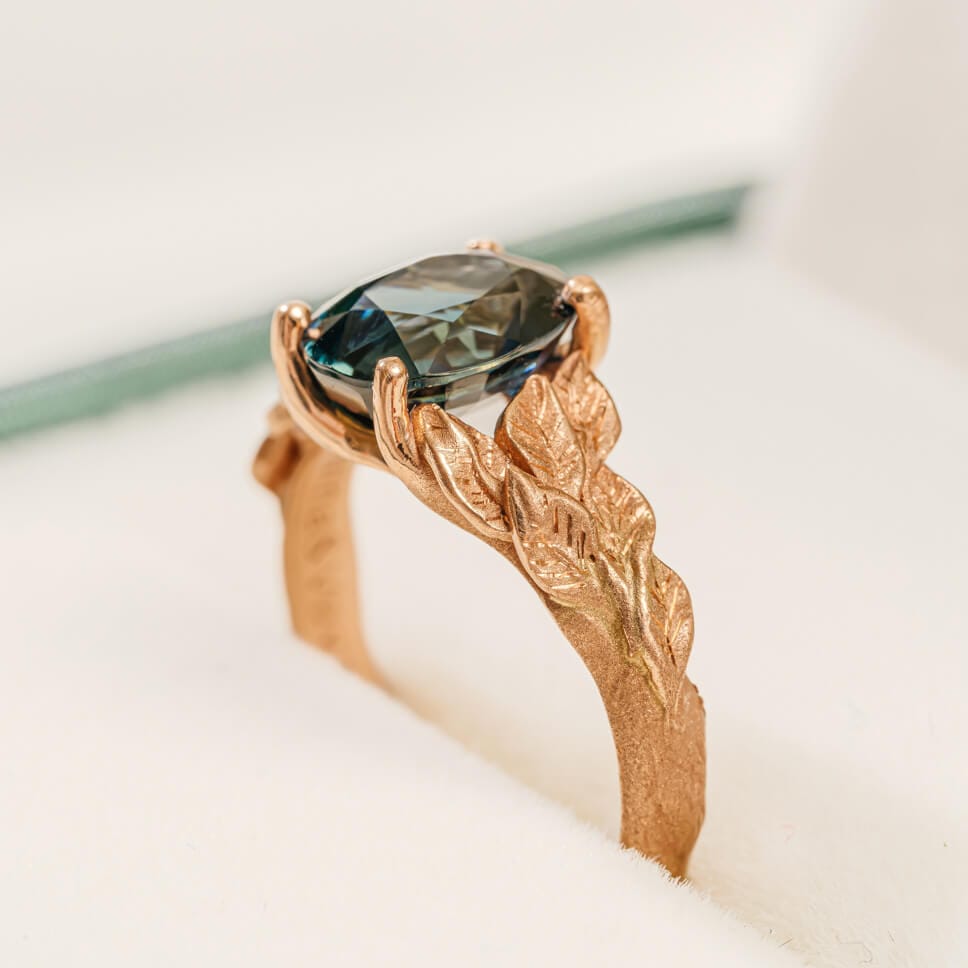
You're looking for the perfect green center stone for an engagement ring, and you've narrowed it down to three finalists: natural emerald, lab-grown emerald, and natural green sapphire.
They can look about the same size on a finger and cost wildly different amounts. A lab emerald might be cleaner than a natural one. A green sapphire can take more everyday wear. And a fine natural emerald may have a shade of green you simply don't find in either of the others.
Let's compare the stones I'd actually consider, the treatments I'd accept, and where spending more makes a visible difference.
Choose the green you love, then decide which care and origin trade-offs fit. Natural emerald offers geological origin and individual character; lab-grown emerald can offer an attractive emerald appearance at a different cost. Green sapphire has stronger scratch resistance. The actual cut, fractures, treatments and setting can matter more than the category name.
At a glance · Start with the actual green · Hydrothermal or Flux-Grown Lab Emerald? · How I'd Choose a Natural Emerald · The Green Sapphire I'd Recommend
Watch the NinaVova discussion
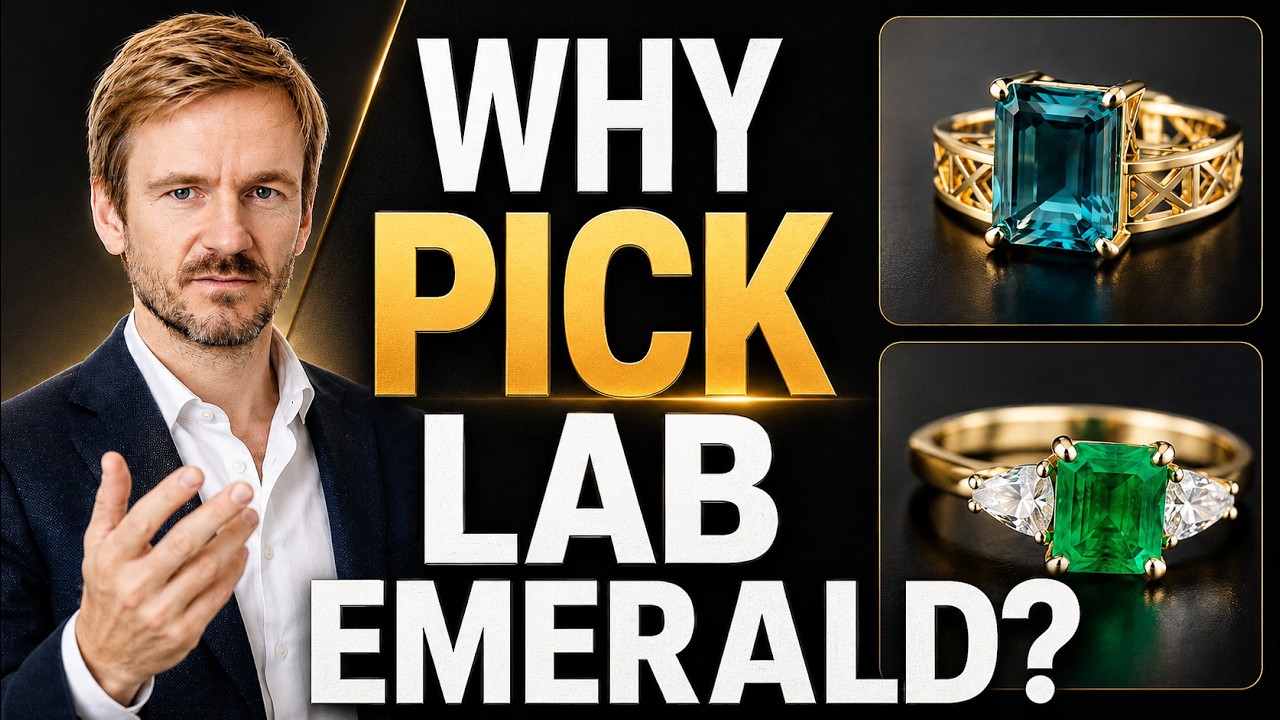
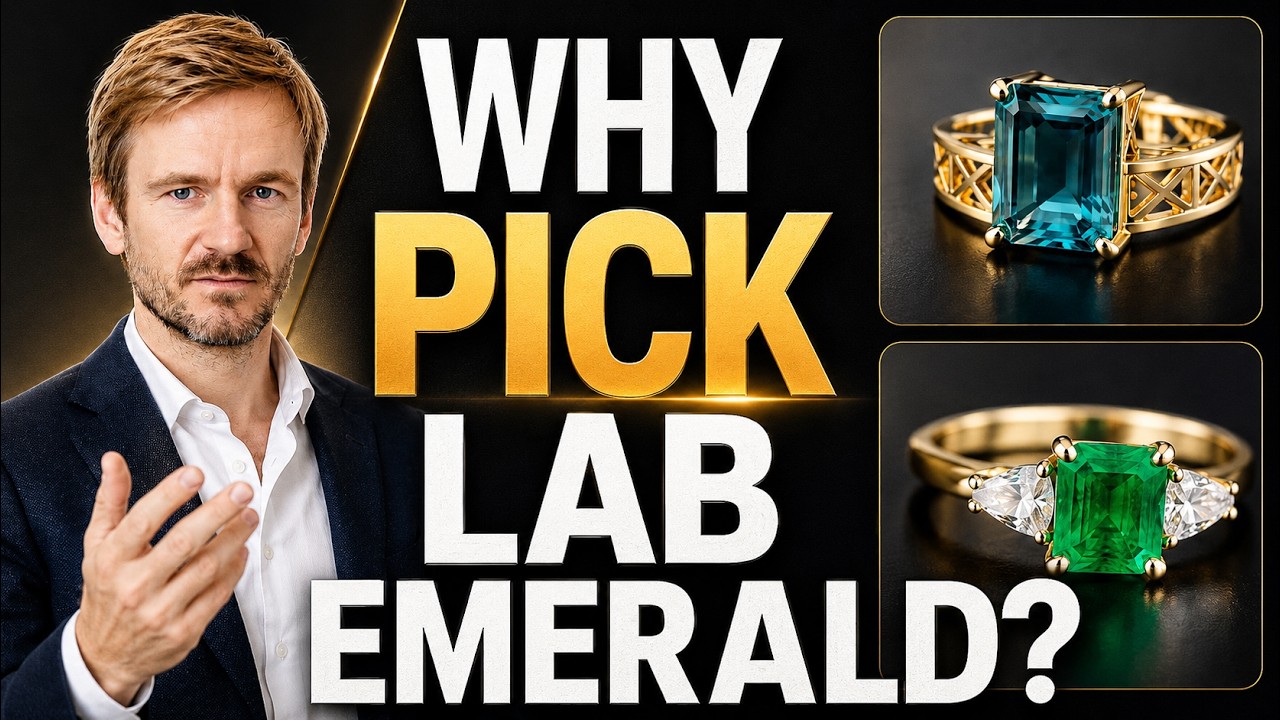
Watch the original NinaVova video on YouTube.
Related NinaVova video: the lab-created emerald discussion provides background. This article compares natural emerald, laboratory-grown emerald and green sapphire.
Three green finalists at a glance
| Decision | Natural emerald | Lab-grown emerald | Green sapphire |
|---|---|---|---|
| Material | Natural beryl. | Synthetic beryl. | Corundum. |
| Color priority | The actual green and transparency. | The actual green and transparency. | Forest, olive, teal and other green directions vary. |
| Care | Fractures and filling require attention. | Still needs emerald-appropriate care. | Stronger scratch resistance, but not unbreakable. |
| Treatment question | Clarity enhancement and its extent. | Identity, growth claims and any treatments. | Heat, diffusion, filling and actual report findings. |
| Design question | Protect corners and assess condition. | Protect corners and assess condition. | Protect points and use the actual stone dimensions. |

Start with the actual green
Start with the color. Emerald gets its green mostly from chromium or vanadium, while iron can influence the shade. Fine emeralds usually have a vivid green or slightly bluish green, with enough transparency that the color stays alive. Very dark doesn't necessarily mean better. A stone can look rich under strong lighting and almost black in a normal room. For an engagement ring, I prefer a green you can enjoy throughout the day.
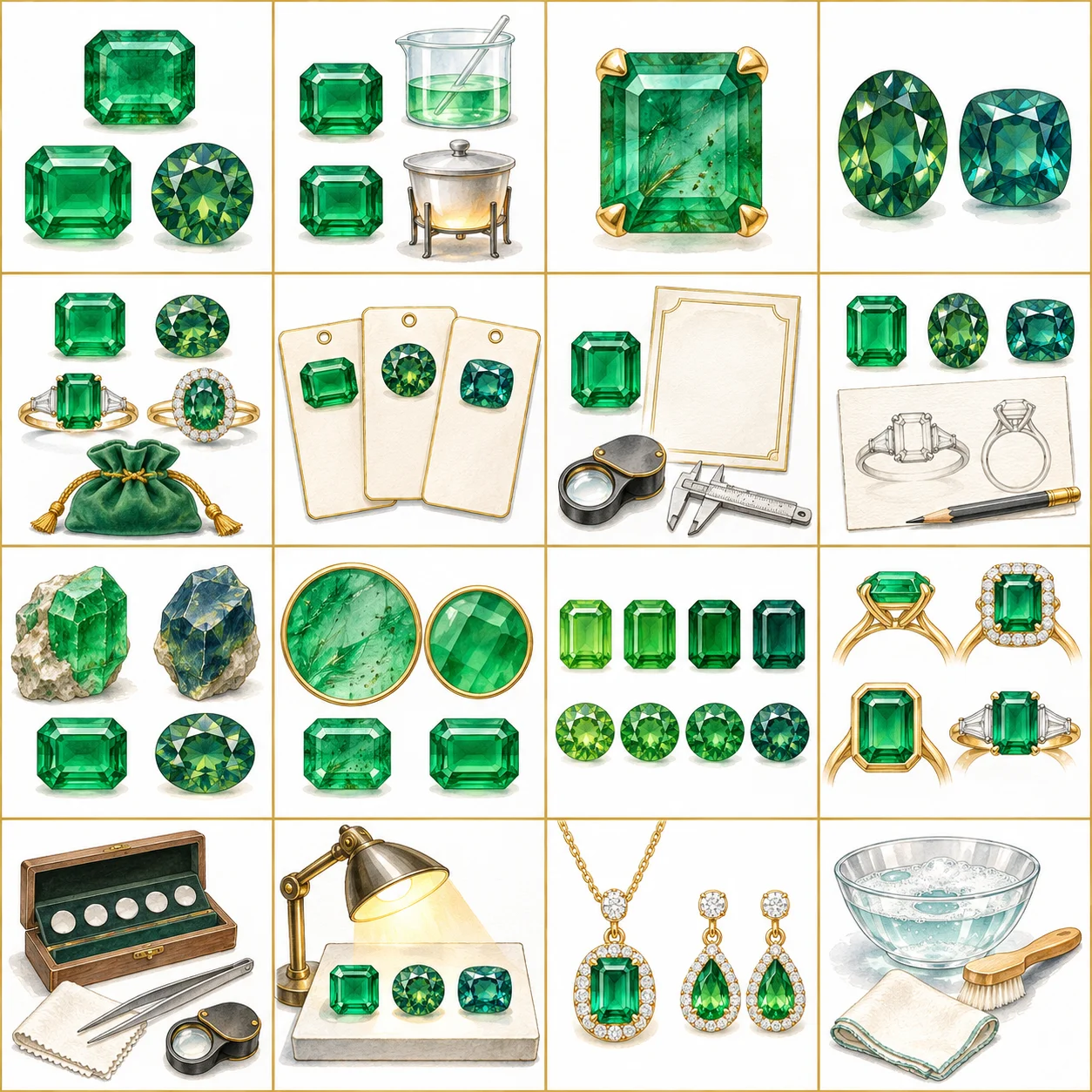
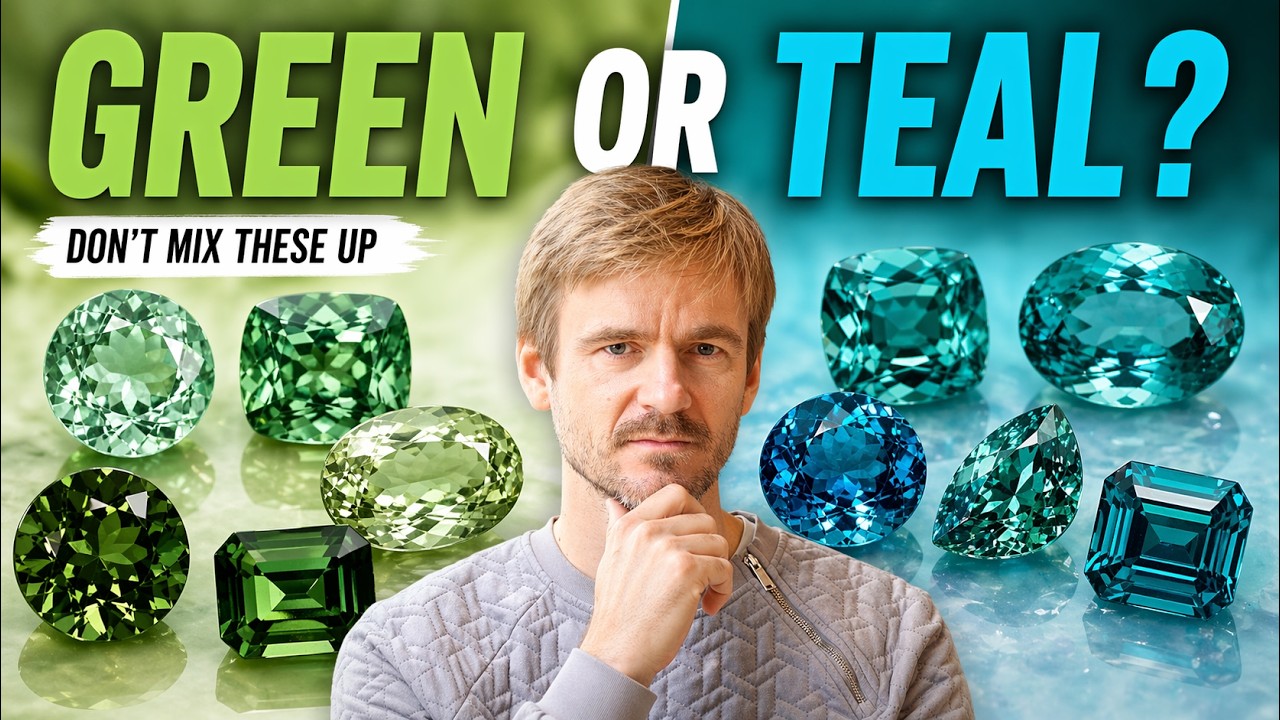
Green sapphire has its own range: forest, moss, olive, teal, and blue-green. Some stones contain blue and yellow zones that look green together when you view the gem from above. Turn it, and those colors may separate. I particularly enjoy cooler blue-green sapphires when the pattern looks attractive. If you're after the vivid green of emerald, though, a grayish or olive sapphire might never give you that look.
Hydrothermal or Flux-Grown Lab Emerald?
Lab-grown emerald is genuine synthetic emerald. It has essentially the same chemistry, crystal structure, and hardness as natural emerald. You're paying less because it grew in a laboratory.
The two main growth methods are worth understanding because they can give you different looks. Hydrothermal emerald grows in a hot, pressurized water-based solution. These gems are often clean and transparent. Flux-grown emerald forms from molten material and can have wispy, feather-like inclusions that resemble the jardin you see in natural emeralds.
I'd start with hydrothermal if you're after a clear, rich green. If those wispy inclusions appeal to you, I'd also look at flux-grown examples. Some flux stones are clean and some hydrothermal stones have plenty of visible growth features, so I still choose by the finished stone. And if a flux-grown emerald costs more, I want the color, cutting, or appearance to make that extra cost worthwhile.
There's a surprising bit of history behind this. Richard Nacken was growing synthetic emeralds suitable for cutting in Germany in the 1920s. Researchers later studied the surviving crystals and established that he'd used a flux process. Synthetic emerald has been around for about a century, and inclusions by themselves don't prove that an emerald came from the earth.
You may also see a name such as "Colombian lab emerald." That's usually describing a color, not where the crystal was mined. Before I'd recommend one, I want to be sure it's actually synthetic emerald and see the actual stone we'd use. An inexpensive stone from a reliable source may not need a costly independent report. If its identity is uncertain or the price is substantial, testing becomes more worthwhile.
How I'd Choose a Natural Emerald
Emerald is probably one of the most complicated gemstones to choose, much like ruby. I have separate buying guides for both. Here, I want to focus on what would make me recommend one natural emerald over another.
Say I show you two stones around the same size. One has beautiful green and some visible inclusions. The other looks cleaner and costs considerably more. I'd want to know what that difference in price actually buys. A clean-looking emerald isn't always a sounder emerald.
Natural emeralds often contain tiny crystals and wisps called jardin, French for garden. I can happily accept some jardin if the color is beautiful and the stone stays transparent. A little crystal enclosed inside the gem is often mainly something you can see. A fracture that reaches the surface is more concerning, especially near a corner or the thin outer edge where a prong has to hold the stone.
Many natural emeralds have been treated to make those fractures less visible. Oil or resin is worked into the tiny openings. The emerald may look cleaner afterward, but the fracture is still there.
Here's what I would buy. Minor oil is normal in the trade, and I'm comfortable with it if the emerald is in good condition. With moderate filling, I'd inspect the stone more carefully and expect the price to reflect it. I would generally pass on significantly filled emeralds for an engagement ring that's going to be worn regularly.
A lab report may describe the enhancement as minor, moderate, or significant. Those words tell us about the filling, rather than giving the whole stone a beauty or durability grade. Even an emerald with no detected filling can have important fractures. For me, the condition of the actual stone comes first.
Origin also affects the price. Fine Colombian emeralds can command a premium because of their reputation and demand. Zambia produces beautiful emeralds too. I'd gladly recommend a lively Zambian emerald over a less attractive Colombian one at the same price. If Colombian origin matters to you and we're paying extra for it, I want an independent lab's opinion to support that claim.
And pay attention to the cut. A step-cut emerald has those broad, calm flashes that show its color beautifully. It also makes cloudiness and windowing easy to see. A window is a pale patch, often in the center, where you can see through the gemstone. Sometimes a smaller emerald with a better cut looks richer than a heavier one with a big window. I'd spend on the cut and the green you actually see before chasing another half carat.

The Green Sapphire I'd Recommend
Once we've found a green sapphire with the right hue, I look closely at the cutting. An oval or cushion brilliant can give you lively flashes. But some stones have a large dark patch that barely changes as they move. That's called extinction. A little darkness can add contrast; a large dead area can make the gem look almost black. I'd compare how the stone looks as it turns rather than judge it from one bright photo.
Treatment is fairly simple for the kind of ring I make. I would choose an untreated natural sapphire or one that's had conventional heat treatment. Heat is common, generally stable, and accepted in the trade. If a heated sapphire has better color and costs less than a comparable unheated one, I'd be happy to recommend it.
I generally pass on diffusion-treated, dyed, or glass-filled sapphires for an engagement-ring center. Diffusion changes the color by introducing elements during heating. It may affect a shallow layer or penetrate much deeper, depending on the method. Glass filling introduces additional concerns for cleaning and repair. These treatments can be honestly disclosed and sold, but I prefer untreated or heat-only stones for my custom rings. That is my selection policy, not a claim that all diffusion-treated sapphires are fragile.
A fine unheated sapphire can command a premium. If two stones look equally attractive, and you care about the untreated origin, paying more may be worthwhile. If the heated sapphire is the prettier one, I'd spend the money there instead.
For this choice, I care much more about the actual shade, how the stone handles light, and clear disclosure than an impressive word on the listing. "Unheated" tells me something about the gem's history. It doesn't tell me how beautiful it is.
Which One Can Handle Everyday Wear?
Sapphire has a real advantage here. It's corundum, with Mohs hardness 9 and generally excellent toughness. Emerald is beryl, around 7.5 to 8, and often has natural fractures. The Mohs number tells you how resistant a stone is to scratches. Those fractures matter much more when an emerald takes a sharp knock.
A clean lab-grown emerald may have fewer significant fractures than a natural emerald, which can make that particular stone easier to set and more reassuring to wear. It still has the basic properties of emerald. If you want the least demanding of these three stones for daily wear, I would choose sapphire.
Think about how the ring will actually be worn. Weightlifting, gardening, working with tools, or anything where your hand regularly hits hard surfaces puts a ring at risk. I recommend taking the ring off for those activities regardless of the center stone. With emerald I'd be especially careful. If the wearer knows they'll keep the ring on almost all the time, that makes sapphire an even stronger candidate.
I design around these differences too. On an emerald cut, the clipped corners give us good places for protective prongs. A bezel can shield much of the edge, and a lower setting catches on fewer things. The top of the stone is still exposed to impact. A sapphire gives me a bit more freedom, although a pear or marquise still needs protection at its pointed tip.
Durability isn't just a number on a chart. The shape, the condition of the loose stone, and the way the setting holds it can change how practical the finished ring will be.
What $5,000 Buys
For an illustrative plan, imagine a $5,000 budget before tax and a hypothetical $2,000 custom setting allocation. That leaves up to $3,000 for a center stone. These numbers demonstrate the decision process; they are not current NinaVova quotes, inventory offers or guaranteed size-and-quality combinations.
I'll compare gems close to 8 by 6 millimeters, because I want them to look a similar size on your finger. Carat weights won't match. Sapphire's specific gravity is close to 4; emerald's is about 2.7. If the two occupied exactly the same volume, sapphire would weigh roughly 48% more. In a real comparison, depth and shape also matter, so I look at length, width, and depth.
For lab emerald, suppose one suitable identified stone were quoted at $500. Combined with the hypothetical $2,000 setting, the model totals $2,500. A hypothetical $800 alternative would total $2,800. Those numbers do not establish current availability: the point is to compare the actual color, transparency, cut and condition, and keep any unused budget rather than spending it automatically.
For natural emerald, more of that hypothetical center allowance may go toward green color, transparency, condition and relevant documentation. If a suitable stone is not available within the current budget, I would show what changes when we reduce the dimensions. A smaller, sounder stone may be preferable to a heavily filled emerald chosen only to maintain size. Compare actual current offers rather than assuming one price per carat describes the category.
For natural green sapphire, imagine comparing a $1,500 center offer with a $2,500 one. With the assumed setting, those illustrate totals of $3,500 and $4,500. They are planning examples, not sourced stones. I would want the additional money to buy a visible improvement in the green or teal color, cutting or dimensions, with clear treatment disclosure, rather than simply a stronger marketing label.
One thing to keep in mind: 8 by 6 millimeters doesn't mean exactly the same visible area in every shape. An oval and a clipped-corner emerald cut have different outlines. When I present actual options, I want you to see them at comparable scale rather than judging only from the measurements.
Here's what those numbers tell us. Lab emerald gives you room to save without necessarily compromising the look. Natural emerald can use most of the money on color, condition, and origin. With sapphire, the biggest challenge may be finding precisely the green you love. The budget should follow the stones we find, not force all three rings to come out at $5,000.
How I'd Check the Stone Before We Make the Ring
When we've settled on the type of gemstone, I narrow the search to a few actual stones. You'll need clear videos of the exact stones, not stock footage. I want to see each one face-up and moving under daylight-type and normal indoor lighting, with consistent exposure. I'd also show it at something close to its real size. Tiny inclusions that look enormous on a screen can be almost invisible on a finger.
Then I check the information that photographs can't give us. For a natural emerald, I want a proper lab report describing any clarity enhancement. If we're paying more for Colombian origin, the report should include an origin opinion. I'll also have the loose gem examined for chips and fractures, particularly around the girdle and places where the setting will hold it.
For a sapphire, I check the report to see whether it's been heated and make sure it matches what I'm telling you about the stone. If we're paying extra for an unheated sapphire, I want that supported by a respected lab. For a lab emerald, I need reliable confirmation that it's actually synthetic emerald.
I'd verify a report number with the lab and match the measurements to the stone. A report tells us what the lab could identify when it examined that gem. It won't tell us if the color is beautiful or whether a damaged corner can safely take a prong. And with a valuable emerald, we should also check that the current treatment matches the paperwork; fillers can sometimes be changed after a report is issued.
Only after the center is selected do I finish the CAD. The exact shape and depth tell us how to build the seat, place the prongs, choose the height, and leave room for a future wedding band. I'd also look at the stone beside the metal and any side diamonds. Very bright white diamonds can make a dark green center seem darker; yellow gold can make certain greens look warmer. Those are choices we can make before anything is cast.
For long-term care, emerald needs gentle cleaning with warm soapy water. Avoid steam and ultrasonic machines, and tell your jeweler about the emerald before any repair that involves heat. Oil and resin fillings can be affected, and fractures may get worse. An untreated or conventionally heated sapphire is usually easier to maintain, though every ring still needs attention after a hard knock.
The Final Choice
When I’m comparing the finalists, I’d rather show you a few excellent stones and explain the differences than bury you in fifty listings.
Suppose the actual options include a green sapphire you love and a more expensive natural emerald with richer green. If you prefer the sapphire, there is no obligation to spend the difference. If you prefer the emerald and its treatment and condition are acceptable, that difference may be worthwhile. Let the current stones decide the comparison.
If an identified lab-grown emerald gives you the look you want at a lower actual cost, that is a useful option too. More of the budget can go toward custom design, or you can simply keep the savings.
If you’re still looking for a different shade of green, tsavorite garnet is another natural option worth considering.
Ultimately, I want you to see exactly what you’re getting for your money. Then we can design the ring around the stone you genuinely love.
Frequently asked questions
Is a cleaner-looking lab emerald automatically as carefree as sapphire?
No. It remains emerald, with emerald’s material properties. Assess the actual fractures, condition, treatment and setting, and use appropriate care.
Does no detected filling mean a natural emerald has no fractures?
No. Clarity-enhancement findings and the stone’s underlying condition are separate questions. A jeweler should assess the actual loose stone.
Compare a few actual green stones
We can explain the color, condition, care and documentation for selected options, then design around the stone you prefer and a budget you are comfortable with.
Book a NinaVova consultation or explore our custom design process.
Continue reading: Morganite versus sapphire · Green and teal sapphire · Lab-grown gemstone comparison.
Sources and further reading
- GIA: Emerald care
- GIA: Emerald buyer’s guide
- GIA: Sapphire care
- GIA: Laboratory growth of gem materials
- GIA: Nacken’s synthetic emeralds
- GIA: Colored stone report service updates
The budget arithmetic is illustrative, based on assumed prices rather than current inventory offers. Tax, stone availability, final dimensions, metal, side stones and construction can change the actual proposal.
Contact Sergey.
Have a question about ring settings, gemstones, or creating a custom ring? Send me a message and I’ll be happy to help.
Book a time to talk through the ring.
Meet remotely for a focused 30-minute call about your design, stones, timeline, and budget. No jewelry terms needed.
When you schedule the meeting, you can also include a short message before the call — the idea, budget, timeline, saved links, or anything you want us to know first.