Skip to navigation Skip to main content
  • Design Process
    • Create a Custom Engagement Ring for Your Partner
    • Design an Engagement Ring Together
    • Create Your Own Custom Engagement Ring
    • Success Stories
  • Ring Gallery
  • Diamonds
    • Natural diamonds
    • Lab-grown diamonds
    • Round
    • Oval
    • Cushion
    • Emerald
    • Pear
    • Radiant
  • Gemstones
    • Sapphire
    • Ruby
    • Emerald
    • Spinel
    • Aquamarine
    • Tourmaline
    • Tanzanite
    • Morganite
NinaVova
  • EDUCATION
  • NinaVova Reviews
  • Book Consultation
0 items / $0.00
Menu
NinaVova home
0 items

Engagement Ring Guides

Home/Engagement Ring Guide
Engagement Ring Guide

Yellow Diamonds: Color Grades, Color Origin and Buying Checks

Posted by author-avatar Sergey Degtyarenko
06.11.2026
On 08.10.2023
Original NinaVova video thumbnail: How to Choose a Fancy Colored Diamond for Your Engagement Ring

By Sergey Degtyarenko, founder of NinaVova

Yellow diamonds range from pale appearances within the D-to-Z system to colors evaluated on a fancy-color scale. Choosing one calls for more than a vivid photograph: confirm whether the diamond is natural or laboratory-grown, whether the color is natural or treated, and what the actual report establishes. Then compare appearance, condition, setting and the complete price.

The short answer

Confirm the material and color origin before comparing the ring. A vivid image is not a grade. Read the actual report, distinguish diamond identity from natural or treated color, then compare appearance, condition and the complete offer.

At a glance · Separate a yellow diamond from other yellow gemstones · Understand the relevant color-grading framework · Confirm color origin and report scope · Compare shape, cutting and the color you see

Watch the NinaVova discussion

youtube placeholder image

Watch the original NinaVova video on YouTube.

The NinaVova fancy-colored-diamond discussion accompanies the color and buying decisions. This written guide focuses on yellow diamonds and the scope of color-origin claims.

Yellow diamonds: facts to separate before buying

Material identity, color origin and geographic source are different questions.
QuestionCheckAvoid assuming
Diamond identityNatural or laboratory-grown statusYellow appearance identifies the material
Color gradeExact report descriptionA screen reproduces a laboratory grade
Color originNatural or treated colorNatural diamond always means untreated color
Geographic sourceRelevant separate evidenceColor origin names the mine
DesignActual dimensions and settingOne shape or metal always looks best
ValueEquivalent complete quotationRarity guarantees resale profit
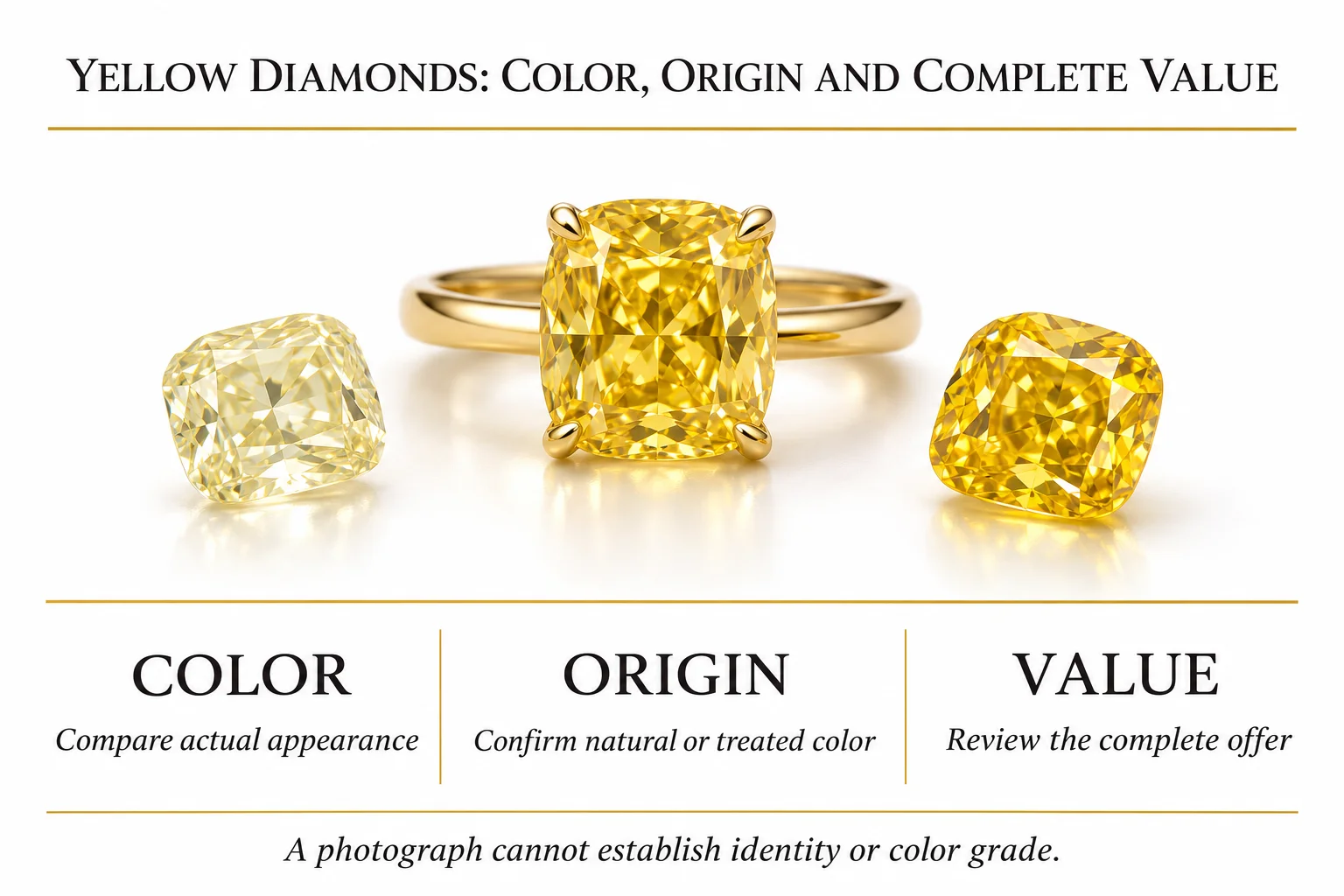
NinaVova overview: Yellow Diamonds: Color Grades, Color Origin and Buying Checks
Illustrated educational overview in NinaVova’s editorial style. Jewelry shown is conceptual, not an inventory photograph. Open at full size.
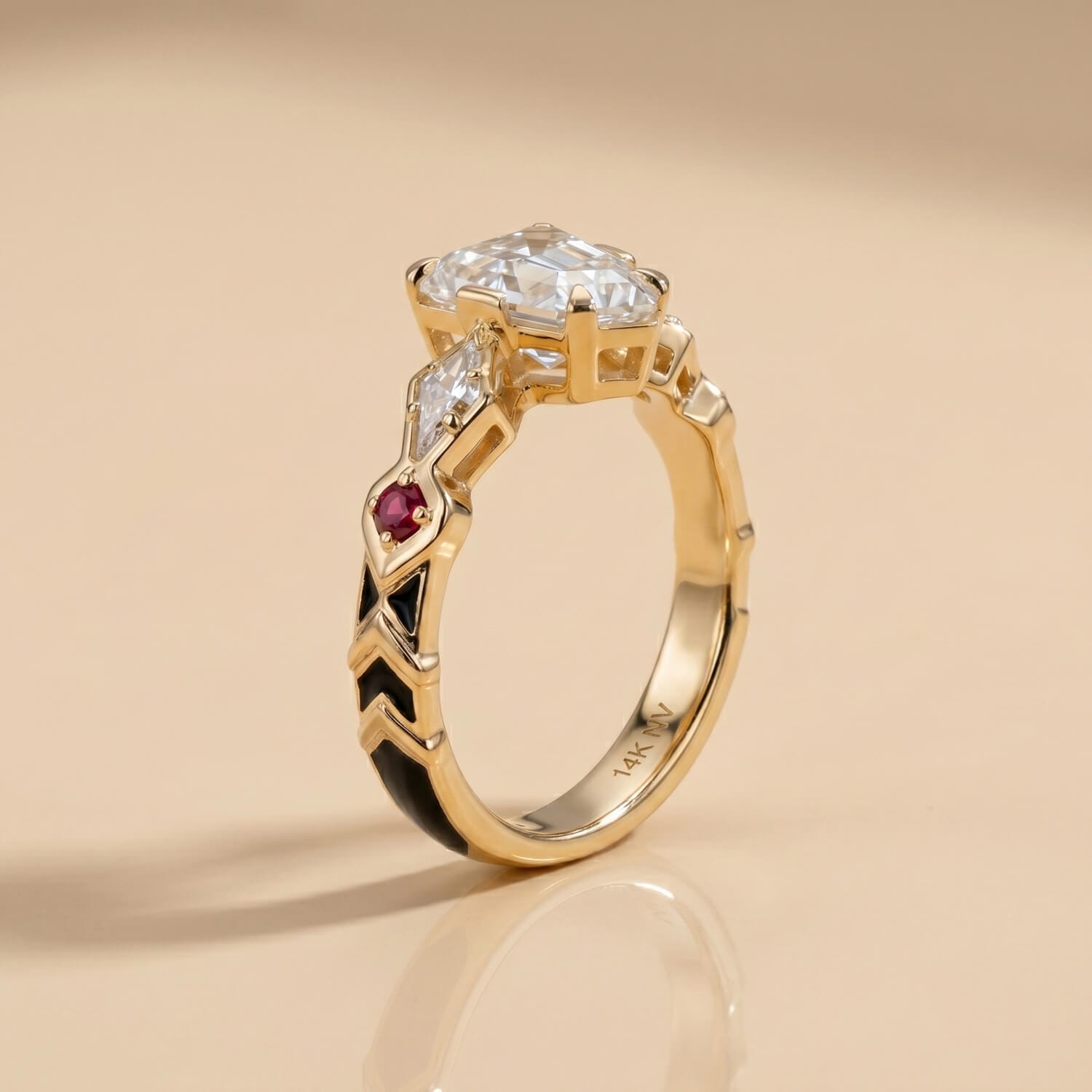
NinaVova Eswatini-inspired diamond engagement ring with ruby and black enamel
Design your ring with NinaVova

Ready to turn your ideas into a custom ring?

Bring your inspiration, questions, or even a rough idea. We’ll work through the details together.

I’ll help you think through the details and create a ring designed around the person who will wear it. You don’t need to have everything figured out before we start.

Design directly with Sergey · Review your ring in 3D before production

Contact Sergey →

Explore this NinaVova ring

Separate a yellow diamond from other yellow gemstones

Yellow describes a color rather than a complete identity. Yellow sapphire, moissanite and other materials should not be described as yellow diamond simply because their appearance is similar.

A natural diamond and a laboratory-grown diamond also require clear descriptions. Neither can be identified conclusively from a dramatic ring image.

Nitrogen-related defects are responsible for much natural yellow diamond color, but a simple more-nitrogen-means-better rule is inaccurate. The atomic arrangement and other factors matter.

Begin with accurate material identification. A nickname such as canary is a trade description, not a substitute for a laboratory color grade.

Actual NinaVova yellow salt-and-pepper diamond ring with colored accents shows one individual design
Actual NinaVova yellow salt-and-pepper diamond ring with colored accents shows one individual design. This photograph does not establish a fancy-color grade or color-origin report. Photograph: NinaVova.

Understand the relevant color-grading framework

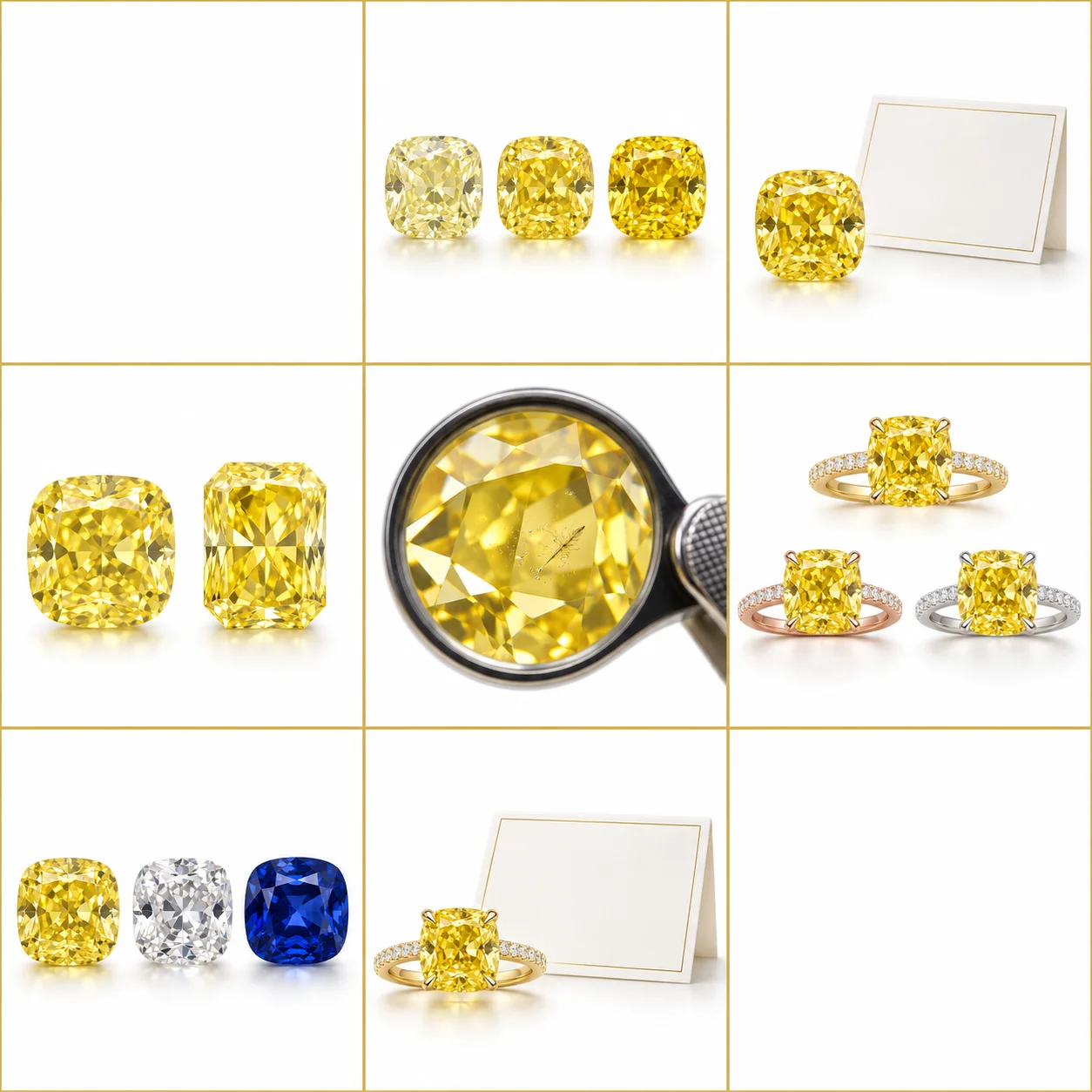
Pale yellow diamonds can remain within the D-to-Z range. Fancy-color assessment addresses a different appearance and should not be reduced to one letter on that scale.
Understand the relevant color-grading framework
Understand the relevant color-grading framework.

Fancy-color descriptions consider hue, tone and saturation. Grade terminology includes distinctions such as Fancy Light, Fancy, Fancy Intense, Fancy Vivid, Fancy Dark and Fancy Deep where applicable.

These terms should not be treated as one simple ladder from less valuable to more valuable in every stone. Actual color appearance and the rest of the diamond still matter.

Read the exact report rather than inferring a grade from a screen. Photography and illustrations here cannot reproduce a controlled laboratory comparison.

Confirm color origin and report scope

Natural or treated color is a separate question from natural or laboratory-grown diamond identity. Ask for both descriptions rather than one vague claim of authenticity.

Confirm color origin and report scope
Confirm color origin and report scope.

A colored-diamond report may address color origin, but that wording does not necessarily identify the mine or establish an environmental or human-rights audit.

Check the issuing laboratory, report details and relationship to the actual stone. Verify relevant information through the issuer’s official service where appropriate.

If a document is an appraisal or a seller’s description, do not assume it carries the same scope as a laboratory report. Each answers different questions.

Compare shape, cutting and the color you see

Cushion, radiant and other forms can create different color presentations. The actual facet arrangement and proportions matter more than a shape-name guarantee.

Compare shape, cutting and the color you see
Compare shape, cutting and the color you see.

View the diamond from several angles and in ordinary lighting as well as the seller’s presentation. A color that looks strong in one still may appear different in motion.

Carat weight is not a fixed visible size or a promise of stronger color. Compare actual dimensions and appearance alongside weight.

Choose an outline and pattern you enjoy. A yellow diamond does not need to fit a celebrity style or a predetermined personality category.

Inspect clarity and condition alongside color

Appealing color does not remove the need to assess inclusions, surface condition and vulnerable areas. Their location and character can matter as well as a grade.

Inspect clarity and condition alongside color
Inspect clarity and condition alongside color.

Ask whether an inclusion near an edge or point affects the proposed support or wearing expectations. Diamond’s scratch resistance does not make it unbreakable.

A high clarity grade does not automatically correct an appearance you dislike, and not every visible characteristic makes a stone unsuitable.

Compare the actual diamond and available documentation with qualified guidance. Magnification is useful, but also consider the view at normal wearing distance.

Choose metal as a design decision, not a regrading tool

Yellow metal can create a warm frame, while white tones can provide contrast. Rose tones or a mixed-metal design offer other visual relationships.

Choose metal as a design decision, not a regrading tool
Choose metal as a design decision, not a regrading tool.

The setting can influence perceived color without changing the diamond’s laboratory grade or color origin. It should not be presented as turning one grade into another.

Review realistic views of the actual center and proposed ring. A drawing cannot perfectly predict reflections from a metal cup, prongs or neighboring stones.

Specify the alloy, finish and any plating as well as the visible color. Suitable support and future service remain part of the design.

Compare yellow with colorless and other colored choices

The appropriate comparison depends on the appearance the wearer enjoys. A yellow diamond is not universally rarer, more expensive or more meaningful than every colorless diamond.

Compare yellow with colorless and other colored choices
Compare yellow with colorless and other colored choices.

Yellow sapphire can offer a different material and optical appearance, while laboratory-grown diamonds introduce another origin category. Each deserves accurate naming and its own evaluation.

Sourcing and environmental claims need evidence for the actual offered materials. Color and production category alone do not establish a responsible supply chain.

Personal associations with warmth or a remembered place are valid design references. They do not guarantee prosperity, luck or an emotional effect.

Compare complete offers without a resale promise

Compare color description, origin, weight, dimensions, condition and included setting work. Two yellow diamonds with similar photographs can represent very different offers.

Compare complete offers without a resale promise
Compare complete offers without a resale promise.

Use current quotations rather than an assumed universal price premium. The actual specification and market availability affect the comparison.

Ask what reports, service, alteration and applicable charges are included. Keep the complete purchase conditions in writing.

Do not treat a color grade or rarity claim as a guarantee of investment return. Purchase value, personal meaning and future resale proceeds are different matters.

Build a ring around a particular yellow diamond

At NinaVova, the actual center can guide proportions, metal contrast and the surrounding details. Existing photographs show individual projects rather than guaranteed matching stock.

Confirm material identity, relevant treatment, dimensions and design approvals before production. Any requested source claim needs its own supporting evidence.

Plan cleaning and inspection appropriate to the full ring, especially where other gemstones or treatments are present.

A considered yellow-diamond choice combines a color you enjoy with a clear report scope, suitable support and realistic ownership terms.

Another actual view of the NinaVova yellow salt-and-pepper diamond ring shows its center and surrounding details
Another actual view of the NinaVova yellow salt-and-pepper diamond ring shows its center and surrounding details. Its character should not be generalized to every fancy yellow diamond. Photograph: NinaVova.

Frequently asked questions

Does canary identify a laboratory grade?

No. Read the exact report description.

Is color origin the same as the mine of origin?

No. Natural or treated color and geographic source are separate questions.

Does yellow gold change a diamond’s grade?

No. It may influence perceived appearance without changing the laboratory grade.

Begin with a particular yellow center

We can consider actual color, proportions and a feasible setting, with clear material descriptions and realistic ownership terms.

Book a NinaVova consultation or explore our custom design process.

Continue reading: F vs G color · Emerald vs princess · Design consultation.

Sources and further reading

  • GIA: Yellow diamond buying guide
  • GIA: Nitrogen and yellow diamond color
  • GIA: D-to-Z diamond color
  • GIA: Protecting a diamond from chipping

Confirm the actual materials, condition, evidence and current written terms for the offered ring. Illustrations do not establish identity, provenance, certification or an environmental footprint.

Option 1Contact Sergey

Contact Sergey.

Have a question about ring settings, gemstones, or creating a custom ring? Send me a message and I’ll be happy to help.

    Option 2 Book Consultation Now

    Book a time to talk through the ring.

    Meet remotely for a focused 30-minute call about your design, stones, timeline, and budget. No jewelry terms needed.

    When you schedule the meeting, you can also include a short message before the call — the idea, budget, timeline, saved links, or anything you want us to know first.

    Open the booking calendar in a new tab

    calendly placeholder image
    Custom Engagement RingsGuide
    Newer
    Engagement and Wedding Rings for Active Lifestyles: Design and Care
    Back to list
    Older Does Rose Gold Tarnish? Surface Changes, Cleaning and Care

    Related Posts

    Original NinaVova video thumbnail: What If You Choose the WRONG Engagement Ring? (The Truth Nobody Tells You)
    26 Nov
    Engagement Ring Guide

    Choosing an Engagement Ring for Someone Who Never Wears Jewelry

    Posted by author-avatar Sergey Degtyarenko
    06.11.2026
    Start with whether your partner wants a ring, then explore personal design, comfort, fit, setting profile, materials and a practical wearing plan.
    Continue reading
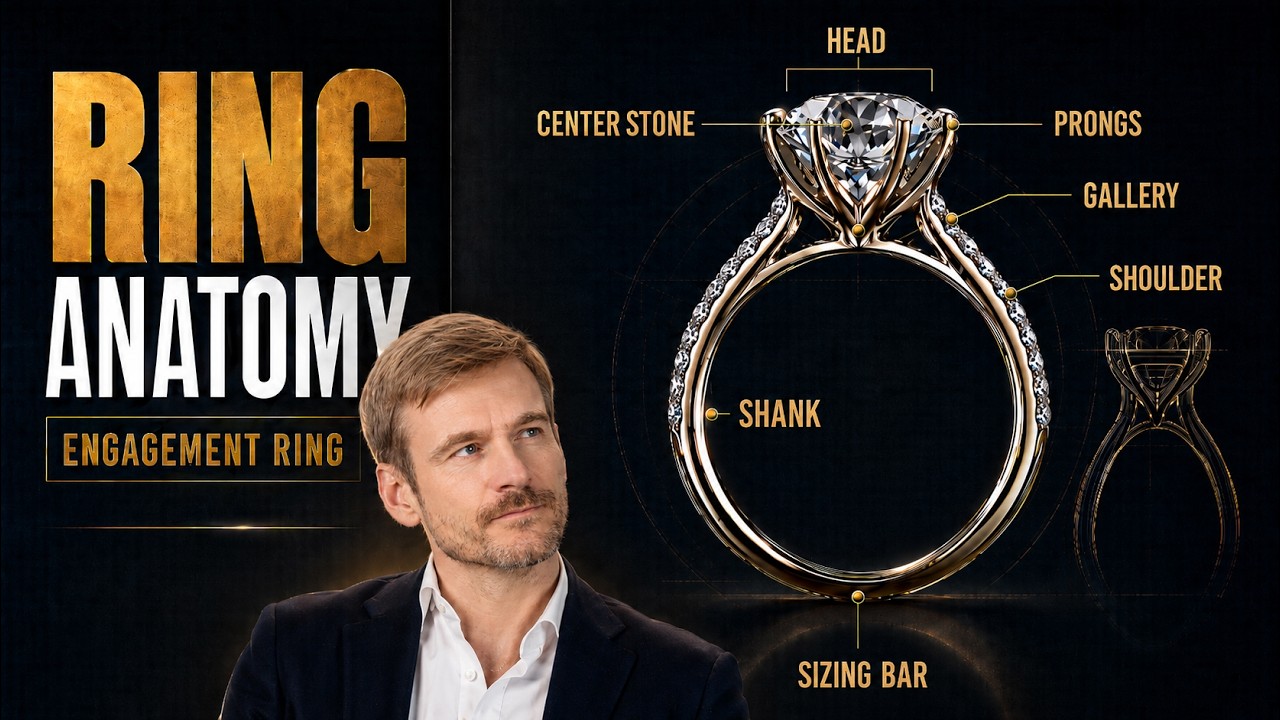
    Original NinaVova video thumbnail: Anatomy of an Engagement Ring | Complete Guide to Every Detail
    25 Nov
    Engagement Ring Guide

    Engagement Ring Settings: Prongs, Bezels, Height and Protection

    Posted by author-avatar Sergey Degtyarenko
    26.11.2026
    Compare prongs, full and partial bezels, tension-style settings and supporting architecture, with practical questions about stone protection, height, fit and maintenance.
    Continue reading
    Original NinaVova video thumbnail: Don’t Gamble on a Custom Engagement Ring
    24 Nov
    Engagement Ring Guide

    Custom Engagement Ring Design: Inspiration Photos, CAD and Approval

    Posted by author-avatar Sergey Degtyarenko
    26.11.2026
    Turn inspiration photographs into a clear custom-ring brief, choose the actual gemstone, review CAD and approve deliberate changes before manufacturing begins.
    Continue reading
    Original NinaVova video thumbnail: 16 Engagement Ring Claims to Check Before Paying More
    20 Nov
    Engagement Ring Guide

    16 Engagement Ring Claims to Check Before Paying More

    Posted by author-avatar Sergey Degtyarenko
    06.11.2026
    Understand what sale, appraisal, handmade, GIA graded, unheated, ethical and lifetime warranty claims actually tell you before paying an engagement-ring premium.
    Continue reading
    Original NinaVova video thumbnail: Engagement Ring Anatomy: Shank, Setting, Gallery and More
    15 Nov
    Engagement Ring Guide

    Engagement Ring Anatomy: Shank, Setting, Gallery and More

    Posted by author-avatar Sergey Degtyarenko
    06.11.2026
    Understand the parts of an engagement ring, from shank and prongs to gallery, bridge and accent stones, so you can discuss a complete custom design with confidence.
    Continue reading
    Original NinaVova video thumbnail: Engagement Rings for Nurses: Design, Comfort and Workplace Rules
    14 Nov
    Engagement Ring Guide

    Engagement Rings for Nurses: Design, Comfort and Workplace Rules

    Posted by author-avatar Sergey Degtyarenko
    06.11.2026
    Plan an engagement ring for a nurse around workplace jewelry rules, setting profile, cleaning access, material choices and fit, without sacrificing personal design.
    Continue reading
    Original NinaVova video thumbnail: Green vs Teal Sapphire Engagement Rings: Color, Cut and Lighting
    13 Nov
    Engagement Ring Guide, Gemstones

    Green vs Teal Sapphire Engagement Rings: Color, Cut and Lighting

    Posted by author-avatar Sergey Degtyarenko
    26.11.2026
    Compare mint, seafoam, olive, forest-green and teal sapphire directions, and learn how lighting, cutting, trade names and origin affect the buying decision.
    Continue reading
    Original NinaVova video thumbnail: 7 Lab-Grown Gemstones for Engagement Rings: A Practical Comparison
    12 Nov
    Engagement Ring Guide, Gemstones

    7 Lab-Grown Gemstones for Engagement Rings: A Practical Comparison

    Posted by author-avatar Sergey Degtyarenko
    06.11.2026
    Compare seven lab-grown gemstone options for engagement rings, including diamond, sapphire, alexandrite, ruby and emerald, with practical guidance on appearance and identity.
    Continue reading
    Original NinaVova video thumbnail: 25 American Gemstones for Engagement Rings: Origin, Color and Care
    11 Nov
    Engagement Ring Guide, Gemstones

    25 American Gemstones for Engagement Rings: Origin, Color and Care

    Posted by author-avatar Sergey Degtyarenko
    06.11.2026
    Explore 25 gemstones associated with U.S. localities, from Montana sapphire and Oregon sunstone to American aquamarine, turquoise, red beryl and Arkansas diamond.
    Continue reading
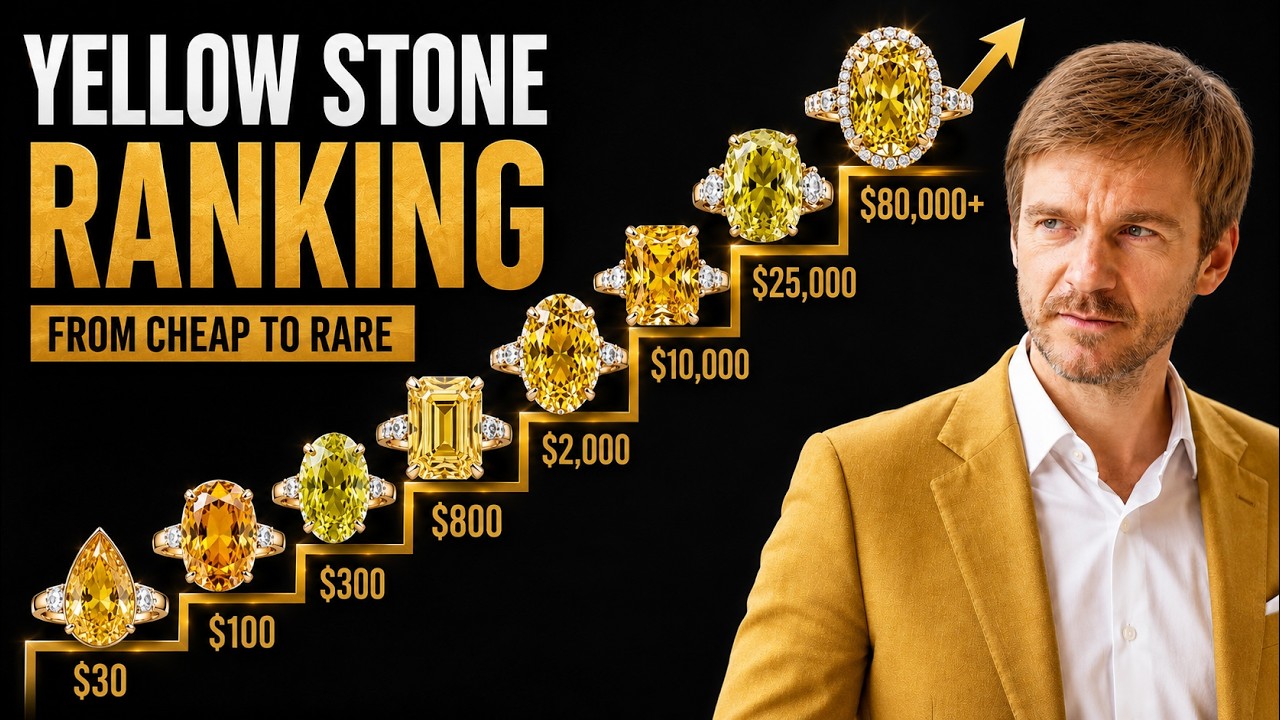
    Original NinaVova video thumbnail: 22 Yellow Gemstones for Engagement Rings: Color, Durability and Care
    10 Nov
    Engagement Ring Guide, Gemstones

    22 Yellow Gemstones for Engagement Rings: Color, Durability and Care

    Posted by author-avatar Sergey Degtyarenko
    06.11.2026
    Compare 22 yellow gemstone options, including sapphire, chrysoberyl, citrine, pearl and diamond, with practical advice on color, durability, treatments and design.
    Continue reading
    Original NinaVova video thumbnail: 25 Purple Gemstones for Engagement Rings: Color, Care and Buying Choices
    09 Nov
    Engagement Ring Guide, Gemstones

    25 Purple Gemstones for Engagement Rings: Color, Care and Buying Choices

    Posted by author-avatar Sergey Degtyarenko
    06.11.2026
    Compare 25 purple gemstones for engagement rings, from amethyst and spinel to sapphire and alexandrite, with practical guidance on appearance, care and verification.
    Continue reading
    Original NinaVova video thumbnail: Montana Sapphire Engagement Rings: Color, Yogo, Treatment and Cut
    08 Nov
    Engagement Ring Guide, Gemstones

    Montana Sapphire Engagement Rings: Color, Yogo, Treatment and Cut

    Posted by author-avatar Sergey Degtyarenko
    06.11.2026
    Choose a Montana sapphire by real-world color, cut and treatment. Understand Yogo, parti-color stones, size tradeoffs and the documentation behind origin claims.
    Continue reading
      YouTube
      Shop Book Virtual Consultation About Blog Ethics + Sustainability Lifetime WarrantyEmail Sergey
      Ordering + Shipping Resizing + Returns Reviews Financing FAQ Terms + Returns Privacy Policy Cookie Policy Cookie Preferences

      Love defines
      our journey.

      NinaVova logo
      © 2026, NinaVova®
      Custom pieces currently take 6–8 weeks unless otherwise stated. Rush orders must be requested before ordering.

      © 2026 NinaVova. All rights reserved

      payments
      • Home
      • Ring Gallery
      • Diamonds
        • All diamonds
        • Natural diamonds
        • Lab-grown diamonds
        • Round
        • Oval
        • Cushion
        • Emerald cut
        • Pear
        • Radiant
      • Gemstones
        • All gemstones
        • Sapphire
        • Ruby
        • Emerald
        • Spinel
        • Aquamarine
        • Tourmaline
        • Tanzanite
        • Morganite
      • Create a Custom Engagement Ring for Your Partner
        • Create a Custom Engagement Ring for Your Partner
        • Design an Engagement Ring Together
        • Create Your Own Unique Engagement Ring
      • Success Stories
      • NinaVova Reviews
      • Contact Sergey
      • Blog
      • Education
      • Custom Engagement Ring FAQs
      Shopping cart
      Close